

Urban nature campaign
When discussing our upcoming urban nature campaign with our community, we discovered that there were lots of us nurturing our own mini nature reserves in our back gardens, balconies, universities and parks. Biodiversity in gardens and sustainable gardening practices have been in the news a lot of late, highlighting the negative impacts of our desire for highly manicured, nature devoid outdoor spaces. When we think of rewilding, the image that often gets conjured up is vast expanses of land, but, with this blog series, we’re going to show you that no matter how small your patch is, how high up it is, or even whether it belongs to you (permission was granted in the instance we’re referring to!), that rewilding can be something everyone can participate in. Gardens cover a huge amount of the UK, so collectively we can have a huge impact for wildlife.
So, whose garden do we get to have a look in first?!
Megan Adamou
We moved in 3 years ago, and got the keys a week before we went into lockdown in 2020. The garden was what drew me in to the house, I saw the potential of a clean slate!
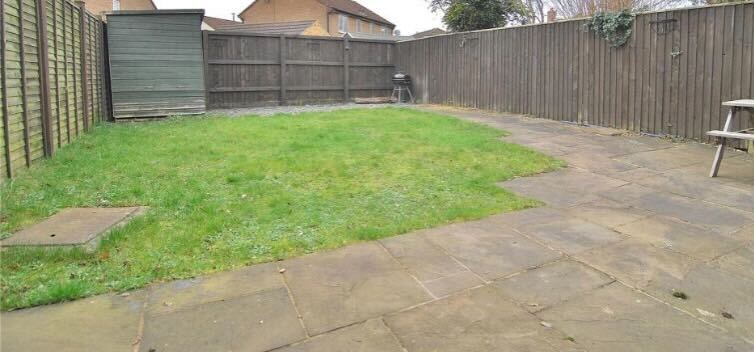
We started with a few potted trees, a Weeping Silver Birch and some Black Bamboo being the first! I then decided to plant the birch, and slowly over the years have been gifted and bargain-bin hunted shrubs, flowers and trees to fill the garden.
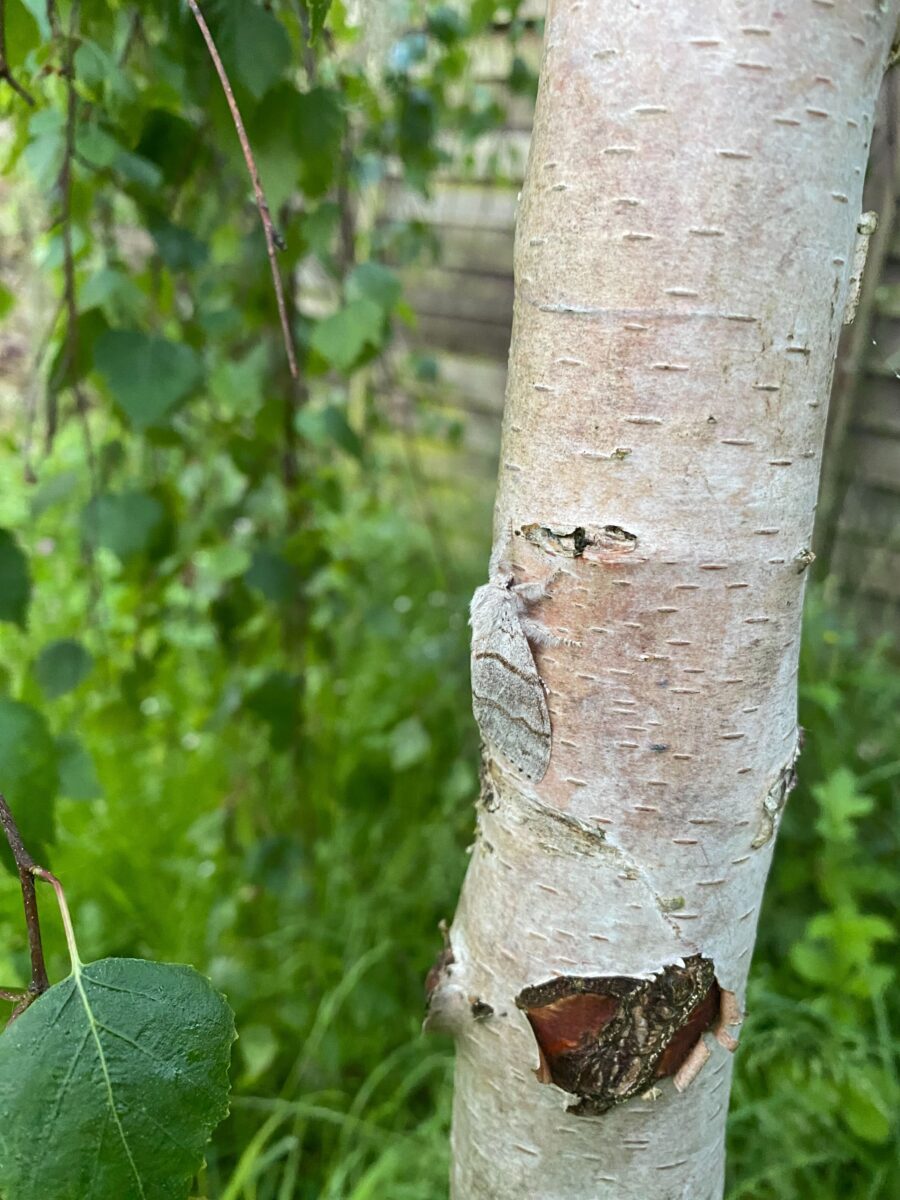
Spot the moth!
I have created different sections of garden to try and encourage as much diversity as I can. We have a log pile with a variety of ferns underneath the weeping birch, and have planted native bluebells and snowdrops underneath. We then have a border of (currently potted) native trees and shrubs. I also let the ivy grow over the top of the fence as the berries and flowers are great for birds and insects – I just cut away any bits that might cause damage and the rest can stay.
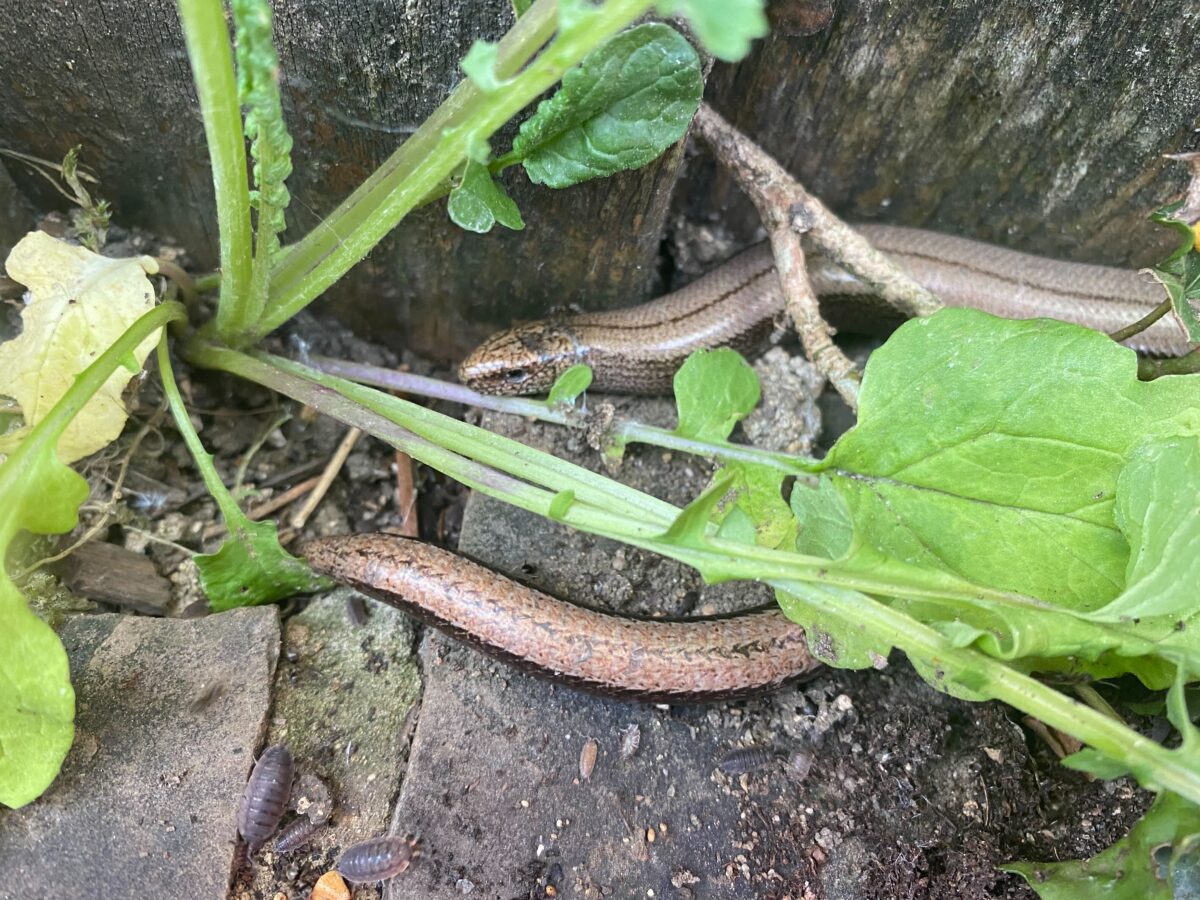
Slow worm!
We found a free pond so have plonked that in and will dig it as a semi-raised pond later this year once we cut all the grass back. The grass is left from the end of April and we then only cut paths in until the beginning of September, where I will cut the grass back section-by-section with shears so the creatures have time to safely move on. We have a massive cricket & grasshopper population so I do what I can to give them somewhere to live!
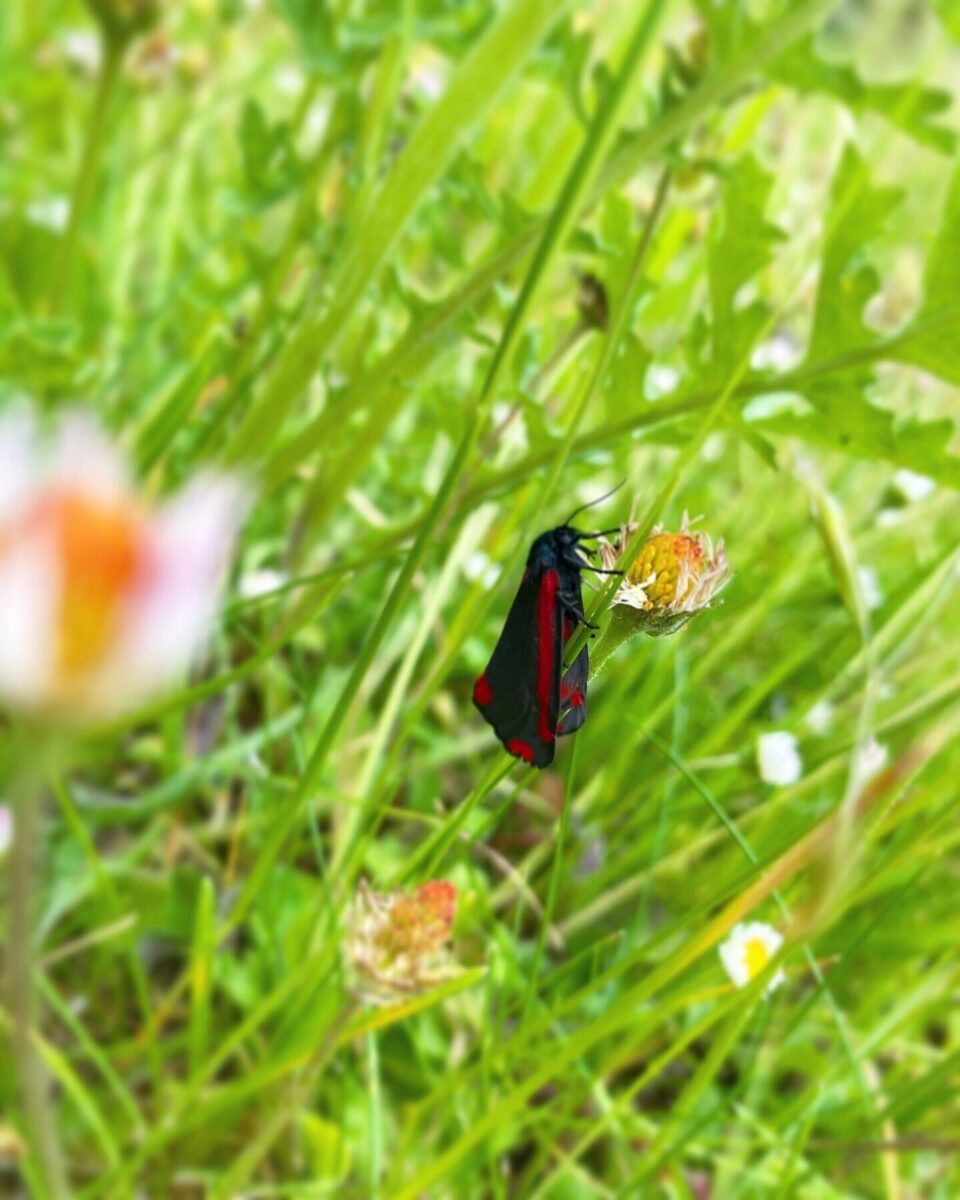
We feed the birds and have 2 bird baths, and use interactive feeding for the corvids (hiding food under coconut shells, hours of fun).
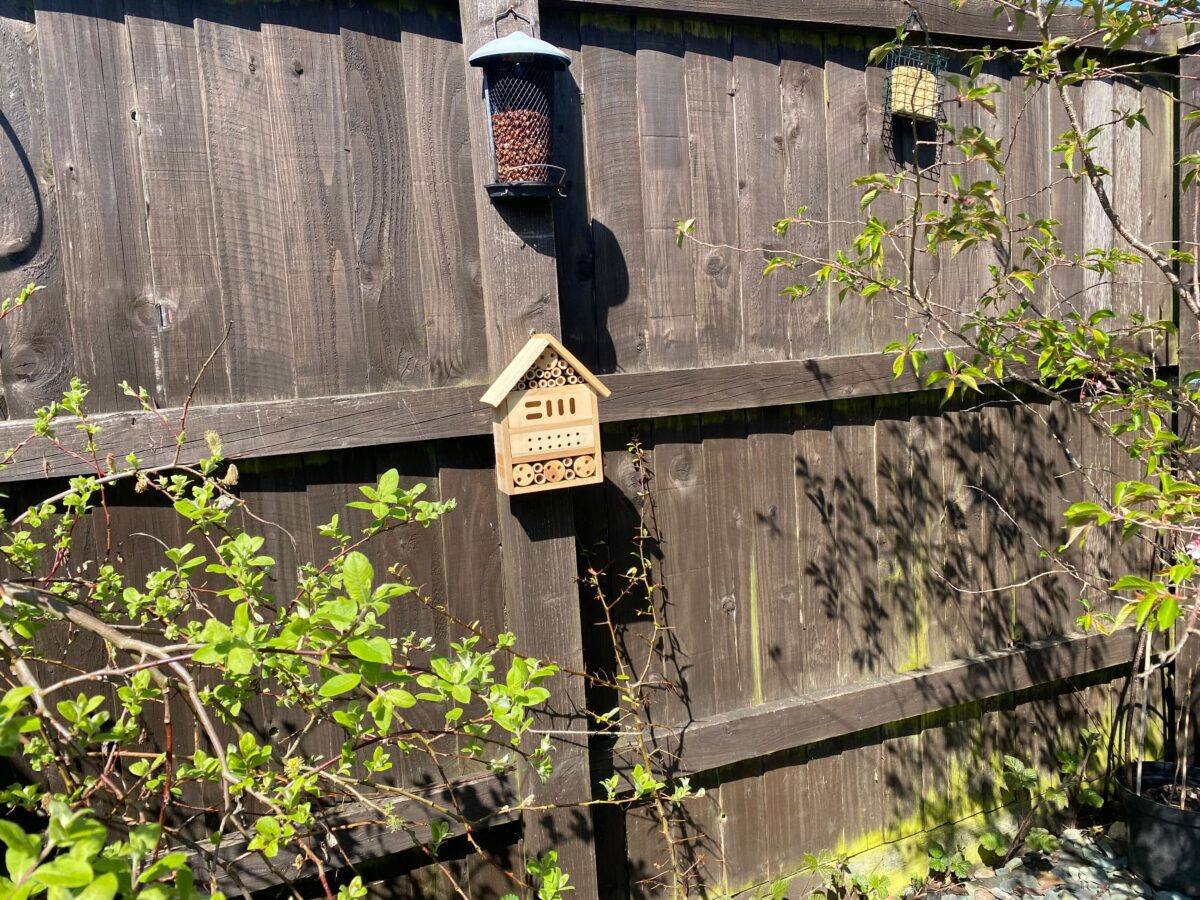
The next steps are to build a raised vegetable patch on the patio (to save it from the ant-army we have in the lawn) and to plant in some foxgloves, UK native plants (including honeysuckle), and put more trees and shrubs in the ground.
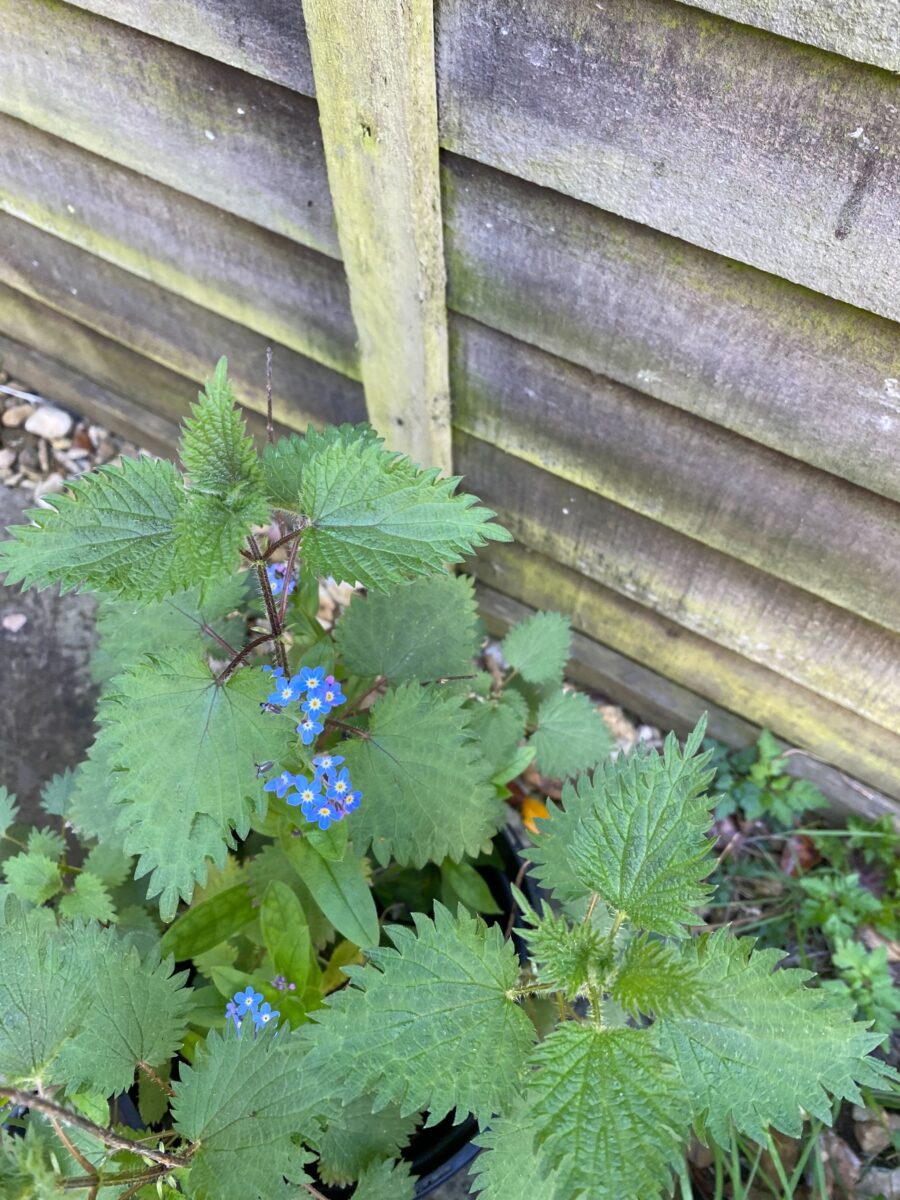
What I find most important when working on my garden is that when we move, a lot of work I’ve done can be easily managed so hopefully won’t be removed. There is still lots of lawn and the trees won’t affect the sun in the garden, so hopefully it has longevity as well as instant impact.
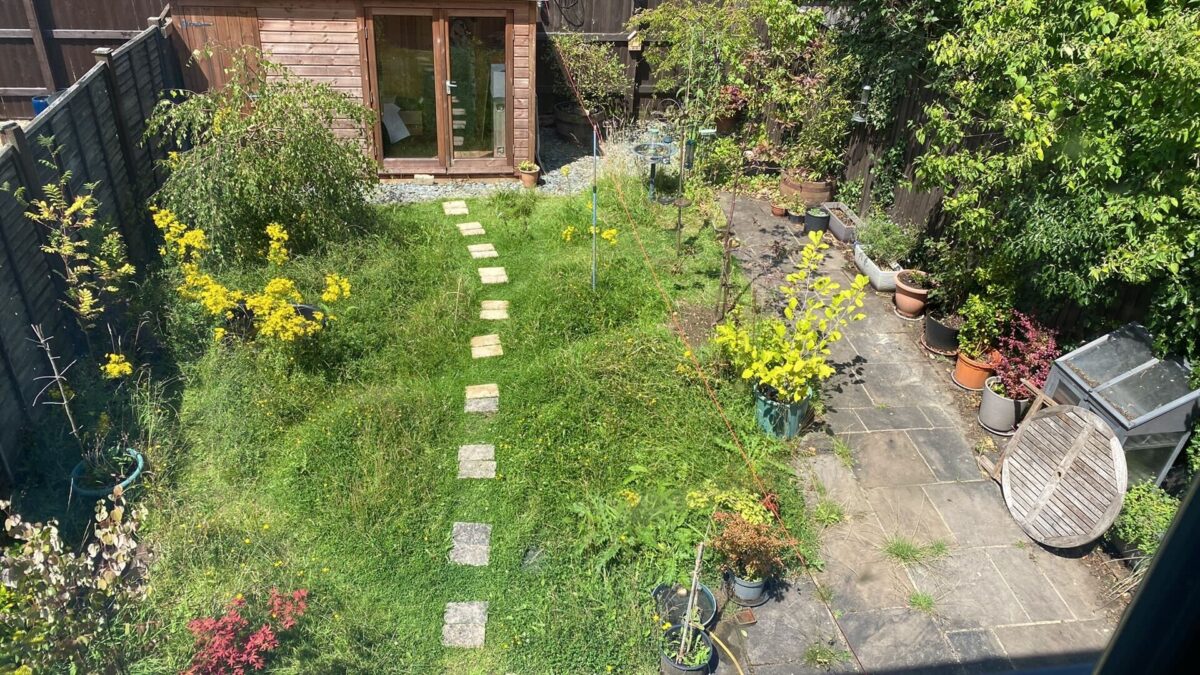
My garden is my haven as well as being one for my local wildlife.
Are you a young person interested in urban nature? We’re running an Urban Nature Day Festival on 9th September in Liverpool to celebrate the UK’s city-dwelling shrubs and critters and a fun creative space to meet like-minded people. Get more information and book free tickets here.
