

Who are you?
I am a pink-haired, fun aunt (self-branded) and natural capital researcher at Liverpool John Moores University. I love learning but will fail to recall anything that I read 30 seconds ago, I very much like to be organised but my home, brain, and the stack of unused planners in my desk provide evidence on the contrary, and I adore life yet most days of my life I’ve struggled to get myself out of bed, never mind the house. Last year, to my relief, I found out that the above, and many other traits that make me a walking contradiction, were due to (previously undiagnosed) Attention Deficit Hyperactivity Disorder (ADHD). The relief came not from gaining a label but instead from being able to somewhat let go of many of the labels that society had drilled into me, and consequently that I had been punishing myself for, for 27 years. Lazy, chaotic, overemotional… the list goes on.

ADHD awareness month
This ADHD awareness month, UK Youth for Nature have given me the chance to write publicly about this aspect of my brain for the first time. I have encouraged openness around mental health for a number of years after various anxiety and depressive disorder diagnoses (common with untreated ADHD). Yet, despite feeling like I now understand my difficulties more than ever, this condition comes with a new layer of stigma that has made me unsure how, or even if, to speak on it.
Why are you speaking out now?
Although ADHD does not define me, it does impact how I show up in every aspect of my life including my work. It is a ‘disorder’ that often plagues those it affects with shame and low self-esteem for not meeting expectations set by oneself and others. Denying it is not an option and neither is the ever-useful advice to “just try harder”, particularly if, like me, you are already forfeiting nights of sleep in an attempt to keep up with peers, setting alarms just so you remember to eat, and spending more time than you’d care to admit researching tools and techniques that may finally help you to function ‘normally’. So I can continue to exert great effort trying to erase all evidence of this part of my life (a tactic that has so far only led to imposter syndrome and exhaustion) or fully embrace my experiences by sharing them – maybe validating those that struggle too and hopefully educating those who don’t. I am incredibly fortunate to have a supportive employer, partner, family and network, allowing me to speak out where others may be unable.
Moving forward with ADHD
The theme of this awareness month is ‘Moving Forward with ADHD’. Until recently, I would tell myself that life could really begin once I had found that one solution that would ‘fix’ me. That somehow, at some point in the future, my executive dysfunction would disappear and only then I would be adequate. These are highly unhelpful and destructive attitudes, a symptom of the ableist beliefs embedded in society. Diagnosis has been the very first step towards self-acceptance and has given me the confidence to start showing up as I am however imperfectly that may be. In other words, I am finally starting to move forward.
A love letter to UK Youth for Nature
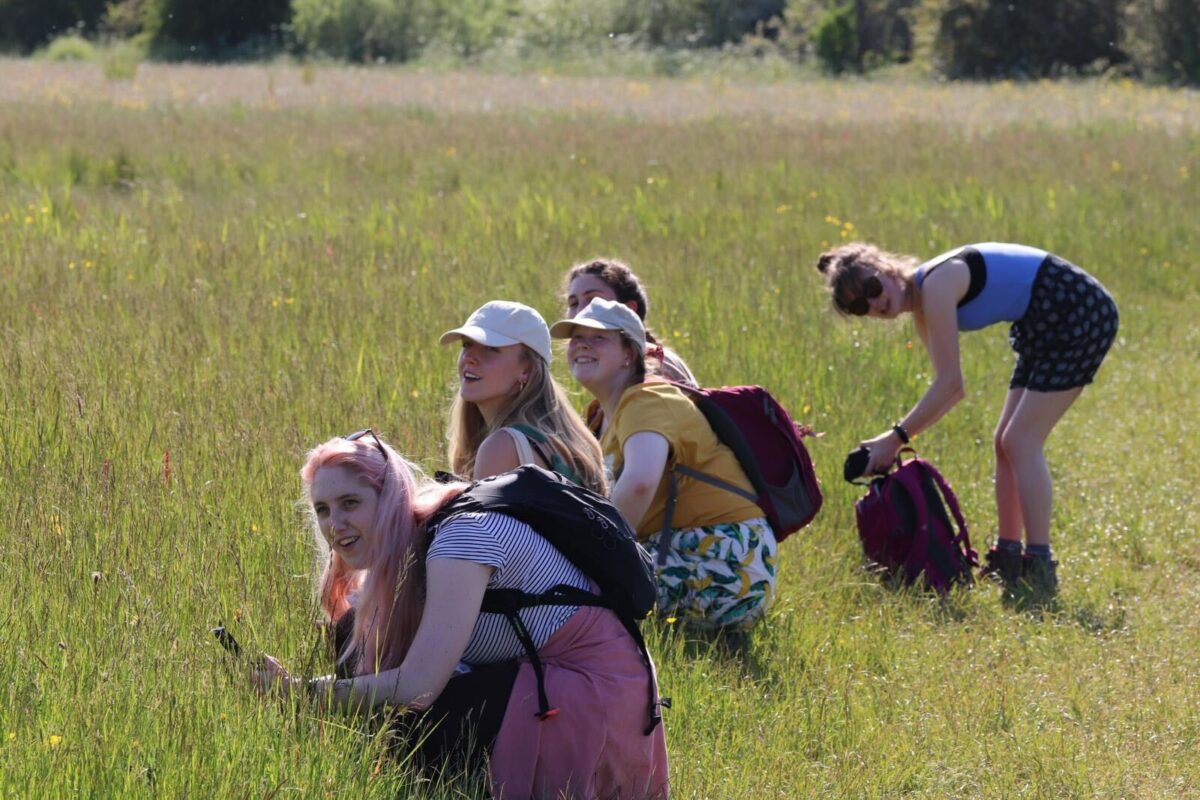
UKY4N has been an incredible community to be part of whilst coming to terms with my diagnosis. My role here has taken me to Westminster, seen me co-organise an Urban Nature Festival in my home city and allowed me to attend events with people I only ever thought I’d see on TV – all welcome distractions and brilliant experiences for my novelty seeking brain! It has helped to kickstart my career, something that can often be difficult for ADHDers and introduced me to a whole host of interesting, inspirational individuals.
ADHD can make everyday life hard to navigate. The stats are often bleak and there are many days where I would do anything to escape it. That being said, the same brain that makes me distractable, impulsive and chronically overwhelmed also makes me curious, passionate and highly empathetic. Ultimately, this has led me to seek out a group of like-minded people. A group that works long hours, mostly without pay, to campaign for the health of our planet and communities is definitely not short of empathy. These individuals are too bearing a burden that is not their fault, but their responsibility to overcome, this time in the form of the nature crisis. I am grateful for each and every person I have had the chance to work with at UKY4N, we have bonded over a whole load of nature nerdiness and over the shared frustration at a society that never seems to have its priorities straight.
Finally, as an organisation that specialises in creative campaigning the team automatically has an appreciation of neurodiverse brains and the “outside-the-box” thinking neurodivergent team members can bring to the table. ADHDers can be disruptors in the most positive sense of the word, we deviate from the status quo and can often find new ways of doing things. Similarly, UK Youth for Nature is known for its distinctive campaigns and amplifying voices that have previously gone unheard. Just this year our Chemical Cocktail Event for parliamentarians impressed attendees for being so innovative, unlike anything they had experienced before.

UKY4N stand for intersectional environmentalism and are continually refining their campaigns to reflect this. The team are changing the game in the nature world and for that I am glad to have been a small part of it for the last three years.

Resources
It is important to note that ADHD can vary greatly both across and within subtypes. Whilst awareness around the condition is growing, much still remains unknown. Misconceptions of ADHD have been around for as long as the condition itself, yet the rise in accessible information on this topic has naturally come with a increased prevalence of misinformation, much of which can be extremely damaging to the community. I have written this blog to explore my own thoughts and experiences of the topic and would emphasise that the above reflects my experience alone. We have provided some links to resources below if you would like to learn more about ADHD or how to manage it.
- ADHD Foundation Resource Hub
- ADHD UK
- Mind – ADHD and mental health
- Youngminds – ADHD and mental health
With thanks to Raman, Roisin and Hannah for giving me the courage and support to finally put this out there!
