

On 14th May, UKY4N went to Portcullis House to hear from the Pesticide Collaboration on their newest campaign: a draft bill aiming to ban pesticide use in public spaces. Read on to find out why we were there, what happened, and what you can do to help!
By Ione Howells
Pesticides: What’s the problem?
Pesticides and herbicides not only harm wildlife, but can harm our health as well. In March 2015, the WHO recognised glyphosate, a popular pesticide often sold as ‘RoundUp’, a ‘probable carcinogen’. Meanwhile, the UK’s commitment to the COP15 Kunming-Montreal Global Biodiversity Framework means they are also committed to ‘reducing the overall risk from pesticides and highly hazardous chemicals by at least half’.
Pesticide use in urban areas makes up 10% of the UK’s total usage, but we are exposed to them far more frequently as we go about our daily lives. Most of the pesticide use is for cosmetic reasons – if we learn to embrace our urban flora and fauna a little more, we could easily make our streets healthier for us and nature.
The Pesticide Collaboration Event
The PC event was a small one – maybe 20 of us in a small meeting room in the depths of Portcullis House. Once settled with coffee and pastries, Nick Mole from Pesticide Action Network (PAN) opened the meeting with an overview of PAN’s work and the impact of pesticides in our community before introducing the Bill.
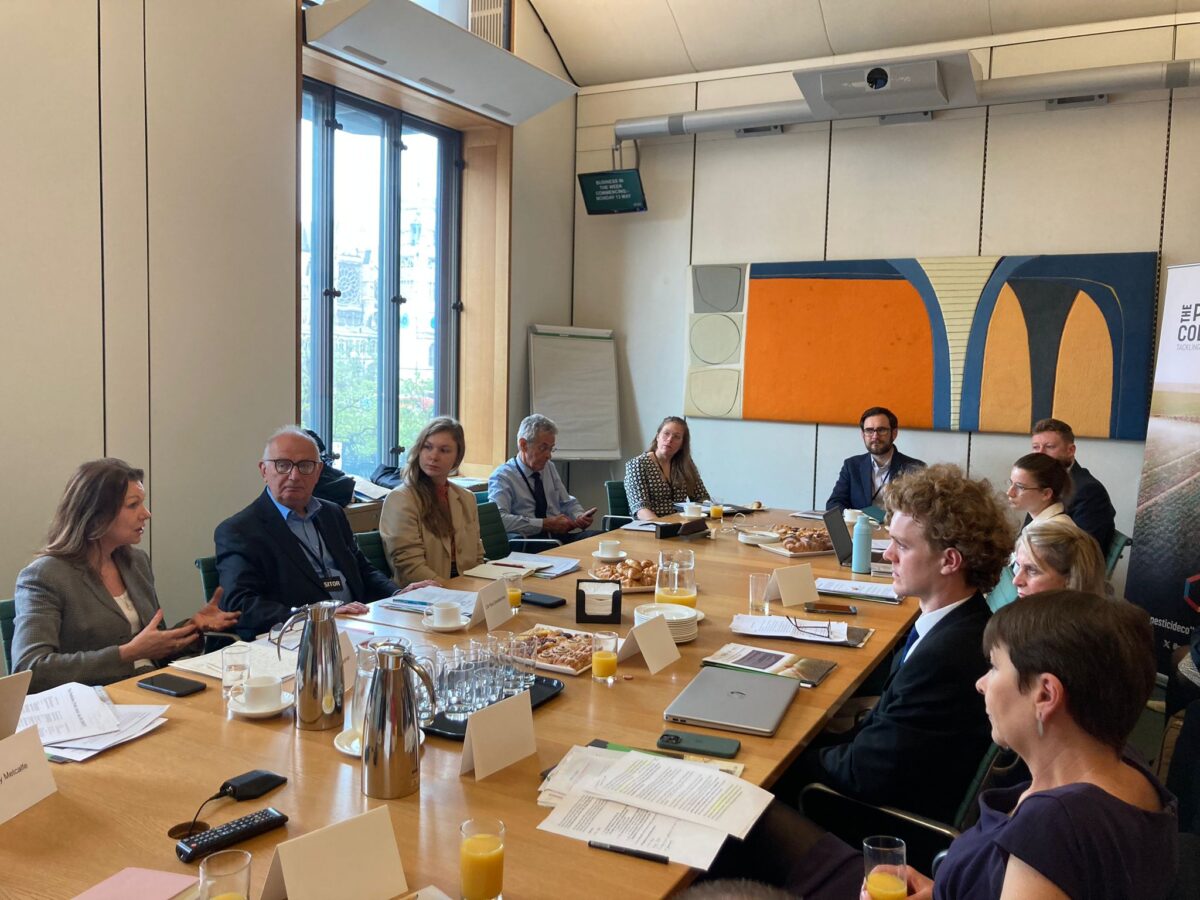
The Pesticides Bill hopes to ban the use of pesticides in towns and public spaces, phasing out ‘plant protection products’ – professional pesticides and herbicides – on ‘amenity’ land owned by public authorities. Over 100 local authorities have already voluntarily reduced or phased out pesticides, and France has already enacted a similar ban.
Wera Hobhouse MP and Caroline Lucas MP spoke next, discussing their support for the bill and how it impacts their constituencies. In Bath, glyphosate is already banned, while in Brighton, a pesticide ban has recently been overturned. Despite this setback, both MPs and PAN remain confident that banning toxic pesticides and herbicides in our public spaces is a positive step forward for both us and nature. Baroness Hayman of Ullock, a Labour peer, also discussed the importance of the environment and how we can positively move forward.
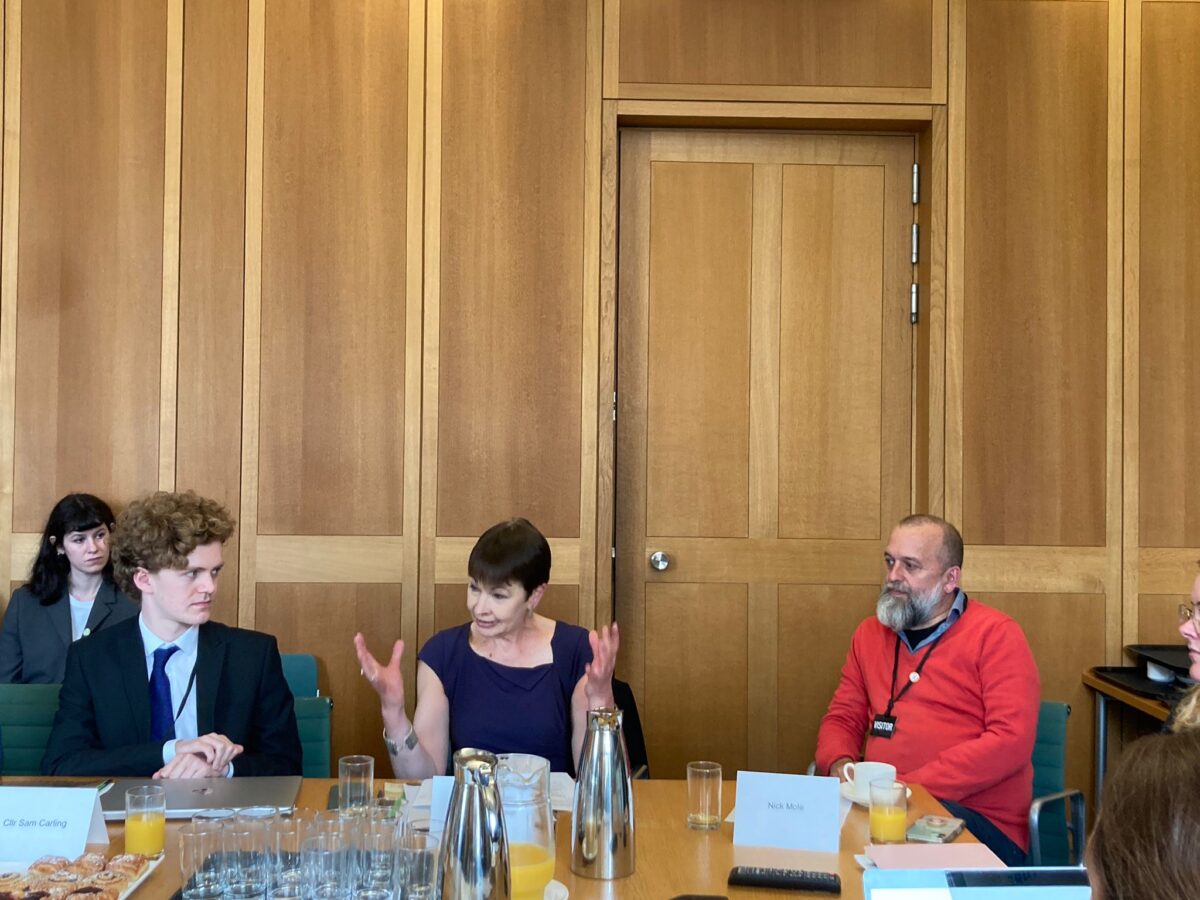
“In Westminster, ‘No Mow May’ is beaten in policy popularity only by the introduction of free school meals.”
Cllrs Sam Carling and Paul Dimoldenberg, from Cambridge City and Westminster Councils respectively, then offered their learnings from several years ‘on the ground’, trying to reduce pesticide use in their areas.
Community involvement is key to successful pesticide reduction. By creating a connection with local nature, residents can see the benefits of the change and be involved in future decision-making. Nature-friendly policy is so popular that in Westminster, ‘No Mow May’ is beaten in popularity only by the introduction of free school meals for all children.
After hearing about the introduction of pesticide bans around the country, the event closed with a talk from Lucy Metcalfe, an environmental lawyer from ClientEarth, a law nonprofit working to tackle the climate and nature crises.
Finally, the floor opened, and the discussion turned to the technicalities of the bill. Balance is also key – the proposed bill does not affect individuals and pesticides would remain legal to deal with ‘risks to public health, public safety or public infrastructure or to present a risk to the environment caused by the spread of invasive species or other harmful organisms’.
PAN UK and the other sponsors highlighted the importance of alternative technology to ensure pavements and parks remain clear and accessible to everyone, and that species such as Japanese knotweed or giant hogweed can’t take over.
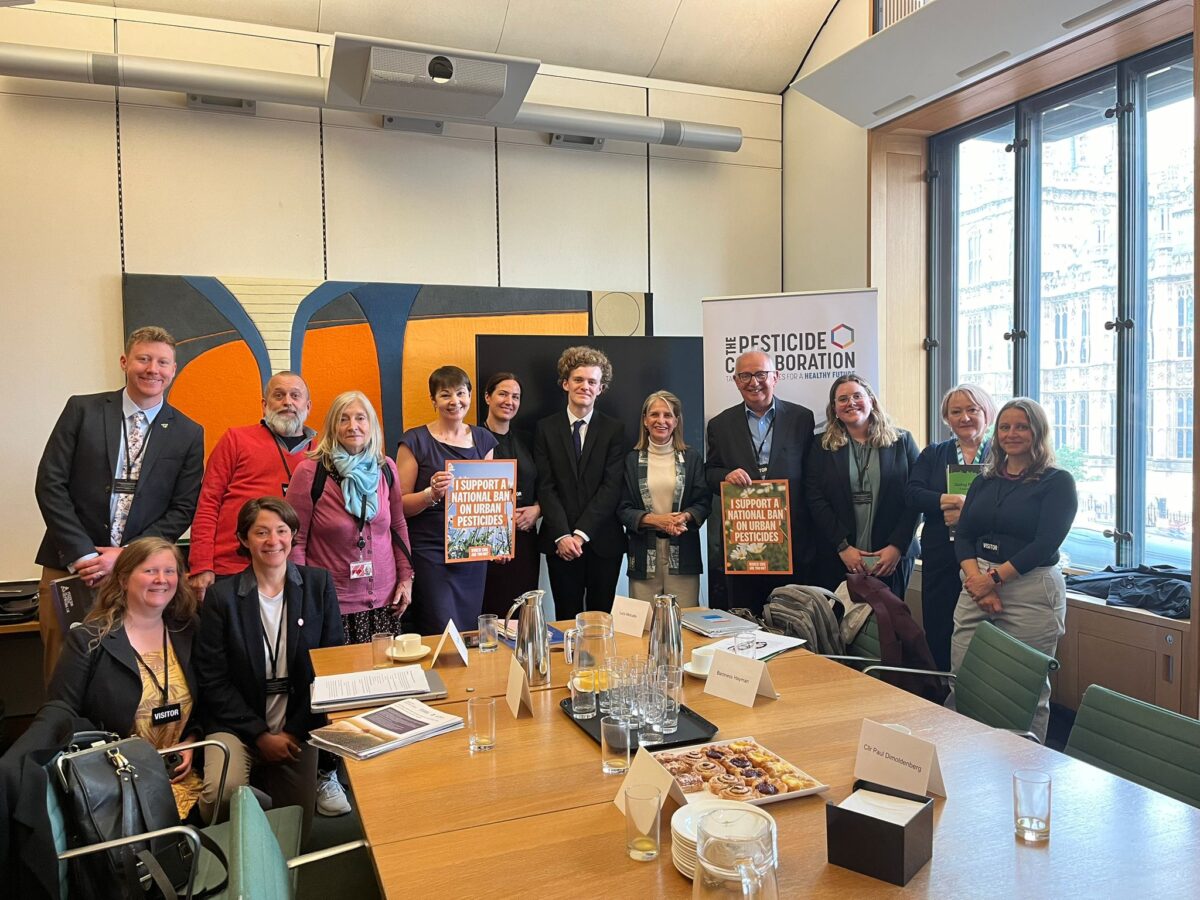
What happens next?
If you would like to get involved and support the campaign – brilliant! The best place to start is by contacting your local MP and council to ask them to phase out pesticides and show your support. You can also ask your MP to sign Caroline Lucas’ ‘Early Day Motion’ on pesticides to show their support – you can use PAN’s website to send a template letter easily just by providing a postcode. You can also help by campaigning for more nature in cities – watch this space with UKY4N!
Subscribe to our newsletter to ensure you never miss a UK Youth for Nature update, youth nature events throughout the UK, job and training opportunities, and lots more!
If you’re a young person aged 18-35 wanting to join a community of likeminded nature lovers who are fighting for the UK’s wildlife and wild spaces, click here!
