

On Saturday 9 September, we held an Urban Nature Festival in Liverpool to launch our new Urban Nature campaign. The day included talks, a panel, workshops, and walks, fostering a whole host of conversations on topics ranging from ecology to creativity and capitalism. These discussions have laid the foundation for further action through the Urban Nature campaign, so watch this space!
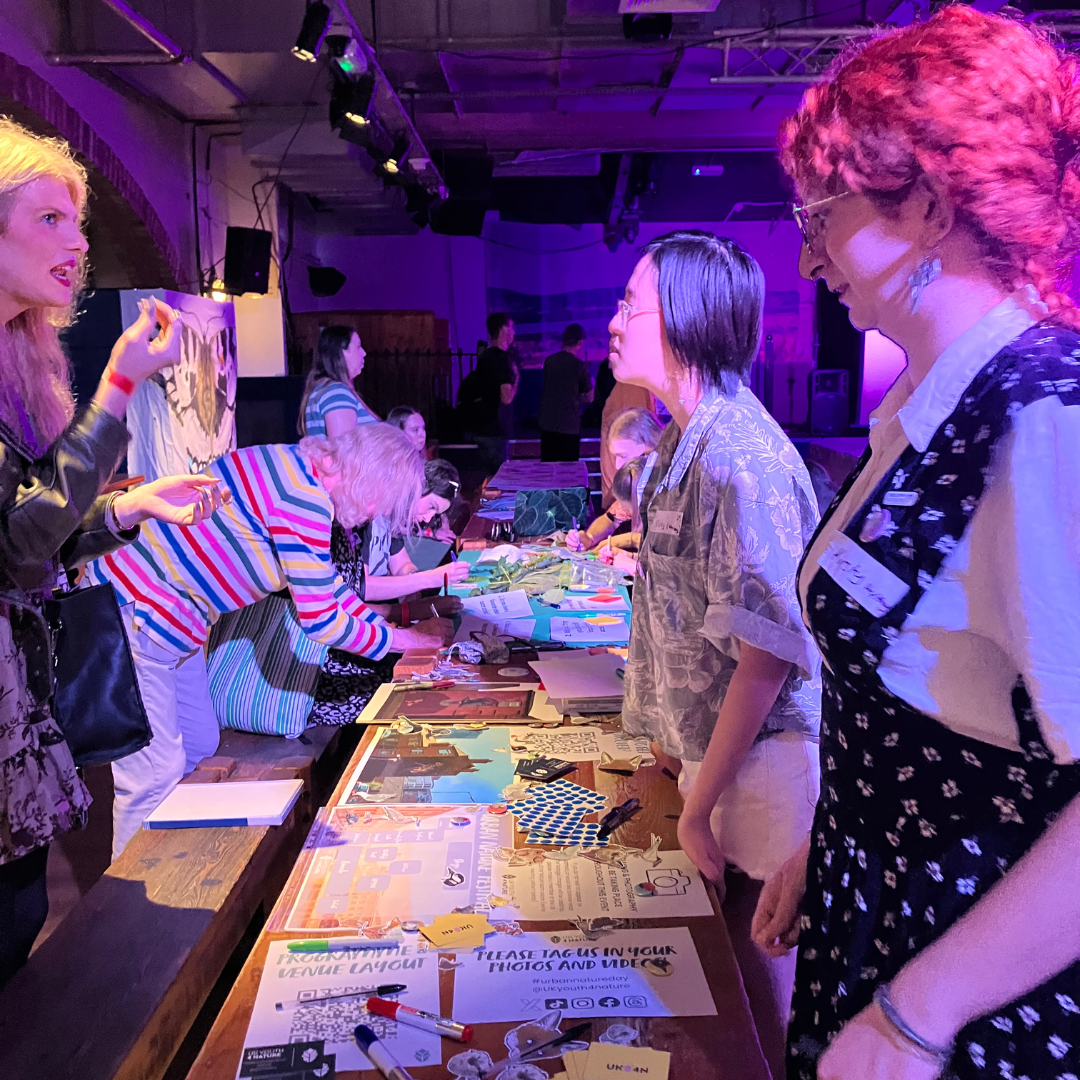
Here, Amelia and Elise will take you through some of their favourite parts of the day as relatively new members of the UKY4N organising team.
Amelia’s reflections
B4Biodiversity- Bee Walk
During the afternoon, I attended a walk of the local green spaces with B4Biodiversity. The venue was situated in the Liverpool One development, which is lucky to have a lovely green space built in. We explored bees as a central pollinator and learnt about the types of species, how they live and work as well as the importance. There are three main groups of bees; solitary bees, bumble bees and honey bees. I was shocked to learn that of the 270 species of bee in the UK, over 250 of these are solitary bees, showcasing just how many insects are out there pollinating aside from the well known bumble bee and honey bee species.

As well as understanding bee behaviour, I found it interesting to explore the design of the garden and green spaces of Liverpool one and how design decisions can have such positive nature impacts. We saw so many pollinators on the doorstep of the venue- right in central Liverpool! Furthermore, it was interesting to see the benefits extending not just to pollinators, and other species- but also to humans too. This green space acted as a respite from the harsh busy city and offered places to relax and socialise. During our short walk I noticed someone meditating within the calmness of the trees and several friends meeting and chatting. This showcased that the benefits of good urban design for nature not only benefits the bees, but also us humans too.
Radical Roots
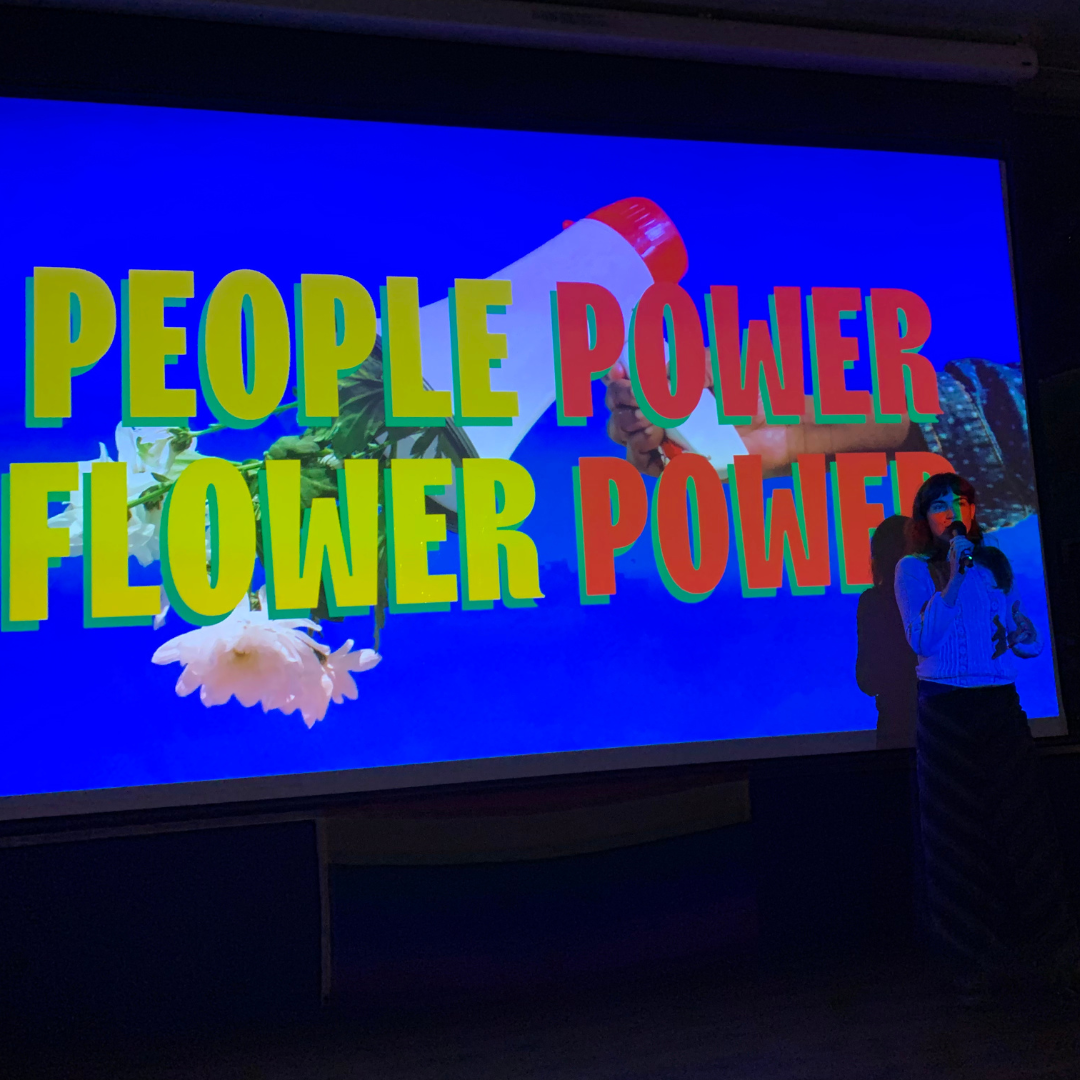
This ecosomatics and rewilding interactive workshop led by Kalpana Arias was transformative. We explored how you yourself are a part of nature and how to gain ecological consciousness. My favourite part occurred where we all sat with eyes closed and felt our feet connect to the ground and with each breath could feel our connection with the earth deepen as energy passed through your body and down into the ground before flowing back into yourself again.
It was really refreshing to feel so aware of yourself as we often live too deeply within our minds. The idea of living within your body really helped me to feel more connected with the rest of the world. Ultimately, the workshop helped to rewild myself and understand the body as an ecosystem which as a mindset can assist in imagining alternative urban futures for both people and planet.
Access to Nature Panel
For me, the access to nature panel was all about listening and absorbing.
The most prominent takeaway for me was a reframing about creating connections to nature. (City Girl in Nature) responded to a question relating to how to get people from marginalised and diverse communities to have a connection to nature. They completely reframed the issue for me and suggested that it is not because these communities don’t have a connection to nature, instead its:
- because their connection is not in the way others deem they should have a connection
- not currently priority due to other constraints where they do not have the privilege of time/money/safety to access nature and foster these connections
- have previously been excluded from these spaces
The biggest take home message from the panel was to meet people where they’re at, it is assisting people in a reasonable and respectable way to help them access nature on their own terms. Co-production is central to accessing nature, designing walks, groups and activities and to allow everyone to have a voice.
Overall, the event has reframed my understanding of nature, it is not something remote and rural, it is everywhere, including within ourselves.
Elise’s reflections
The Urban Nature Festival in Liverpool was the first event I have been involved with as part of UK Youth for Nature, having joined the team just a few weeks earlier. I reached out to UKY4N partly to counter my frustration at many people’s apparent lack of concern for the environmental threats we face, so it was incredibly encouraging to spend the day in a room full of nature enthusiasts who care about protecting our planet.
Access to Nature panel

Equally reassuring was the emphasis placed by UKY4N and speakers at the event on ensuring that we can all enjoy the natural world. Nowhere was this more evident than in the panel on Access to Nature, where Mahnoor Kamran, Kwesia AKA City Girl in Nature, Jasmine Isa Qureshi, Meg Watts and Jenny Griggs discussed some of the barriers faced by marginalised groups.
The panel particularly led me to reflect on the power of representation and the importance of simply asking people what they need to engage with nature, rather than imposing ‘solutions’ that are unwelcome or exclusionary.
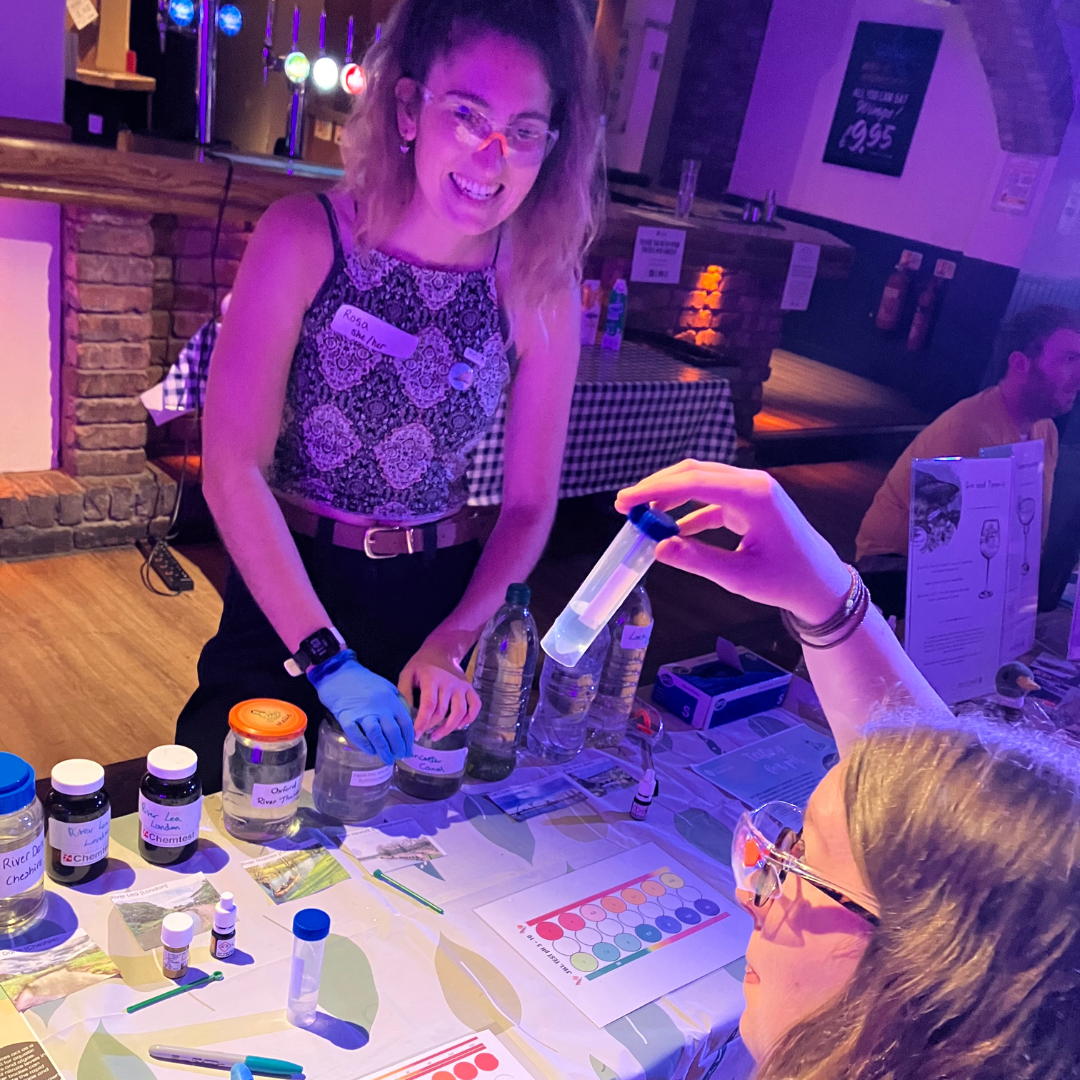
Although it can be depressing to think about the state of nature and inequitable access to green space in the UK, I learnt that there is also great joy to be found in connecting with other people who are passionate about making a difference. In the midst of our frustrations, we enjoyed sharing stickers (made by UKY4N’s very talented Kirsty), testing river samples, making seed bombs, and talking about how we can introduce nature into our own neighbourhoods.
As someone who hasn’t studied science for a decade, I was in awe of the knowledge shared by those at the event who have dedicated their education or careers to conserving nature. Nevertheless, the festival also proved to me that you don’t need to be an expert on nature to help protect it. I was inspired by the Creative Campaigning workshop led by our Co-Directors, Ellen and Roisin, which showed how the UKY4N team has enacted change not only thanks to their ecological expertise, but through their incredible creativity, courage and compassion. I am so excited to get more involved and can’t wait to see where the Urban Nature campaign goes next.

Read more about our urban nature campaign here, and follow us on Instagram, TikTok, Twitter and Facebook to keep up to date with what were doing!
Feeling inspired to join our team? Click here to find out how you can get involved.