Latest UK Nature News: Environmental Updates for the Week of 27th October

Welcome to our nature news round-up for the week ending Friday 27th of October.

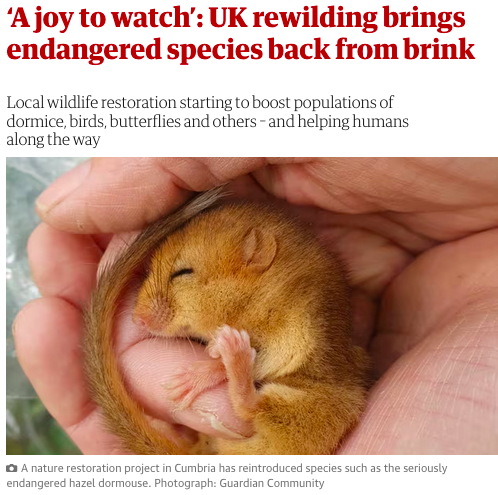
1. ‘A joy to watch’: UK rewilding brings endangered species back from brink

Vast expanses of rolling hilltops may be easy on the eye. But look a bit closer and many are in fact bleak landscapes – overgrazed and mostly devoid of diverse natural life. Shortsighted agricultural practices, habitat destruction and factory farming are among the causes of an alarming biodiversity crisis in Britain, where one in six species are in danger of local extinction.

Around the edges, however, local wildlife restoration projects are having an impact. Last year, 3.22% of the UK’s land was deemed to be well protected and managed, according to Wildlife Trusts, a slight increase on 2021, and councils are embracing rewilding. More and more community and private projects appear to be springing up too.
2. Badger cull: Belfast High Court judge quashes Northern Ireland plan – BBC Northern Ireland, 25th October

A high court judge has quashed a decision by the Department of Agriculture, Environment and Rural Affairs (Daera) for a badger cull.

A judicial review was brought by the NI Badger Group and Wild Justice.

The legal challenge was granted at the high court on the grounds that the department’s consultation was flawed. Up to £35,000 in legal fees is to be paid by the department to the groups involved.

In March 2022 then agriculture minister Edwin Poots announced a cull as part of a strategy to tackle Bovine Tuberculosis (bTB). The department’s decision was met with dismay from a number of wildlife charities and campaign groups who claimed that allowing farmers to use rifles to kill up to 4,000 badgers a year would be inhumane and ineffective.

The NI Badger Group and Wild Justice claimed that a proper consultation on the strategy of the cull was not carried out, and a judicial review was granted on this basis.

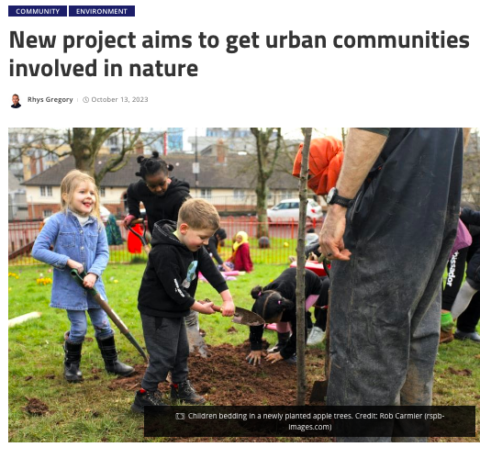
3. New project aims to get urban communities involved in nature – BBC Northern Ireland, 25th October

Newport’s Maindee area, Pwllheli in Gwynedd, and Neyland in Pembrokeshire are part of a new UK-wide initiative announced today, seeking to help local, mostly urban, communities stand up for nature in their neighbourhoods, tackling the global climate and nature crises at a local level.

Three-quarters of people in the UK are worried about the state of nature, yet we are in the bottom 10% of countries globally for protecting it. In March 2023, the People’s Plan for Nature set out recommendations to reverse the UK’s shocking declines in nature, including calls for greater investment in ways to help communities take action to protect and renew nature at a neighbourhood level. The Nature Neighbourhoods project is a direct response to those calls.
4. Pioneering river restoration project completed on military land in Wiltshire – gov.uk, 26th October

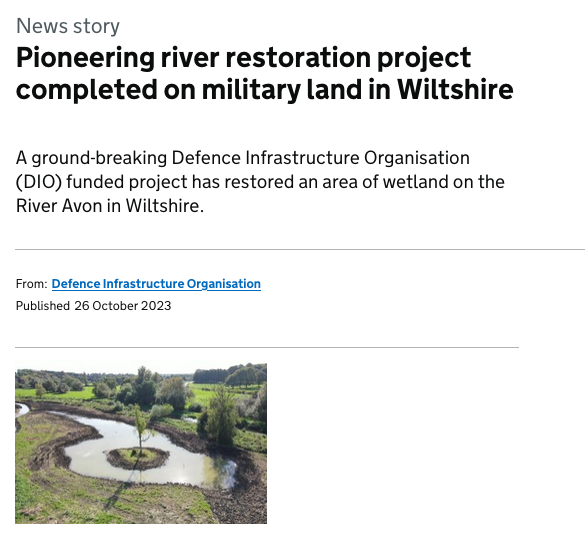
A ground-breaking Defence Infrastructure Organisation (DIO) funded project has restored an area of wetland on the River Avon in Wiltshire.

A ground-breaking Defence Infrastructure Organisation (DIO) funded project has restored an area of wetland on the River Avon in West Chisenbury, part of the Salisbury Plain Training Area (SPTA). The ‘first of its kind’, the project is enhancing the biodiversity of the local area by improving the watercourse and natural floodplain, and off-setting nutrient pollution.

The project has restored a 400-metre stretch of the river Avon by putting the river back into the centre of the floodplain along a new channel. Secondary channels have also been created to connect wetlands and ponds and establish wildlife habitats across the river’s floodplain. As well as boosting biodiversity, these new areas of wetland will help to capture nutrient-loaded sediment and carbon.

The restoration will see the new wetland habitats retain water all-year-round, meaning native wetland plants will flourish and wildlife will thrive.
5. Television presenters to host new wildlife show from Dundreggan Rewilding Centre

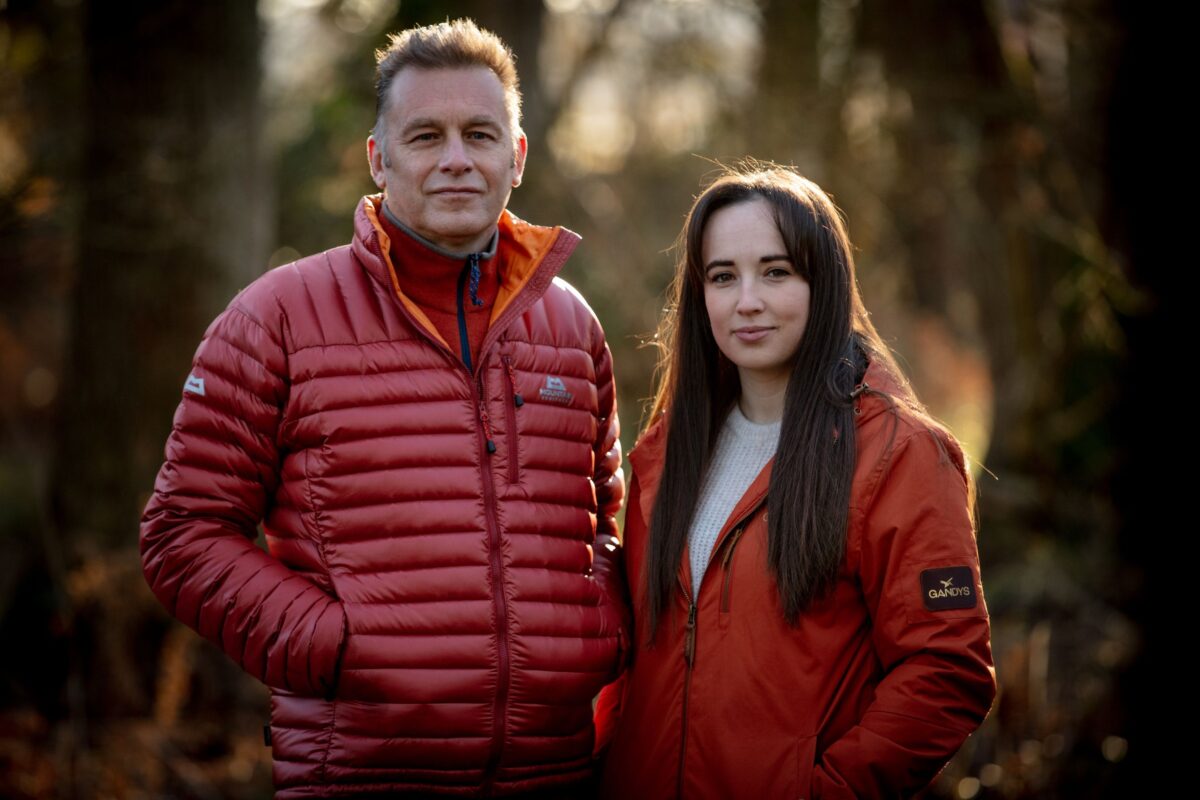
TELEVISION presenters Chris Packham and Megan McCubbin will be live presenting a week of anarchic and inspiring autumn wildlife programmes from Trees for Life’s Dundreggan Rewilding Centre near Loch Ness in the Highlands from today (23rd October – 26th October).

Chris, Megan and a team of talented young conservationists will be hosting the new 8 Out of 10 Bats nature series via YouTube from 7.30pm-8.30pm each evening.

The hour-long show will feature live segments, topical films by leading wildlife film-makers, hilarious props, and live wildlife cameras, with content from across the UK and plenty of audience participation.
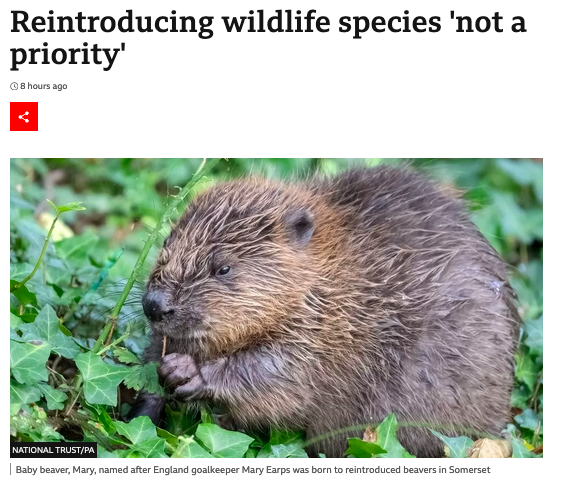
6. Reintroducing wildlife species ‘not a priority’, BBC – 27th October

Bringing species like beavers back to England is no longer a priority, the government said on Friday to criticism from wildlife groups.

In recent years animals and plants have been reintroduced by charities as part of efforts to restore the country’s depleted biodiversity.

A recent report shows that one in six UK species are at risk of extinction. The government said it was focused on habitat restoration and pollution.

In September more than 60 conservation organisations reported a significant decline in species due to expansions in farming and the effects of climate change. Farmers and wildlife charities have take action in recent years to reintroduce extinct or rare species like beavers, ladybird spiders and red kites into England.

Despite the government allowing this, the Environment, Food and Rural Affairs Committee – a group of cross-party MPs – concluded in July that there was an absence of long-term plans on how to manage this.

In response, the government has now said that the “reintroduction of species is not a priority”.

In its letter to the committee – which was made public on Friday – the government said it was focused on increasing biodiversity but through habitat restoration and reducing pressures from pollution. The government’s environment department has come under scrutiny for not doing more to prevent sewage dumping and other forms of pollution in England’s waterways.
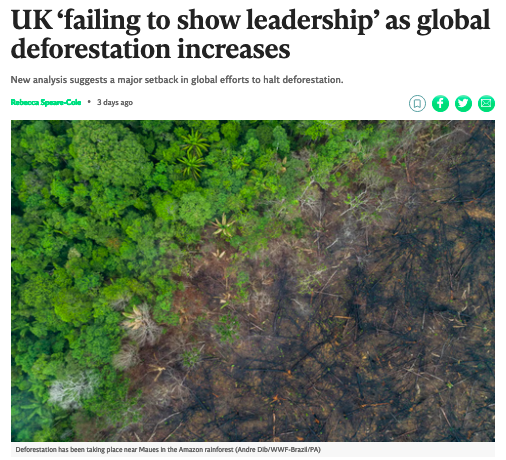
7. UK ‘failing to show leadership’ as global deforestation increases – Independent, 24th October

The UK is failing to show leadership to tackle deforestation as the rate of global forest loss accelerated last year, according to an international group of experts.

The 2023 Forest Declaration Assessment, which looks at the state of global deforestation each year, found that it accelerated in 2022 as businesses and governments failed to turn commitments into meaningful action.

The report revealed global forest loss last year was 6.6 million hectares while tropical forest loss was 4.1 million hectares – an area the size of Denmark.
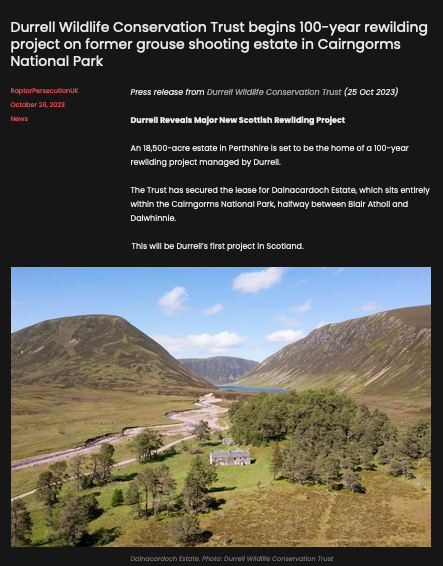
8. Durrell Wildlife Conservation Trust begins 100-year rewilding project on former grouse shooting estate in Cairngorms National Park – Raptor Persecution, 26th October

Durrell Reveals Major New Scottish Rewilding Project

An 18,500-acre estate in Perthshire is set to be the home of a 100-year rewilding project managed by Durrell.  

The Trust has secured the lease for Dalnacardoch Estate, which sits entirely within the Cairngorms National Park, halfway between Blair Atholl and Dalwhinnie.  

 This will be Durrell’s first project in Scotland. 

The team has a long-term vision to revive the estate by applying its proven techniques to restoring habitats and ecological processes, as well as recovering iconic missing species such as the capercaillie, which is currently facing extinction in Scotland.   

Durrell’s scientific approach combines hands-on species management with habitat restoration while working alongside local communities and training conservationists.   
Thanks for reading our news round-up! If you enjoyed it and want to amplify these stories, why not give this blog a share on your social media, and help us celebrate and commiserate the good, the bad and the ugly from this week! See you next week!

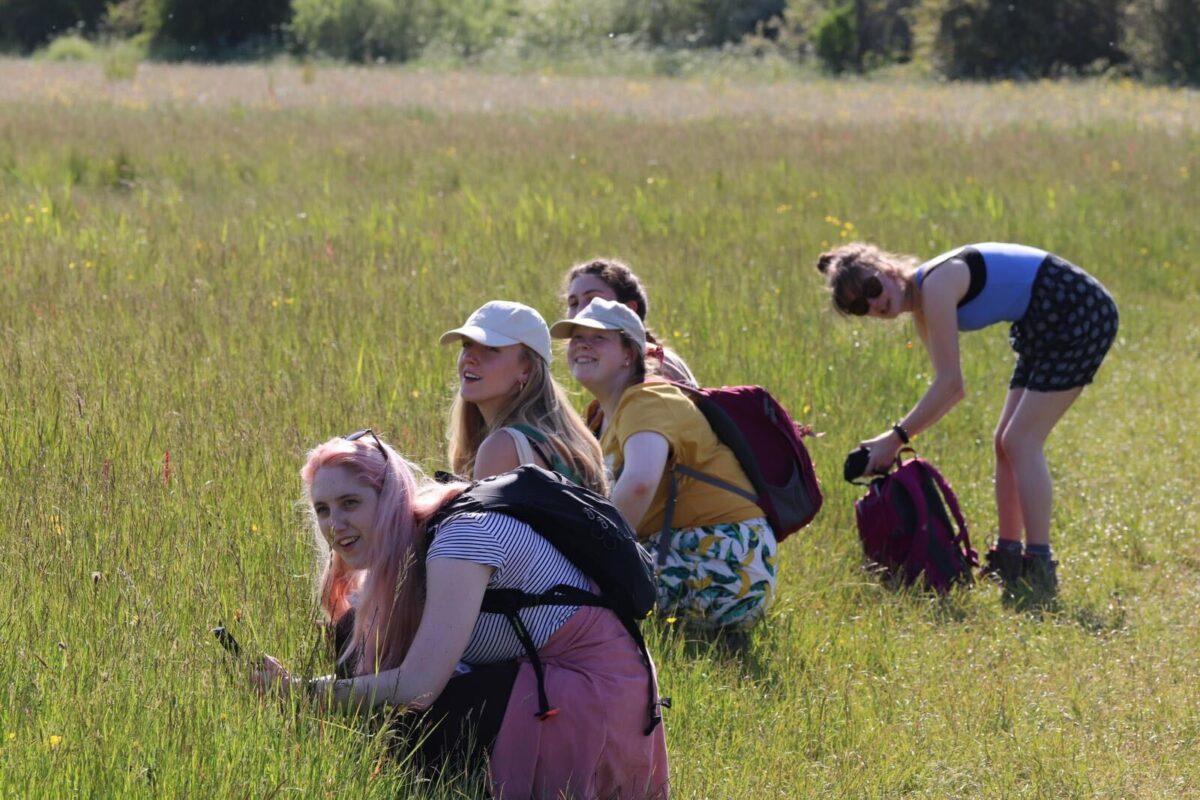
Community member spotlight – Hannah Branwood

Who are you?

I am a pink-haired, fun aunt (self-branded) and natural capital researcher at Liverpool John Moores University. I love learning but will fail to recall anything that I read 30 seconds ago, I very much like to be organised but my home, brain, and the stack of unused planners in my desk provide evidence on the contrary, and I adore life yet most days of my life I’ve struggled to get myself out of bed, never mind the house. Last year, to my relief, I found out that the above, and many other traits that make me a walking contradiction, were due to (previously undiagnosed) Attention Deficit Hyperactivity Disorder (ADHD). The relief came not from gaining a label but instead from being able to somewhat let go of many of the labels that society had drilled into me, and consequently that I had been punishing myself for, for 27 years. Lazy, chaotic, overemotional… the list goes on.

ADHD awareness month 

This ADHD awareness month, UK Youth for Nature have given me the chance to write publicly about this aspect of my brain for the first time. I have encouraged openness around mental health for a number of years after various anxiety and depressive disorder diagnoses (common with untreated ADHD). Yet, despite feeling like I now understand my difficulties more than ever, this condition comes with a new layer of stigma that has made me unsure how, or even if, to speak on it.

Why are you speaking out now?

Although ADHD does not define me, it does impact how I show up in every aspect of my life including my work. It is a ‘disorder’ that often plagues those it affects with shame and low self-esteem for not meeting expectations set by oneself and others. Denying it is not an option and neither is the ever-useful advice to “just try harder”, particularly if, like me, you are already forfeiting nights of sleep in an attempt to keep up with peers, setting alarms just so you remember to eat, and spending more time than you’d care to admit researching tools and techniques that may finally help you to function ‘normally’. So I can continue to exert great effort trying to erase all evidence of this part of my life (a tactic that has so far only led to imposter syndrome and exhaustion) or fully embrace my experiences by sharing them – maybe validating those that struggle too and hopefully educating those who don’t. I am incredibly fortunate to have a supportive employer, partner, family and network, allowing me to speak out where others may be unable.

Moving forward with ADHD

The theme of this awareness month is ‘Moving Forward with ADHD’. Until recently, I would tell myself that life could really begin once I had found that one solution that would ‘fix’ me. That somehow, at some point in the future, my executive dysfunction would disappear and only then I would be adequate. These are highly unhelpful and destructive attitudes, a symptom of the ableist beliefs embedded in society. Diagnosis has been the very first step towards self-acceptance and has given me the confidence to start showing up as I am however imperfectly that may be. In other words, I am finally starting to move forward.

A love letter to UK Youth for Nature

UKY4N has been an incredible community to be part of whilst coming to terms with my diagnosis. My role here has taken me to Westminster, seen me co-organise an Urban Nature Festival in my home city and allowed me to attend events with people I only ever thought I’d see on TV – all welcome distractions and brilliant experiences for my novelty seeking brain! It has helped to kickstart my career, something that can often be difficult for ADHDers and introduced me to a whole host of interesting, inspirational individuals.

ADHD can make everyday life hard to navigate. The stats are often bleak and there are many days where I would do anything to escape it. That being said, the same brain that makes me distractable, impulsive and chronically overwhelmed also makes me curious, passionate and highly empathetic. Ultimately, this has led me to seek out a group of like-minded people. A group that works long hours, mostly without pay, to campaign for the health of our planet and communities is definitely not short of empathy. These individuals are too bearing a burden that is not their fault, but their responsibility to overcome, this time in the form of the nature crisis. I am grateful for each and every person I have had the chance to work with at UKY4N, we have bonded over a whole load of nature nerdiness and over the shared frustration at a society that never seems to have its priorities straight.

Finally, as an organisation that specialises in creative campaigning the team automatically has an appreciation of neurodiverse brains and the “outside-the-box” thinking neurodivergent team members can bring to the table. ADHDers can be disruptors in the most positive sense of the word, we deviate from the status quo and can often find new ways of doing things. Similarly, UK Youth for Nature is known for its distinctive campaigns and amplifying voices that have previously gone unheard. Just this year our Chemical Cocktail Event for parliamentarians impressed attendees for being so innovative, unlike anything they had experienced before.

UKY4N stand for intersectional environmentalism and are continually refining their campaigns to reflect this. The team are changing the game in the nature world and for that I am glad to have been a small part of it for the last three years.

Resources

It is important to note that ADHD can vary greatly both across and within subtypes. Whilst awareness around the condition is growing, much still remains unknown. Misconceptions of ADHD have been around for as long as the condition itself, yet the rise in accessible information on this topic has naturally come with a increased prevalence of misinformation, much of which can be extremely damaging to the community. I have written this blog to explore my own thoughts and experiences of the topic and would emphasise that the above reflects my experience alone. We have provided some links to resources below if you would like to learn more about ADHD or how to manage it.

With thanks to Raman, Roisin and Hannah for giving me the courage and support to finally put this out there!

Latest UK Nature News: Environmental Updates for the Week of 20th October

Welcome to our nature news round-up for the week ending Friday 20th of October.

1. Welsh Water admits spilling untreated sewage near dolphin habitat for decade

Welsh Water has admitted to spilling untreated sewage near a rare dolphin habitat for at least a decade.

A BBC investigation found the water company had been illegally discharging untreated wastewater at dozens of sewage plants, often for years at a time.

The organisation has promised to tackle the problems after viewing the analysis, which it did not dispute.

Water companies across England and Wales frequently discharge sewage into rivers and seas. In England, sewage was spilled via storm overflows more than 300,000 times last year.

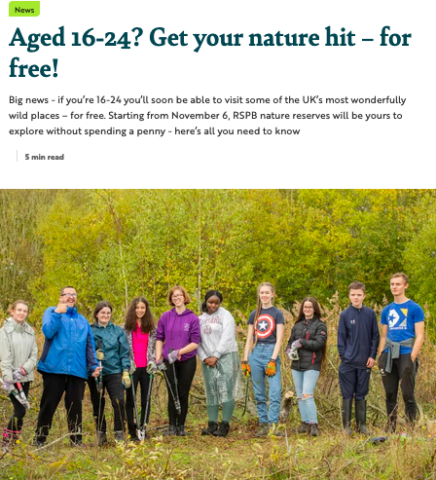
2. Aged 16-24? Get your nature hit – for free!

Big news – if you’re 16-24 you’ll soon be able to visit some of the UK’s most wonderfully wild places – for free. Starting from November 6, RSPB nature reserves will be yours to explore without spending a penny – here’s all you need to know.

Nature is for everyone.  It’s our ambition to encourage more and more people of all ages and backgrounds to engage with wildlife and wild places and make our natural world as accessible as possible.  

At the moment we know we need to do more to engage and connect with 16-24 year olds. Young people are less likely to visit our nature reserves than other age groups and we know that cost is one of the main barriers.  By removing entry charges, we hope more young people will come to explore these wonderfully wild places and connect with the great outdoors in new ways.

From November 6, all you need to do is show a valid photo ID with your age on it when you arrive at the nature reserve. This could be a driving license, a proof of age card or your passport.

3. New project aims to get urban communities involved in nature

Newport’s Maindee area, Pwllheli in Gwynedd, and Neyland in Pembrokeshire are part of a new UK-wide initiative announced today, seeking to help local, mostly urban, communities stand up for nature in their neighbourhoods, tackling the global climate and nature crises at a local level.

Three-quarters of people in the UK are worried about the state of nature, yet we are in the bottom 10% of countries globally for protecting it. In March 2023, the People’s Plan for Nature set out recommendations to reverse the UK’s shocking declines in nature, including calls for greater investment in ways to help communities take action to protect and renew nature at a neighbourhood level. The Nature Neighbourhoods project is a direct response to those calls.

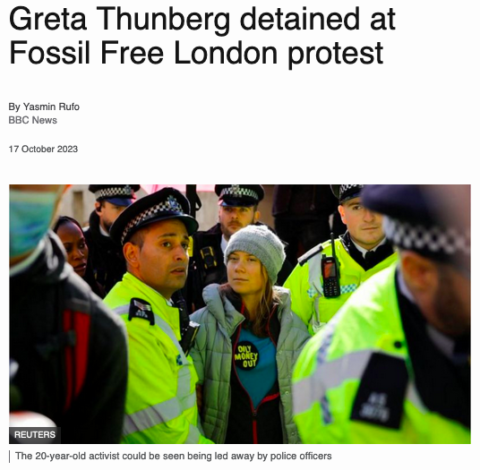
4. Greta Thunberg detained at Fossil Free London protest

Greta Thunberg has been detained during a Fossil Free London protest.

The Swedish climate campaigner had joined other activists outside the InterContinental Hotel on Park Lane where oil executives were meeting.

The protesters attempted to block access to the hotel by occupying the area by the entrance.

Fossil Free London posted on X, formerly known as Twitter: “Breaking – Greta Thunberg has just been arrested.”

Images on social media showed the 20-year-old activist being led away by police officers and placed in the back of a marked van.

In a statement, the Met Police said it had imposed conditions on the activists under Section 14 of the Public Order Act, to “prevent serious disruption to the community, hotel and guests”, and had asked them to move from the road and on to the pavement.

5. Number of nesting seabirds on Lundy island at nine-decade high

Tiny island in Bristol Channel has 25,000 Manx shearwaters – 95% of England’s breeding population – and 1,335 puffins.

There are more seabirds nesting on the island of Lundy than at any time since the 1930s, conservationists have revealed.

The tiny island in the Bristol Channel, a globally famed location for Britain’s seabirds, is now home to 25,000 Manx shearwaters – 95% of England’s breeding population – as well as 1,335 puffins and more than 150 pairs of storm petrels, a species that only arrived on the island in 2014.

Despite the recent threat of avian flu, which has decimated wild bird populations in some of the world’s most sensitive locations, and the problematic decline in wild sources of food such as sand eels, the total number of seabirds on Lundy stood at 40,000 this summer.

This is a massive turnaround after just 7,351 remained in 2000. Puffins were close to extinction, with just 13 counted on the windswept 450-hectare island in 2001.

6. UK’s biggest nature charities publish shared Nature Markets Principles to help combat corporate greenwashing

The Wildlife Trusts, RSPB, Woodland Trust and National Trust have today published a set of principles for ensuring ‘nature markets’ truly deliver for nature, climate and people. 

With an estimated £6 billion annual funding gap for UK nature recovery across land and sea, the UK Government has set an ambitious target to grow annual private investment in nature by at least £500 million by 2027, rising to over £1 billion by 2030. It published its Nature Markets Framework in May and is working with the British Standards Institute to develop robust standards for green financing.

7. Hull set to allow ‘right to grow’ on unused council land in UK first

City councillors pass motion to let community groups, charities and neighbours cultivate fruit and veg

Hull is set to become the first city in Britain to give people a “right to grow” on unused council land.

Community groups, charities and even small groups of neighbours would be able to cultivate fruit and vegetables on suitable council land in what campaigners say will provide healthy local food, boost mental health and revive neglected spaces.

Hull councillors unanimously passed the “right to grow” motion that means the council will produce a map of suitable land it owns and help those who want to grow food on it overcome practical obstacles such as insurance or provision of water for the plants.

8. Storm Babet: ‘It’s the price of climate change’, says expert

A CLIMATE change expert has said Scotland can likely expect even more intense storms than Babet due to global warming.

Storm Babet has wreaked havoc on the north east of Scotland. Parts of Angus are accessible only by boat after heavy flooding on Thursday night, including the entire village of Brechin – with First Minister Humza Yousaf saying he “cannot stress how dangerous” conditions are for residents.

Angus Council said the flooding was a “very serious emergency” and “completely unprecedented”.

Heavy rain and strong winds are also causing major transport disruption across Scotland and northern England on Friday.

Simon Tett, a professor at the University of Edinburgh, told The National that he’s sorry for those impacted by this extreme weather.

He warned, however, that not only is the likelihood of extreme weather events like Storm Babet higher, they already have and will also likely become more intense.

Thanks for reading our news round-up! If you enjoyed it and want to amplify these stories, why not give this blog a share on your social media, and help us celebrate and commiserate the good, the bad and the ugly from this week! See you next week!

Latest UK Nature News: Environmental Updates for the Week of October 13th

Welcome to our nature news round-up for the week ending Friday 13th of October.

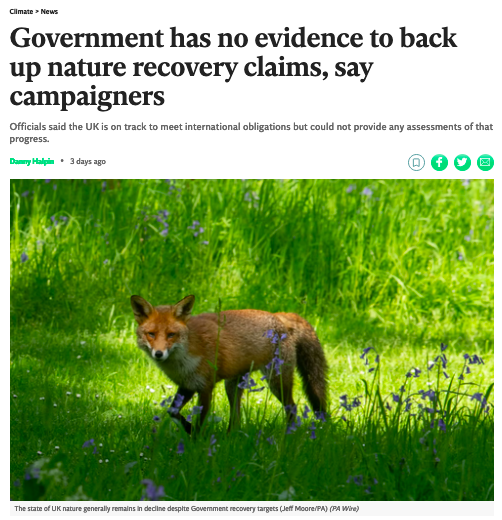
1. ‘Government has no evidence to back up nature recovery claims, say campaigners’ – The Independent, 10th October

The Government has no evidence to back up a recent claim it made saying the UK is on track to meet its internationally-agreed targets on improving nature, campaigners have said.

After the Wildlife and Countryside Link (WCL) found there to be just over 3% of land and up to 8% of sea protected for nature – when the target is 30% – the campaign group accused the Government of failing to make headway.

2. ‘Formidable coalition’ of policymakers and NGOs rap Rishi Sunak for biodiversity rollbacks – edie, 9th October

The accusation forms part of an open letter published in The Independent on Friday (6 October) as part of the Nature 2030 campaign, which implores all major political parties to set out meaningful and credible plans to halt and reverse nature loss in the UK.

It was revealed recently that one in six of the UK’s plant and animal species are now at risk of extinction. Even for those species not at risk, there has been an average decline in abundance of 19% since 1970. Worryingly, that decline rises to 54% for flowering plants and 43% for birds.

These are all findings from the State of Nature Report. This includes data from 60 organisations including the National Trust and Natural History Museum.

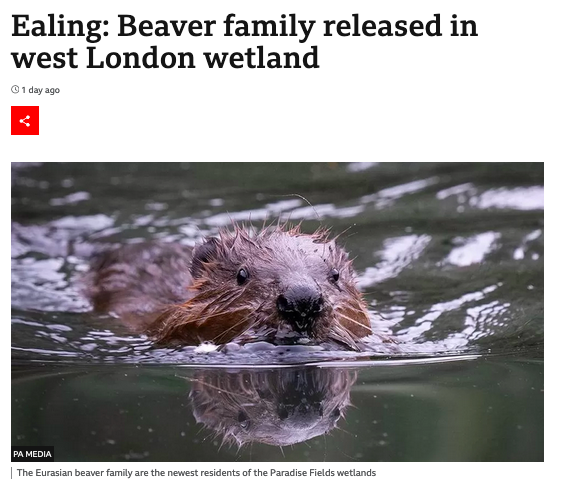
3. Ealing: Beaver family released in west London wetland – BBC News, 12th October

Beavers have been reintroduced to west London for the first time in about 400 years in a bid to improve biodiversity and help mitigate the impact of climate change.

The family of five Eurasian beavers were released at Paradise Fields, an area of wetlands in Ealing.

They were relocated from a wild beaver population in Scotland by a coalition of wildlife groups. It is hoped they will improve the local habitat and reduce flood risks. The project is being paid for as part of the mayor’s Rewild London Fund.

Elliot Newton, co-founder of Citizen Zoo, told BBC London: “Beavers became extinct in the UK 400 years ago so this is part of bringing them back into the landscape where they deserve to be.”

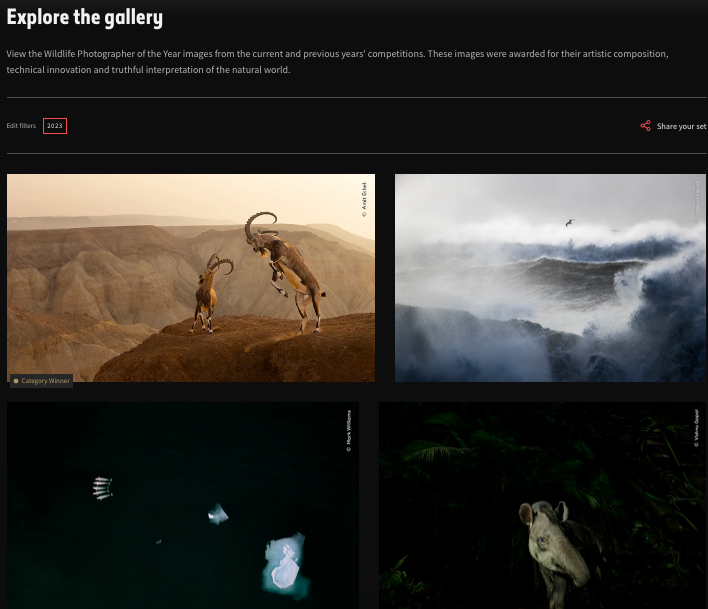
4. Wildlife Photographer of the Year Award winners and highly commended images announced – Natural History Museum, 11th October

Selected from 49,957 entries from 95 countries, the winners of the Natural History Museum’s prestigious wildlife photographer of the year competition were revealed at an awards ceremony in South Kensington on Tuesday. The flagship wildlife photographer of the year exhibition featuring the awarded images will open on Friday 13 October 2023 at the Natural History Museum in London [from The Guardian online].

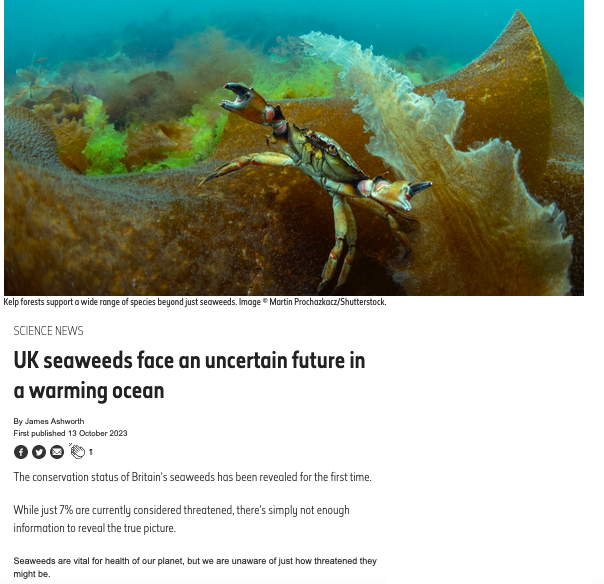
5. UK seaweeds face an uncertain future in a warming ocean – Natural History Museum, 13th October

The conservation status of Britain’s seaweeds has been revealed for the first time.

While just 7% are currently considered threatened, there’s simply not enough information to reveal the true picture.

Seaweeds are vital for health of our planet, but we are unaware of just how threatened they might be.

While we know that climate change, invasive species and pollution are having an impact on the marine macroalgae, the difficulty of studying them due to their wide range of lifestyles and shapes makes it hard to know the exact impacts on individual species.

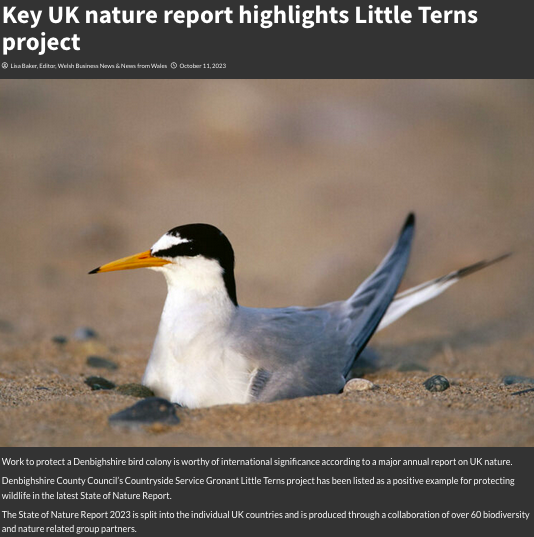
6. Key UK nature report highlights Little Terns project – News from Wales, 11th October

Work to protect a Denbighshire bird colony is worthy of international significance according to a major annual report on UK nature.

Denbighshire County Council’s Countryside Service Gronant Little Terns project has been listed as a positive example for protecting wildlife in the latest State of Nature Report.

The State of Nature Report 2023 is split into the individual UK countries and is produced through a collaboration of over 60 biodiversity and nature related group partners.

Species studied by the collaboration have on average declined by 19 percent since monitoring started in 1970. The declines are much higher for some groups including birds which stands at a 43 percent loss.

However, the State of Nature Report highlights the Little Terns Project as a positive piece of conservation work of ‘international significance’.

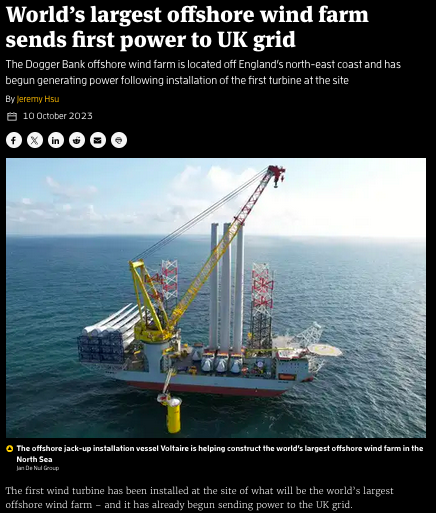
7. World’s largest offshore wind farm sends first power to UK grid – New Scientist, 10th October

The first wind turbine has been installed at the site of what will be the world’s largest offshore wind farm – and it has already begun sending power to the UK grid.

The plan is to install a total of 277 wind turbines at the Dogger Bank Wind Farm, located about 130 kilometres off the north-east coast of England. Once fully operational in 2026, the wind farm is expected to power more than six million UK homes.

The first turbine at the site is a GE Haliade-X turbine with spinning blade tips reaching 260 metres above sea level – about the same height as New York City’s Rockefeller Center. The power it generates flows through an array of high-voltage direct current cables that connects to the coast of north-eastern England.

8. Giant living artwork unfurled at Westminster as waiting lists for allotments double in a decade – Greenpeace UK, 11th October

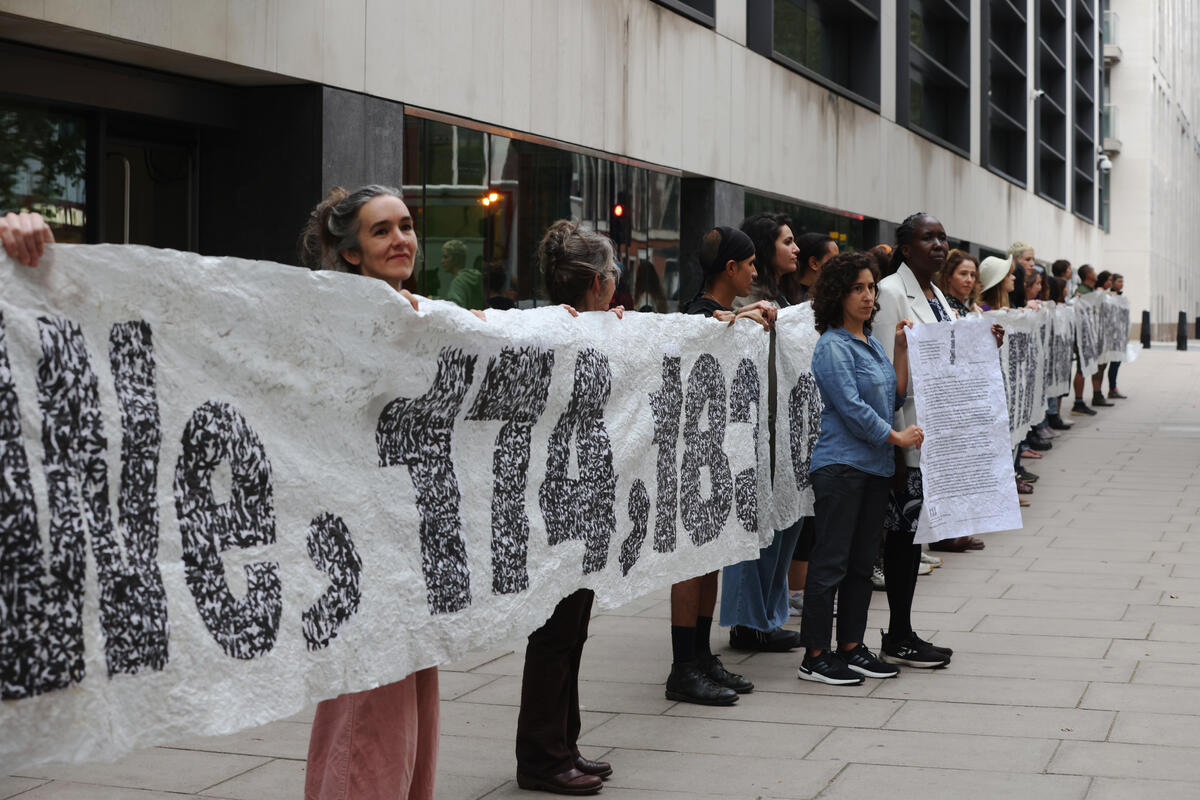
A 30-metre-long living artwork made of seed paper was unfurled and displayed at Westminster this morning by artists and allotmenteers. They are urging the government to enable people to exercise their rights to allotments as part of the solution to food insecurity, the cost of living crisis and the climate and nature emergency. 

The artwork, which was taken to the Department of Levelling Up, Housing and Communities, is embedded with clusters of seeds as well as ash from burned Amazon forests, spelling out the message “We the 174,183 demand allotments”. It is a visual representation of new data collected by Greenpeace UK and the artists via Freedom of Information requests to all councils in England, Wales and Scotland. 

The data shows there are now at least 174,183 applications sitting on local authority allotment waiting lists across Great Britain – with England figures almost double what they were in 2011. Waiting times average at 3 years and the longest average waiting time recorded was 15 years. The local authority with the longest waiting list is Bristol at 7,630 applications, followed by Sunderland, Portsmouth, Southampton, Edinburgh and Manchester.

Thanks for reading our news round-up! If you enjoyed it and want to amplify these stories, why not give this blog a share on your social media, and help us celebrate and commiserate the good, the bad and the ugly from this week! See you next week!

The 2023 UK State of Nature Report

Written by Nell Miles

What is it?

The UK State of Nature Report is the most comprehensive report on the UK’s current biodiversity, based on the latest and data from biological monitoring and recording schemes across the country. The 2023 report is the fourth to be published since the State of Nature Partnership was founded in 2013.

What does it say?

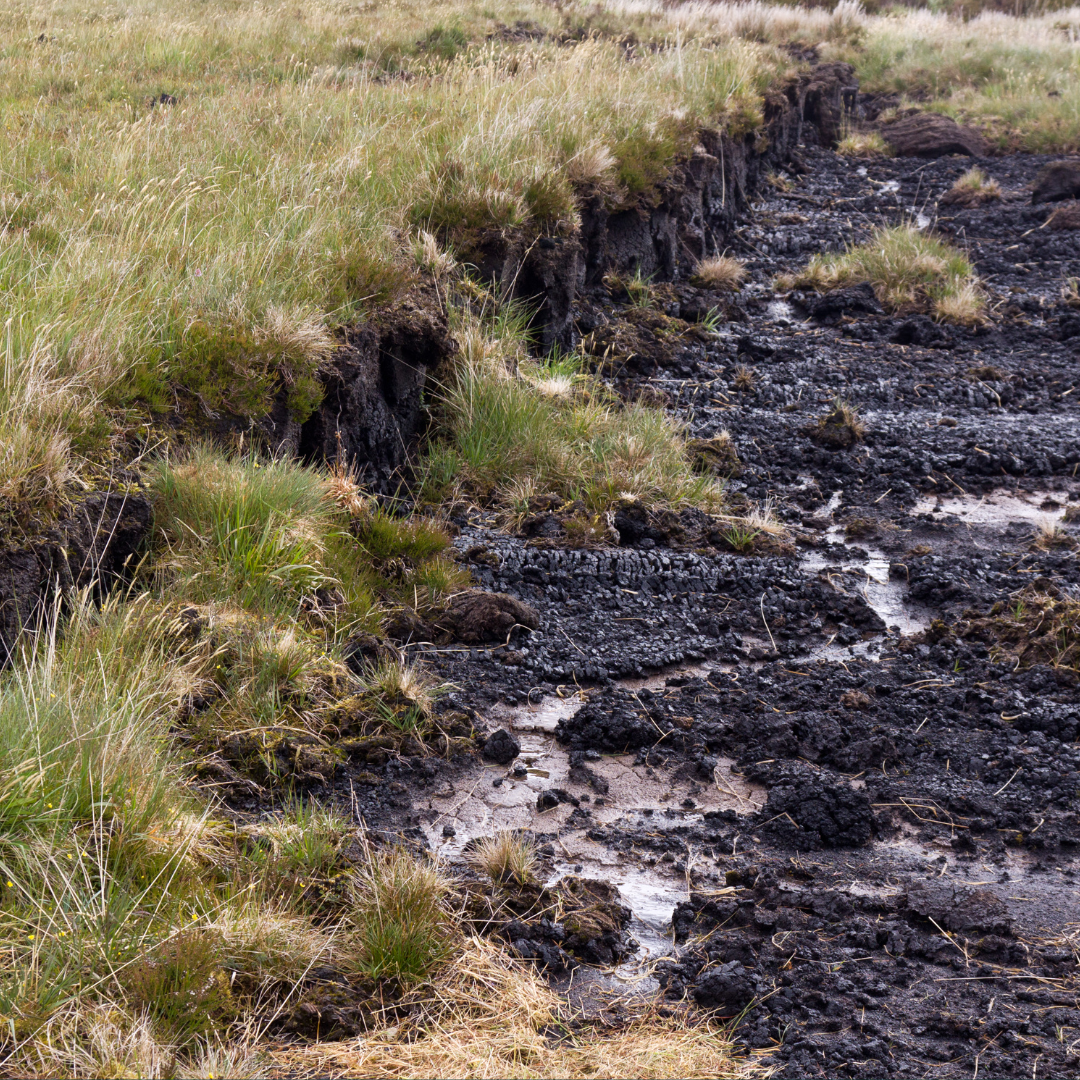
The report is 213 pages long and covers the current state of nature in the UK, followed by information on current conservation responses and what the Government could do better to more adequately protect nature. The ‘key findings’ section features some rather dire figures – the abundance of 753 terrestrial and freshwater species has dropped 19% on average across the country, 58% UK priority species have shown a decline, and only a small percentage of our natural habitats (14% of priority habitats, 7% of woodland, and 25% of peatlands) have been assessed to be in good condition. Public sector funding for biodiversity conservation has also decreased 24% over the last five years.

Only 25% of the UK’s peatlands have been assessed as being in ‘good condition’

Current conservation responses are also clearly inadequate: only 11% of UK land is in protected areas, 44% of woodland is certified as sustainably managed, and only a fifth of farmland is in agri-environment schemes – only a small part of this is considered nature-friendly farming. The picture is similar for marine ecosystems: large areas of the UK seafloor were reported to fail to meet Good Environmental Status owing to habitat disturbance from fishing, and half of marine fish stocks are unsustainably harvested.

Is there any good news?

While the report is admittedly largely negative, there are some key wins to be celebrated. A trial of nature-friendly farming on the RSPB’s Hope Farm featured diversified crop rotation and conversion of 10% its formerly cropped land to support nature, and suffered only a small drop in food energy production (90.4% previous levels) whilst breeding bird populations increased 177% and greenhouse gas emissions dropped by 9.4%. There is clear evidence that some species conservation projects have worked, and reduced sulphur dioxide levels owing to the EU National Emissions Ceiling Directive have contributed to population recoveries of several bryophyte species (mosses, liverworts and hornworts).

Reductions in sulphur dioxide emissions have contributed to bryophyte recovery in the UK

It’s also important to remember that the fact we can have this data is a positive too. Only once we know about the problem can we do something about it, so the wealth of data on which to assess the state of UK nature is an invaluable resource. It has also been collated as a result of thousands of incredible volunteers whose work has contributed to the findings – an example of how brilliant collective action can be.

What are the report’s recommendations?

The State of Nature report is very clear about what is needed to halt and reverse biodiversity loss: the Government must not only increase conservation and restoration efforts, but also tackle the drivers of biodiversity loss, especially in relation to our food system. We need ambitious legislation backed by meaningful action and investment to restore nature.

What can I do?

Reports like this, at a time when the UK has already been in the news for a sleuth of environmental harms and issues, can be extremely disheartening. But it’s important to remember that we can make change. We need rapid systemic change if we are to reverse the loss of nature and mitigate global warming, but we are not powerless in this fight. Young people have power in our votes, our consumption, in the time we can spend volunteering or spreading the word. If you are feeling hopeless and want help in finding how you can make a difference, get in touch.