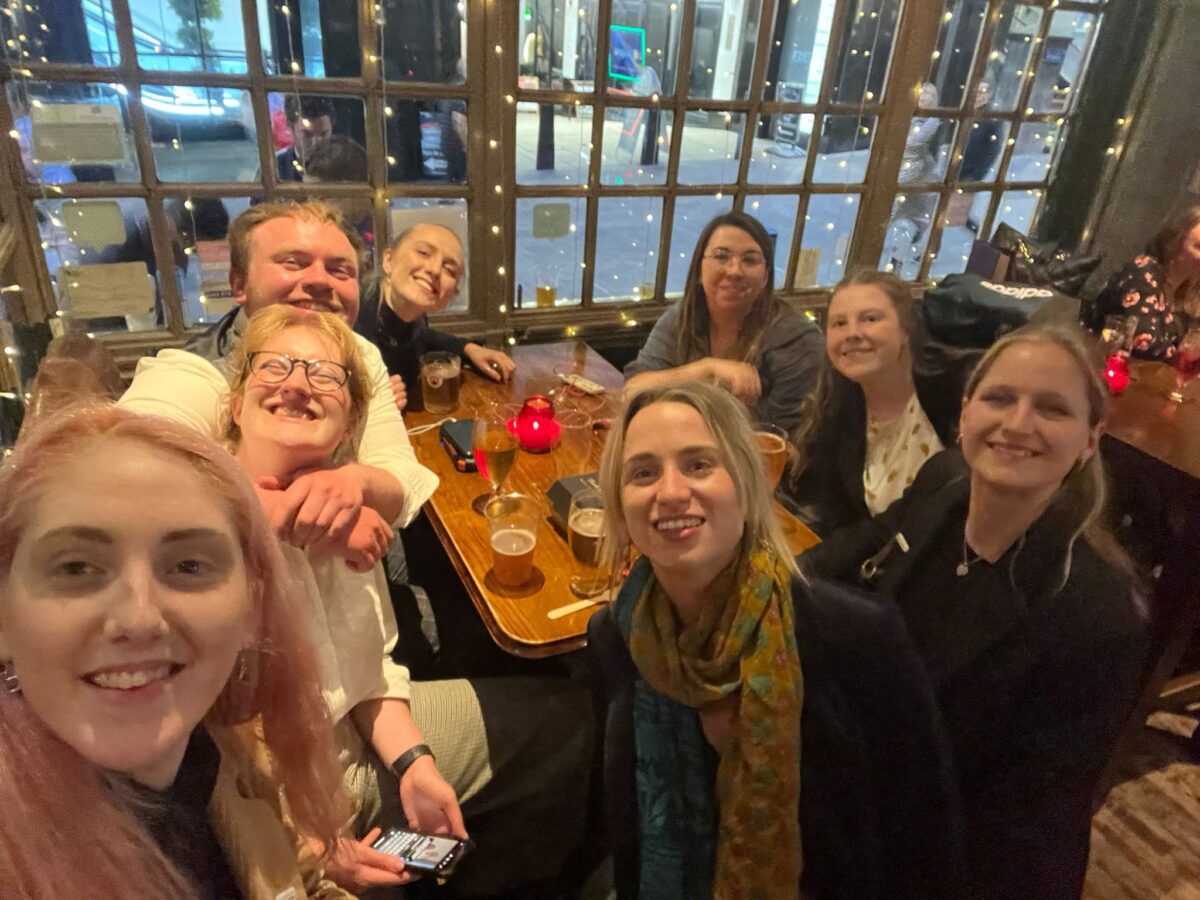
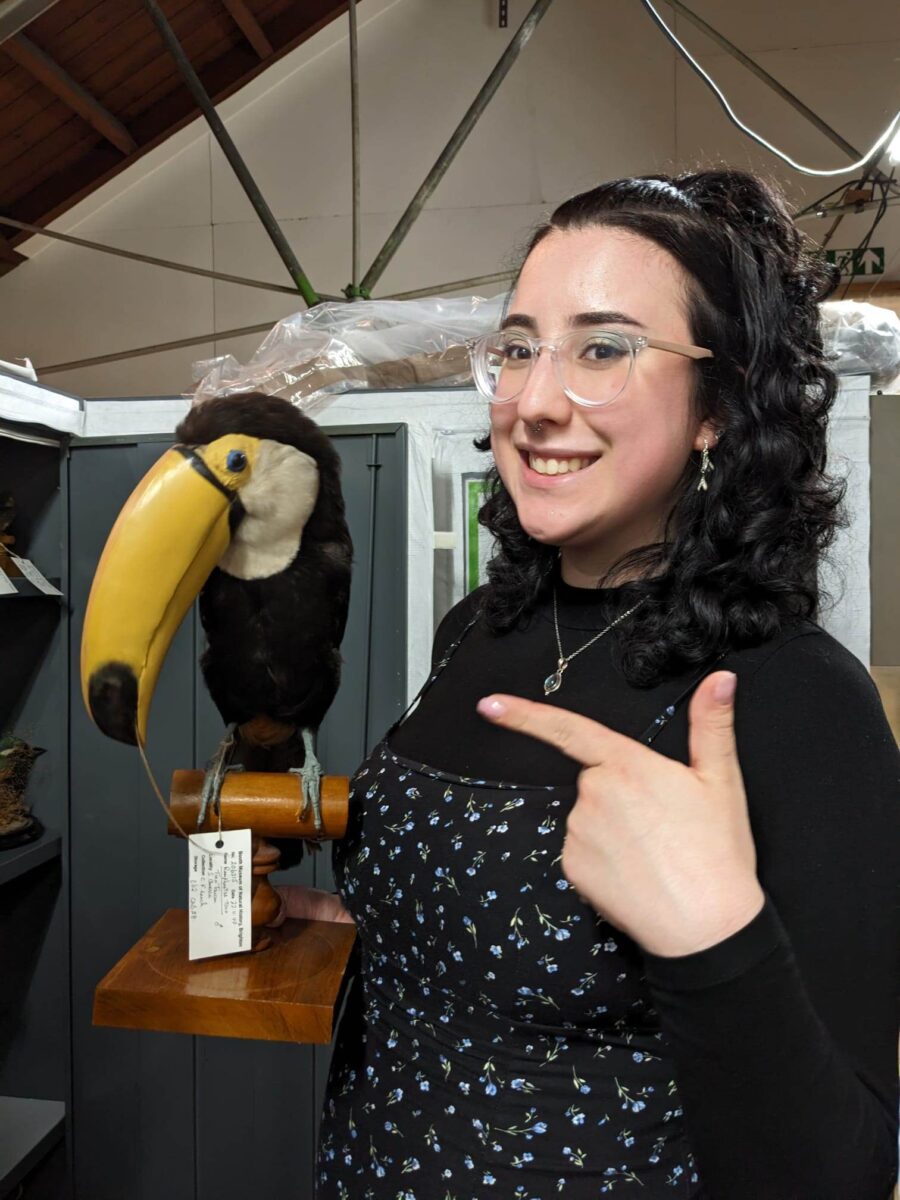
Community member spotlight – Şeniz Mustafa

Who are you?

To put it in just a few words, my name is Seniz. I am an ecology and conservation master’s student studying in Brighton. My projects mainly focus on birds and their foraging behaviours and choices. I
am a very active member of the Brighton environmental community, and I endeavour to make that community more open and inclusive where I can!
How did you get here?

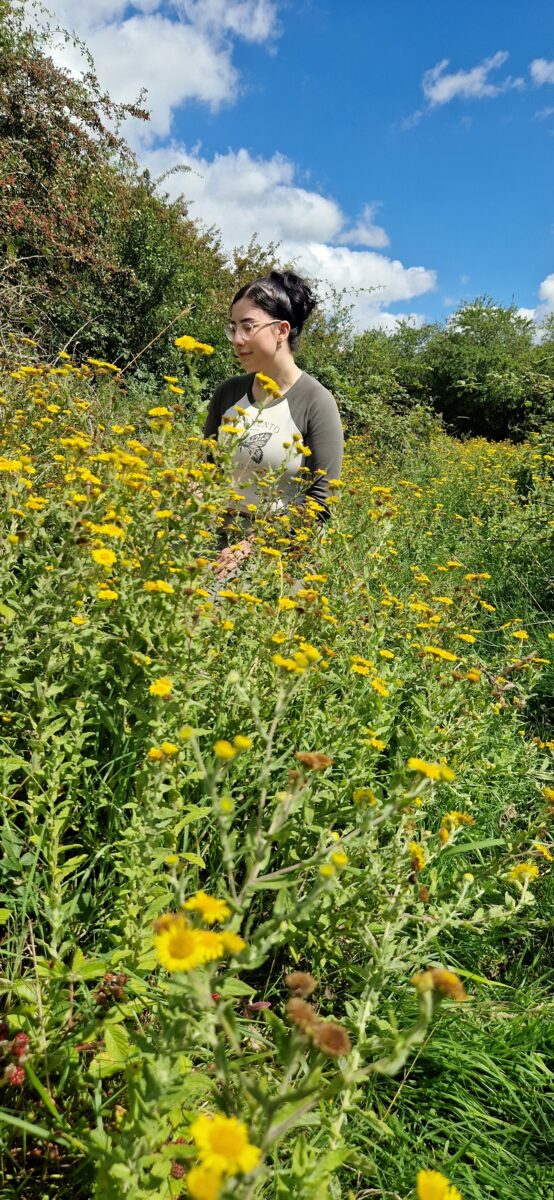
Not in the easiest way, but with unadulterated determination! I had a windy road, having I was not from a nature-focused background. Still, I always found nature to be something I wanted to learn more about and developed a strong emotional connection to it, as unbeknownst to me, I have AuADHD! After fumbling around a bit and getting onto my course, it wasn’t until I was on my placement year that all those years clicked together, and that began with falling in love with birds and moths (a killer combo). As we emerged from the COVID pandemic, I had the chance to gain experience that let my passions to flow and have an output. Since then, I’ve never really stopped being proactive, taking every opportunity I could and sharing that with other young people in my community – we do not gatekeep environmentalism whilst I’m around!

What do you believe to be an absolute non-negotiable for the future of our planet?

I firmly believe that to achieve global unity in the face of the climate crisis, we must allow space
for all cultures and communities to be heard. The face of environmentalism need not be that o
western ideals; after all, western ideologies have a lot to learn. That means even in the UK we make
environmentalism more accessible and give people the tools to decide how they feel our shared pot
of earth should be treated. It also means more acknowledging of the colonialist roots of western
conservationism across the globe and working to untangle that. To learn from and empower
indigenous cultures and their ideas of interacting with nature!
Biggest nature obsession

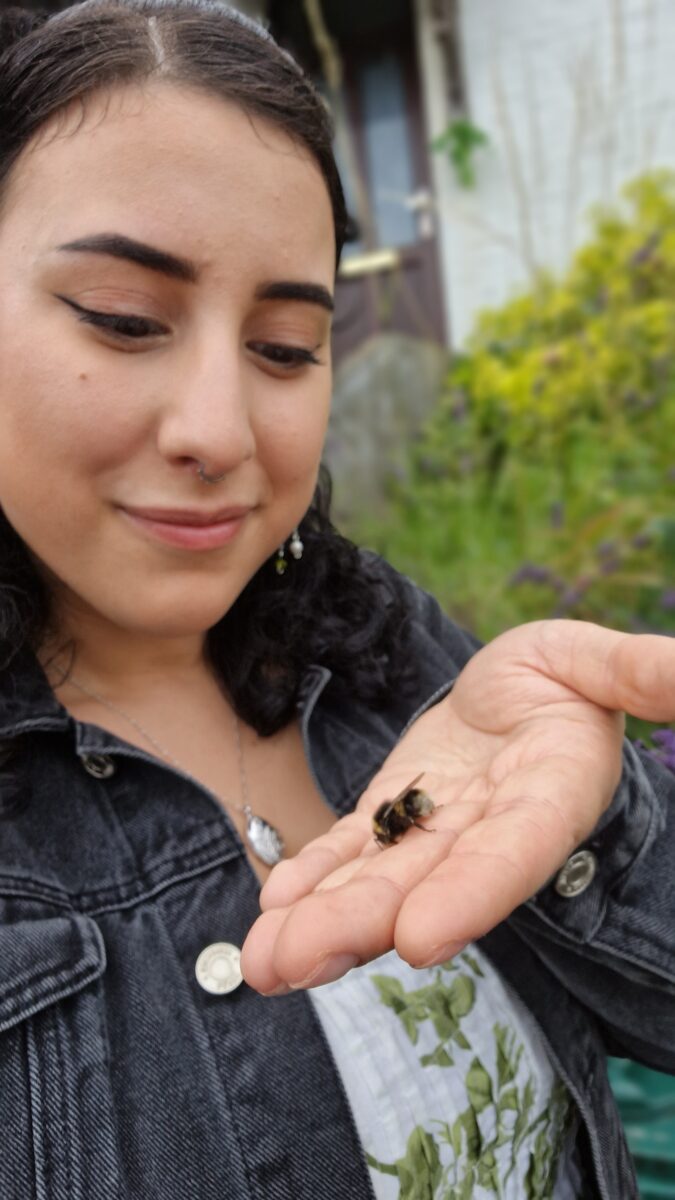
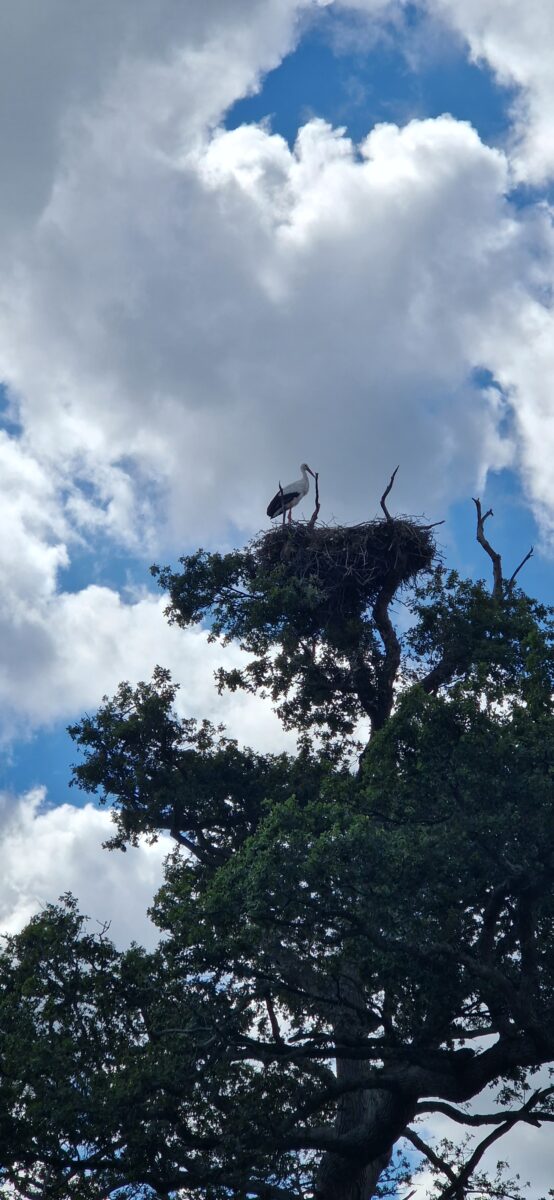
I absolutely love animal behaviour! It’s so fascinating to me, hence why it’s a big focus of my dissertations. It’s not enough for me to know just what decisions animals make. I need to understand WHY they make the decisions they make! From the aggressive purple emperor males that will attack not just each other but even birds to maintain their own territory to white storks bringing animal dung to their nests so their young can practice eating on their own! It’s crazing and an absolutely fascinating part of ecology!

What’s the most interesting nature fact you’ve learned lately?

This is something I learned in my time at Knepp Estate, and I love to share this with people, it is how the Tamworth pigs that they introduced during their rewilding journey churn up the soil when searching for food. This disruption in the soil actually allows the scarlet pimpernel plant to grow, and its seeds are one of the key food sources turtle doves depend on! As a red list species, it demonstrates how important those behaviours and interactions are!
Creating Thriving Nature-friendly Gardens – Megan Adamou

Urban nature campaign

When discussing our upcoming urban nature campaign with our community, we discovered that there were lots of us nurturing our own mini nature reserves in our back gardens, balconies, universities and parks. Biodiversity in gardens and sustainable gardening practices have been in the news a lot of late, highlighting the negative impacts of our desire for highly manicured, nature devoid outdoor spaces. When we think of rewilding, the image that often gets conjured up is vast expanses of land, but, with this blog series, we’re going to show you that no matter how small your patch is, how high up it is, or even whether it belongs to you (permission was granted in the instance we’re referring to!), that rewilding can be something everyone can participate in. Gardens cover a huge amount of the UK, so collectively we can have a huge impact for wildlife.

So, whose garden do we get to have a look in first?!

Megan Adamou

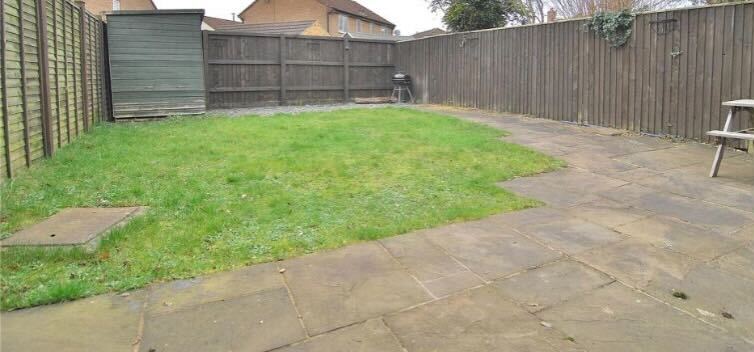
We moved in 3 years ago, and got the keys a week before we went into lockdown in 2020. The garden was what drew me in to the house, I saw the potential of a clean slate!

We started with a few potted trees, a Weeping Silver Birch and some Black Bamboo being the first! I then decided to plant the birch, and slowly over the years have been gifted and bargain-bin hunted shrubs, flowers and trees to fill the garden.

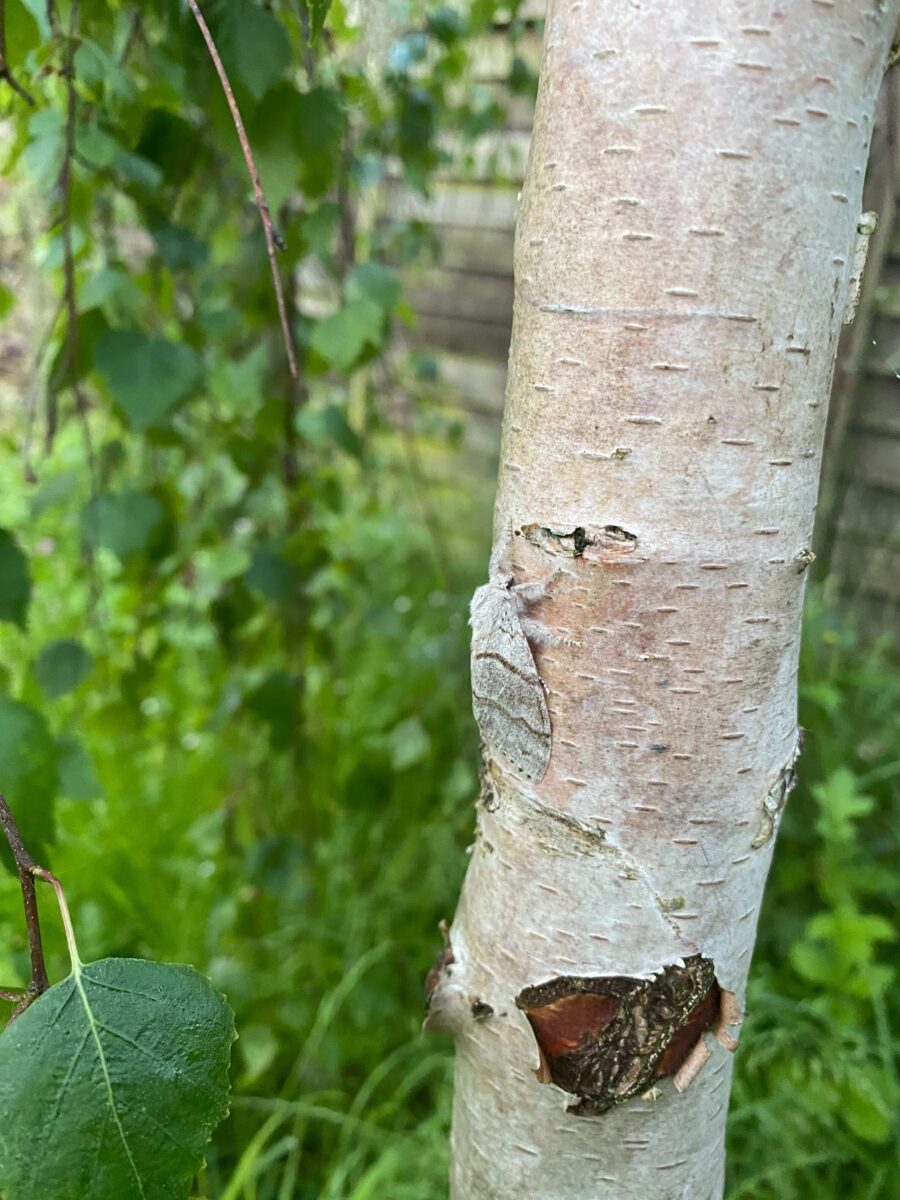
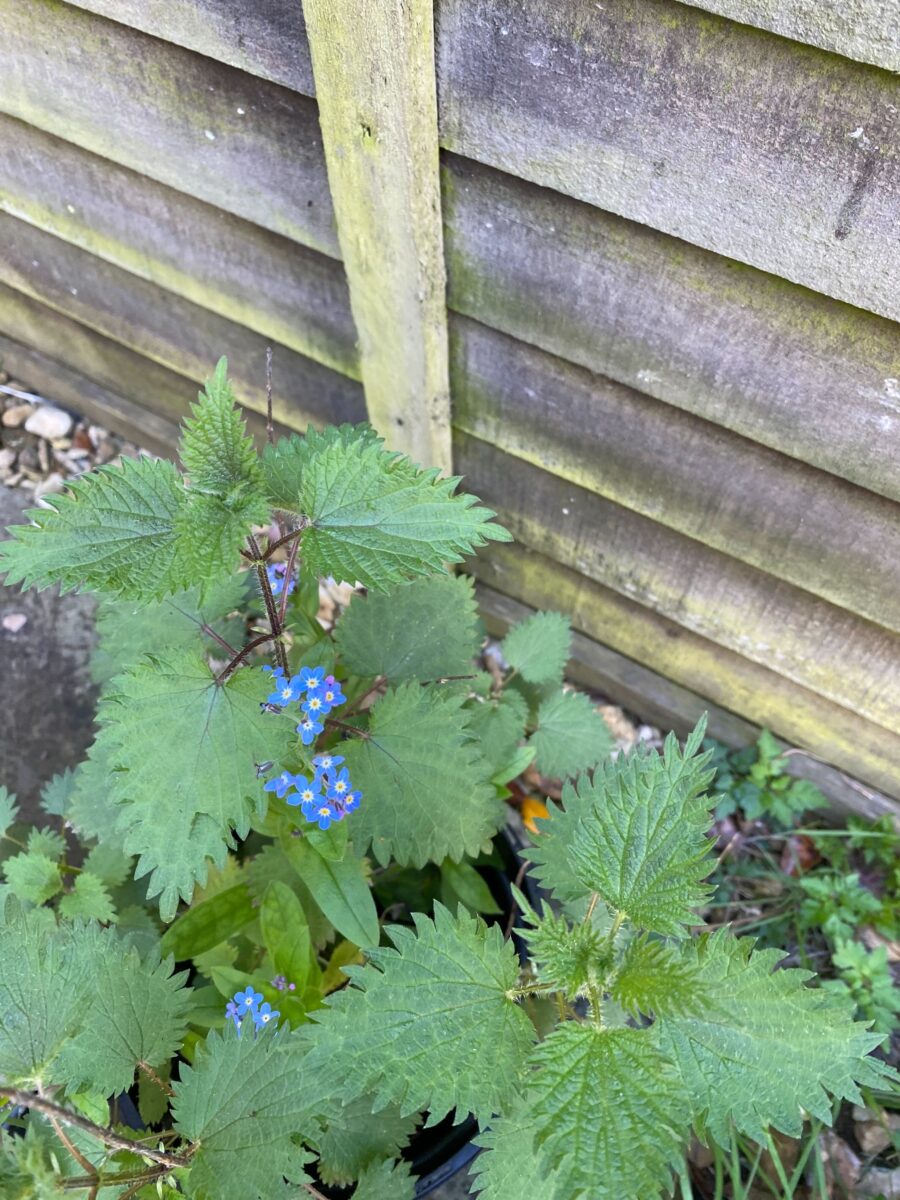
Spot the moth!
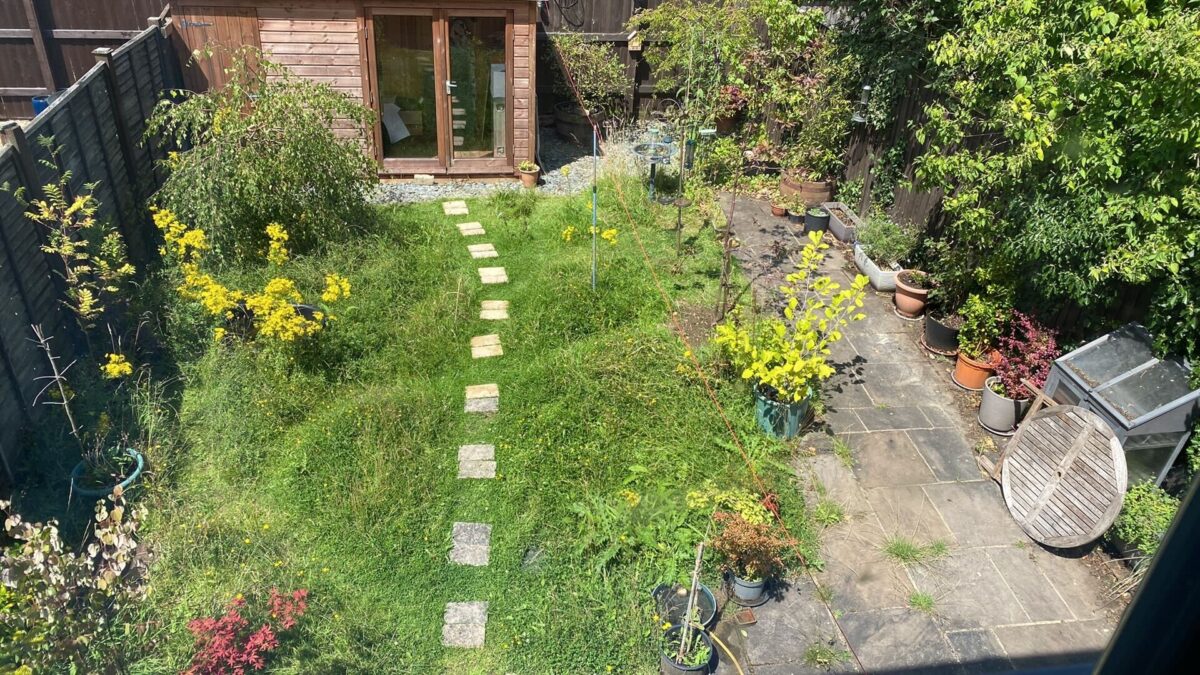
I have created different sections of garden to try and encourage as much diversity as I can. We have a log pile with a variety of ferns underneath the weeping birch, and have planted native bluebells and snowdrops underneath. We then have a border of (currently potted) native trees and shrubs. I also let the ivy grow over the top of the fence as the berries and flowers are great for birds and insects – I just cut away any bits that might cause damage and the rest can stay.

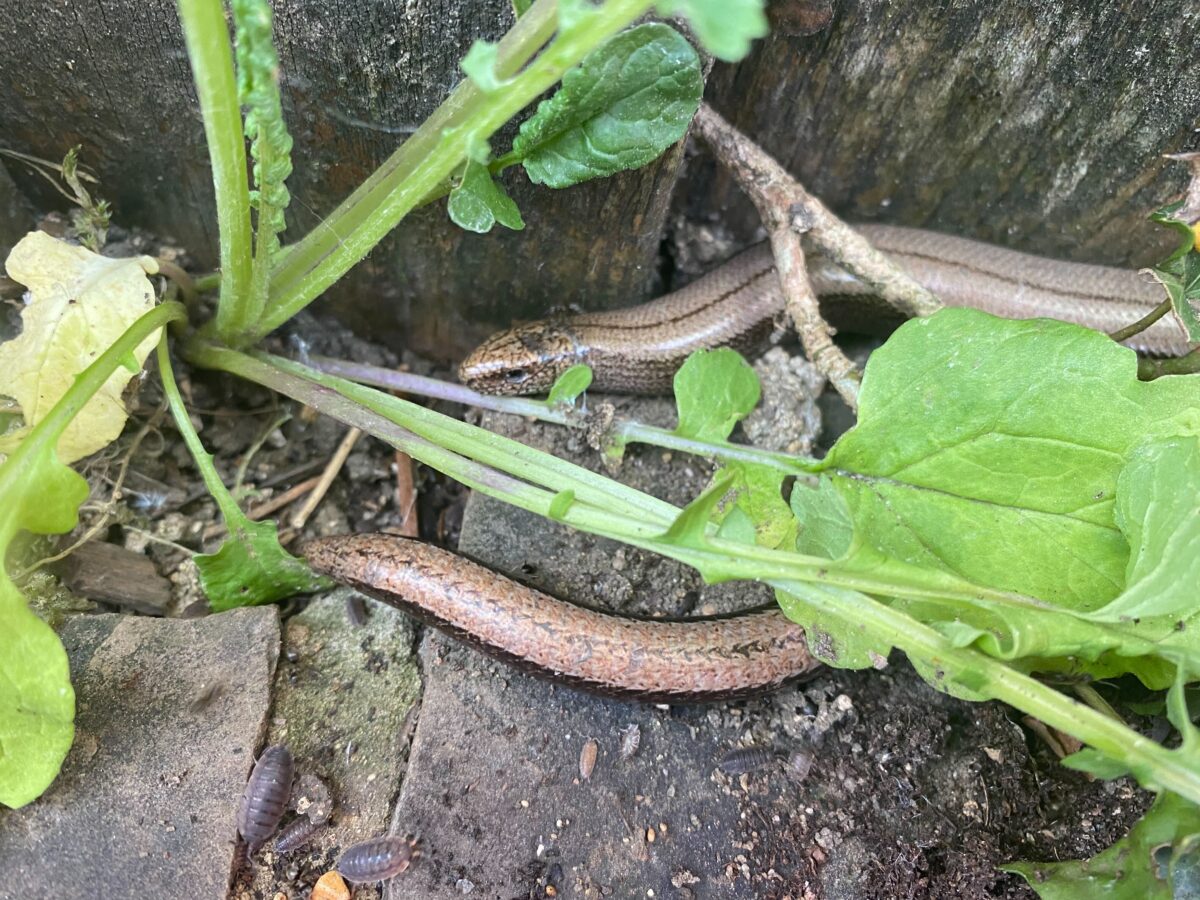
Slow worm!

We found a free pond so have plonked that in and will dig it as a semi-raised pond later this year once we cut all the grass back. The grass is left from the end of April and we then only cut paths in until the beginning of September, where I will cut the grass back section-by-section with shears so the creatures have time to safely move on. We have a massive cricket & grasshopper population so I do what I can to give them somewhere to live!

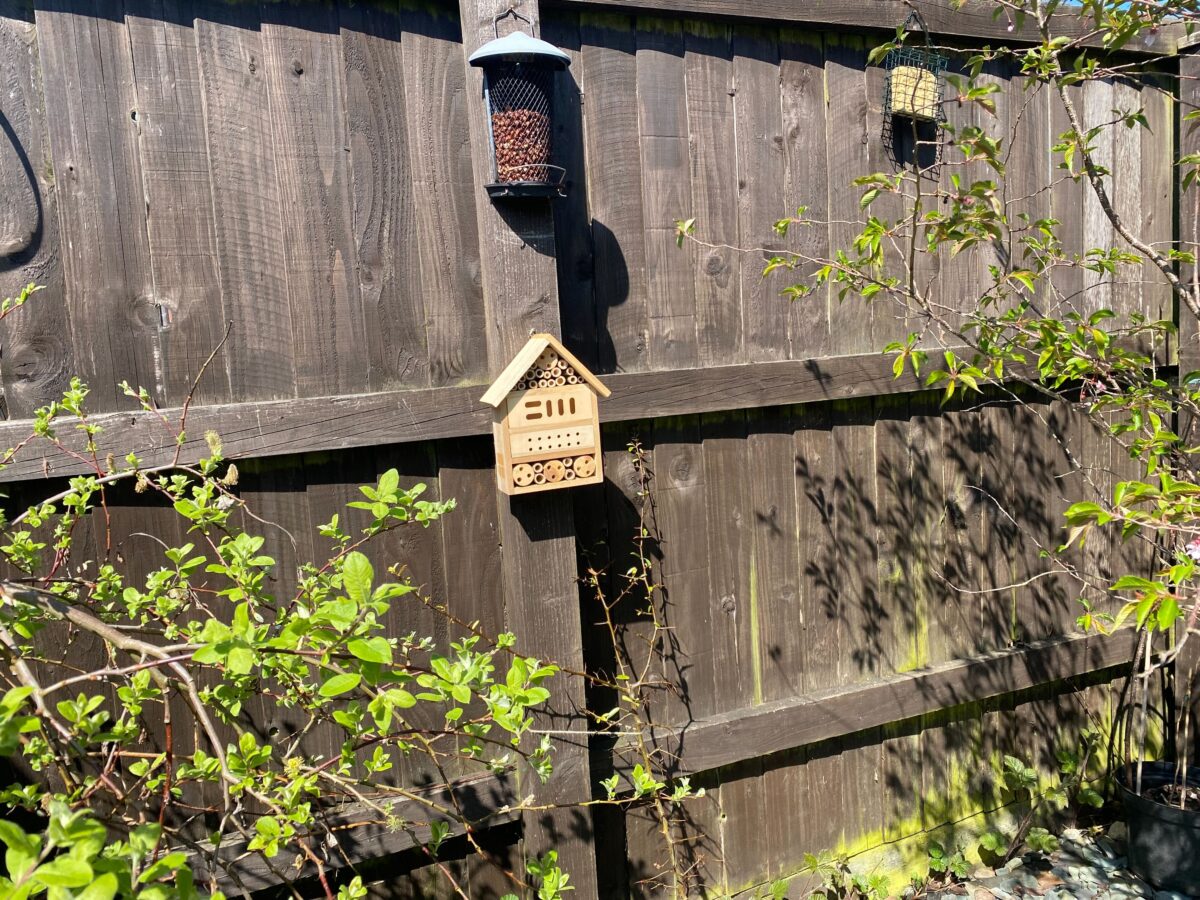
We feed the birds and have 2 bird baths, and use interactive feeding for the corvids (hiding food under coconut shells, hours of fun).

The next steps are to build a raised vegetable patch on the patio (to save it from the ant-army we have in the lawn) and to plant in some foxgloves, UK native plants (including honeysuckle), and put more trees and shrubs in the ground.

What I find most important when working on my garden is that when we move, a lot of work I’ve done can be easily managed so hopefully won’t be removed. There is still lots of lawn and the trees won’t affect the sun in the garden, so hopefully it has longevity as well as instant impact.

My garden is my haven as well as being one for my local wildlife.

Are you a young person interested in urban nature? We’re running an Urban Nature Day Festival on 9th September in Liverpool to celebrate the UK’s city-dwelling shrubs and critters and a fun creative space to meet like-minded people. Get more information and book free tickets here.

Discover Urban Nature: Exciting Youth Event in Liverpool this September

A day event full of workshops, panel discussions and nature walks in the centre of Liverpool!

Introducing our Urban Nature Festival, this September, kicking off our brand new Urban Nature Campaign! The festival will be a day to celebrate the UK’s city-dwelling shrubs and critters and a fun creative space to meet like-minded people.

What’s on?

Working in collaboration with the Wildlife Trusts, we will be hosting a variety of talks, panels and activities throughout the day including:

• Get Guerilla Gardening with Ellen Miles

• A panel discussion around access to nature with: Jasmine Isa Qureshi, Mahnoor Kamran, and City Girl in Nature.

• Nature walks to transform the way you view urban ecology, including: Urban plants and Bird Walks (with RSPB)

• Workshop: creative tools for environmental campaigning

• Plus a chance for you to come and tell us what you want to see governments doing for biodiversity in your towns and cities + many more!

…and there’s more!

Full breakdown of the day to come soon. Your ticket includes lunch! Vegetarian, Vegan and gluten free options will all be available.

***Please note that if you are under 18 you must be accompanied by a parent or guardian***

Learn more about who we are here.

Life after The Drop Off

The article below was written by UK Youth for Nature Co-Director Roisin for RSPB Wingbeat – a publication created for the organisation’s youth membership. Find out more about it here.

The Drop Off happened to me when I left university and moved in with my best friend. Even though I knew Newcastle – I grew up around here – I didn’t actually know anyone. The friendship circles that my best friend welcomed me into weren’t really mine, and I felt so lonely. No one seems to tell you that when you leave school, or sixth form or university, that making friends suddenly feels daunting. It can lead to isolation and loneliness. It feels like everyone is off leading new lives, in different cities, without you. This is The Drop Off. I wish I knew then what I know now, that so many of us experience this and that there are plenty of ways to find new communities and get involved.

Sharing the load

I joined UK Youth for Nature , the leading youth network calling for urgent action on nature loss, in September 2022 as one of the co-directors. I don’t have many friends who are interested in wildlife or nature, and it sometimes frightens me that people don’t seem to care enough. It adds to the eco-anxiety I feel when I have no one to talk to about the changes we are seeing, or how bad my eco-anxiety has become. Joining UKY4N was transformative because suddenly I was able to sit online and chat with other young people with a huge range of life experience, who want to act for nature. There is something reassuring about the idea that every week we meet via Zoom.

We plan meetups, throw around ideas for how we can turn the latest government announcement into a meme or trending sound on TikTok, plan out what march we want to attend, and decide how we can influence politicians to do more for nature. In November, we all headed to Birmingham to spend the day planning out our Not So Freshwater and Urban Nature campaigns. Over piles of sticky notes with scrawled ideas for the next big campaign action, and surrounded by lists of our favourite nature podcasts, books, films and resources, I felt part of something that made the loneliness and anxiety loosen its grip. A passion for nature and campaigning, and the desire to meet other people who felt the same way, had brought us together.

Finding your people

The Drop Off feels all-consuming, but it doesn’t need to make you feel stuck. Getting involved in a youth network, local group or volunteering is one of the best ways to find new friends and, ultimately, a new community. Coming from a place of structure and friendship, then being launched into a life with equal parts endless possibility and responsibility is overwhelming, but it is so much easier to do alongside other people who are going through the same thing.

Whether it is UK Youth for Nature that floats your boat or a local group close by, you absolutely have skills that are worth sharing with a cause you care about. You might be excellent at campaigning already, or maybe you’re more behind-the-scenes, curating the perfect social media post? Maybe you’re a passionate ecologist, or a skilled nature artist? Whatever you bring to the table there are other people who will celebrate those skills, and communities who could use them to advocate for a brighter and more nature-rich future. So, if you ever feel in that lonely space, reach outwards rather than inwards, and find that new community. It sometimes takes a bit of bravery, but it’s so worth it in the end.

Learn more about joining UK Youth for Nature here.

Statement on the UK Government’s shameful backtracking on environment commitments

OUR STANCE

At UK Youth for Nature, we work with politicians of all parties to push for better policies for nature, climate, and people. We try to remain positive. To remain optimistic that things will change. That the groundswell of support for nature will translate into meaningful policy and legislation. That our governments will take action to protect this wonderful planet and the species that call it home.

But the UK government seems intent on doing the opposite.

Today, we’re angry. Today, we’re fuming. But we’ve been fuming for a while.

The announcement of new oil and gas licenses is awful and this government should be ashamed of themselves. But this is just the latest step in the government’s anti-environment, anti-people, pro-big-business path. From pushing back water quality targets to ill-informed and destructive infrastructure projects, this government does not care about our planet and our future. And it shows.

We stand in solidarity with campaigners who have worked tirelessly on this issue, not only because of the links between climate change and nature loss, but because we know the mental, emotional, and physical burdens that come with campaigning on these issues.

Are you angry too? We think one of the best ways to help eco-anxiety, and get things done, is to join a community of like-minded people. UK Youth for Nature might just be the organisation for you! Learn more about joining here.

Read more about this story here.