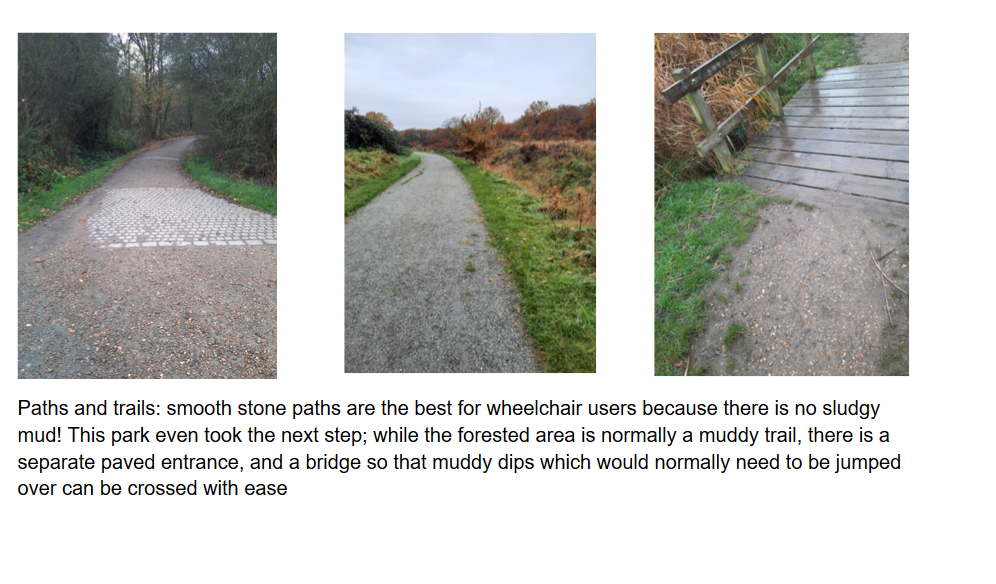
Physical Access And Nature

By Monica Bhatia

We all know that nature is incredibly beneficial to people of all ages, for a variety or different reasons, whether it be physical health such as going for a jog, or mental health, such as taking some time to clear your head. Now, if nature is so helpful for anyone, why isn’t it accessible for everyone?

To begin, we need to address the question; what actually makes nature accessible? Accessibility is defined as the quality of being able to be reached or entered, and for people with disabilities, their requirements for being able to enter nature spaces are slightly different. Examples of some simple implementations that can make a green space be classified as open to all are:

  • Wheelchair rental 
  • Disabled parking
  • Near public transport links (for those unable to drive)
  • Disabled toilets
  • Braille on maps and signs
  • Ramps for hides
  • Wheelchair friendly ramps
  • Keys given out for vehicle access gates

These small scale adaptations to the UKs green spaces could mean that more people can get out there and comfortably experience wildlife without struggle.

So if we know what makes a green space open to all, which green spaces have already taken on these adaptations? If we, for example, are looking at nature reserves, the statistics are as follows:
1The UK hosts a huge 341 national nature reserves (224 in England, 74 in Wales, and 43 in Scotland), yet only a small portion of these have implemented the facilities above.
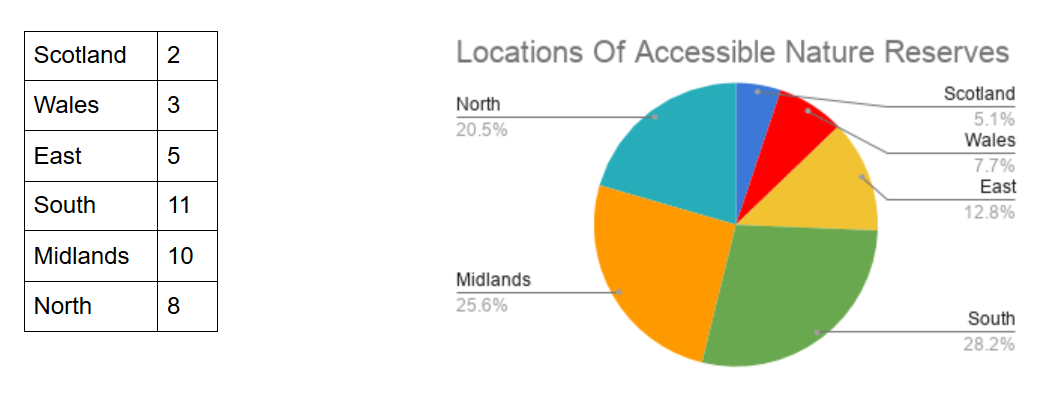
This statistic is incredibly saddening, because while some may believe that accessible green spaces are not of much importance, research by many trusts and organisations prove otherwise. 3Below is presented just why accessibility to these nature spaces is so important.
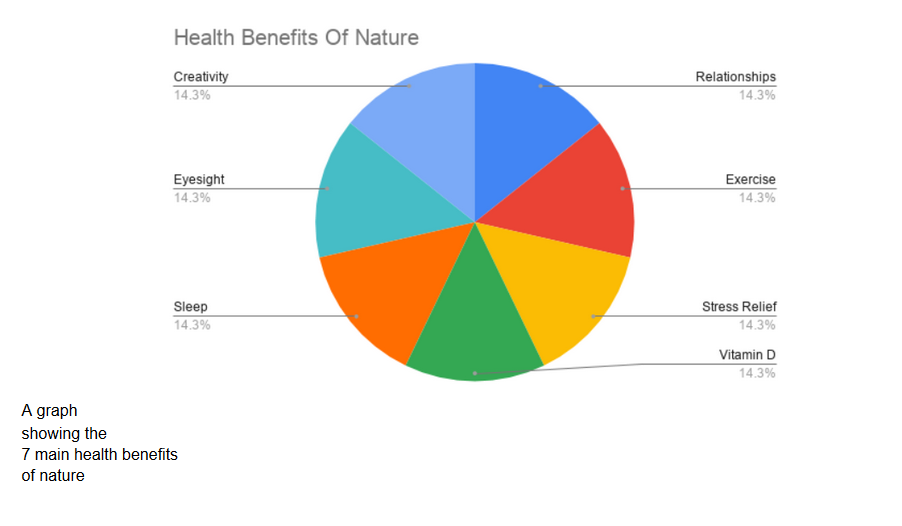
Upon knowing the vast array of the benefits nature provides, it makes the lack of green spaces such as nature reserves in the UK even more saddening – but not all hope is lost! There are many individuals and organisations trying to turn the tide. One example is the 4All For Nature & Nature For All campaign, started by a young girl living with cerebral palsy called Ellie. In her post, she explains that she has faced many disappointing experiences with inaccessible nature, stating that the location of her local nature reserve, linked with the inconsistent public transport timetable means she is unable to travel to and from the area, and her campaign sets out to ‘further educate those working in the conservation sector to make sites of natural interest as accessible as possible’.

Additionally, an example of a celebrity hero in conservation who has recognised the issue and is doing his bit is no other than Sir David Attenborough himself! In 1966, The Attenborough Nature Reserve And Centre was established – being best known for its birds, the reserve is incredibly accessible, hosting on site disabled parking and wheelchair friendly trails.

Finally, an organisation supporting the cause is us! Our #Naturenearby campaign is calling on governments to make nature accessible to ALL, so if you’re looking for ways to support the cause, be sure to sign our 5petition!

So now that you know who to support when it comes to making nature accessible to all, what can you as an individual do? I recently went to my local green space, and using the criteria of what makes a place accessible, took photographs and gathered a rough idea of how open-to-all it was. By doing this, you can inform friends and family with disabilities where they should consider going to be around nature, and if you really feel there are issues with the open spaces accessibility, with this information you could even write a 6letter or email to your MP!
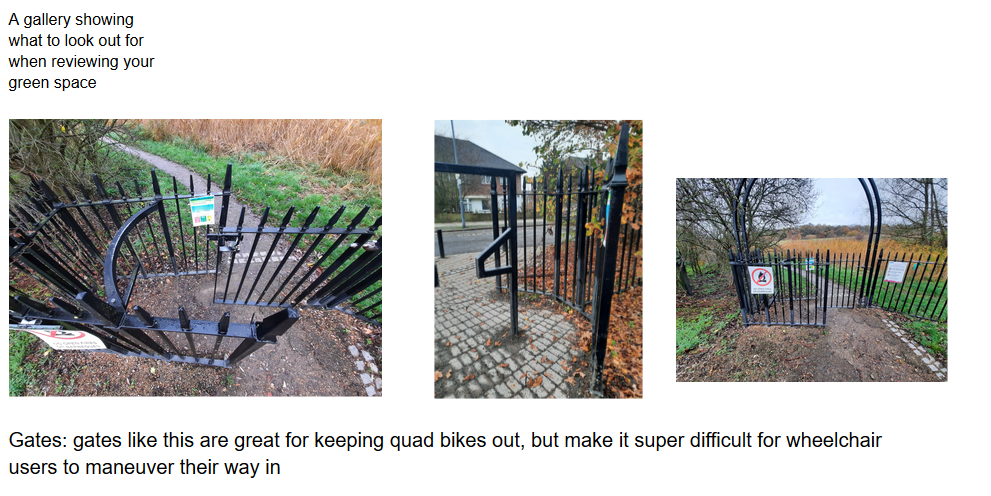
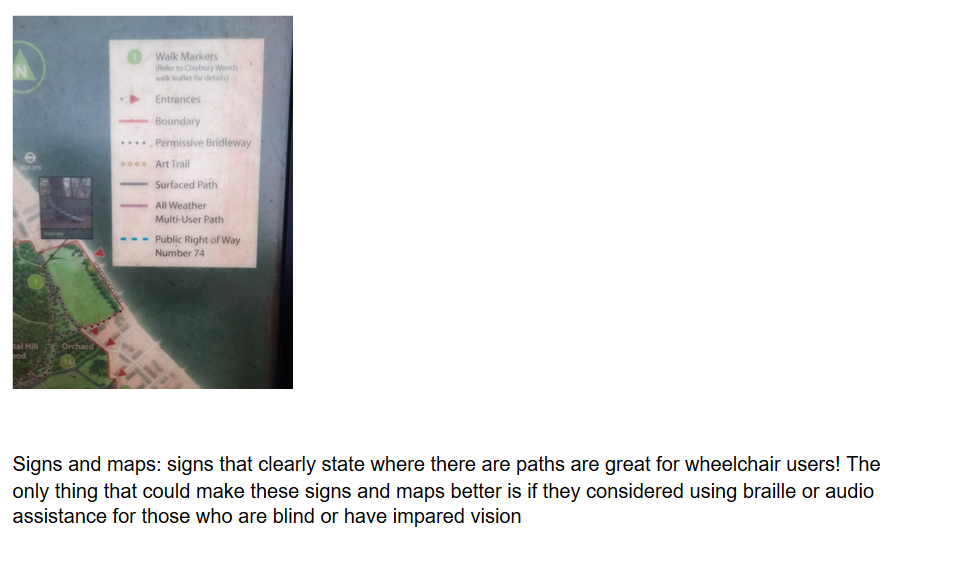
1 – www.gov.uk>Parks, trails and nature reserves

2 – www.wildlifetrusts.org>Accessible nature reserves

3 – cvc.ca>Top 7 health benefits of being in nature

4 – #Attenborough90: Why nature should be accessible to all

5 – http://chng.it/DRqDtKm7Qd

Follow Monica HERE

Nature Nearby: Moving beyond nature ‘access’

A guest blog by Dr Sarah Bell, University of Exeter.

“I think nature has become more important to me in some ways, now that I find it harder to get to it… because it’s unnecessary that it’s harder to get to, so it feels like an unnecessary separation”

This is a pertinent quote from one of the participants in our two-year ‘Sensing Nature’ research project; a project that invites us to question how nature access and inclusion are currently understood and approached in research, policy and practice. 

The project was funded by the UK Economic and Social Research Council, from 2016-2018. Using an in-depth, collaborative research approach, it aimed to explore how people with sight impairment describe and experience a sense of wellbeing (or otherwise) with diverse types of nature through the life course. 

What ‘nature’ is and what it means to people can vary according to the environments we grow up in, those we experience (or are excluded from) over time, and with the many stories that circulate about nature within different societies and across generations. 

Since the 2003 Diversity Review, there has been growing momentum to nurture nature that is ‘accessible’ and ‘relevant’ to everyone. In 2018, the UK Government published its 25 Year Plan to Improve the Environment, ‘A Green Future’. This plan explicitly calls for policies that ‘balance the needs of a growing, vibrant society with the ability to access green space’. 

Despite such commitments, there remain stark inequalities – particularly along lines of disability, race, ethnicity and income – in who can shape, access and experience nature in its varied forms. Perhaps more critical attention is needed to whose versions of nature are prioritised in current access initiatives, in the name of what forms of nature connection?

Progress has been made in identifying groups who are typically less likely to engage with nature, for example through nationwide surveys, such as Natural England’s ‘People and Nature’ survey. Yet, these surveys tend to operationalise socio-demographic ‘differences’ as static variables to be ‘controlled’ or ‘adjusted for’, without necessarily exploring why or how inequalities in access have developed over time.

Valuable guidance exists for those keen to enhance nature access amongst varied groups. For example, the fantastic Sensory Trust has developed the widely used ‘Access Chain’ tool. This tool demonstrates opportunities for ensuring nature access plans relate to all parts of a visitor experience; from the moment someone decides to visit, to their journey to a site, their experiences in situ and their return home. 

Despite a range of innovative nature encounters being supported through such awareness, many so-called ‘accessible’ nature experiences continue to segregate on the basis of perceived difference rather than fostering genuine social inclusion. 

This tendency may reflect a failure to fully understand varied ways of sensing and making sense of nature, or to employ a diverse workforce within the sectors involved in ‘curating’ nature experiences; for example, in landscape architecture, nature conservation, access, management and interpretation roles. Indeed, how can people design for, manage or interpret nature experiences that they may not even be aware of? 

It may also be a product of longstanding nature exclusion, intentional or otherwise. For example, there is growing concern about the imposition of ‘Green LULUs’, Green Locally Unwanted Land Uses, whereby planners do not engage with existing land use conflicts or the needs of historically marginalised communities. These interventions can fail to address histories of neglect or exclusion – or support meaningful participation in local land use decision-making – amongst underheard community members. 

In our work during and since the ‘Sensing Nature’ project, we have tried to encourage a shift in people’s awareness of and approaches to disability and ‘difference’ in relation to nature access and experience; moving away from framing disability as an ‘access need’, and recognising it instead as a potential opportunity for creativity and shared learning. 

Through nurturing a more diverse workforce and volunteer base, perhaps the nature sector could acknowledge past erasures and better harness the valuable knowledges that different people can contribute to nature conservation, management, interpretation and visitor experience roles? Perhaps we could better work together to transform the sector, to make the unseen or rarely felt qualities of nature encounter more compelling across varied backgrounds, histories and life circumstances?

If you would like to read more about the Sensing Nature project or the initiatives we have been working on since, do visit the project ‘News’ pages or feel free to get in touch via email (via Sarah.Bell@exeter.ac.uk). 

Letter to the Prime Minister on Equal Access to Nature

This is the letter that, this morning (18 November 2020), we have sent to Boris Johnson MP, the Prime Minister of the UK:

Dear Prime Minister,

We are writing to you at a crucial moment in your Government’s term and ahead of the major 2021 year for the environment. Your Government is also about to announce its spending priorities for the next year through its Spending Review. We are writing to call on you, and Chancellor Rishi Sunak MP, to use the Spending Review to invest in increased access to nature.

Your Government has said it will make the environment one of its priorities and achieve a green recovery from coronavirus, lockdown and the economic recession we find ourselves in. At the time of writing we are part-way through a new lockdown of at least four weeks, which will only underscore how important access to green spaces is for many people across our country.Your Government also plans to introduce some of the biggest reforms to the planning system in England for generations. 

These are crucial opportunities to make sure that people across our country have greater access to high quality green spaces near to where they live. The evidence shows very clearly that people in urban areas and the most deprived in society face greater barriers to accessing green spaces.

We are writing to you particularly on behalf of young people across the UK who care passionately about our wildlife and nature. In the UK, nature and wildlife are in perilous decline, with 41% of species falling in numbers. The UK is only due to meet 4 of its 19 global biodiversity targets this year. At the same time, people in our towns and cities are often deprived of access to high quality green spaces that are accessible from where they live.

It is unacceptable and immoral that young people today are growing up with hazardous air pollution, depleted soils, polluted rivers and without being able to enjoy the flocks of birds and wonders of butterflies (as well as many other species) that your generation grew up with only a few decades ago. Our country’s natural beauty and resources are being ravaged and there is little sign yet that your Government’s 25 Year Environment Plan has begun to turn the tide on the nature and ecological emergency we are in.

Your proposed planning reforms, and future spending decisions by your Government are unmissable opportunities to undo these injustices. The lack of access to green spaces entrenches existing divisions within society: those from black or other ethnic minorities, those on lower incomes and young people are all much less likely to have access to private green space. Research for the National Trust has shown that in areas where ethnic minorities make up over 40% of the population there is 11 times less access to public green space.

We are aware that your Government may only be able to influence these outcomes across England, but we would encourage you to work with the devolved administrations to achieve the same outcomes right across the UK.

Your Government can help the nations of the world to broker a new relationship with nature and to set stretching new targets that will heal nature and the climate through the UN biodiversity and climate conferences in 2021. But the UK’s international credibility will only hold if it is backed up with action back home. You can help to tackle both the nature crisis and the great inequalities in accessing green space in our society by:

  • Investing £10 billion in improving the quality of existing urban green spaces and in doubling the area of urban green space in the UK.
  • Making existing urban green spaces, parks and Local Wildlife Sites protected designations in your planning reforms, and requiring planning authorities to identify potential new areas for urban green spaces and parks and exclude those from development through Local Plans.
  • Ensuring that planning reforms maximise opportunities for green and blue space to be built into new developments, including green architectural features.
  • Investing £1 billion in a Get Outdoors Initiative to educate and engage urban communities, particularly young people, in nature and the outdoors.
  • Conducting an urgent review of all high-carbon infrastructure (such as new roads and airport infrastructure) to ensure it is compatible with the UK’s 2050 net zero target. Where it is not compatible, the hundreds of billions of pounds due to be invested in this infrastructure should be diverted to new active travel measures and local public transport: bus routes, cycle lanes and infrastructure, bridleways and public footpaths.
  • Restoring urban wildlife sites to good condition – at present almost half of SSSIs in urban areas (Sites of Special Scientific Interest) are in a poor condition and 100% of these should be managed and restored to good condition.
  • Providing local and regional authorities with sufficient funding to support schemes, projects, programmes and community groups in their area that are already helping people to connect with nature but that urgently need increased resources to improve and widen this work.

We would welcome the opportunity to discuss these and other ideas that we have with you and members of your Government at your earliest convenience.

Yours sincerely

Matt Williams, Co-Director and Founder, UK Youth for Nature

Talia Goldman, Co-Director, UK Youth for Nature

Signatories:

Peter Mcintyre, Operations Lead and Leadership Coach, 3 Pillars 

Lauren Cox, Policy and Campaigns Officer, A Focus on Nature

Beth Wright, Environment and Sustainability Officer, Aberystwyth Students Union

Accidentally Vegan UK 

Hendrikus van Hensbergen, Chief Executive, Action for Conservation

Dr. Andrea Mechelli, Professor of Early Intervention in Mental Health, King’s College London

Mya-Rose Craig, Black2Nature

Black Environment Network

Black Girls Camping Trip 

Rhiane Fatinikun, Black Girls Hike

British Caving Association

British Mountaineering Council 

Cameron Bespolka Trust 

The Chartered Institute of Ecology and Environmental Management 

Lucas Ruzo, CEO, Citizen Zoo

Climate Reframe (Doc Society)

Co.Laboratory

Countryside Jobs Service 

CPRE, the countryside charity

Dr. Alison Greenwood, Director and Lead Psychologist, Dose of Nature, UK

Forest School Association

Henry Greenwood, Managing Director, Green Schools Project 

Heal Rewilding 

Imperial College Environmental Society

Kendal Activists Saving The Little Earth

Nathan Jackson, Founder, Mental Health Monster

Muslim Scout Fellowship 

National Youth Agency

Stefan Batorijs, Director and Founder, Nature and Therapy, UK 

Nature Premium Campaign 

Nottingham Wildlife Trust Wild Youth Forum

Outward Bound Trust

Georgina Wilson-Powell, Founder, Pebble Magazine

Miles King, CEO, People Need Nature  

Reserva: The Youth Land Trust

The Rivers Trust 

Linda Philips, Director, Roots and Shoots 

Dr. Halima Begum, Director, Runnymede Trust

Myles Farnbank, Vice-Chair, Scottish Adventure Activities Forum (SAAF)

Sheffield Environmental Movement (SEM)

Solidaritree

Kieron McGlasson, Director, Sow the City

The Schools, Students and Teachers network 

Straight Forward Science 

Students Organising for Sustainability – UK 

UK Student Climate Network 

Trees for Cities

Carrie Starbuck, Managing Director, Urban Growth 

Dr. Stephen Head, Wildlife Gardening Forum 

The Wild Network

Wilderness Foundation UK

Women’s Environmental Network

Woodland Trust

YorScience 

Youth Climate Association NI 

Supporters:

Joe Burton, Education Manager, the Linnean Society of London