Large scale mammal reintroductions in the UK – what are they and why do we want them?

A What the Heck? series blog.

By Christina Derrick

What are reintroductions and why are they happening? 

Imagine going for a walk in the countryside, what animals might you expect to see? 

Probably some cows, most definitely some sheep, perhaps a red kite, a buzzard or a red fox. If you’re really lucky you might even see a pine marten if you’re in the right part of the UK or a golden eagle, even a beaver or two! What if you could see a bison, or even an elusive lynx while wandering around the woods? To some this might sound far-fetched or even scary but with the rewilding zeitgeist gradually gaining more support and credibility it may only be a matter of time before these idle dreams become reality.

In ecology and conservation, a reintroduction is the act of putting a species back into its ‘historic habitat range’, simply put it’s a place the species used to live before humans intervened. Often reintroductions provide a way for species to get back to those historic habitat ranges where they otherwise wouldn’t be able to do so, due to things like the lack of a land bridge or lack of habitat corridors to the habitats (Some species prefer shelter when they’re moving around and won’t move through open spaces). Reintroductions have happened for decades, be it through global conservation efforts or rogue gorilla reintroductions. Though every reintroduction is different, they all come with some downsides and not all of them succeed. 

The red kite and blue butterfly are good examples of species that once given a helping hand can slowly start to look after themselves after reintroduction. The red kite was globally threatened and severely range restricted in the UK in the 1980s, and the large blue butterfly was actually declared extinct in the UK in 1979, but after coordinated efforts and the translocation and reintroduction of European individuals of these species, both the red kite and the large blue butterfly are once again UK residents. 

In recent years several mammals have become focal points for reintroduction projects in the UK, including Eurasian lynx, European bison, Eurasian beaver and more. Many mammal species proposed for reintroduction were extirpated (removed) from the UK hundreds of years ago if not longer due to a combination of over-hunting, deforestation, and other land-use changes. In fact in a much more recent event, rapid industrialisation and changes in agricultural practices have led to the UK becoming one of the most ecologically depleted countries in the world.

Human society relies on ecosystems and we now understand that biodiversity is fundamental for healthy functioning ecosystems. However, taking a purely passive protectionist approach to nature and biodiversity (i.e. conserving what we have left) will not be enough to solve the ecological crisis we currently face. This is where reintroductions become important as they are a vital tool in the arsenal of a conservationist. 

How would mammal reintroductions help address the ecological crisis?

Mammal reintroductions not only address missing biodiversity in the UK, but they also restore vital ecological processes and functions that are currently missing from our ecosystems.  Since the grey wolf reintroduction programme to Yellowstone it has become abundantly clear that apex predators provide substantial ecological benefits to an ecosystem through the suppression of mesopredators (smaller predators such as fox), control of herbivore numbers, and provision of carrion for scavengers. These effects can quickly spread throughout an ecosystem, reducing the effects of overgrazing on vulnerable vegetation, and allow many other species to thrive if pressure from mesopredators is reduced. This effect is known as a trophic cascade, and in the UK it is hoped that reintroductions of top predators such as the lynx would have a similar effect in woodland habitats, where deer overgrazing is deemed a large contributor to forest habitat health decline.

However, it’s not only top predators that can have far reaching effects on their ecosystem, as cascades don’t always flow from the top down! It is becoming increasingly clear that large herbivores (mega-herbivores) play an important role in increasing ecosystem diversity. For example, through grazing, stomping and wallowing habits, European bison are key drivers of creating mosaic grassland wood pasture habitats, and by opening up areas of woodland they allow associated species like insects, butterflies and reptiles to thrive.  Wild boar do this too. By churning up earth in search of food wild boar make space for annual wildflowers, and shrubs to germinate, as well as creating burrowing opportunities for bees and beetles. So many opportunities for increasing biodiversity!

However, size isn’t everything either! At a mere 19kg the Eurasian beaver is perhaps one of the most significant ecosystem engineer species to have existed in the UK. By digging canals, building dams, and creating dead wood, beavers significantly alter the water flow of rivers, creating a diversity of habitats for life to flourish. For example, in the river Otter beaver trials small pools held more fish and allowed water vole to find refuge from invasive mink. By slowing the flow of water, beaver dams also improve the quality of downstream water by trapping carbon and nutrients leached from fields, and they can also reduce flood risk  too. 

So, by reintroducing mammals across the UK we can upscale our ecosystems, improve their resilience and benefit from nature-based solutions addressing growing environmental issues such as flooding, woodland management and even climate change! Notwithstanding the ecological benefits of mammal reintroductions, there can also be significant economic rewards for the surrounding communities through ecotourism. 

If mammal reintroductions are so great, why aren’t we doing them everywhere?

Mammal reintroductions (or reintroductions in general) aren’t the silver bullet to solve all our ecological problems. Great care must be taken to ensure that the species has a significant chance of success where it is reintroduced and there are several considerations to address namely:

Space and habitat.

The UK landscape has changed over the last few thousand (or even few hundred) years. Over the long term forest cover has decreased, urban sprawl has increased, and fences, motorways and other roads criss-cross the land cutting the countryside up into little chunks that represent a significant challenge for the reintroduction of some large ranging species. However, there are still many areas of the UK physically suitable for the reintroduction of mammals, and with increased focus on landscape scale rewilding and reforesting initiatives many more areas could become suitable.

Cost and logistics. 

Capturing, breeding, and transporting wild mammals from mainland Europe to the UK is expensive, for example the Wilder Blean bison project is estimated to cost around £1 million. A great deal of skill, and expertise is also required both in technical field logistics and navigating the UK conservation legislation which is not set up to easily facilitate reintroductions

Opposition from landowners and other interest groups

Not all mammal reintroductions are controversial, for example the Vincent Wildlife Trust pine martin recovery project in Wales made little in the way of newspaper headlines. However, more controversy exists around proposed reintroductions of predators or other species that have the potential to impact or change current ways of living. 

Given the lengthy periods of time many reintroduction candidates have been absent from the UK, they no longer exist in our cultural memory, that is we do not remember how to live alongside them. When viewed in this disconnected way some of their impacts can be perceived as nuisances or unnecessary risks rather than ‘facts of life’. 

Opposition to mammal reintroductions ranges from fear of injury, predation, the spread of disease to livestock and/or other native species, to worries about flooding of agricultural fields or damage to infrastructure (in the case of beavers). These worries are not always unfounded and for a reintroduction to be successful they must be addressed. This is where conservationists and ecologists need to look outside their own field and collaborate with social scientists, local governments, and the communities surrounding reintroduction areas too. 

Some exciting examples

Despite the myriad of obstacles to mammal reintroductions in the UK there are still some encouraging examples with some creative solutions!

Wilder Blean

As you may be aware, recent proposals to reintroduce the lynx to the UK have been met some staunch opposition, especially from farmers who fear predation. As mentioned above, predator reintroduction proposals are often more controversial than herbivore reintroductions. Even herbivores who weigh a whopping 600 kg! So, while we may be a way off seeing lynx once again roam the UK countryside, we are only a few years away from seeing European Bison! Extirpated from the UK 15,000 years ago and driven to the brink of extinction in the rest of Europe too, four of these giants are set to be released in Kent in 2022. As part of an ambitious project co-led by Kent Wildlife Trust and Wildwoods Trust aiming to ‘rewild’ Blean woods through natural (bison led) woodland management. 

Beavers

While successful beaver trials and subsequent reintroductions were carried out without enclosures in Scotland, in other parts of the UK the prospect of free release can be contentious (for reasons discussed above). However, that has not stopped the establishment of several successful enclosed trials which have shown the huge landscape benefits of welcoming these creatures back to our waterways. In Cornwall, Devon and Kent small numbers of beavers have been released into enclosures ranging from 3 – 30 hectares where they have been a huge success in restoring wet meadows and fens, and slowing water flow which could be vital to combatting local flooding! 

Knepp

On the sprawling 3,500-acre Knepp estate, populations of Tamworth pigs are working wonders for the land. The intensive farmland come pioneering rewilding project has used creativity to overcome dangerous animal laws that prohibit the reintroduction of wild boar to the area. Instead they use the rare Tamworth pig as a proxy. Despite being slightly smaller than its wild relative, the pigs grazing and rooting behaviour is helping to boost invertebrate and bird populations on the estate. Knepp now has the largest breeding population of the purple emperor and is the only place in the UK where turtle dove populations are increasing!

To cut a long story short, mammal reintroductions are an incredibly important tool for solving the ecological crisis we currently face. Not only in terms of replacing or reinforcing extirpated or threatened populations of species but also for improving ecosystem health and diversity through the reestablishment of vital ecosystem services. Clearly, context is important and there are a variety of socio-economic and ecological factors that need to be considered when considering reintroductions, a lynx in Hyde park probably wouldn’t be very happy for example. However, the time has come to be proactive, taking a purely protectionist approach to nature conservation is not enough given the depauperate state of UK wildlife. The future is rewilding and we should embrace it!

** End note **

This blog post has focussed on mammal reintroductions however, it should be stated that reintroductions of other groups such as birds, invertebrates, plants, and fungi too. All species have a role to play in their ecosystem and the more there are the more resilient the ecosystem can be.

A little bird told me…

Edition: Restore Our Rivers

Newsletter blog by Joshua Harris

You can really immerse yourself in a river. Both literally of course, but also by observing the physical and biological activity which is taking place there. Rivers, and aquatic environments in general, have an extra dimension of living space for organisms to occupy – the water. So you have these three kinds of living space in close proximity: the trees and other plants along the river banks; the aquatic world of algae, aquatic plants, and riverbed life; and the air in the river channel along which the kingfishers and dippers zoom. 

Then there are the connections between these different realms: the caddisfly larvae under the rocks on the bottom of the stream which feed aerial dippers; the bats which roost under the bark of the dead trees and feast on the emerging midges; the kingfishers which zoom up and down the tunnel of air between the riverbanks and the overhanging vegetation; the deer, foxes, and badgers which come from land to drink at the river. 

In lockdown, as many people have got to know their local areas more intimately, rivers are the perfect way to explore a landscape. And since the UK has 200,000km of rivers and streams, you are never too far away from the opportunity. In last year’s lockdown, I spent many days exploring my local network of rivers and streams to search for evidence of a certain elusive mammal. Often dragging my kayak through streams little wider than ditches, clambering over weirs and woody debris, and keeping undercover of the overhanging vegetation, I was really immersed in the environment, seeing it from the perspective of the creatures which live there. In small streams with high banks, you can’t see anything either side; on one day, I travelled for about 10 miles barely encountering any signs of human activity. On other occasions I have spent hours sitting half submerged in the river to photograph dippers from the water level, passing the time by watching the minnows congregating around my legs and the kingfishers zooming past my head. 

Rivers are amazing, and you can get lost in exploring the diversity of life they hold, but our rivers today are a shadow of their former selves. The river which I spent my summer exploring is polluted on a near weekly basis in winter by sewage discharges whenever there is heavy rain, as well as slurry and fertiliser pollution from farming. A report last year found that just 14% of English rivers were classified as being in “good” ecological condition, and none any better than that. It’s often said that wildlife populations are nearing a cliff edge, but in the case of British migratory fish, they’ve pretty much already fallen off. The 8 foot long sturgeon which once migrated up our rivers are long gone, eels are critically endangered, and salmon are almost extinct in most rivers. Medieval records tell us of the almost inconceivable abundance of migratory fish which once thronged our river systems and marshlands, in numbers which would once have rivalled those we see in western north America today.

To restore our rivers we’ll need a variety of approaches. Removing dams and weirs would allow migratory fish to journey unimpeded from sea to source, and reinstate some of the natural hydrology – meanders, gravel banks, eroded river cliffs, etc. At the same time, reintroducing beavers (whose dams are porous and often have side channels, allowing migratory fish to pass) could kickstart interesting hydrological processes and create wildlife habitats in our headwater streams, as well as holding back the flow of water after heavy rain. We urgently need proper regulation of the farming industry and water companies, as well as the adoption of better farming techniques (zero till farming, buffer strips, and the reduction of livestock numbers adjacent to watercourses), and better infrastructure for dealing with sewage.

We should also allow more public access to rivers so that people can engage with them. Currently a shocking 97% of rivers are off limits to wild swimming and kayaking. If we could implement a 20m buffer zone either side of our rivers and streams with no cultivation or chemical applications, and then allow public access to these areas, then this could form corridors for people and wildlife through the landscape. 

River restoration provides huge benefits for both nature and people – diverse wildlife habitats, recreation, flood alleviation, and ecological connectivity. With some fairly simple changes we could all enjoy living rivers. 

The power of Awe: How nature changed my outlook on my place in the world

By Ella Gregory

Nature has an almost hidden power to elicit grand emotions from us. This concept, in literature, is called the sublime and is defined by the Tate as ‘a quality of greatness or grandeur that inspires awe and wonder…a source of inspiration for artists and writers, particularly in relation to the natural landscape.

This feeling of reverence, one that is so consuming it is almost indescribable, has featured in many great works of art and literature, including The Prelude by William Wordsworth and Romantic art, like that of Joseph Mallord William Turner. Works of art that capture the sublime have the power to produce overwhelmingly strong reactions from the observer, usually accompanied by a recognition of how small we as individuals are. 

The truly magical thing is that nature inherently has this power, without needing to be sculpted or created nature can remind us simultaneously of how small and how important we are. This reaction is characterised by a feeling of awe, sometimes including both a fearful feeling and one of great amazement.

Awe surpasses the traditional dichotomy of ‘good’ and ‘bad’ emotions and offers a unique experience. A lot of research has been done into the importance of feeling awe, the effects it can have on our life and outlook. “Awe walks” are an activity that we can all take part in and have shown to “reduce self-focus, promote social connection, and foster prosocial actions by encouraging a ‘small self‘.” Awe is an emotion, that one we open ourselves up fully, can be felt in most areas of life, but it is most easily felt when we are in nature.

A truly incredible example of an awe-inspiring experience is described by ‘The Overview Effect’. It is an experience had by astronauts viewing the Earth from space, that promotes greater clarity and interconnectedness. Some of these astronauts went on to experience profound shifts in their worldview that stayed throughout their lives. Edgar Mitchell, an astronaut on Apollo 14, described the effects of seeing the Earth from space: “You develop an instant global consciousness, a people orientation, an intense dissatisfaction with the state of the world, and a compulsion to do something about it. From out there on the moon, international politics look so petty. You want to grab a politician by the scruff of the neck and drag him a quarter of a million miles out and say, ‘Look at that, you son of a bitch.” He spoke about it being an ‘epiphany’ and that the feeling of being in a ‘larger reality’ inspired him to change his life back on Earth. Most importantly Allen felt that his ‘role in the universe completely shifted. I saw myself as part of a bigger cosmic picture.’ This inspired him to think about our global lack of sustainability, which should worry us all, and realise that what could combat this is a ‘love of nature’ and ‘love of each other’.

The feeling of awe for many has a direct spiritual connection. It is a key feature of mystical experiences, and the feeling of vastness and oneness is one typically embraced by those following a spiritual path. However, this new research into awe is showing us that it needn’t be reserved for those who believe in some sort of higher power, and that awe has the ability to help us shape a kinder society for all. It has also been suggested that awe-inspiring experiences can open us up to further personal growth.

I have experienced this myself through meditating and walking in nature. The ‘vastness’ that often accompanies these experiences is both terrifying and humbling and I have walked away with a renewed sense of my place in the world and a determination to do good.

These benefits of awe show us another reason why greater access for nature is needed. We should all have the chance to improve ourselves and to feel such beneficial emotions. This is why our campaign ‘Nature Nearby’ is so important, we are calling on the UK government for better access to nature so that people across the UK have access to nature’s benefits, of which awe is one of many.

The Power of parks

By Monica Bhatia

Some people may question, “What’s so special about a park?”. Even though the idea of stretches of green grass and stoney paths may be seen as boring to some, these places are the ones we can always rely on; they are always free, often accessible, and have been one of the safest and only places we have been able to turn to for the past year or so. Not to be stereotypical and discuss the revelations I have had during this lockdown, but many months after not leaving my home, I stumbled across a park that is a one minute drive from my home – I have lived in the same house all of my life and I never knew this place existed – and since then, going for a quick lap around this park has been the highlight of my days and weeks. It provided me with a place to exercise, a place to think and breathe, and a place to get away. Parks feed the nation with so many rich benefits, and in this post I am going to discuss a mere few of the beautiful gifts that parks provide us with. 

Physical health – run, walk, cycle or jog, these parks provide paths that allow us to get our steps in in an environment that is peaceful and calm. Different routes allow for different amounts of exercise, and in addition to this, many parks are fitted with gym equipment! You can easily argue that one could simply walk down the street for their daily walk, buy some home exercise equipment or head to the gym for a work out, yet there is something about parks that makes the often daunting idea of working out more comfortable. Walking down the street is great, but the thing about streets is it is often just houses after houses – this almost mundane surrounding can lead to demotivation when it comes to exercise, yet in a park, there is always the option to try something new! You can take a new path each time, or even if you choose to take the same one, I guarantee there will always be something new there that wasn’t there the day before – this could be as simple as a new bug or bird sound, or something drastic and beautiful like the colours of the leaves on trees changing – either way, this ever changing environment can be the factor that motivates people to visit and therefore exercise in parks every day. In regards to working out in the gym or in your homes, I understand that a lot of people almost feel embarrassed about working out in front of regular gym goers or family, but in parks there is a certain comfort in knowing that everyone is here to do the same thing – just go for an easy walk! In addition to this, if you’re lucky you will have a dog run up to you, and I can’t think of anything more motivational than that. 

My go to walk route in my local park!

Mental health. This is what I have gained the most from these parks. The quiet, the fresh air, and the open space combined provides an environment perfect for organising your thoughts, or given that parks create a world separate to the crowded urban streets, the option to leave your worries at the gate and get back to them when you’re ready. Whenever I find myself stressed, I often get so frustrated that I can’t make myself feel better where I am in the house – I ask myself “why do I need to go somewhere to clear my head?” – but that’s precisely the issue. You cannot make yourself feel better in the environment that is stressing you out, from the mound of homework laying on your desk to the loud hustle and bustle going on in your kitchen, to feel better, you need to get away from the source of worry. I can fully admit that now, sitting at my laptop with a huge to do list of tasks ahead of me, that a simple 10 minutes outside would make me feel miles better.

I remember exactly how I felt when I took this one! I’d been sitting at home for 3 days straight, and felt so demotivated. I went to the park to get a break and saw the blossoms and remembered it was the beginning of spring! And while I was still stressed, simply seeing the blossoms provided me with a mental boost.

Hobbies and education. The fact that something as simple as a space full of grass and trees could open up so many doors and interests is mind boggling! While these links may not seem direct, the sheer beauty of a park can stimulate something in us creatives, this thing being inspiration! The colours, sounds, and feelings you can gain while in your park can fuel you with ideas to put in a vast array of things you do, whether it’s the things you do for fun such as music or art, or the things you have to do such as school assignments or projects – I’m an A Level student, and I can find myself in a biology lesson learning about anything from photosynthesis to the food web and I can actually think to myself “wait – I’ve seen this happen!” even if it was simple observing a leaf or seeing a bird gobble up a worm. I think a huge, direct hobby that I have gained from my parks is photography – not even anything special; I strolled into the park with nothing but my phone camera, and I left with a gallery full of pictures that were fairly decent, and since then whenever I go somewhere where there is a chance of coming across a spot of nature, a camera is always at the ready – this may seem simple, or uninteresting to some, but having this simple hobby to fall back on that has no commitments, pressure, and is free of charge provides me with so much joy. 

Finding moss in the park gives me an example of a component of a woodland area when studying ecosystems!

Community – this links to my last point. Let’s just say, if you’re a nature lover, that instantly makes you part of a pretty cool community – as I started to post the pictures mentioned above on my social media, I found myself being embraced into a community of wildlife photographers that I didn’t even know existed – the ability to talk, text and share with talented photographers all across the globe was a blessing in a time where I couldn’t even leave the house to see friends, and none of this would have happened had I not ventured into a park and took some simple photographs.  

One of my favourite bits of nature photography.

To conclude, I want to acknowledge how lucky I am to have a park on my doorstep – I understand that this is a privilege that not many have (if you’d like to help us ensure that this isn’t the case, keep up with our Nature Nearby campaign, we are all over the idea of equal access to nature like a rash!), yet if you are one of the lucky ones, all I can say is go. No commitments or anything, but just go for a little bit of your day, and I promise you that there will be something incredible to gain.

The Power of Birdsong

By Sathvika Krishnan

Birdsong has inspired many artists, poets and composers from different backgrounds over the years. Great writers like Chaucer and Shakespeare marvelled at sounds of birds and incorporated the songs in their literature. From classic-romantic Beethoven to 20th century Messiaen to modern jazz musician Rothenberg, either direct or indirect references to the melodious models of birdsong feature greatly across many genres of music. Birdsongs are said to be among the most beautiful, complex sounds produced in the natural world. Birds produce sound using a uniquely avian vocal organ called the syrinx, which is located at the top of the bronchi in the lungs. Some birds with particularly complex syringeal muscles are able to produce two harmonically distinct sounds simultaneously, like the Wood Thrush. Each species has a unique set of calls and songs, known as its repertoire, and some birds have a particularly vast selection of sounds. The Brown Thrasher, for example, can sing 2000 song variations and can switch sound production back and forth from one side of the syrinx to the other, even within a single syllable! Bird vocalisations are heavily involved in courtship displays, nesting care and interspecies interaction (the dawn chorus). However, birdsong is far more than just a means of communication.

Bird bioacoustics is an active field of scientific research using bird vocalizations to gather information about habitats. By measuring birdsong, researchers can use birdsong as an indicator to assess the health of ecosystems and can monitor species populations. Birds play ecologically crucial roles in the balance of food webs and it is imperative that their populations are maintained. Birdsong also has notably positive effects on humans. Listening to birdsong can improve our mood and boost our mental health significantly. This ‘natural high’ helps us to recover from stress and refocus our attention. This is because birdsong is stochastic; this means that it is made up of seemingly random sounds with no audible, repeating pattern to focus on. Evolutionarily, it is believed that birdsong was a signal of safety and thus stimulates us cognitively. The ecological and psychological benefits of birdsong are unquestionable but there is a serious problem.

Studies show that British birdlife is in trouble. The combined actions of pesticides, farming intensification and habitat change, as well as other factors, has caused species populations to plummet drastically. The glorious song of the nightingale, one of the world’s most celebrated passerines (songbirds), is now a rarity as its population has crashed by more than 90%. With our skies emptier and woodlands quieter, we need to act quickly to reverse this loss in biodiversity. So, what can you do to help support U.K. birds?

1) You could start by feeding garden birds on your windowsill, balcony or garden. This will help attract birds locally.

2) Avoiding chemical pesticides can help protect the insects that are essential to the survival of many bird species.

3) If you have a pet cat, try and keep your feline friend inside as cats are notorious for killing birds.

4) Enjoy the birdsong. Through listening and learning, you will soon be able to identify your avian garden visitors by sound and you can become a ‘citizen scientist’!

As renowned naturalist Sir David Attenborough says, “What wild creature is more accessible to our eyes and ears, as close to us and everyone in the world, as universal as a bird?”

Why we must protect our vanishing species

By Monica K Bhatia

We as humans can often get so caught up in our hectic urban lives, spending all day seeing only other people. It can be easy then, to forget that we cohabit our spaces with many other species.

Can you guess how many we share the UK with?

70,000. That is 70,000 species of animal, plant, fungi, grass in the UK alone! To be fair, we don’t exactly see them every day – if you’re a wildlife fanatic you probably have seen some through your screens in the form of documentaries. However, so many go unnoticed from the humble Silphidae (beetles that feed on decaying matter, often dead animals) to the mighty fox, which can live a lot closer to city centres than you may think. We can be dismissive of these species and this tends to continue to keep them out of the conversation, when it comes to what we love about nature.

But as our Vanishing campaign makes clear, 41% of these species (or the ones that were studied for the State of Nature report) are declining. The UK is 189th in the world for biodiversity and has missed most of its major targets for preventing the loss of biodiversity in the last decade. Making targets is all well and good but if we don’t then follow up on creating successful plans and holding the government to account when they fail, they are pointless.

If you asked somebody “what is the population of the world”, you’d probably get an answer of around 7.5 to 8 billion, but this is in fact wrong. There are around 8.7 million species of wildlife in the whole world, and imagine how many individuals there are in each species, we actually have no idea of how many organisms this earth holds!


Our human-centric focus tends to keep us from moving forward and clouds are judgement regarding policy change. Something that must be reworked.

If you look back at some of our previous blogs at UK Youth for Nature (you can find the link below!), you will see that we have discussed ecosystem services; the benefits they can give are vast and varied but none of these would occur without the support of a diverse set of species that fill all the niches (Little quirks) of a habitat. I truly believe that if you picked out any species – yes any out of the 8.7 million – it is more than likely indirectly part of your life

whether it be pollination from wild honey bees (creating fruits and seeds), the little bit of joy you gain when you see a heron standing in a pond, the brush of some moss instead of scraping your hand on stone or even just being able to breath slightly healthier air thanks to a few trees lining the street.

While I would love to type for pages and pages about how great the earth’s species are for all that it does, there are some harsh statistics surrounding what is happening to them. Wildlife experts calculate that a low-ball estimate between 0.01-0.1% of all species are lost every year. Looking at the number 0.01 seems pretty minute, right?
At this rate, we are still losing 8,700 per year; it’s far too much to lose globally. Especially when you take into account some of these are from small changes we have made, like neonicotinoids, fisher trawling, etc.

There’s a lot of things the government could do in this regard, without stating the obvious that they should have stuck to the targets they set and aggressively pushed to achieve them by 2020. They could always make more aggressive action for 2025 and fund this area significantly to get back on track of their own plan. But, we know that’s unlikely to bear any fruit and so what they could do instead is turn protected areas already created, into havens for wildlife. Often they’re miss-managed, under funded and generally disregarded by the wider public. Make these areas beautiful retreats for nature, pillars of the community and beacons of hope to show that the UK should not be a 189th best for biodiversity country (https://www.britishwildlife.com/article/volume-30-number-2-page-87-95).

In addition they need to fund and provide enough legal enforcement to environmental enforcement agencies (Natural England and Environment Agency to name two), so that they can spend the time needed to continuously educate and reinforce the importance of biodiversity across the UK. That funding should then filter down into nature itself, simply comparing it to road infrastructure funding makes it look miniscule. £3 billion is a laughable amount when we’re already so far behind the promises the government made 10 years ago. Why isn’t it our priority to save the biodiversity on our little island?

Local authorities should take a tougher stance on planning proposals and utilise the knowledge of experts when required. Wider government should create nationwide nature plans to reduce the distance needed to find a local site, corridors for nature should be created and specific ‘stop off’ points supported to help migrating birds find shelter. We should be investing in saving the most vulnerable species, those endemic to our island and those that are part of our national identity. Reintroduce species where possible to help resolve centuries old issues due to extinction (Deer populations are too high). Then filter through that passion and desperation to every species we can save, we used to care so much about nature, from the books we wrote, to the interest we gave to other countries. Yes, it’s a huge issue rolling down the hill and it’s hard to stop. We can fix this though, there’s still a small amount of time, it just requires some effort. There’s so many things we can do but the biggest thing we can do is try

As always, I will never write an article about how change needs to happen without offering advice on how to step in, so if you’re thoughtful enough to make personal changes to keep these species living and thriving, read on! One way is through ethical consumerism, which is exactly what it sounds like – purchasing ethically, and we can take orangutans as an example. Sumatran orangutans are classified as critically endangered. These great apes live in the rainforests of the Southeast Asian islands of Borneo and Sumatra, and while it makes for a great home for these animals, for us humans, it is a rich source of palm oil, an edible vegetable oil that comes from the fruit of oil palm trees which is found in everything from our chocolate bars to our shampoos. So how can we counteract this? Always check your products before putting them in the basket, and if you don’t want to sit and read the tiny writing on the back of your products, head over to the nifty app linked below that’ll do all of the research for you. (Once you start looking you’ll find a lot of surprising food items contain palm oil, even ones not supposed to!!)

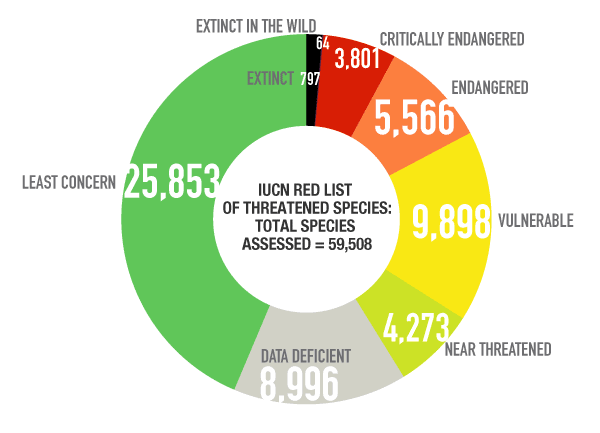
When seeking to help out a pressing cause, it all starts with education. Head over to the IUCN Red List linked below to do some research into your favourite animals and their stance in population numbers, or if you want to see the most endangered straight away, take a look at the WWF website to look at their list of most endangered species (which you 

could then consider sponsoring!). 

Thank you very much for taking the time to read, remember to stay safe, and stay educated on the vanishing species you know and love! And always keep in mind, while being aware of the species we have lost, don’t forget to look at all of the great success stories when it comes to reappearing (we’re looking at you, dodo bird).

Ecosystem services and nature based solutions blog: https://youthfornature.uk/2020/12/15/ecosystem-services-and-nature-based-solutions/

Ethical shopping resource:

giki.earth/

IUCN Red list:
https://www.iucnredlist.org/

WWF endangered list

https://www.wwf.org.uk/learn/wildlife?ds_rl=1263317&pc=ATB001001

WWF success stories! 

https://www.wwf.org.uk/success-stories

Monica’s Instagram: HERE

Ecosystem Services and Nature Based Solutions

By Monica Bhatia

It is clear to see that so much of what we humans have on earth is given to us by the natural world – many of these are what keep us alive! So if the services that ecosystems provide us are so important, surely we should be doing everything in our power to keep these ecosystems alive and healthy. Unfortunately this isn’t always a priority. So let’s discuss ecosystem services, and the nature based solutions to keep them functioning.

To begin, it is key that we understand the components; an ecosystem is a biological community of interacting organisms within their physical environment and a service is a system supplying a public need. Therefore an ecosystem service can be defined as the benefits to humans provided by these ecosystems. 

Before we continue, let’s look at the main ecosystems that make our lives oh so wonderful:
  • Tropical rainforest
  • Temperate forest
  • Boreal forest
  • Tropical grassland
  • Temperate grassland
  • Mediterranean
  • Desert
  • Tundra
  • Mountain

Now, what are the main ecosystem services? They can be split into four main categories:

1 – Provisioning services

These are the tangible goods produced or provided by ecosystems. One example of this is food, such as fruits, vegetables, nuts and seeds, which not only provides us food on a basis of survival. Another example is fuel wood, and this benefits not only individuals in regards to heat for cooking but also allows unusable wood excess to find a home and reduce waste.

2 – Regulating services

These are the benefits we gain from the regulation of ecosystem processes (regulation meaning the act of something being maintained by an authority). Examples of regulating services include pest regulation, climate regulation, and pollination. What is key to note when looking at these is the fact that we could not live without them; if pests were not regulated, crops would be devastated or even wiped out; if the climate wasn’t regulated, the earth’s surface temperature would soar even quicker, making the planet simply inhospitable sooner than is already predicted and if pollination wasn’t to take place, the habitats that wildlife rely on for food and shelter may not even exist. 

Without pest predators like birds, plant life would likely struggle to feed our global populations because pests adore munching away on plants.

3 – Cultural services

These are the non-material benefits we withdraw from ecosystems, such as a spiritual, recreational, aesthetic and educational gain. While, unlike the provisioning and regulating services, our lives don’t necessarily depend on cultural services, they provide a different type of gain; it allows traditions to be withheld throughout decades, allows families and friends to bond in the outdoors, provides self peace and joy, and allows you to educate yourself with a more holistic understanding of the world.

Did you know, just 20 minutes spent outdoors can significantly lower your stress levels?
Simply, nature provides a stunning view; just look at those trees – and mountains – and that lake!
There are an estimated 413 ecosystems in the world. That is 413 things to learn about!

4 – Support services

These are the factors necessary for maintaining these ecosystem services, such as soil formation and nutrient cycling. If these biological processes didn’t exist, nor would the animals and environments that produce all of the gains mentioned above, and our lives would be nowhere near what they are right now. 

In the same way that bricks and cement build solid foundations for our houses, nutrients and soil build up ecosystems – it’s like a construction matrial!

At this point you might be thinking, we have all of this already, and we will in years to come, so what are we trying to solve? People think this because the things mentioned above such as food and wood fuel are labelled as “renewable”. If a resource is renewable, it is meant to mean we will always be able to have it, however, this is often not the case. It can happen where over exploitation occurs – thinking it’ll never run out – yet an infinite resource can turn finite. Why don’t we look at an example:
Trees. We can always plant them, and the world is full of them. The fact that they can be grown again and again means that they are an infinite resource. Wood is in demand as we use it for heating and energy, so we cut it down. If we cut down the trees at a faster rate than we can grow them back, there is a possibility of there being a period where there are no trees (as we would still be waiting for more to grow). If you’re a bit business savvy, you could even call it supply and demand. 

So now we know where our issue lies, we can begin to ponder the solutions, and more specifically, the nature based solutions. Nature based solutions are actions that work with and enhance nature to help address social challenges. The solution begins with us – we need to take on lifestyles where we withdraw the gifts of nature that we need to survive, while allowing it to flourish and recover between periods where we take from it. If you are reading this article, I can assume that you are intrigued as to what the nature based solutions to ecosystem loss are – they can be carried out on an individual, organisational or governmental scale, but considering you may want to make a change, let’s begin with the steps you can take.

It is all about consumption really. More or less everything we buy, eat or wear is a derivative of nature, even if it isn’t so obvious, somewhere down the supply chain of the products you own, an ecosystem service comes into play. There are two main questions we can ask ourselves; what do we buy/consume, and how much do we buy/consume. You should always check when buying natural products that they are derived ethically, in a way that doesn’t harm the ecosystem it comes from, here are some marks to look out for that ensure that your product is doing as little damage as possible:

Note that these symbols don’t guarantee that the entire product is both ethical, sustainable and provide a fair wage. They merely target one section of the creation process (and sometimes transport process) and suggest that they’ve tried to follow certain guidelines.
Often the best practice is to buy when you need something and to buy local.

Additionally, we just need to buy less if it is derived from nature – remember how we mentioned supply and demand? We need to give what we take away time to be replenished. If you want to go all the way and make as little interruptions in ecosystems as possible, consider some lifestyle changes; ensure your home runs on renewable energy sources, or install a smart meter so you can keep an eye on what you use.

When we talk about organisations, we are discussing amazing groups such as the WWF, which collect funds in order to preserve these habitats and shield them from being exploited. This trend has developed and progressed into other organisations but this needs to be a more commonplace practice for businesses.

But where the most influence is held, is in our governments. If stricter environmental rules were insisted upon, we wouldn’t have products that are not ethically sourced in a way that is as unobtrusive as possible, as it simply wouldn’t be allowed – yet laws and policymakers often turn a blind eye and allow too much to be derived in the wrong way (often only focusing on economic benefit), meaning we are losing many more ecosystems than we should. (speaking your mind is the best way to show a government that you disagree with a policy – sign petitions at www.gov.uk > petition-government, or maybe express your views in an instagram post and tag @borisjohnsonuk @ukgovofficial and @ukparliment !)

I would like to thank you so much for reading, I hope I have done a decent job in educating you on ecosystems and nature based solutions – stay safe, and stay caring for the planet 🙂

Follow Monica HERE

What the heck? SSSI’s

An informatory series, to educate on topics relevant to any of our campaigns.

What are they?

A Site of Special Scientific Interest1 (SSSI) is a protected area considered special by virtue of the wildlife, geology or landform contained within it. There are over 6900 SSSI‘s in the UK! (See image below!)

Image depicting the listed SSSI’s across the UK as of 2020.
© Scottish Natural Heritage Contains Ordnance Survey data © Crown copyright and database right (2020)
© Natural England copyright. Contains Ordnance Survey data © Crown copyright and database right 2020.
© Natural Resources Wales copyright. Contains Ordnance Survey data © Crown copyright and database right 2020.
© Northern Ireland Environment Agency copyright. Contains Ordnance Survey data © Crown copyright and database right 2020.

SSSI status is a higher-level designation than a Local Wildlife Site which means they are afforded partial legal protection to prevent damage from activities such as development. In some parts of the UK SSSI’s are also protected from neglect as owners have legal obligations to look after them.2 

The specific legislation underpinning SSSI’s differs between countries but all offer similar levels of protection. They are;

  • Wildlife and Countryside Act (1981) as amended (England and Wales)
  • Nature Conservation (Scotland) Act 2004 (Scotland)
  • Nature Conservation and Amenity Lands Order 1985 (Northern Ireland).  

How are they created?

Fundamentally, SSSI’s are selected because they contain the best examples of natural heritage in the UK but the actual process of designation involves;

  1. Cataloguing features of interest.
  2. Evaluation against a set of established criteria.

The ultimate responsibility for designating SSSI status then falls to the devolved nature conservation bodies;

  • Natural England
  • NatureScot 
  • Natural Resources Wales 
  • Northern Ireland Environment Agency. 

Why is it important to look after them?

SSSI’s are a cornerstone in British nature conservation, forming a national network of protected sites, often underpinning higher-level designations such as National Parks or Natura 2000 sites.  Given the scale of wildlife decline in the UK and the continued development of the countryside it is imperative to look after SSSI’s to ensure the continued survival of a wide range of the diverse habitats, species and landforms found in the UK.  

Many SSSI’s also deliver a variety of provisioning, regulating and cultural services to society, which are so valuable, that DEFRA has concluded that the benefits of achieving favourable condition in all SSSI’s far outweighs the investment cost.

By Chrissy Derrick – Organising member

References

1) Known as an Area of Special Scientific Interest (ASSI) in Northern Ireland
2) In England since 2000

‘Rewilding’ at different spatial scales

(A suggestion of a variety of small steps we could all take to achieve a complex goal – reducing homogenous landscapes)

The biodiversity crisis is real, and we require serious action to avert a mass extinction and the deterioration of our self regulating planet. “Rewilding” is often posed as a solution, yet there is now much confusion about what it actually means, and, rather than slapping meaningless labels onto things, we need a clear plan to restore nature at speed and scale.

So here is my vision of how we can restore nature in the UK, my “rewilding manifesto” if you like.

At the smallest scale, we can let more nature into our gardens. Allowing patches to grow into scrub, planting flowers, creating a pond, and growing vegetables could create a variety of microhabitats for insects and small birds. This isn’t going to save the planet, but we might as well allow a bit more wildness to live alongside us.

At a slightly larger scale, we can allow more wildlife to persist in our parks, verges, and the margins of farmland (hedges, field margins, and ditches). At these scales, we’re reliant on mimicking ecological processes through human management rather than allowing nature to truly take over. Cutting vegetation sporadically to maintain a patchwork of vegetation heights, mimicking wild herbivores; tilling the soil and sowing wildflower mixes to mimic wild boar; culling herbivores to mimic top down apex predator control.

Within farmland itself, harnessing our ecological understanding will be vital for producing nutritious food with the smallest possible environmental impact. Minimising the disturbance of soil and ensuring a constant covering of vegetation can increase its fertility and minimise the erosion of this precious resource. Integrating trees into arable systems may be able to increase the yields of crops by restoring soil mycorrhizal networks, and also producing fruit or nuts – more nutritional diversity – as a bonus. Providing hedge habitat for songbirds may be able to reduce the impact of insect pests through predation. Since we have so little agroecological farming in the UK, there are likely to be many ways in which we can make farmland better for wildlife without reducing yields.
However, neither should we entirely abandon conventional modern agriculture or oppose new developments such as genetic modification; we should be wary of romanticising the farming practices of the past or having an irrational fear of modern technology, when what we need is a combination of both high tech and low tech approaches to farm using the smallest possible amount of land and water, and emitting as little greenhouse gases and nutrient and soil runoff as
possible.

Across the wider farmland landscape we should restore corridors of greater ecological complexity. The obvious way to do this is along our river valleys. Creating a 20m buffer either side of rivers and streams, allowing scrub to regenerate, and releasing vast numbers of beavers, would create mosaics of wetland, woodland, dead wood, and rough grassland habitats. Focusing our efforts along river valleys not only ensures that these habitats are joined up at a landscape scale, but also helps to attenuate flooding, and minimise the effects of agricultural runoff on our aquatic ecosystems.

Corridors should also be created to link up tiny, isolated nature reserves to allow species to move to track climate change, and enable the use of large herbivores roaming over large areas to create a diverse mosaic of habitats, rather than prescriptive management of individual sites. The margins of urban areas should also be a priority for nature restoration. “Green belts” are often little better for wildlife than the surrounding countryside; a commitment to a “wild belt” around every city could make a real contribution both to nature recovery and improving people’s connection to nature and mental health.

Into these corridors we could reintroduce lost species to restore the complex web of trophic interactions which characterises a healthy ecosystem. Wildcats, pine martens, water voles, red backed shrikes, and storks could all be reintroduced, or come back of their own accord, and, whilst they may not have the ecosystem engineering capabilities of wolves or beavers, they would certainly add a lot more magic into our natural world.

At the largest scale, we should have huge areas, each of many thousands of acres, devoted toambitious nature restoration, where ecosystem engineers and natural processes are the primary engines of biodiversity. We should prioritise this strategy in areas which are already fairly good for nature and retain substantial fragments which we can join up by filling in the intervening farmland. In the south of England, we might have a 15,000 acre heathland and wetland stewarded by bison and beavers at Minsmere; a continuous swath of chalk grassland, woodland and scrub along the south downs and the chilterns, grazed by feral horses, cattle, and wild boar; a mega wetland in the Somerset Levels 10x the size of what we have now, and a few more. As well as these, we should create new nature areas from scratch: the famous Knepp estate has become a truly fantastic wildlife hotspot, starting from ecologically barren farmland, in just 20 years. In places such as the lake district, smaller, slightly-less-wild areas could involve aspects of traditional farming to preserve cultures, rare breeds, and rural economies.

Within the massive wildlands we should bring back many more of our lost species. White tailed eagles already soar over the south coast and will soon be thriving in the marshlands of East Anglia and Somerset; perhaps one day truly epic dalmatian pelicans, one of the world’s largest living birds, will join them. In the coming decades, we should reintroduce lynx and wolves. The latter could live here already, we only need to change mindsets and design mitigation for farmers.

So how can we achieve this vision? I think there are two main requirements: a shift in mindset, and a restructuring of food production and farm subsidies.

In our sanitised, efficiency-obsessed modern world, we seem to have developed what one ecologist calls “ecological tidiness disorder”. We have an obsession with “cleaning up” messy corners, yet these are the places where wildlife can thrive. We need to appreciate the creatures living around us, and allow them a little more space to thrive. We would also do well to temper our fear of large animals: in mainland Europe, wild boar live in landscapes as densely populated as southern England. They are not without problems – raiding dustbins, rotavating football pitches, and terrorising nudists – but that is part of the point: we need to accept that other species impact the landscape as well, and we shouldn’t always be in control. How can we expect poorer nations to coexist with tigers, lions, or elephants – species which pose a genuine threat to human lives and livelihoods – if we can’t live alongside wild boar or beavers?

Secondly, we need to rethink the relationship between food production and nature. Due to the infamous shifting baseline syndrome, as well as our cultural romanticisation of farmed landscapes, we have mistakenly believed that we can solve our ecological crisis by farming differently. Yes, we can allow a bit more wildlife to live in farmland, but when scientists have measured the population sizes of wild species in different kinds of farmland, they have found, universally, that farmland of any kind is a poor habitat for most creatures. When we abandon our preconceptions, this is unsurprising: part of the reason why there are so many species on the planet is because most are specialists, occupying a particular niche which, moreover, is often created by other species – the huge complexity of intact ecosystems creates the conditions for new species to evolve, which promotes further complexity. Therefore, it’s inevitable that many of these species will disappear, and many others decline dramatically, whenever intact, complex ecosystems are replaced with simplified, farmed ones, regardless of the kind of farming practices we use. Or in other words, creating a genuinely rich ecosystem requires the reduction of farmyields to such an extent that it becomes impossible to produce any meaningful quantity of food, regardless of whether we might choose to label this as “regenerative”, “in harmony with nature”, or “traditional farming”. Furthermore, if we farm more land to produce a given amount of food, it is intuitive that the impacts on soils, carbon emissions, and water use are likely to be greater.

Farming is a necessity for our survival but it is, fundamentally, an environmentally damaging activity. To reduce its impacts on the other species with which we share the planet, our key goal should be to reduce the amount of land that we farm.

In terms of a national plan for biodiversity, then, we should restructure farm subsidies to create large areas primarily devoted to ambitious ecological restoration, and, by necessity, separate areas devoted to highly productive food production. Not only is this our best option for large scale nature recovery, but it is also one of the best options for reducing farming’s climatic impact.

As consumers, we should dramatically reduce the quantity of animal products which we consume. Getting a higher proportion of our nutrition from plants would enable us to substantially decrease the land area required to feed each person. We should reduce food waste as much as possible. It is outrageous that 30-40% of food is wasted, and we might as well eat all the food we buy. If we could implement measures to prevent the spread of disease, we could feed any remaining food waste, as well as some crop residues, to pigs and chickens, but the amount of meat which could be produced in this way would be much lower than what we consume today.

In general we should shift to a paradigm of “land for food and land for nature”. As the excellent book Rebirding suggests, Britain is uniquely weird in the extent to which we perceive farmland as our core wildlife habitat, and have no real ecosystems. If we are to address the truly cataclysmic biodiversity crisis, we need to be much more ambitious than simply making our farmland a bit better for wildlife.

So there you have it, my vision for rewilding Britain. Perhaps I have talked too much about farming, but I think this is the key issue – how can we restore Britain’s wildlife without simply destroying more of the natural world in other countries (which often hold more of the earth’s biological diversity) to feed ourselves.

So, going back through the scales. At the top, we have massive areas of truly incredible ecosystems, governed by herds of megafauna, flooding, vegetation succession, predation, and death and decay, built up from our existing remnants which still hold substantial wildlife. At the next level down, we have smaller areas of nature recovery where low densities of semi-wild herbivores create habitat diversity. At a smaller scale, we have corridors along our rivers thronged with ecosystem-engineering and flood-mitigating beavers, small mammals such as wildcats, pine martens, and water voles, and returning birds such as red backed shrikes, storks, and willow tits, which move between the larger nature areas and spill out into the surrounding landscape. And finally at the micro scale, we allow a bit more mess and wildness to grow, sustaining insects which may not save the world but nevertheless enrich our lives. Combined with a parallel effort to feed ourselves sustainably on less land, ambitious nature recovery could conceivably occupy half of Britain, and we would do our bit to once again make this a genuinely living planet.

By Josh Harris – Organising member

Twitter/Insta: @joshharriswild

The power of nature in a chaotic and digital world

Having grown up in a small town since the age of 6, I never realised how important having green space near me was until I moved to a city last year. I had to walk for 25 minutes to reach my nearest green space, which was a shock when I was used to having nature all around me. When I lived in the city, I missed being able to go out and walk in the woods, but more than this, I wanted the freedom you feel when you’re in green spaces, away from buildings and cars. Being in these physical spaces helps to give you mental space, to think and feel without as much noise and as many buildings and distractions. Being able to spend a little part of your day in nature will change your mood instantly, it will help you to feel calm and more relaxed (1). 

I now live in the same town in which I grew up and even though I see them every day, there is always something lovely about seeing deer, red squirrels, hares, eagles, rabbits and chaffinches around you when you’re outside. Bird song is also known to help relieve stress and refocus your attention (2). You can’t help but smile when watching a red squirrel challenge itself to see how many peanuts it can fit in its mouth or when they chase each other around the trunk of a tree. There is so much joy to be found in seeing and hearing animals in their natural habitats and without green spaces, this becomes more difficult. There is no reason why these moments of happiness in nature shouldn’t be accessible to everyone. 

Having nature on your doorstep is even more vital now, with so many people spending all day staring at computer screens when working from home or doing online university courses. Spending all this time connected means we are taking in much more information than we are used to, and it can be really difficult to process this. Being able to spend some time in nature each day, away from email pings and zoom calls, is essential for our mental health and our ability to process information and the events of the day. I know that for me, being able to spend time with my dog in the park or go for a walk in the local nature reserve after university classes is the perfect way to unwind and let my mind relax. 

I am much happier now as I am back in my small town with nature on my doorstep, but it should not take living in a town or the countryside for this to happen. There is no reason why every city can’t have open spaces where residents can experience nature and all its benefits. 

Written by Morgan Guthrie 

Twitter: @morganguthrie35 

(1)https://www.mind.org.uk/information-support/tips-for-everyday-living/nature-and-m ental-health/how-nature-benefits-mental-health/

(2)https://www.theguardian.com/environment/2019/may/04/birdsong-antidote-to-stre ssful-lives-dawn-chorus-day