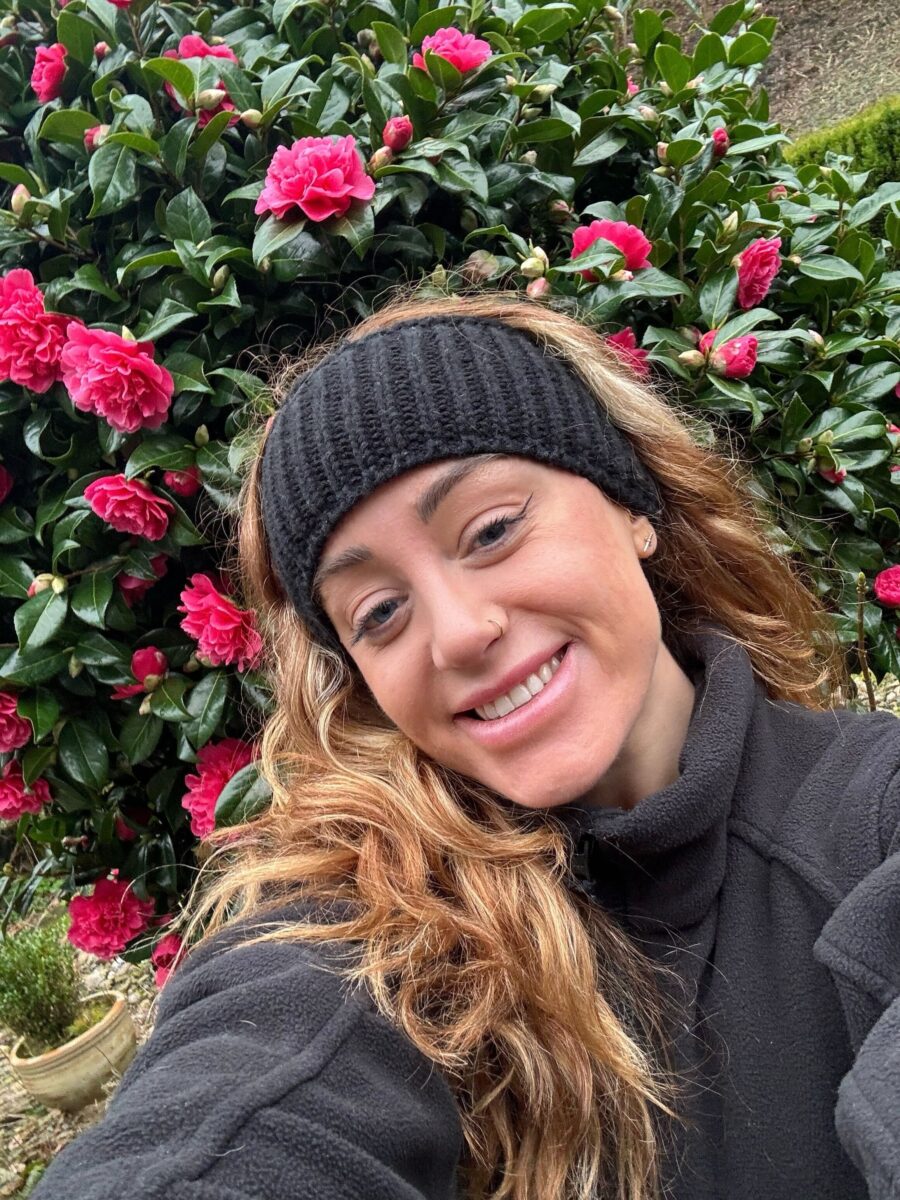
Community member spotlight – Katie Harriet Thompson

Who are you?

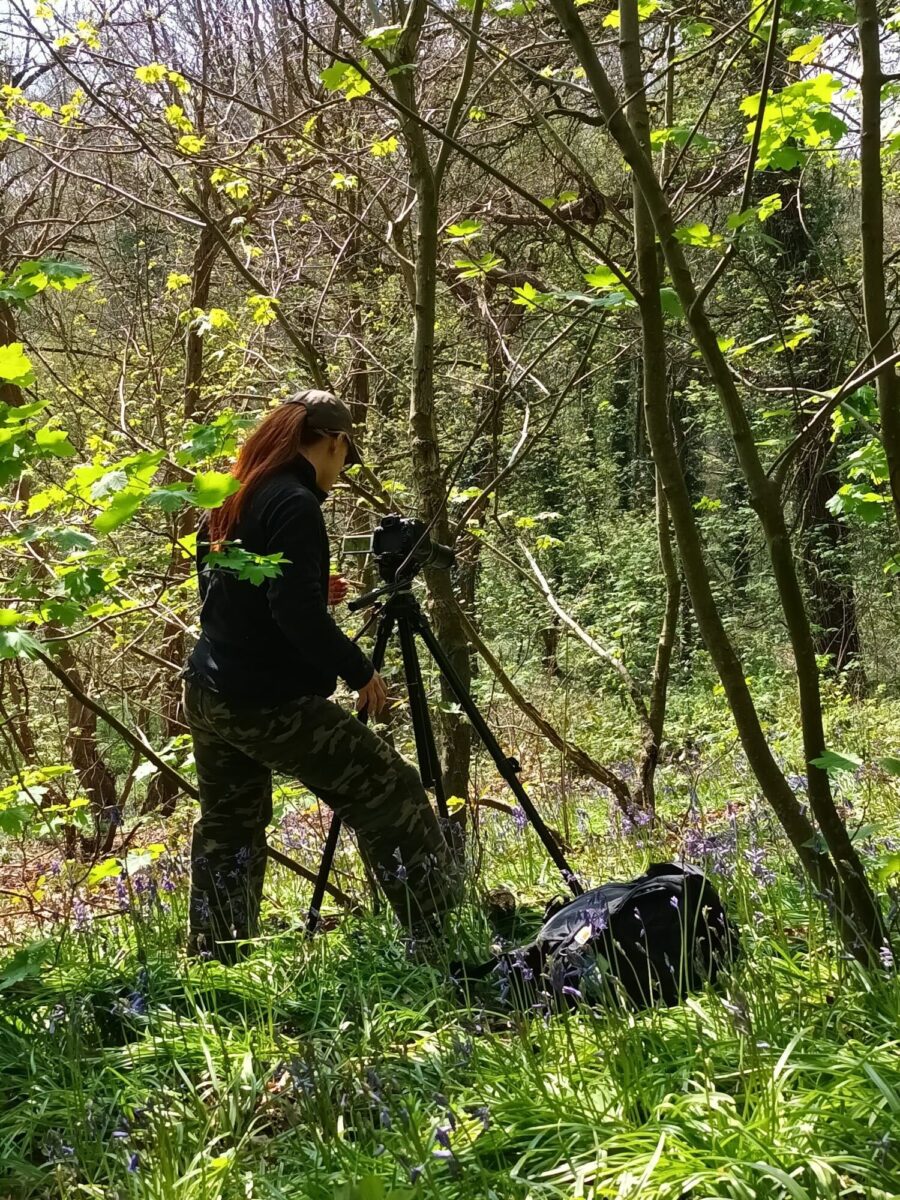
Hey, I’m Katie, I’m a wildlife storyteller and I’m obsessed with animals! I’m part of the UKY4N Webinar team. In my spare time, I love hiking, travelling and skateboarding. I’m also a freelance filmmaker and photographer :camera_with_flash: 

Why are you so passionate about engaging young people with nature and the environment?

    I believe engaging with young people is key to solving the climate and nature crisis as 70% of young people have climate anxiety, yet 86% believe being outdoors and among nature has a positive effect on their mental wellbeing. We are our future stewards, leaders and stakeholders. We make up a huge percentage of our population and we need to be engaged and share our passion. Plus, younger people are so much fun!! Being around young people, especially children, brings out my inner child and playful side. I’m very lucky that both my current jobs include youth engagement. 

    Tell us three reasons why we should care about ancient woodlands

    They are the UK’s most complex ecosystem, supporting many rare species and communities such as primrose, hazel dormice and specialist lichens. They are our natural heritage and history, housing our ancestors and providing their timber. They have always been woodlands and they have a right to remain so.

    With only 2.5% land coverage and a lack of legal protection, we are at risk of completely losing these magical woodlands for good. If policy doesn’t change, ancient woodlands will degrade and be destroyed until nothing is left.
    What is your favourite tree and why?

    This changes all the time for me! One of my favourites is a very specific ancient hawthorn tree in my local woodlands. I love it as it was the first ancient tree I photographed and I also notice memorial flowers are left there often, which makes me feel connected to the other people who visit and notice the tree too.

    Have you ever had an encounter with a famous person?

    I met 3 TV celebrities when I entered the Woodland Trust Igniting Innovation challenge -Megan McCubbin, Danny Clarke and Dwayne Fields. They were all really lovely and supportive during my project pitch and, as a filmmaker, I really appreciated their encouragement and it felt surreal to show them my film clips.

    Do you have a bucket list? Tell us two things that are on it

    Hell yeah! 2 things I am hoping to tick off next year are surfing in Cornwall and visiting the rainforests in Dartmoor (I’m a northern girl so haven’t been to either before).
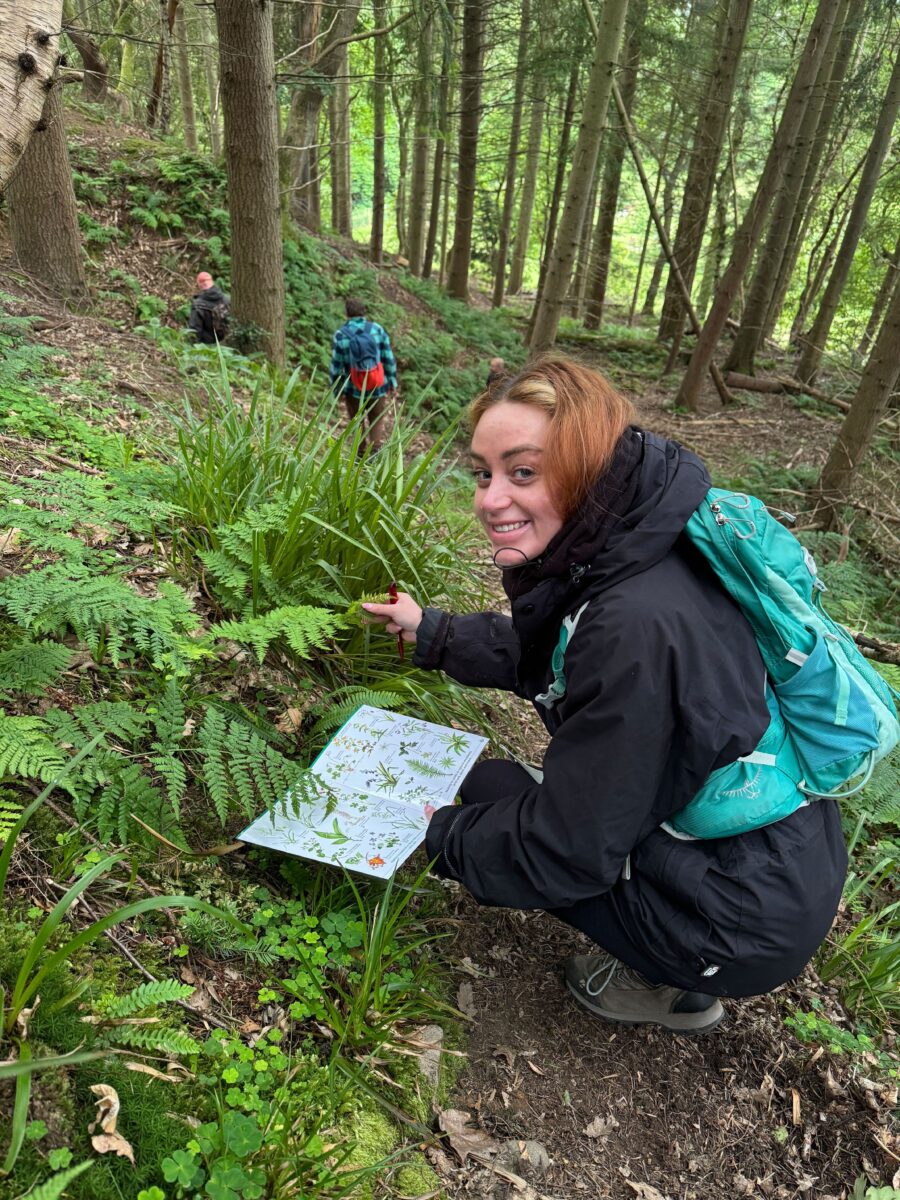
    UK Youth for Nature is a group of like-minded nature lovers who are on a mission to improve the future for wildlife, nature and humans in the UK. If you want to be part of our community, you can find out more here.

    Why the Bad Rep? Halloween-adjacent Animals That Don’t Deserve Their Bad Reputation

    By Jasmine Foster

    Many of our UK wildlife species have spooky folklore and stories attached to them, making them prime Halloween decoration/costume inspo! But where do these stories come from? Jasmine wanted to explore where these scary stories originated and whether the species deserve their bad rep (we think not!).

    Spiders

    What’s their connection to Halloween?

    • Spiders’ history on why they are related to Halloween dates back to the medieval period, when the Roman Catholic Church spread word of the dangers of witchcraft. They were often seen to be companions to witches, therefore gaining a bad reputation within communities, especially during the witch trials between the 15th and 18 centuries. 
    • In addition to this, run down areas often said to be ‘haunted’ are naturally home to many species of spiders due to their fondness for darker, less disturbed areas. When there are lots of spiders sharing one area and building multiple webs, it doesn’t take long before they build up and look pretty much exactly like the decorations you can buy!

    Why they don’t deserve their bad rep:

    • Spiders are a key aspect of insect control as they naturally prey on insects such as flies, moths, and mosquitoes. This means that insect populations can remain stable. The control of insect population can also reduce the spread of disease which can, in turn, benefit humans.
    • Spiders act as a source of nutrition for many bird species and other small animals, and therefore play a key role in their food web.

    Favourite facts about spiders: 

    • A spider’s blood is blue. The oxygen in their blood binds to copper, giving their blood a blue appearance.
    • Around 100 different species of spider mimic the appearance of ants, and they are even able to produce ant pheromones. This makes it easier for them to hunt and also provides them with protection from some of their predators.
    Synemosyna formica

    Synemosyna formica

    Owls

    What’s their connection to Halloween?

    • Owls are nocturnal and therefore communicate during the night, producing haunting calls that are frequently used in horror films or to set the tone for a scary scene. The design of their feathers also allows them to fly silently.
    • Owls were also seen as the companions of witches, meaning that they became a sign of misfortune and ghostly and earthly decay. This was during the time period where Catholicism was encompassing Europe and more sinister Roman characteristics of owls became common. This made them more associated with Halloween themes. 
    • In Welsh folklore Blodeuwedd, a maiden who has an affair and tries to kill her lover’s partner, turns into an owl as a form of punishment. They do this as they state that an owl is “the creature hated by all other birds”. This has led to myths around owls surrounding the folklore, making them seem more spooky and mysterious. 

    Why they don’t deserve their bad rep:

    • Similarly to spiders owls can act as form of pest control, especially for species such as rodents. Rodents are prone to eating and destroying crops in fields and storage, therefore controlling their populations is beneficial for human food production. 
    • Owls such as barn owls are birds of prey and are at the top of the food chain, therefore playing an incredibly important role in their ecosystem. Preservation of owls can sustain biodiversity in certain areas.

    Favourite facts about owls:

    • Their eyes are immobile. Owls have eyes that are tube-shaped, and cannot move. Their retinas contain many rod cells to help them see at night and help them with their depth perception for hunting.
    • To compensate for not being able to move their eyes, owls can rotate their heads 270 degrees. When they turn their heads and cut off blood circulation, a blood-pooling system collects blood to power their brain and eyes. 

    Tawny owl

    Bats

    What’s their connection to Halloween?

    • Around 2,000 years ago celtic people celebrated a festival called Samhain on the 31st October. The Celts believed that the division between the world of spirits and our world was the weakest during this day, meaning that spirits could cross into our world. The festival would include bonfires, which acted as an attractive light source for nearby flying insects. The gathering of these insects would then attract bats interested in a meal, therefore swarms of bats would gather near the festival. The Celts noticed this and then started to believe that the bats were the spirits that had crossed over to our world.
    • As well as old traditions, old media also influenced the reputations of bats. Dracula, a famous book written by Bram Stoker, depicts bloodsucking vampires turning into bats. The publishing of this book led to people believing that bats suck blood, when only 2 species are known to do so, and they prefer goats’ and birds’ blood over that of humans. This depiction of vampires and bats still influences how bats are seen and is one of the reasons they are feared, as well as the old wives’ tales about them getting stuck in your hair.

    Why they don’t deserve their bad rep:

    • Bats are key for many tropical plants who depend on them, sometimes wholly, to pollinate their flowers or spread their seeds. This means that they can help maintain biodiversity of plants, making sure they’re spread across an area.
    • Bats are also insect controllers, due to them preying on many insects. All UK bat species eat insects, meaning that Britain benefits via pest control from their presence. Some studies show that bats are so efficient at this that they eat enough pests to save more than $1 billion per year in crop damage and pesticide costs in the United States corn industry alone. This is advantageous as it means less pesticides are being used, which can cause damage to the environment. 

    Favourite bat facts:

    • A single bat can eat up to 3000 insects per night, which is the same as eating their body weight in insects. This proves how effective they can be at pest control. 
    • Over 300 species of fruit depend on bats for pollination. They also help spread seeds for nuts, figs, and cacao. Some other fruits that they pollinate include bananas, avocados, and mangoes. 

    Brown long-eared bats (found in UK)

    Crows

    What’s their connection to Halloween?

    • A poem by Edgar Allen Poe called ‘The Raven’ may have led to the association of crows (and also ravens) with Halloween. The narrator in the poem called the raven a thing of evil and a prophet, which suggests a connection with the supernatural. The talking raven responded to the questions of the narrator, which eventually drove him mad. The talking ability and intelligence of the raven in the poem reflected the natural abilities of crowds and ravens.
    • Crows also most likely became a part of Halloween due to their habits. Crows are large and black and make a “cawing” sound that is often considered jarring when compared to other birds. The birds also are scavengers and the Celtic people strongly associated crows with war, death, and the battlefield because they were known to feed on the remains of those who died in battle. GRIM.

    Why they don’t deserve their bad rep:

    • Crows play a big role in waste management. They consume tonnes of waste every year, which can prevent disease and bad odour. They have an efficient digestive system, so they can consume waste efficiently.
    • Crows will stay around gardens to eat grubs and insects rather than crops. Their ability to clear pests and parasites from farmlands can outweigh the minimal damage they cause to vegetation. An extended family of crows can feed on more than forty thousand caterpillars, armyworms, and grubs during nesting season. 
    • They can also act as pollinators by transporting pollen from one plant to another. 
    • They also eat carcasses, meaning that decay is prevented and, consequently, an influx of insects. 
    • Crows were used as an indicator by health authorities for the West Nile virus, due to being susceptible to it. The birds can die in large numbers during an outbreak which helps people detect the disease, but do not pass it onto humans.

    Favourite crow facts

    • Crows can remember faces. 
    • Crows have different dialects. Different species’ languages can have slight differences.

    Carrion crow

    Toads

    What’s their connection to Halloween?

    • Toads have an association with witchcraft, which came from the idea that toads are toxic, and can therefore be used to craft maleficent poisons. By the 1600s they became a classic ingredient for mythological witch’s brew. This was immortalised after the publication of Macbeth. 
    • A toad’s role in witchcraft then transformed into being a trusted and intelligent demonic figure accompanying witches. This was introduced in the Spanish Inquisition of the 17th century. In 1610 the Spanish inquisitors of Navarre reported that they’d seen a cult of witches in nearby mountains. They claimed that the devil had been recruiting witches in Navarre, and that he had gifted each new witch with a toad. These toads were described as “…A demon in the form of a toad with its face like a man’s, dressed in finely tailored velvet and cloth”. These creatures would then become known as a ‘dressed toad’ which would instruct witches on the Devil’s evil plans. 

    Why they don’t deserve their bad rep:

    • Toads are pest controllers, meaning that they eat slugs, snails, beetles, and flies in gardens and crop fields. This is considered as “ecosystem service” in the fact that the animals are benefiting humans free of cost. 
    • Amphibians are important to their ecosystems. They are connected to many species in their food web, meaning that they eat a variety of things and a variety of things eat them. They are an indicator species, meaning that they often disappear from ecosystems first and indicate that something is wrong.

    Favourite toad facts

    • A group of toads is often called a knot.
    • There are over 500 species of toads.
    • The largest toad is the cane toad. These can grow up to 23cm in length and are originally from South and Central America.

    Common toad

    Read our other Halloween blogs here.

    All of our blogs are written by our community members who are aged between 16 and 35. If you’re a nature loving young person seeking like minded people, why not join us? Find out more here.

    Subscribe to our newsletter to keep up to date with all things UK Youth for Nature!