A little Bird Told Me…#4 :

Edition: Oceans by Joe Wilkins

At time of writing, many people around the country are heading to the coast. 

Why do we flock to the coast? Is it the open space? The cooling sea breeze? The sounds? I guess everybody has their own reasons for wanting to be beside the sea (we’d love to hear yours – @ukyouthfornature on social media!)

When I started planning this blog, I thought I would know exactly the direction it was going to take. But as I started writing, I realised there were so many topics and issues I wanted to cover. Did I want to focus on my personal love of the sea? Marine biodiversity? Access to the coast and the ocean? The ocean is such an important part of my life that I wanted to be sure that this blog did it justice.

So, I decided to use this blog as a chance to introduce a few different themes and areas of interest and serve a conversation starter for myself and you, the readers.

The State of the Ocean

“How inappropriate to call this planet Earth when it is quite clearly Ocean.”

Arthur C. Clarke

The ocean covers nearly three-quarters of our planet’s surface and was long thought to be too large for human activities to impact. But this is no longer the case (Pink, 2018). We are seeing large-scale changes in ocean chemistry, biology, and dynamics globally (Gattuso et al., 2015). With the threats of sea level rise, ocean warming, and acidification set to impact many countries worldwide, governments worldwide must begin looking to humanities future relationship with the ocean (IUCN, 2017). This will involve creating and implementing policy and management strategies that, firstly, reduce the impact of human activities on the sea and, secondly, reduce the effects of ocean change on coastal socio-ecological systems, particularly those increasingly vulnerable to said change. 

But what is actually being done? In a word: nothing.

It’s been nearly two months since World Ocean Day (June 8th), when businesses and world leaders were making big promises to protect the ocean. But shockingly, they haven’t followed through on any of these commitments.

Let’s do a roundup of the last month in ocean conservation:

  • The High Seas/BBNJ Treaty signing has been delayed.
  • The United Nations Convention on Biological Diversity COP15 has been delayed to 2022.
  • The Gulf of Mexico was on FIRE from a ruptured pipeline.
  • The UK Government is likely to approve the drilling of massive oil field in the North Sea. Seriously? We need to #stopcambo
  • The MV X-Press Pearl Disaster has caused unknown damage to marine ecosystems in Sri Lanka.
  • Seas continue to warm.
  • It’s looking likely that Deep Sea Mining will be entering the exploitation phase in the near future. We still know so little about the deep sea and the impacts of DSM but in my opinion, it’s a disaster waiting to happen. 
What needs to be done?

This is question could be answered in a variety of different ways, depending on your area of interest. Here’s some things that spring to my mind straight away, beyond the simple “we need to protect our seas” statement often heard.

Building a love for the sea

Education is an extremely valuable tool in the fight against ocean destruction. Ocean science and conservation can be an incredibly gate-kept sector, even in comparison to other environmental studies and activism. The ocean itself can seem very distant for many people, with them feeling extremely far removed from the ocean.

Governments need to invest in nature- and ocean-based education, with funding for hands-on experiences for children and young people. Speaking from personal experience, these are extremely important to building a love and appreciation of our natural world and in this case the ocean. This is especially true for those in marginalised communities, who may not have the opportunity to otherwise.

“People protect what they love.”

Jacques-Yves Cousteau, Renowned Oceanographer

Allowing people to act on this love

Governments need to be put in place mechanisms that enable people to act upon their values. This is an issue that extends beyond the individual. Mainly this should be targeted at large businesses and corporations who have the audacity to charge extra for ‘sustainable’ options. Create a system where it doesn’t cost extra to be environmentally friendly. We need to hold companies to account and, as our representatives, governments should be acting in our best interests, not those of FTSE100 companies

Realising that technology forms only a part of the solution

This is a recurring problem globally. Many governments, particularly those who prioritise economic growth and business, look for technological development and solutions to allow business to continue to grow, often at the expense of communities and the environment. This solution is further pushed by businesspeople and industrialists globally. The most recent example was billionaire founder of Microsoft, Bill Gates, suggesting that the spraying of chalk dust into the atmosphere could be the solution to climate change (Ramirez, 2021). Another ocean-based example is the pre-eminence of the plastic pollution problem among those facing the oceans and technological ‘clean-up’ solutions (Stanton, Johnson & Kay, 2020). A recent study by Hohn et al. (2020) found that clean-up technology alone will not tackle the issue of plastic pollution, but that behavioural change in our consumption and production patterns are required. Yet, this receives less prominence than ‘tech’ solutions and start-ups.

Many scholars in risk and resilience theory question the ability of technology to solve a problem caused by technology itself. Technology will play a role but there is a greater need for behavioural and systemic change rather than focusing solely on technological solutions. 

So, in short, world leaders and policymakers have a long way to go on our journey towards protecting the world’s ocean.

A personal note…

As you may have gathered, I’m extremely passionate about protecting marine environments.
The ocean is possibly the most important component of Earth’s life support system, impacting every inhabitant of this planet, even those thousands of miles from the nearest coast.

But on a personal level, I’m happiest when in the sea and that is a big reason I want to see our seas healthy and thriving. The world beneath the waves has always called me (Moana who?)! So, my desire for ocean protection may not be completely altruistic (don’t @ me).

References

Gattuso, J., Magnan, A., Billé, R., Cheung, W. W. L., Howes, E. L., Joos, F., Allemand, D., Bopp, L., Cooley, S. R., Eakin, C. M., Hoegh-Guldberg, O., Kelly, R. P., Pörtner, H. o., Rogers, A. D., Baxter, J. M., Laffoley, D., Osborn, D., Rankovic, A., Rochette, J., Sumaila, U. R., Treyer, S. & Turley, C. (2015) Contrasting Futures for Ocean and Society from Different Anthropogenic CO 2 Emissions Scenarios. Science (American Association for the Advancement of Science). 349 (6243), aac4722. Available from: https://hal.sorbonne-universite.fr/hal-01176217. Available from: doi: 10.1126/science.aac4722.

Pink, J. (2018) 5 ways that climate change affects the ocean. The Conversation.

Stanton, T., Johnson, M. & Kay, P. (2020) The war against plastic is distracting us from pollution that cannot be seen. The Conversation. Available from: https://theconversation.com/the-war-against-plastic-is-distracting-us-from-pollution-that-cannot-be-seen-147161 [Accessed 29/04/2021].

Common Bottlenose Dolphin – Natural Kingdom: Wild Walls

(Also known as Tursiops truncatus)

By Claudia Villacian Casado

Natural Kingdom: Wild Walls are a series of wildlife and nature murals in cities and towns across the UK. These murals represent our collective concern about the loss of wildlife and climate change in the UK, and internationally. Working with communities, young people, partners, and artists up and down the country we will be highlighting the importance of nature, especially for fighting climate change. The murals will be created between now and the end of September and will be accompanied by lots of political and community activity in the run up to COP26 .

Find me here: SY23 2EX

If you’re lucky enough to be looking out to beautiful Cardigan Bay from Aberystwyth on a peaceful morning, you might just be able to catch a glimpse of a sleek, dark grey, curved dorsal fin. Or hear a faint clicking sound as you see a streamlined body surfing the waves – what could it be? You’re in the presence of a playful and sociable bottlenose dolphin! 

Photo by NOAA on Unsplash

Found throughout the world and the UK but frequenting Aberystwyth through Cardigan Bay, common bottlenose dolphins help keep our oceans healthy – which is crucial to having a healthy planet. They do this by eating animals like fish and squid, maintaining the balance in the food chain. Due to anthropogenic factors, the beautiful bottlenose dolphin faces several threats. As a trusting and playful animal, bottlenose dolphins often get caught in fishing gear and our continual exploitation of our waters means commercial fishing for other species is a threat to bottlenose dolphins. While seeing a bottlenose dolphin from a boat might be a wonderful experience for humans, boat traffic and water pollution can disrupt these creatures’ natural habitat and affect their sense of orientation. Unfortunately, our impact on the planet means the bottlenose dolphin has to be on high alert. 

Photo by Andrew Jephson on Unsplash

So why should we care and what makes these dolphins so special? The bottlenose dolphins found in British waters are the biggest of their kind and from Aberystwyth looking out to Cardigan Bay is one of the best places to see them! Their size helps them cope and thrive in the cold temperature of the waters – they can live up to 50 years! Common bottlenose dolphins are social animals and love to live in groups – you call these groups pods. Another characteristic of these creatures are the different types of vocalisations they use to keep in contact. Just within the population found in Cardigan Bay, we can hear a variation in the type of whistles used to communicate. As well as whistling, bottlenose dolphins make clicking sounds so they can use echolocation to find prey or scope out their surroundings. These animals have extremely complex language systems – what do you think they’d say if we could understand? 

And how can you spot a bottlenose dolphin? The name might give you a hint – these dolphins have a short and bottle-shaped beak as well as light/dark grey bodies with a lighter underbelly. Around 60% of the dolphin population in Cardigan Bay has a distinct mark on their fin, making it easier to recognize them! Otherwise look out for these animals taking part in some activities. Bottlenose dolphins love to have fun – they’ve been known to surf on waves, jump out of the water and slap their tails! They’re also speedy swimmers – being able to reach speeds of 18 miles an hour. 

Photo by Bertrand Borie on Unsplash

After a long day of exerting so much effort, the bottlenose dolphin rests by alternating which side of their body sleeps – a type of sleep called unihemispheric sleep. A true testament to how magnificent these creatures are, they only rest one side of the body at a time so they can maintain consciousness on the other side to carry out activities like breathing or swimming very steadily. Tomorrow their day of play, hunting and communication starts again!

How are we helping, and how you can too:

Common bottlenose dolphins are at risk in our changing climate and through our exploitation of the ocean. To help, you can: 

  • Visit the mural, take a picture, draw it, post it online and celebrate its beauty! 
  • Get in touch with your local MP or councillor, write them a letter, and tell them why protecting and restoring nature is so important! We can help you get started here 
  • Support organisations like Cardigan Bay Special Area of Conservation and The Wildlife Trusts – get in touch with them, tell them about the mural, why you care, and let’s fight together! 
  • Learn more about our friend the Common Bottlenose Dolphin here and here. 
  • Paint/Draw/Write about your own experiences with the species and @ukyouth4nature on socials

Northern Dune Tiger Beetles – Natural Kingdom: Wild Walls

By Monica Kaur Bhatia and Bred Beckett

Natural Kingdom: Wild Walls are a series of wildlife and nature murals in cities and towns across the UK. These murals represent our collective concern about the loss of wildlife and climate change in the UK, and internationally. Working with communities, young people, partners, and artists up and down the country we will be highlighting the importance of nature, especially for fighting climate change. The murals will be created between now and the end of September and will be accompanied by lots of political and community activity in the run up to COP26 . 

Find me here: Grafton Street, Toxteth, Liverpool L8 5XJ

A little introduction 

Small and subtle, the northern dune tiger beetle is a hidden gem when it comes to the UK’s ecological build up. These invertebrates are full of surprises and go about their lives in such an exciting way, so I thought what better way to get to know these little legends than by spending a day with these incredible tiger beetles! 

Some background

For a little bit of background, northern dune tiger beetles definitely hold some cool titles on the UK wildlife scene; they are actually quite rare found in only a few places across the west coast, and exert so many beautiful intricacies, whether it’s their bright red wings, or their hidden iridescent green underside – do you see what I mean about them quite literally being hidden beauties? Along with these physical features, the beetles hold some serious skills for an insect only 2cm in length – they are thought to be one of the fastest beetles in the whole world, rocketing at speeds of 2.5 metres/second!

To put these nifty skills such as super-speed to good use however, it is fundamental that these insects are given the habitat they need to thrive – they are fussy little things, and so the temperature, along with hiding places, egg laying spots, and hunting areas of these habitats need to be just right! So, where on earth will we get all of the right conditions for these insects? The answer is sand dunes! Sand dunes aren’t just your average sandy beaches either. They have been intricately shaped by natural wonders such as the wind and water to form specific mounded shapes, and without these dunes perfectly managing the conditions for these beetles to go about their daily life, they simply wouldn’t be able to thrive in abundance.

Photo by Chantal on Unsplash

Now that we know a little more about these beetles and where they live, let us get right into how they utilise these superb skills and habitats in their daily life.

Morning time!

The day starts on the barely vegetated, sparse sand dunes of Sefton, Merseyside and Cumbria in the north west of England. For such speedy sprinters, the first call to action for these insects is surprisingly relaxing – they sunbathe! That’s right, they get to start out the day how every human wishes they could; laying on rocks, grass and the ground, basking in the sun rays. Why do they do this? Just to simply get warm – I think we all know that given how chilly it gets each night up north that these little creatures need to warm up before leaping into their active day.

Photo by p j on Unsplash

Where do they hang out for the rest of the day?

While they like to have a stretch in the sun in the mornings, they can’t laze about all day – this is the fastest beetle in the world we’re talking about, and they have so much to do! These tiger beetles spend a lot of time in their larval form before metamorphosing into adults. In this stage, they nuzzle in sand burrows – these are just holes within the sand – and while sitting down for most of their lives doesn’t make it seem like these beetles are very busy, this is the stage where they must always be on the lookout, as things are about to get interesting. 

Photo by Anthony Choren on Unsplash

Time to eat!

The way in which nutrients are obtained to sustain an active lifestyle – in the same way as humans – is through diet. Northern dune tiger beetles love to dig into a range of treats, and due to its immense hunting skills, it has its pick of the bunch; they like to eat anything from ants and spiders to moths and flies. So how does this link to the larval position we spoke about; these beetles will sit in their holes, keeping a close eye on what’s happening at the surface of the sand, pouncing on these prey as they move past the burrow. In regards to the moths and flies, the beetle is adept in flight too, and fast at that!

Photo by kazuend on Unsplash

They must be exhausted!

After this long day of hunting, sprinting, and flying, it is safe to say that these beetles need a good night’s sleep in order to do this all again in the morning. Using these same burrows, they dig into them even deeper in the night – up to 20cm, and rest here until the sun rises. These nifty holes are also where any eggs are laid and shielded in the winter time until they are ready to crop up in summer.

Photo by Basil Samuel Lade on Unsplash

This routine is unfortunately at risk

Do you remember how before we got stuck into the day, we discussed how sand dunes must be surplus and well maintained in order to sustain the exciting lifestyle of the northern dune tiger beetle? This, sadly, isn’t the case right now. While invasive species such as Rosa rugosa (a non-native species of rose originated in Eastern Asia, introduced to the UK as an ornamental species) are being maintained to limit the rate of which the land reclaims the sand dunes, human activities such as the creation of seaside attractions, holiday paths and homes, along with the natural process of dune degradation (through erosion and transport as a result of high velocity wind) means that this already rare species is at even greater risk due to displacement. 

Photo by Brina Blum on Unsplash

How are we helping, and how you can too.

Northern Dune Tiger Beetles and Sand Dunes are at risk in our changing climate and through changes in land use. To help, you can: 

  • Visit the mural, take a picture, draw it, post it online and celebrate its beauty! 
  • Get in touch with your local MP or councillor, write them a letter, and tell them why protecting and restoring nature is so important! We can help you get started here 
  • Support organisations like Buglife and Dynamic Dunescapes – get in touch with them, tell them about the mural, why you care, and let’s fight together! 
  • Learn more about our friend the Northern Dune Tiger Beetle here.
  • Paint/Draw/Write about your own experiences with the species and @ukyouth4nature on socials

A little bird told me… #3

Edition: Hedge of Glory

By Glesni & Alanna

Farming is a way of cultivating a relationship with the more-than-human world. It connects us to our own web of life and joins up the dots on how our harvesting and cultivation impacts those around us – for better or for worse. When done with respect to other natural systems we can create more biodiversity, better health and even redirect floods/alleviate drought and capture carbon. 

Commercial large scale farms that run on fossil fuels, mono-crops and subsidies are failing us. When farms consist of large fields of one crop, and one crop only, these require huge amounts of artificial fertilizers and additives that are systematically conforming to processes of machinery. This conformity not only results in quick run-off of nutrients from the fields into the nearest waterways, but also means that any ‘product’ unconforming to shape or size gets rejected from ever leaving the farm – thus creating wasted food.

Out of the over 300,000 edible plant species out there, only 200 of these on average are eaten by the majority of people, even less so in commercially monopolised countries like the UK. If the way we farmed reflected these other species, we could create farms that reflect the landscape and dance with their own niches.

More often than not, we associate our behaviour as an ethical consumer with the impact our spending habits have on the environment and on the treatment of the workers. Whilst these are incredibly important factors to consider, there are additional questions we should be asking ourselves that feed into these. How does how we shop affect ourselves and our community?

During the pandemic, more people have been shopping locally and supporting small businesses, which has been linked to an increased feeling of community spirit. This has given people the opportunity to connect with where their food comes from, build relationships with people in their community and has given both the consumer and the business owner a chance to help each other during a time of uncertainty. 

A practice that applies similar values, includes a method of food production called Community-supported agriculture (CSA). CSA enables people in the community to form a direct partnership with the farmers. This includes sharing the responsibility and rewards of farming and enabling them to take control of their food supply. There is no one strict method or definition for CSA. Examples can include local people investing in a farm, whereby they receive a share of the produce whilst the food production is still farmer-led. There are also other groups where local people lead the farm, by sourcing a piece of land and using it to produce their own food – recruiting other members of the community to help. 

CSA schemes have been found to provide a variety of benefits to individuals, the community, the local economy and the environment. 

It has changed people’s eating habits, often leading to eating healthier and organic food, supporting better overall health and happiness. Eating seasonal fruit and vegetables has provided people with the opportunity to experiment with the different food that is available that particular season and become more connected with nature and the process of growing food. Eating seasonal local foods also means there is very little transport or plastic involved, reducing an individual’s carbon footprint. 

Concerns that we might have when buying from larger supermarkets, including excess plastic packaging and limited transparency in the food trade and production, are reduced when buying food from CSA schemes. Consumers are able to be proactive in how their food is produced, are able to get involved as much or as little as they wish to. 

People have gained new skills, connected with others in their community and according to research from the Soil Association, CSA has also improved local employment. In comparison to UK agriculture as a whole, CSA has shown higher levels of employment relative to the land available. 

If you’re looking for hands-on experience and an element of adventure, have a look at Worldwide Opportunities on Organic Farms (WWOOF). WWOOFing involves learning about sustainable and argo-ecological farming whilst working and living with a host family. During your time as a WWOOFer, you are not paid by being given money. Instead, the host family pay you by providing you accommodation and food for the time that you spend on their farm. 

Alternative farming is a great example of how food production can work in harmony with nature and the community. We hope you find a way to get involved!


To read the full Newsletter – Click the link below

A little bird told me… #2

Edition: Connect to Roaming

Land. It’s all around us. But what comes to mind when you think of ‘land’? There is a tendency for our minds to wander to the familiar portrayal of it as large swathes of farmed fields that exist autonomously and seperate from the spaces we live in; far from towns and cities. But land is everywhere. Issues that include land include us. Everywhere we are allowed to relax, socialise,  work: – whilst not in the air or in the sea, of course, is land. Something we all bear our weight on each day, trusting the ground below us to support and cradle us, holding us close, preventing us from falling out into distant galaxies… 

And land is around us for our whole lives. Everywhere we occupy, wherever we are. 

Yet, our experiences of what type of land we each are able to access varies so vastly from person to person – from inner city parks where pigeons coo; to disused tennis courts full of dandelions and grasses sneaking up through the cracks; to vast wetlands and mountains adorned with flowering heather and the quiet buzz of bees… The type of land we can each access not only affects where we are, but also who we are and how we are. 

It has been said countless times already that the type of spaces we have been able to reach during national lockdowns have been incredibly important for our health. But just how important is it?  Research by the University Of Surrey[1] found that some birdsong were able to offer relief from stress and mental fatigue, depending on the participants’ upbringing. Studies[2] have also shown a correlation between noise pollution and exacerbation of detrimental physical and mental health issues, as well as hindering the ability to have primary socialization and develop crucial early learning skills. Chronic exposure to noise keeps your stress receptors active for longer than is healthy- wearing down your immunity and making you more vulnerable to health problems. The effects that noise pollution has on communities and families further deepens the pre-existing disparity that exists in society. 

Ensuring that we have better access to land would be a chance for us to better the health of those that we share the land with. Lepidopterist (butterfly collector!), Robert Micheal Pyle, once wrote “What is the extinction of a Condor to a child who doesn’t know a Wren?”. The strength of our connection to the life around us is reflective and shows up as reciprocal acts of care. When we understand the ecological systems around us we can find our place within them, and be a naturally equal asset to the biomes we inhabit, belonging here as much as any other species. We all have gifts that we can share. 

In the UK we have a long history with land rights. I’d recommend Three Acres and a Cow (and Gafael Tir) for a full and fun way to absorb it all (via some catchy folk songs and poems). However, I’d like to talk about our recent history. Only 24 years ago the Right To Roam  legislation was made law, and due to actions such as the Kinder Scout Mass Trespass in 1938 were the first National Parks created only 70 years ago. Currently, the Right To Roam only covers areas that equals approx 8% of England’s land (in contrast to 100% of land in Scotland). However, these areas (such as The New Forest, Dartmoor and The Peak District) are often too far away to be part of people’s daily life. Currently, the Right To Roam campaign is working on ways to further our ability to access more of these vital spaces. Emerging work such as Who Owns England and Mapping The Lost Rainforests of England is really taking strides at mapping out the unseen and unspoken. So if you are able to, do enjoy the areas that we can access in the UK, either by footpaths, rights of way or the right to roam – and be sure to check out the countryside code guidelines.

If we only conjure up images of big farms and far away forests when we think of land, we run the risk of removing ourselves from it – losing our innate connection with it and the knowledge of how to live in symbiosis. If we don’t take time to imagine the future, we will get what is already being planned – and there’s a lot of inspiration coming in our next newsletter…

Additional links: 

Slow Ways – https://beta.slowways.org 

Groundwork ‘Out Of Bounds’ report: https://www.groundwork.org.uk/about-groundwork/reports/outofbounds/?fbclid=IwAR1znEn5LgRyEEg4jmP_-FZch_sqplP7iVKdjKU9ThGgFloEOBDRyq7ABHA

The Lost Rainforests of England – https://lostrainforestsofengland.org/2021/03/16/mapping-the-lost-rainforests-of-england/

Three Acres and a Cow – history of land rights – https://threeacresandacow.co.uk

Countryside Code Infographics – https://www.nfuonline.com/news/latest-news/use-our-free-countryside-code-resources-to-spread-the-word-with-walkers/

Who Owns England – https://whoownsengland.org

Gafael Tir – http://gafaeltir.cymru/en/home/

Study citation [2] – https://www.theguardian.com/lifeandstyle/2018/jul/03/sonic-doom-noise-pollution-kills-heart-disease-diabetes

Study citation [1] – https://www.nhm.ac.uk/discover/how-listening-to-bird-song-can-transform-our-mental-health.html

A little bird told me…

Edition: Restore Our Rivers

Newsletter blog by Joshua Harris

You can really immerse yourself in a river. Both literally of course, but also by observing the physical and biological activity which is taking place there. Rivers, and aquatic environments in general, have an extra dimension of living space for organisms to occupy – the water. So you have these three kinds of living space in close proximity: the trees and other plants along the river banks; the aquatic world of algae, aquatic plants, and riverbed life; and the air in the river channel along which the kingfishers and dippers zoom. 

Then there are the connections between these different realms: the caddisfly larvae under the rocks on the bottom of the stream which feed aerial dippers; the bats which roost under the bark of the dead trees and feast on the emerging midges; the kingfishers which zoom up and down the tunnel of air between the riverbanks and the overhanging vegetation; the deer, foxes, and badgers which come from land to drink at the river. 

In lockdown, as many people have got to know their local areas more intimately, rivers are the perfect way to explore a landscape. And since the UK has 200,000km of rivers and streams, you are never too far away from the opportunity. In last year’s lockdown, I spent many days exploring my local network of rivers and streams to search for evidence of a certain elusive mammal. Often dragging my kayak through streams little wider than ditches, clambering over weirs and woody debris, and keeping undercover of the overhanging vegetation, I was really immersed in the environment, seeing it from the perspective of the creatures which live there. In small streams with high banks, you can’t see anything either side; on one day, I travelled for about 10 miles barely encountering any signs of human activity. On other occasions I have spent hours sitting half submerged in the river to photograph dippers from the water level, passing the time by watching the minnows congregating around my legs and the kingfishers zooming past my head. 

Rivers are amazing, and you can get lost in exploring the diversity of life they hold, but our rivers today are a shadow of their former selves. The river which I spent my summer exploring is polluted on a near weekly basis in winter by sewage discharges whenever there is heavy rain, as well as slurry and fertiliser pollution from farming. A report last year found that just 14% of English rivers were classified as being in “good” ecological condition, and none any better than that. It’s often said that wildlife populations are nearing a cliff edge, but in the case of British migratory fish, they’ve pretty much already fallen off. The 8 foot long sturgeon which once migrated up our rivers are long gone, eels are critically endangered, and salmon are almost extinct in most rivers. Medieval records tell us of the almost inconceivable abundance of migratory fish which once thronged our river systems and marshlands, in numbers which would once have rivalled those we see in western north America today.

To restore our rivers we’ll need a variety of approaches. Removing dams and weirs would allow migratory fish to journey unimpeded from sea to source, and reinstate some of the natural hydrology – meanders, gravel banks, eroded river cliffs, etc. At the same time, reintroducing beavers (whose dams are porous and often have side channels, allowing migratory fish to pass) could kickstart interesting hydrological processes and create wildlife habitats in our headwater streams, as well as holding back the flow of water after heavy rain. We urgently need proper regulation of the farming industry and water companies, as well as the adoption of better farming techniques (zero till farming, buffer strips, and the reduction of livestock numbers adjacent to watercourses), and better infrastructure for dealing with sewage.

We should also allow more public access to rivers so that people can engage with them. Currently a shocking 97% of rivers are off limits to wild swimming and kayaking. If we could implement a 20m buffer zone either side of our rivers and streams with no cultivation or chemical applications, and then allow public access to these areas, then this could form corridors for people and wildlife through the landscape. 

River restoration provides huge benefits for both nature and people – diverse wildlife habitats, recreation, flood alleviation, and ecological connectivity. With some fairly simple changes we could all enjoy living rivers. 

Physical Access And Nature

By Monica Bhatia

We all know that nature is incredibly beneficial to people of all ages, for a variety or different reasons, whether it be physical health such as going for a jog, or mental health, such as taking some time to clear your head. Now, if nature is so helpful for anyone, why isn’t it accessible for everyone?

To begin, we need to address the question; what actually makes nature accessible? Accessibility is defined as the quality of being able to be reached or entered, and for people with disabilities, their requirements for being able to enter nature spaces are slightly different. Examples of some simple implementations that can make a green space be classified as open to all are:

  • Wheelchair rental 
  • Disabled parking
  • Near public transport links (for those unable to drive)
  • Disabled toilets
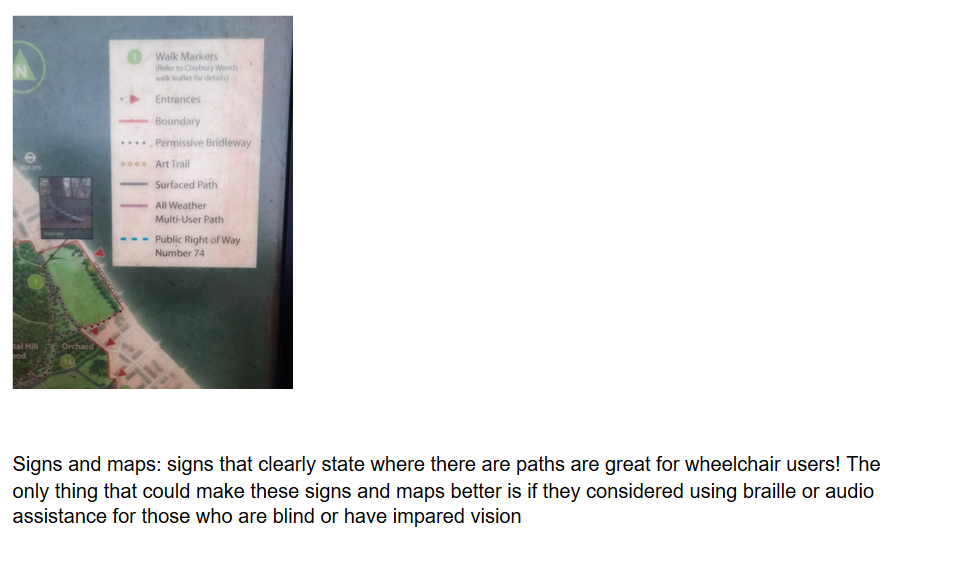
  • Braille on maps and signs
  • Ramps for hides
  • Wheelchair friendly ramps
  • Keys given out for vehicle access gates

These small scale adaptations to the UKs green spaces could mean that more people can get out there and comfortably experience wildlife without struggle.

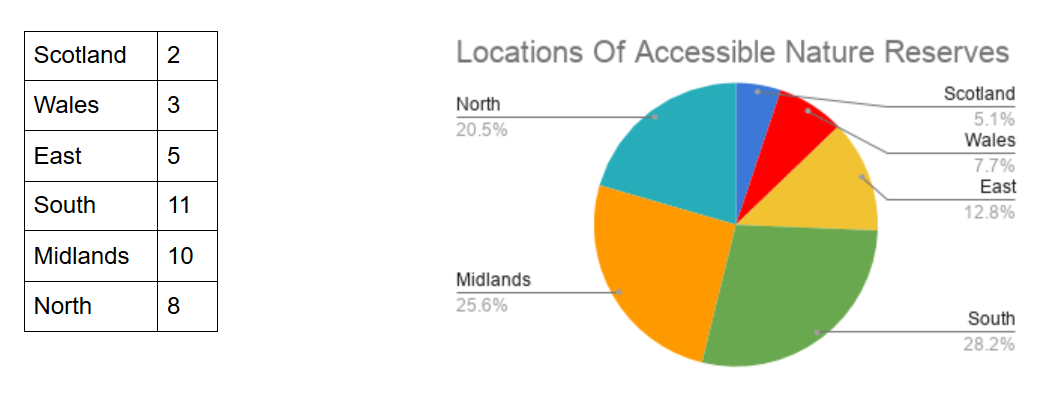
So if we know what makes a green space open to all, which green spaces have already taken on these adaptations? If we, for example, are looking at nature reserves, the statistics are as follows:
1The UK hosts a huge 341 national nature reserves (224 in England, 74 in Wales, and 43 in Scotland), yet only a small portion of these have implemented the facilities above.

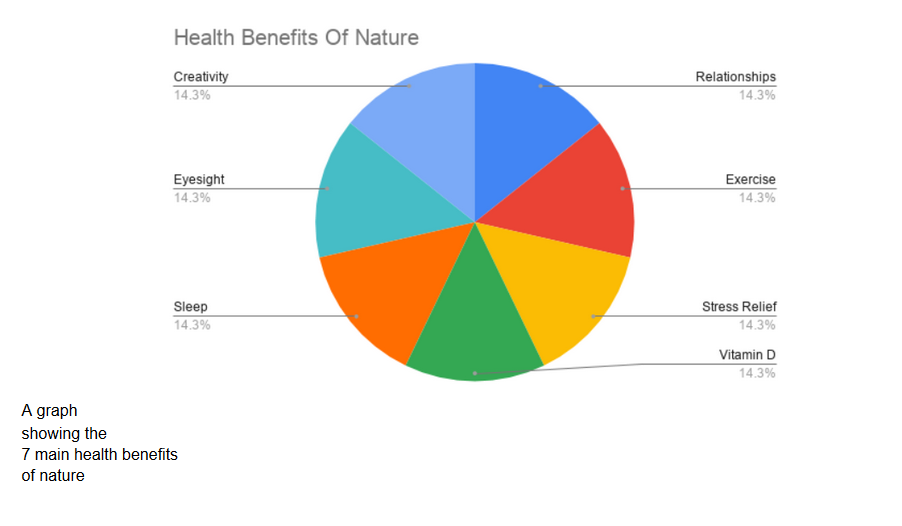
This statistic is incredibly saddening, because while some may believe that accessible green spaces are not of much importance, research by many trusts and organisations prove otherwise. 3Below is presented just why accessibility to these nature spaces is so important.

Upon knowing the vast array of the benefits nature provides, it makes the lack of green spaces such as nature reserves in the UK even more saddening – but not all hope is lost! There are many individuals and organisations trying to turn the tide. One example is the 4All For Nature & Nature For All campaign, started by a young girl living with cerebral palsy called Ellie. In her post, she explains that she has faced many disappointing experiences with inaccessible nature, stating that the location of her local nature reserve, linked with the inconsistent public transport timetable means she is unable to travel to and from the area, and her campaign sets out to ‘further educate those working in the conservation sector to make sites of natural interest as accessible as possible’.

Additionally, an example of a celebrity hero in conservation who has recognised the issue and is doing his bit is no other than Sir David Attenborough himself! In 1966, The Attenborough Nature Reserve And Centre was established – being best known for its birds, the reserve is incredibly accessible, hosting on site disabled parking and wheelchair friendly trails.

Finally, an organisation supporting the cause is us! Our #Naturenearby campaign is calling on governments to make nature accessible to ALL, so if you’re looking for ways to support the cause, be sure to sign our 5petition!

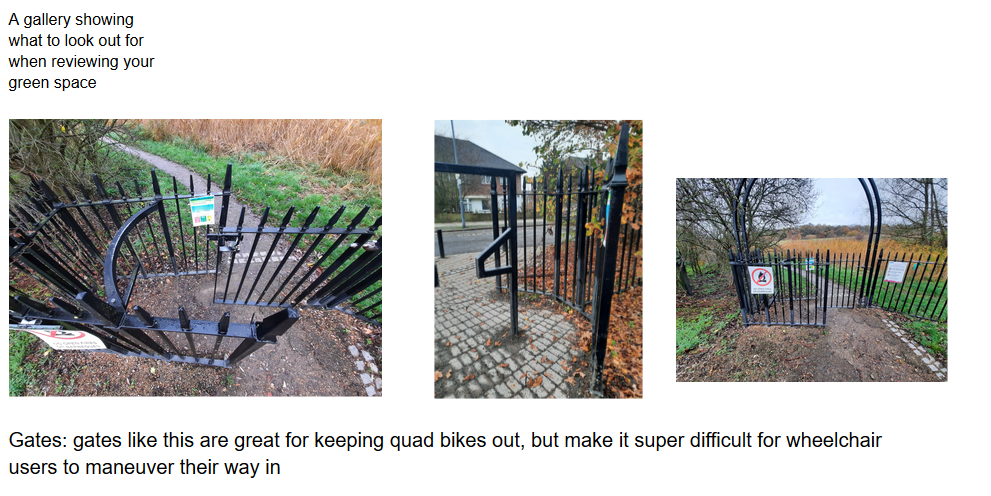
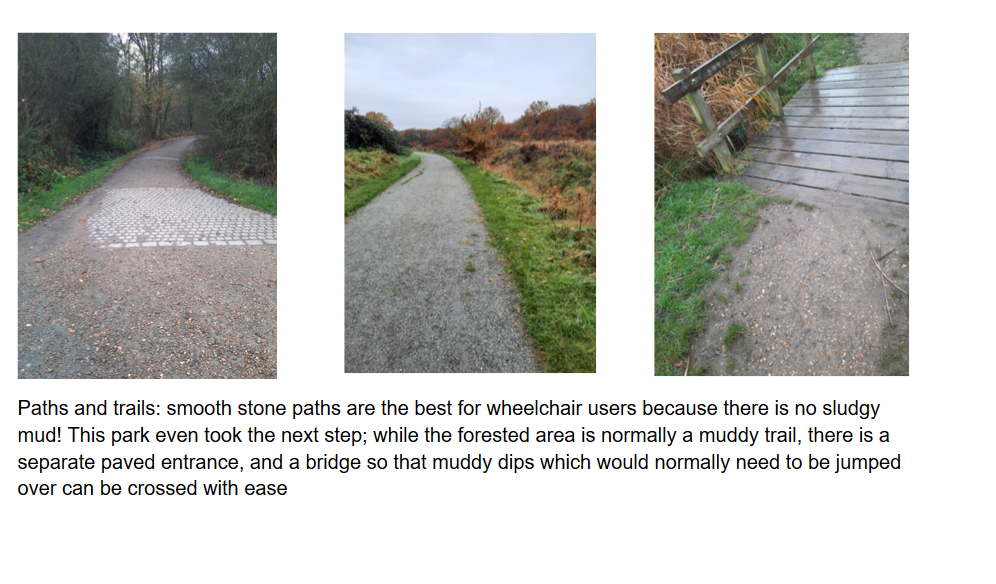
So now that you know who to support when it comes to making nature accessible to all, what can you as an individual do? I recently went to my local green space, and using the criteria of what makes a place accessible, took photographs and gathered a rough idea of how open-to-all it was. By doing this, you can inform friends and family with disabilities where they should consider going to be around nature, and if you really feel there are issues with the open spaces accessibility, with this information you could even write a 6letter or email to your MP!

1 – www.gov.uk>Parks, trails and nature reserves

2 – www.wildlifetrusts.org>Accessible nature reserves

3 – cvc.ca>Top 7 health benefits of being in nature

4 – #Attenborough90: Why nature should be accessible to all

5 – http://chng.it/DRqDtKm7Qd

Follow Monica HERE