
Reflections on April’s Wildfires

In light of the devastating wildfires this month, we wanted talk to a member of our community who helps to manage the uplands that have been burned. UKY4N volunteer and uplands common manager Jake Cohen, kindly shared his reflections on this landscape wide tragedy. Not So Freshwater


Jake Cohen:

“Across the land I look after, fires have devastated 1600 hectares of upland landscape.

The size, scale and impact of such a fire is quite difficult to fathom and has both short term and long-term consequences.
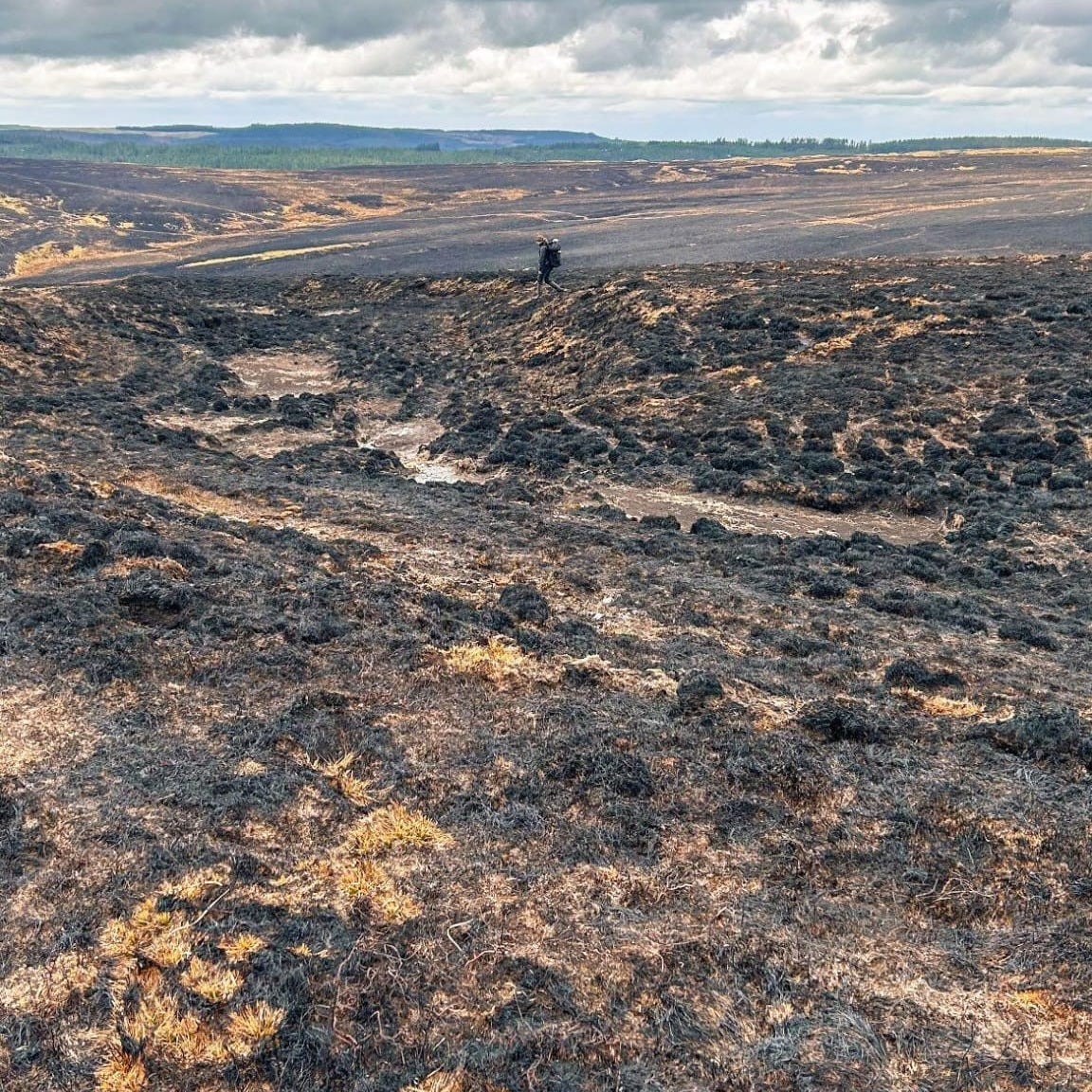
The fire has torn through our last known stronghold of breeding Golden Plover (which are just about clinging on as a breeding species in Wales) and through the last three years of peat restoration efforts. The top layer of peat has been burned away, thereby emitting thousands of years worth of carbon dioxide that would otherwise have stayed in the ground. Furthermore, the freshly exposed peat will now dry out, erode and therefore release further emissions and contribute to habitat loss.

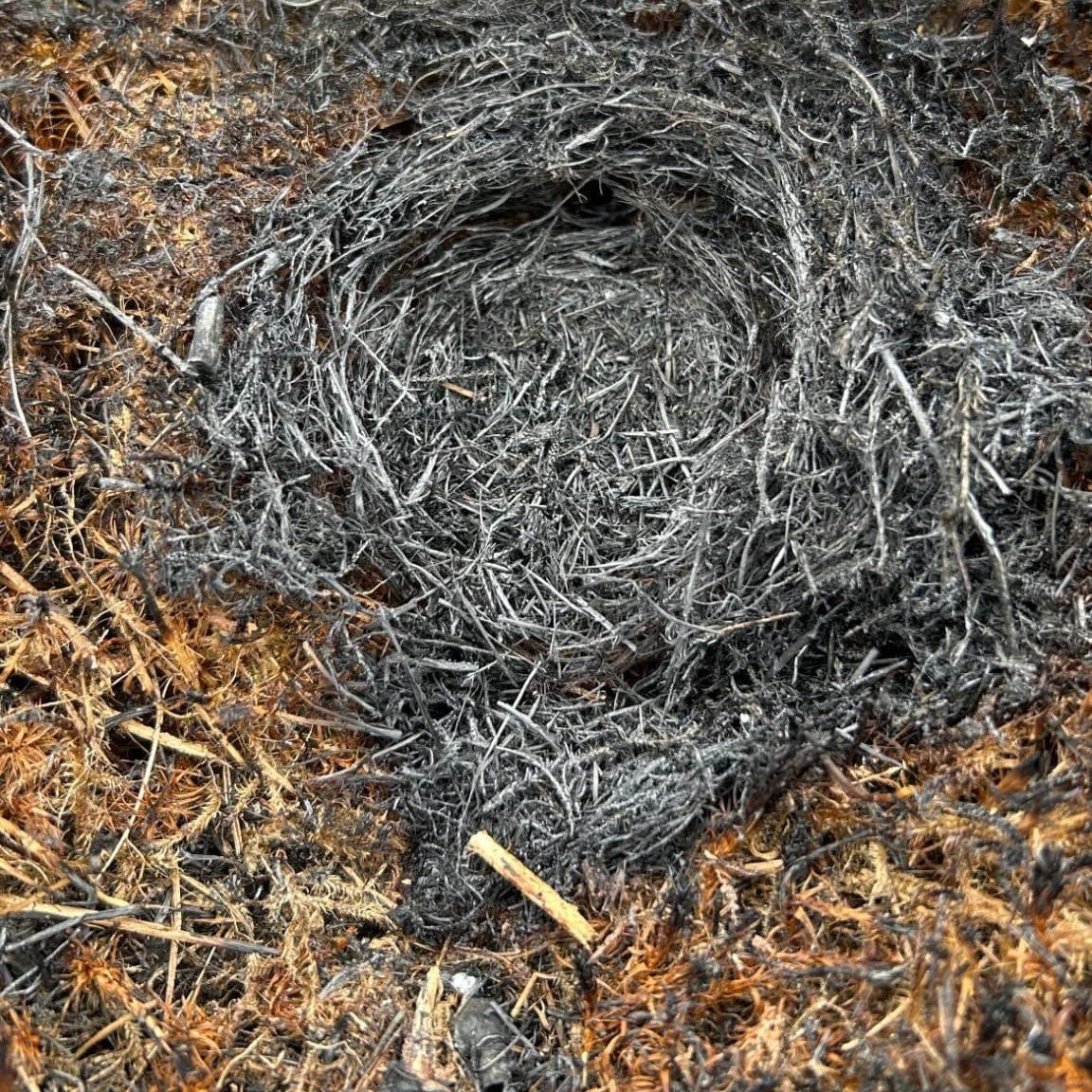
I went out last week to inspect some of the damage and found frogs and shrews burnt on the spot, as well as a lone male Golden Plover seemingly refusing to abandon his territory. Even if he does manage a nest, the lack of invertebrates leaves him and any potential chicks with very little chance. There was no Skylark or Meadow Pipit song which is usually rife this time of year and the miles and miles of blackened landscape was quite shocking. Our eyes, noses and clothing were choked with ash. It was a distressing and bizarre experience.
Upland Ecology

Fire damage also affects the long-term ecosystem as it encourages grasses, which hold their nutrients underground, to thrive, become dominant, and upset the delicate balance of this unique ecosystem. Grasses regenerate quickly and the fresh shoots are great for grazing livestock, but this rapid reproduction means that nothing else has the chance to come through. These dominant grasses create a dry level of vegetation, further increasing the fire hazard and thus creating a feedback loop.

Unfortunately, this is not an accidental wild fire – the fire services have deemed this fire to be ‘deliberate’ which just shows that we have quite a lot of work to do! Although this is a really mournful time for us – the fire didn’t reach rich areas of cattle grazing and more recent peat restoration sites, and the peat burn was only surface level and doesn’t appear to go deeper. So, we take stock and move forward!”

A little bird told me…

Edition: Restore Our Rivers

Newsletter blog by Joshua Harris

You can really immerse yourself in a river. Both literally of course, but also by observing the physical and biological activity which is taking place there. Rivers, and aquatic environments in general, have an extra dimension of living space for organisms to occupy – the water. So you have these three kinds of living space in close proximity: the trees and other plants along the river banks; the aquatic world of algae, aquatic plants, and riverbed life; and the air in the river channel along which the kingfishers and dippers zoom. 

Then there are the connections between these different realms: the caddisfly larvae under the rocks on the bottom of the stream which feed aerial dippers; the bats which roost under the bark of the dead trees and feast on the emerging midges; the kingfishers which zoom up and down the tunnel of air between the riverbanks and the overhanging vegetation; the deer, foxes, and badgers which come from land to drink at the river. 

In lockdown, as many people have got to know their local areas more intimately, rivers are the perfect way to explore a landscape. And since the UK has 200,000km of rivers and streams, you are never too far away from the opportunity. In last year’s lockdown, I spent many days exploring my local network of rivers and streams to search for evidence of a certain elusive mammal. Often dragging my kayak through streams little wider than ditches, clambering over weirs and woody debris, and keeping undercover of the overhanging vegetation, I was really immersed in the environment, seeing it from the perspective of the creatures which live there. In small streams with high banks, you can’t see anything either side; on one day, I travelled for about 10 miles barely encountering any signs of human activity. On other occasions I have spent hours sitting half submerged in the river to photograph dippers from the water level, passing the time by watching the minnows congregating around my legs and the kingfishers zooming past my head. 

Rivers are amazing, and you can get lost in exploring the diversity of life they hold, but our rivers today are a shadow of their former selves. The river which I spent my summer exploring is polluted on a near weekly basis in winter by sewage discharges whenever there is heavy rain, as well as slurry and fertiliser pollution from farming. A report last year found that just 14% of English rivers were classified as being in “good” ecological condition, and none any better than that. It’s often said that wildlife populations are nearing a cliff edge, but in the case of British migratory fish, they’ve pretty much already fallen off. The 8 foot long sturgeon which once migrated up our rivers are long gone, eels are critically endangered, and salmon are almost extinct in most rivers. Medieval records tell us of the almost inconceivable abundance of migratory fish which once thronged our river systems and marshlands, in numbers which would once have rivalled those we see in western north America today.

To restore our rivers we’ll need a variety of approaches. Removing dams and weirs would allow migratory fish to journey unimpeded from sea to source, and reinstate some of the natural hydrology – meanders, gravel banks, eroded river cliffs, etc. At the same time, reintroducing beavers (whose dams are porous and often have side channels, allowing migratory fish to pass) could kickstart interesting hydrological processes and create wildlife habitats in our headwater streams, as well as holding back the flow of water after heavy rain. We urgently need proper regulation of the farming industry and water companies, as well as the adoption of better farming techniques (zero till farming, buffer strips, and the reduction of livestock numbers adjacent to watercourses), and better infrastructure for dealing with sewage.

We should also allow more public access to rivers so that people can engage with them. Currently a shocking 97% of rivers are off limits to wild swimming and kayaking. If we could implement a 20m buffer zone either side of our rivers and streams with no cultivation or chemical applications, and then allow public access to these areas, then this could form corridors for people and wildlife through the landscape. 

River restoration provides huge benefits for both nature and people – diverse wildlife habitats, recreation, flood alleviation, and ecological connectivity. With some fairly simple changes we could all enjoy living rivers.