

By Elise Boothroyd
Mayfly lifecycle
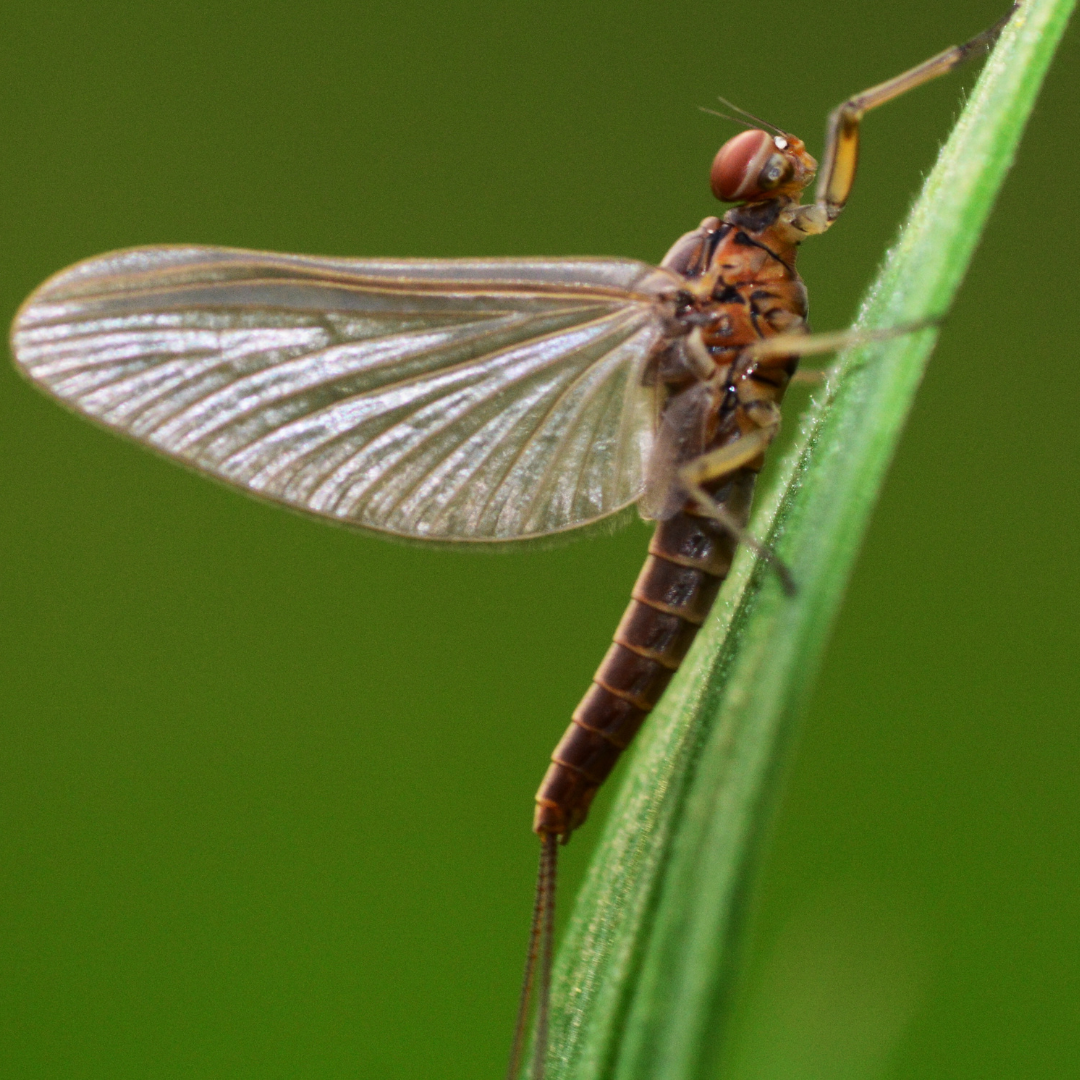
Mayflies begin their journey as nymphs, spending up to three years beneath the gravel in rivers and lakes. Eventually, the nymphs come to the surface and undergo two moults to reveal their winged adult form. After taking to the skies, often alongside hundreds of other mayflies, the insects have just a few hours to breed before they die.

Mayflies in ancient culture
This short adult lifespan is why mayflies have long been viewed as a symbol of the brevity of life. We find the earliest reference to mayflies in the Epic of Gilgamesh, which was written in Mesopotamia between around 2100 and 1200 BC. The short life of Gilgamesh, king of Uruk, is conveyed through the image of a dying mayfly: “Ever the river has risen and brought us the flood, the mayfly floating on the water. On the face of the sun its countenance gazes, then all of a sudden nothing is there”.
Many years later, in around 45 BC, the Roman lawyer Cicero considered the short life of mayflies in his Tusculan Disputations. After his daughter died at the age of 32, Cicero wrote this series of philosophical books to contemplate themes including death and grief. In Book I, Cicero wrote: “Death…which, by reason of the shortness of life, can never be far off, does not deter a wise man from making such provision for his country and his family as he hopes may last forever”.
Cicero goes on to say that nature “has only lent you life…without fixing any certain time for its repayment…Aristotle saith there is a kind of insect near the river Hypanis…whose life consists but of one day…Compare our longest life with eternity, and we shall be found almost as short-lived as those little animals”.
Cicero implies that, like mayflies, our lives are relatively short in the grand scheme of things. Nevertheless, the shortness of our own life should not stop us from trying to create a better future – a concept that is well understood by those working to preserve nature for the benefit of all humans, animals, and plants. In this sense, the mayfly teaches us that our lives have a purpose and we should make the most of the time we have available.
Mayflies in modern culture
Over two thousand years later, in 2006, Vodafone spread a similar message in a television advert compelling viewers to “make the most of now”. The advert explains that the common mayfly has a life expectancy of just one day, but “he fills his day with the things he loves” and “savours every moment”. It ends: “Just think, if we embrace life like the mayfly, what a life that would be”.
Whether you enjoy personifying the mayfly like Vodafone or prefer to accept that the insect is simply following its biological imperative, we should all agree on one thing: it is essential that we protect our freshwater environments so that the mayfly’s unique lifecycle may live on for many more years.
Not So Freshwater
Our Not so Freshwater campaign is calling on the UK Government to:
- Reduce pesticide use by 50% (volume and toxicity) by 2030
- Create ambitious targets to restore field margins and riverside ecosystems to reduce field run-off and boost our waters for wildlife and people
If you want to support our campaign, head to our campaign page and write a letter to your MP or subscribe to our newsletter to get regular updates directly to your inbox.