UKY4N at the Oxford Real Farming Conference

Farming in Flux

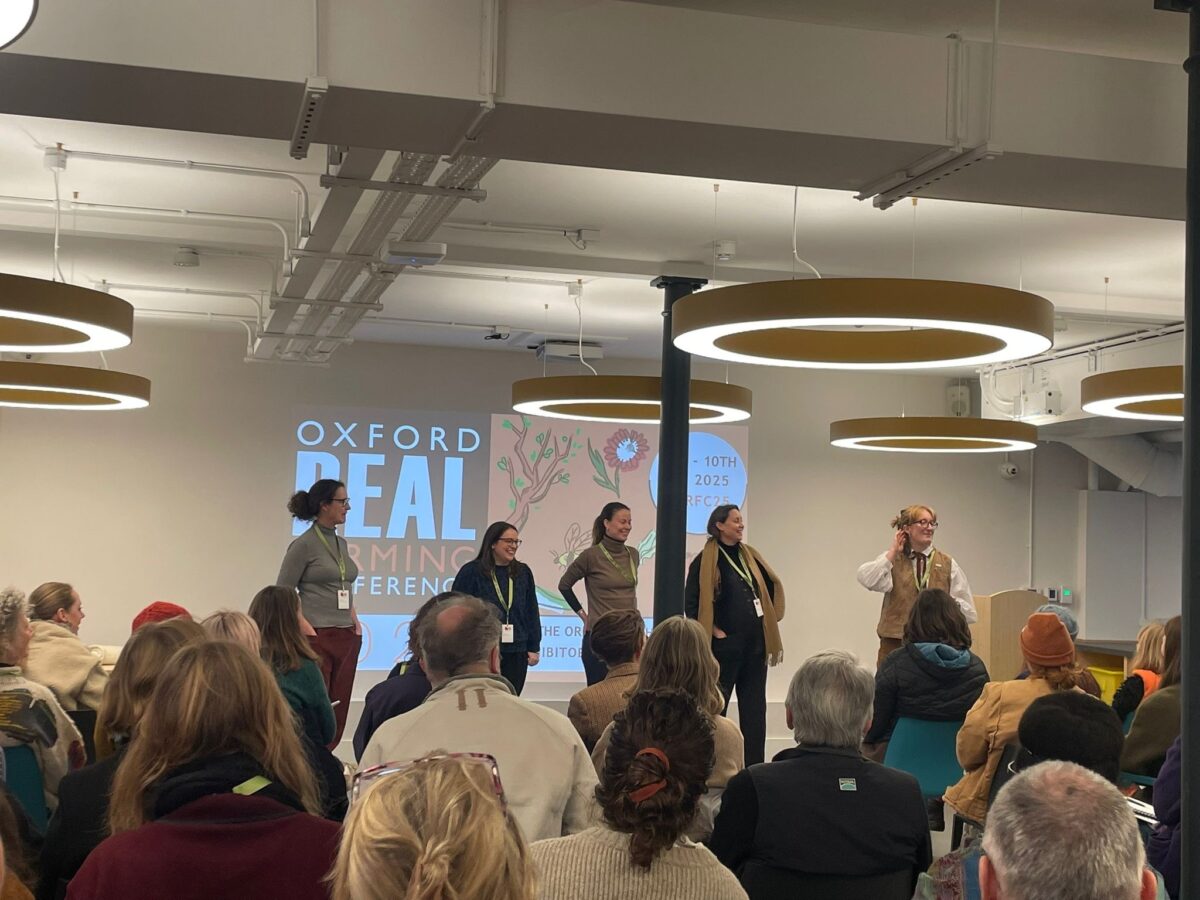
Oxford Real Farming Conference is a meeting of farmers, activists and various groups from across the rural economy. Yesterday our co-director Roisin delivered sessions aimed at connecting these interests, to help build a more biodiverse, sustainable future. 

Rois led a session on flower farming and diversification (her other job) focussing on: 

  1. How nature friendly methods can help us adapt to our changing climate.
  2. How we can increase the diversity within farming.
  3. How we can create community, starting right here in the conference.

This event was absolutely packed out, demonstrating the appetite among farmers and growers to adapt to the climate and biodiversity crises. The questions tackled in the event matched the tone of the wider conference – how can we develop farming to improve our communities, our nature and our planet?
Growing Culture

Rois also represented the UK Youth 4 Nature campaign in a session hosted by the ‘Growing Culture’ cooperative. This session explored how we can communicate the trauma of climate change, nature loss and genocide without our narratives themselves reproducing that trauma.  

The session was a space for everyone to share stories of hope and their stories of pain without fear of judgement. Rois’s favourite quote from the session was:

“We are not fighting for nature to survive, we are fighting to survive as nature.” 

The room discussed the importance of looking after our own mental health and practicing self love as a critical tool against oppression. One member explained that this practice was vital to be able to recognise when we have become overwhelmed or burned out.

Inclusion and solidarity are values that we in the UKY4N campaign hold dear, and we were pleased to see it reflected in the broader conference. These values were woven through many of the sessions over the two days and we are excited to further engage with farming spaces as we navigate and develop our Not So Freshwater campaign in 2025.

Not So Freshwater

Our Not so Freshwater campaign is calling on the UK Government to:

  1. Reduce pesticide use by 50% (volume and toxicity) by 2030
  2. Create ambitious targets to restore field margins and riverside ecosystems to reduce field run-off and boost our waters for wildlife and people

If you want to support our campaign, head to our campaign page and write a letter to your MP or subscribe to our newsletter to get regular updates directly to your inbox.
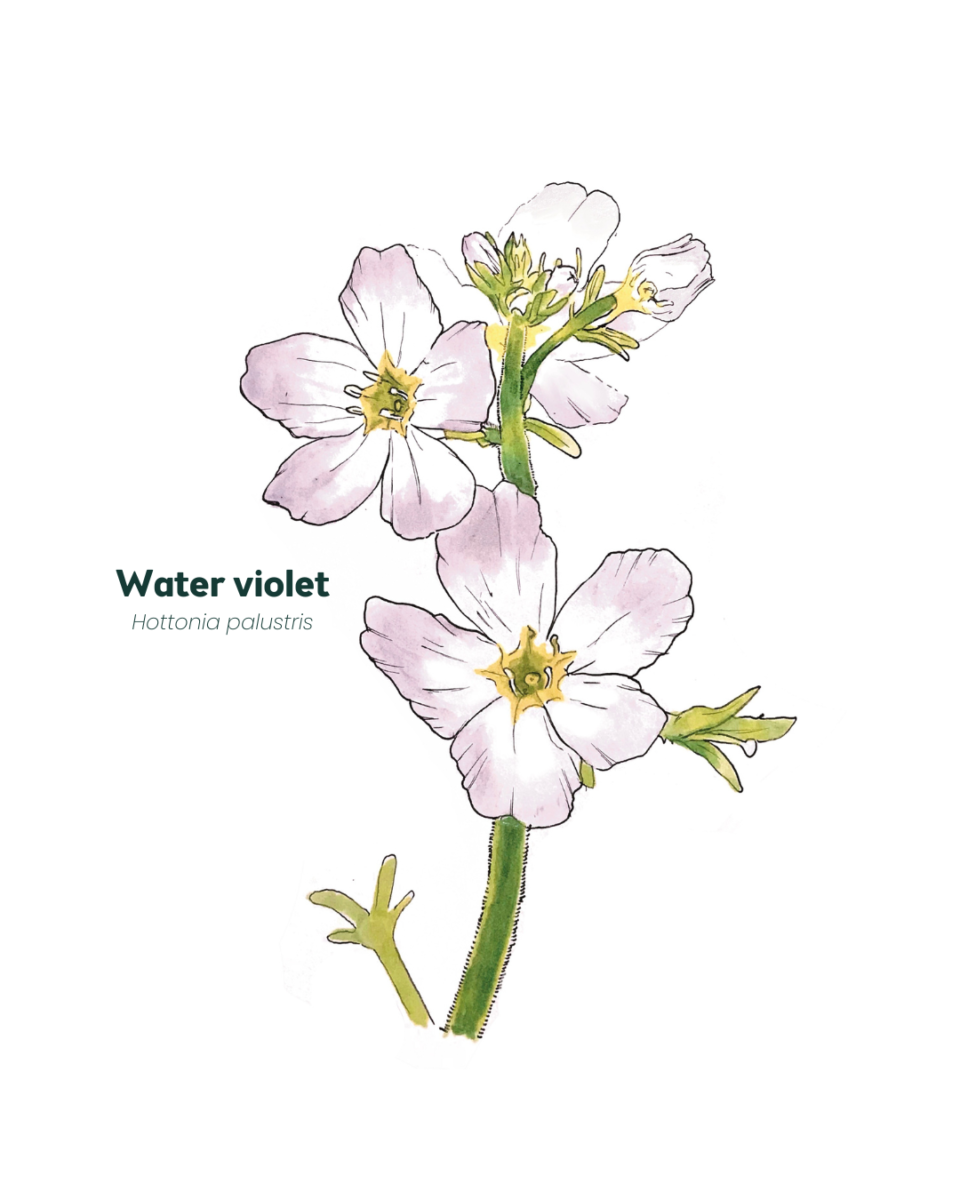
FRESHWATER SPOTLIGHT: WATER VIOLET

By Medha

Violet imposters

Did you know that water violets (also known as ‘featherfoil’) aren’t actually violets at all? They’re members of the primrose family. These beautiful aquatic plants bring a unique charm to the water’s surface, living mostly underwater with just their delicate flower spike peeking above the surface. Their blooms, which look a lot like other primroses, feature white or pale pink petals and a cheerful yellow “eye” at the center.

Water violet decline

Once a common sight across southeast England, water violets have had a tough time lately, landing a spot on England’s Red Data List due to a steep drop in their numbers. These plants thrive in clear, nutrient-poor waters, so water pollution and excessive drainage are among their biggest threats.

The scientific name for water violets, Hottonia palustris, gives a hint about their habitat preferences: palustris means “of the marsh.” The marshy, slow-moving waters that they thrive within aren’t just home to the water violet; they buzz with other life. Water spiders, beetles, and dragonfly nymphs share this habitat, and frogs, toads, and newts tadpoles are big fans, too. As well as providing shelter for other species, water violets are fantastic oxygenators, making them essential to biodiversity and a beautiful addition to slower streams and ponds.

So next time you’re near a quiet marsh or pond, keep an eye out for these “marsh primroses.” They’re not only lovely to look at, but they’re also doing vital work to keep our ecosystems healthy!

Not So Freshwater

Our Not so Freshwater campaign is calling on the UK Government to:

  1. Reduce pesticide use by 50% (volume and toxicity) by 2030
  2. Create ambitious targets to restore field margins and riverside ecosystems to reduce field run-off and boost our waters for wildlife and people

If you want to support our campaign, head to our campaign page and write a letter to your MP or subscribe to our newsletter to get regular updates directly to your inbox.

FRESHWATER SPOTLIGHT: DIPPER

By Jasmine Foster

Dipper ecology 

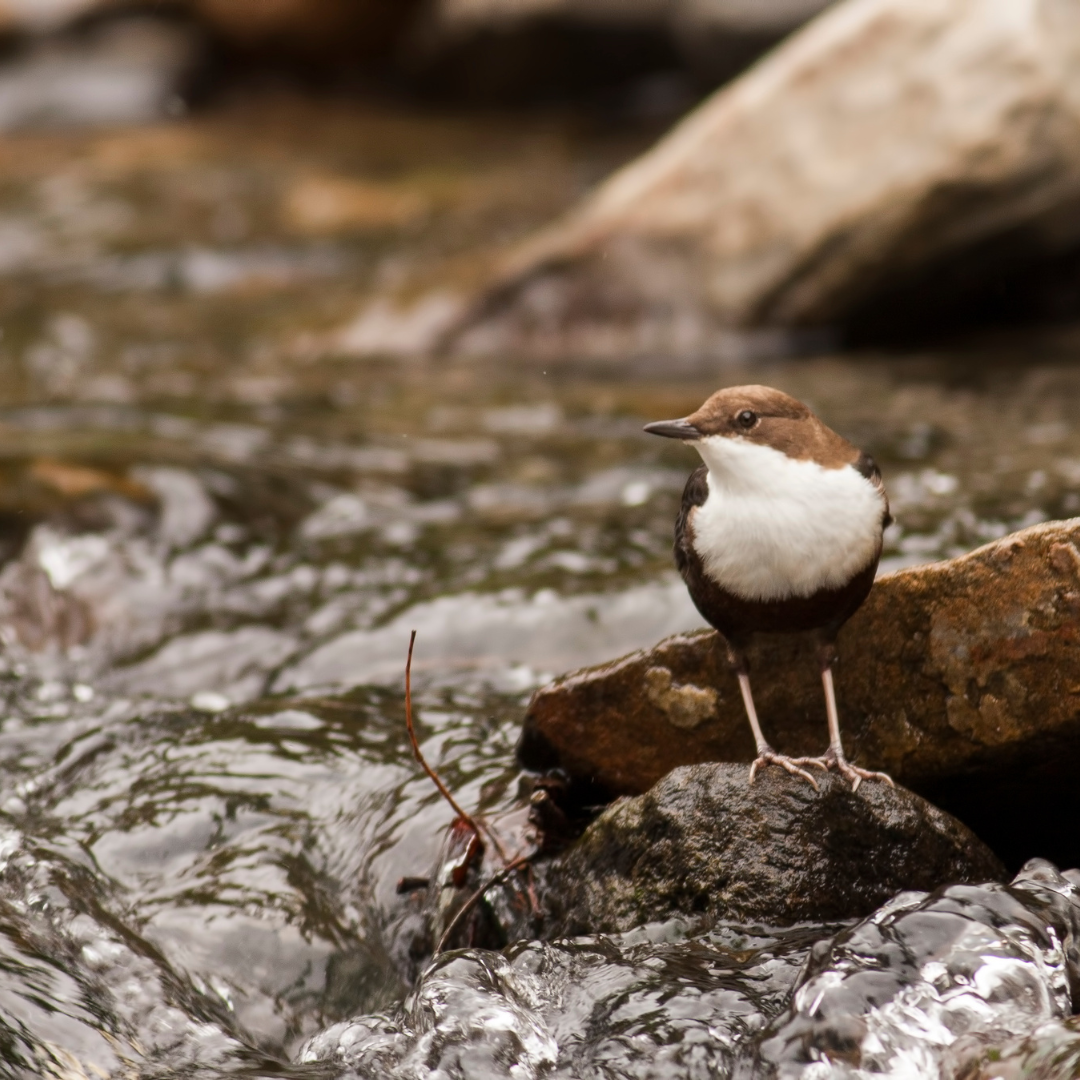
Dippers are one of the many species inhabiting freshwater areas. They play a key role in their environment, keeping the ecosystems they live in stable. However, pollution and other factors are threatening their survival. 

Habitat and location

Dippers are found in freshwater habitats in North and South America, Europe, and Asia. They are also found in Morocco in Africa. There are five different species of dipper around the world, whoinhabit banks of fast-moving upland rivers and visit lake shores and sea coasts outside of the breeding season. The species found in the UK is also known as the white-throated dipper or European dipper.

Diet

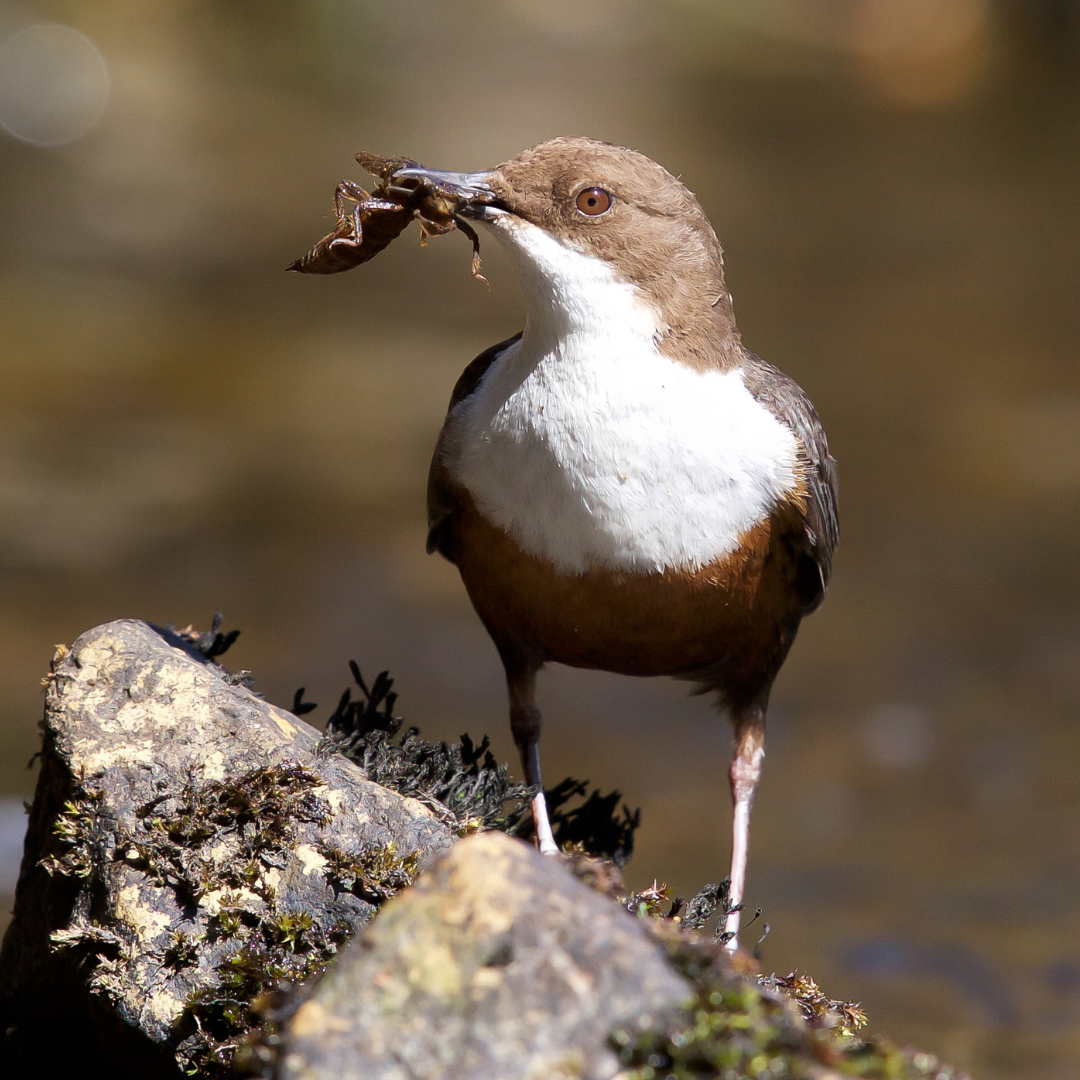
Dipper diets consist mainly of insects and their larvae. Crustaceans and molluscs are another source of food primarily during winter due to the lack of insect larvae. Additionally, they will sometimes feed on worms, tadpoles, and small fish.

Many types of prey that the dippers depend on are affected by pollution and water acidity, as they cannot survive in modified conditions. With the current state of rivers in the UK, dippers have less access to food which makes it difficult for them to sustain themselves. 

Dippers find their prey by foraging in and along the margins of fast-flowing freshwater streams and rivers, perching on the edge of rocks and feeding at the edge of the water. They will often grip the rocks firmly and walk beneath the water until partly or wholly submerged, searching underwater for prey between and under stones and debris. Their wings also allow them to swim, meaning that they can find their prey more effectively.

Behaviour

During the breeding season, dippers will establish breeding grounds along suitable rivers, which they defend against attacks by other dippers. Their nests are made from moss, grass, and rootlets, and have a dome structure with a side entrance hole. They are constructed on ledges, banks, drainpipes, and crevices. The length of these breeding territories are usually between 300 metres and 2,500 metres, sometimes larger. The size is usually dependent on the availability of food throughout the area, and whether there is enough to sustain themselves and their brood. 

The three northern dipper species usually have a clutch size of four or five, however clutch sizes of South American species aren’t well known. The incubation period usually lasts 16 to 17 days, after which the hatchlings are incubated by the female for 12 to 13 days and are fed by both parents. The fledging period lasts 20 to 24 days, and young dippers become independent within a couple of weeks of leaving the nest.

Dippers create loud, high pitched calls, similar to other birds inhabiting fast flowing rivers. They are the UK’s only aquatic songbird. Alongside vocalisation they communicate via dipping or bobbing movements, and rapidly blinking to expose the white feathers on their upper eyelids, creating a series of white flashes. This act is carried out for both courtship and threat displays.

Dipper vocalisatons (C) Simon Elliott/Xeno Canto CC BY-NC-ND 4.0

Environmental conditions

Dippers can be sensitive to the pH levels in water environments, and therefore need clear, clean water in their habitat. Heightened acidity in streams due to high levels of pollution can cause issues in reproduction and their survival. This is happening throughout the UK due to agricultural chemicals, sewage, oil pollution, and radioactive substances, causing declines in their population.

Not So Freshwater

Our Not so Freshwater campaign is calling on the UK Government to:

  1. Reduce pesticide use by 50% (volume and toxicity) by 2030
  2. Create ambitious targets to restore field margins and riverside ecosystems to reduce field run-off and boost our waters for wildlife and people

If you want to support our campaign, head to our campaign page and write a letter to your MP or subscribe to our newsletter to get regular updates directly to your inbox.

FRESHWATER SPOTLIGHT: COMMON MAYFLY

By Elise Boothroyd

Mayfly lifecycle

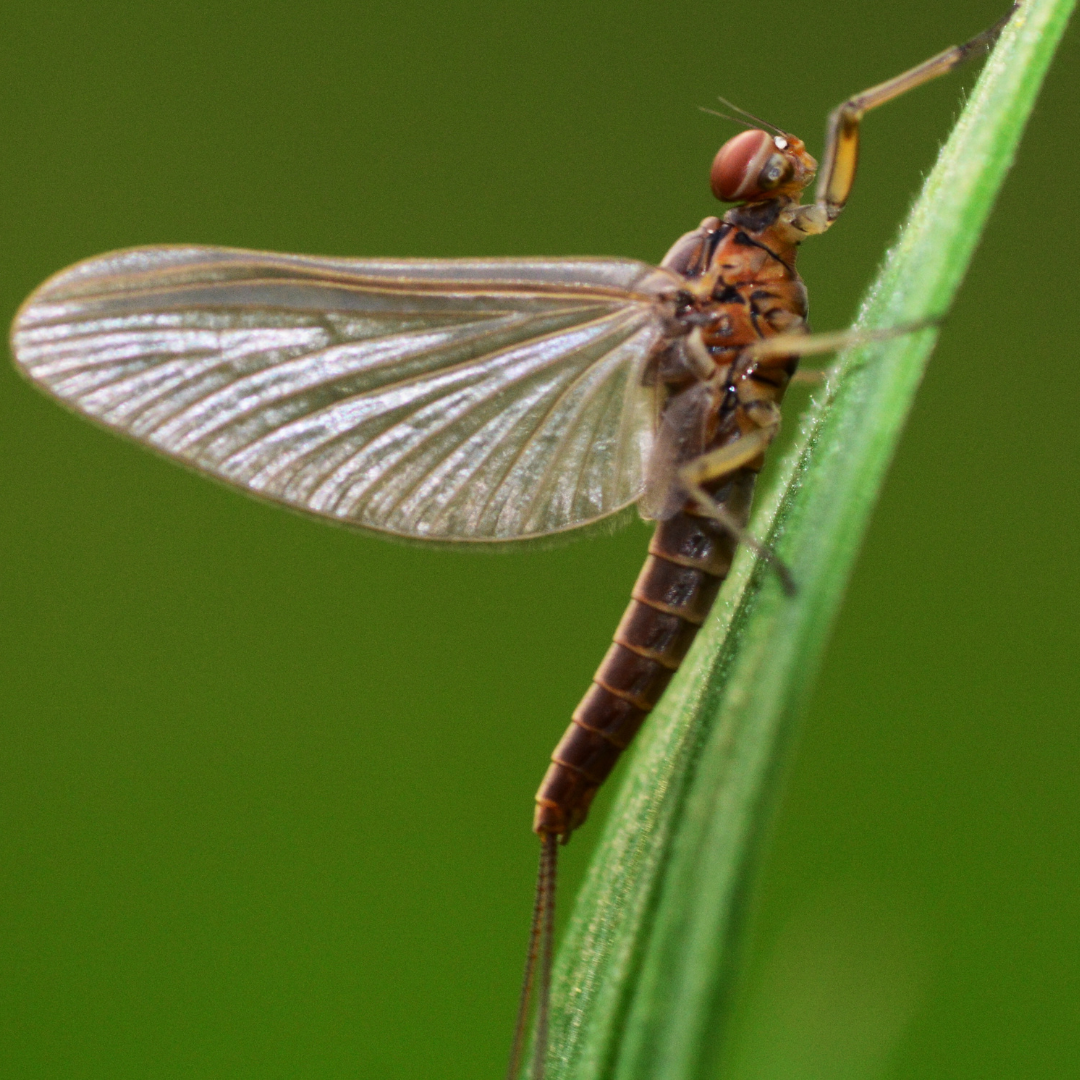
Mayflies begin their journey as nymphs, spending up to three years beneath the gravel in rivers and lakes. Eventually, the nymphs come to the surface and undergo two moults to reveal their winged adult form. After taking to the skies, often alongside hundreds of other mayflies, the insects have just a few hours to breed before they die.

Artwork by Kirsty Lloyd

Mayflies in ancient culture

This short adult lifespan is why mayflies have long been viewed as a symbol of the brevity of life. We find the earliest reference to mayflies in the Epic of Gilgamesh, which was written in Mesopotamia between around 2100 and 1200 BC. The short life of Gilgamesh, king of Uruk, is conveyed through the image of a dying mayfly: “Ever the river has risen and brought us the flood, the mayfly floating on the water. On the face of the sun its countenance gazes, then all of a sudden nothing is there”.

Many years later, in around 45 BC, the Roman lawyer Cicero considered the short life of mayflies in his Tusculan Disputations. After his daughter died at the age of 32, Cicero wrote this series of philosophical books to contemplate themes including death and grief. In Book I, Cicero wrote: “Death…which, by reason of the shortness of life, can never be far off, does not deter a wise man from making such provision for his country and his family as he hopes may last forever”. 

Cicero goes on to say that nature “has only lent you life…without fixing any certain time for its repayment…Aristotle saith there is a kind of insect near the river Hypanis…whose life consists but of one day…Compare our longest life with eternity, and we shall be found almost as short-lived as those little animals”.

Cicero implies that, like mayflies, our lives are relatively short in the grand scheme of things. Nevertheless, the shortness of our own life should not stop us from trying to create a better future – a concept that is well understood by those working to preserve nature for the benefit of all humans, animals, and plants. In this sense, the mayfly teaches us that our lives have a purpose and we should make the most of the time we have available.

Mayflies in modern culture

Over two thousand years later, in 2006, Vodafone spread a similar message in a television advert compelling viewers to “make the most of now”. The advert explains that the common mayfly has a life expectancy of just one day, but “he fills his day with the things he loves” and “savours every moment”. It ends: “Just think, if we embrace life like the mayfly, what a life that would be”.

Whether you enjoy personifying the mayfly like Vodafone or prefer to accept that the insect is simply following its biological imperative, we should all agree on one thing: it is essential that we protect our freshwater environments so that the mayfly’s unique lifecycle may live on for many more years.

Not So Freshwater

Our Not so Freshwater campaign is calling on the UK Government to:

  1. Reduce pesticide use by 50% (volume and toxicity) by 2030
  2. Create ambitious targets to restore field margins and riverside ecosystems to reduce field run-off and boost our waters for wildlife and people

If you want to support our campaign, head to our campaign page and write a letter to your MP or subscribe to our newsletter to get regular updates directly to your inbox.