In today’s blog, we will be talking all about what it’s like being a Young Trustee. Less than 3% of charity trustees are under 30 (Young Trustees Movement), which is a startling statistic and a gap that needs to change. Young trustees offer fresh perspectives and represent the voices of future generations.
To shed light on this important topic, we gathered three incredible speakers a couple of weeks ago to speak and share their personal experiences as young trustees and this is a summary of some of their amazing and useful points.
The speakers:
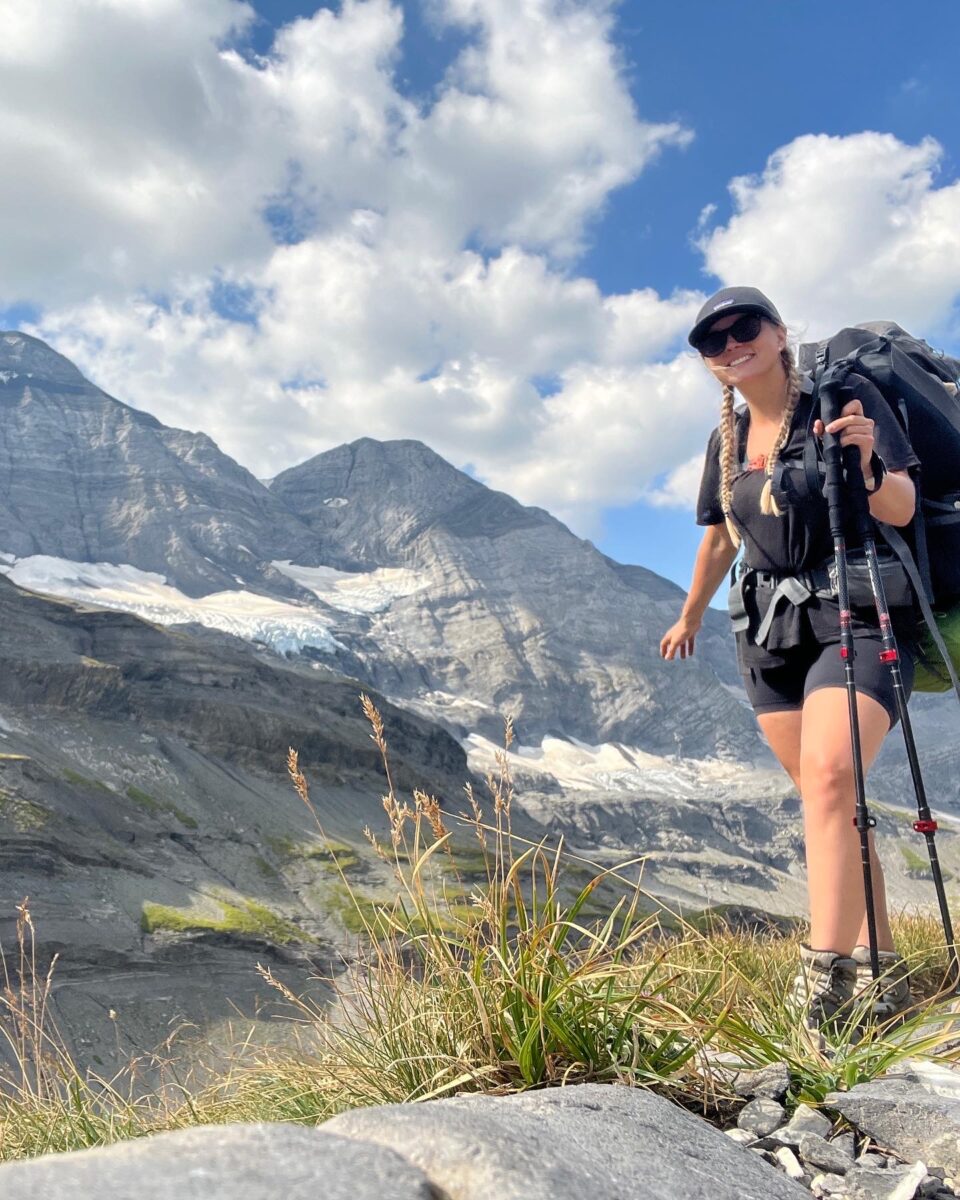
Alana: Young Trustee for Staffordshire Wildlife Trust
Joe: Young Trustee for Reserva Youth Land Trust and Small World Theatre
Elen: Young Trustee for Young Changers Sea Scotland

What motivated you to become a trustee, and how do you think your perspective as a young person adds value to the board?
Alana: I volunteered for causes that I cared about – in this case youth voice, and local wildlife and green spaces. I was asked to be a trustee in 2020 because the boards knew they needed to increase their diversity but were taking the first steps in building that. Since then, with the support of the Young Trustee Movement and the rise of Youth Councils/Forums/Advisory groups, the value that young people can bring to boards is much more widely appreciated – through their experience, perspective, and ambitions in life.
Elen: I grew up in a coastal area in North Wales and spent my entire childhood in and around the sea. When I moved to Stirling for university I moved to a landlocked place and lost my connection to the sea. The charity I am a trustee for helps to empower people to speak up for Scotland’s seas, so it gave me the opportunity to reconnect to the sea and hopefully help it thrive again.
Additionally, I work as an ecological consultant and the work we do is driven by construction and infrastructure-based industries. These feel like destructive behaviours, surveying wildlife to aid people building in their space. Being a trustee helps me give back to society and again helps me feel a little better about helping people. I add perspective because my charity aims to empower young people and as a young person, I give direct advice that I wish had been in place when I was volunteering/working with charities.
How was the application process when you applied to become a Trustee?
Alana:
- The trustee interviews are a great way to check in with how your CV and experience is for governance opportunities. It can be nerve-wracking, and that’s okay as that means you are pushing your comfort zone and trying. Some larger charities might have competitive trustee application processes, so if you’re not sure, local charities are often keen to find trustees.
- Most charities will have a rotation of trustees, in the case of the charities I’m a trustee of, we go for ‘re-election’ every 3 years and we have a maximum term of 9 or 12 years. So, charities will be regularly looking for trustees.
- There’s some really great guides here: https://www.gov.uk/government/collections/5-minute-guides-for-charity-trustees

Elen: Very easy. I set up a marine conservation society with a friend at university. She is pretty well known in marine policy in Scotland and so was asked to join the board first. They then decided they wanted additional young people, and she was asked if she knew anyone that would be interested/had relevant experience, and she named me! I had an informal interview/chat with the director and then was asked to join!
What are some of the main things you do in your role?
Alana:
- Ranges from monthly tasks such as reading papers, revising policies and the meetings itself to networking with similar organisations and being an ambassador for the organisation.
- Depending on the size of the charity / organisation trustees will take less of a main role in the operational (day-to-day) work, instead we are advisors working with the Senior Leadership Team.
Elen: I am the EDI lead for the charity so I push the charity to do the best it can and assist the staff with additional manpower when they need it. My other roles include searching for and applying to funding, trustee recruitment, attending events to represent the charity and more!
What have been some of the most rewarding aspects of being a trustee so far and what are some of the challenges?
Alana:
- Being able to approve the creation of new job roles and seeing those projects and initiatives come to life through the incredible people that they have employed.
- Attending the Annual General Meetings and hearing about a year of great work.
- Site visits to project locations and hearing from the staff and volunteers doing the good work on the ground.
Elen: Most rewarding aspects have been seeing the work we put in as trustees pay off. We work by aiding staff with running our training programmes, by securing funding etc, and then seeing this pay off with young people responding to consultations or coming up to us at events and saying that the skills they’ve learned have helped them get a job or pick a future career or write a letter to their MSP, is so rewarding!
Challenges – I am generally a very busy person. I work a full-time job which sometimes has long days and unusual shifts (dawns/dusks), have two volunteer positions, train for two sports and hold my trustee position. I sometimes struggle with having time and energy for everything, but I find if I am organised, I have time and if I make time for my hobbies (being outdoors) then I maintain energy!
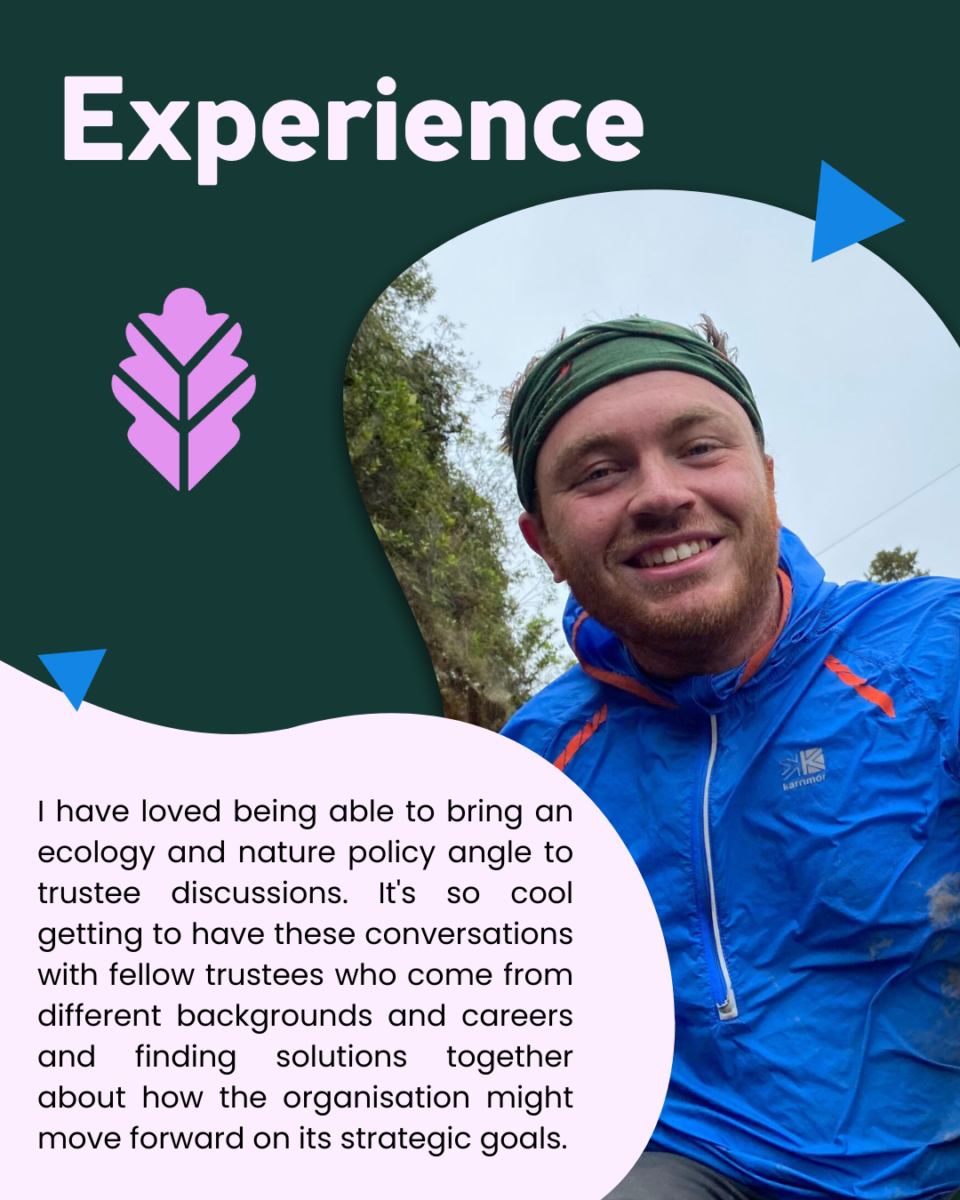
Joe: I have loved being able to bring an ecology and nature policy angle to trustee discussions. It’s so cool getting to have these conversations with fellow trustees who come from different backgrounds and careers and finding solutions together about how the organisation might move forward on its strategic goals.
I have learned so much about different aspects of running an organisation such as accounting, maintenance, and safeguarding legislation – topics that I might not have a chance to experience until much later in my career, if at all!
How can organisations best support young people with being a trustee?
Alana:
- Adaptable meeting times.
- Providing training opportunities.
- Interview on values in addition to experience (as an early-career… it’s impossible to have 40 years experience in a sector)… look for dedication and enthusiasm. So for young people interested in being trustees… how have you put effort towards the goal and values of that organisation? You are volunteering your time, so support organisations that align to your values!
Elen: Try not to overload your young trustees – they’re often exceptionally busy. Have an honest conversation with them about the workload that is expected of the trustees and ask them what their capacity is. Have a buddy system where you pair the incoming trustees with more experienced trustees so that they have someone to show them the ropes or to ask “stupid questions” to (there aren’t any stupid questions).
Joe: There are many laws around paying trustees of a charity. It effectively means that, in most cases, a trustee is an unpaid role. Therefore, it is very important that organisations do what they can to make the trustee position as accessible as possible to young people. If they can, they should cover any expenses related to the trustee role (travel, platforms etc.)
It’s important that young trustees are given access to any training and networking opportunities to ensure the role is beneficial to their careers. So even though we can’t be paid to be a trustee under most circumstances, there are ways to ensure that (a) we are not losing money and (b) there are future career benefits as well.
What advice would you give to other young people who are interested in becoming trustees but may be unsure or intimidated about getting started?
Alana:
- If you are able to get involved in the charity before you become a trustee to see if their values and actions align with yours.
- Research what a trustee is and read role descriptions (provided by most organisations recruiting trustees).
- If an organisation isn’t advertising for trustees, but you are interested, contact them to see if they have any positions on the board available.
- Talk to current trustees of the organisation you may be interested in.
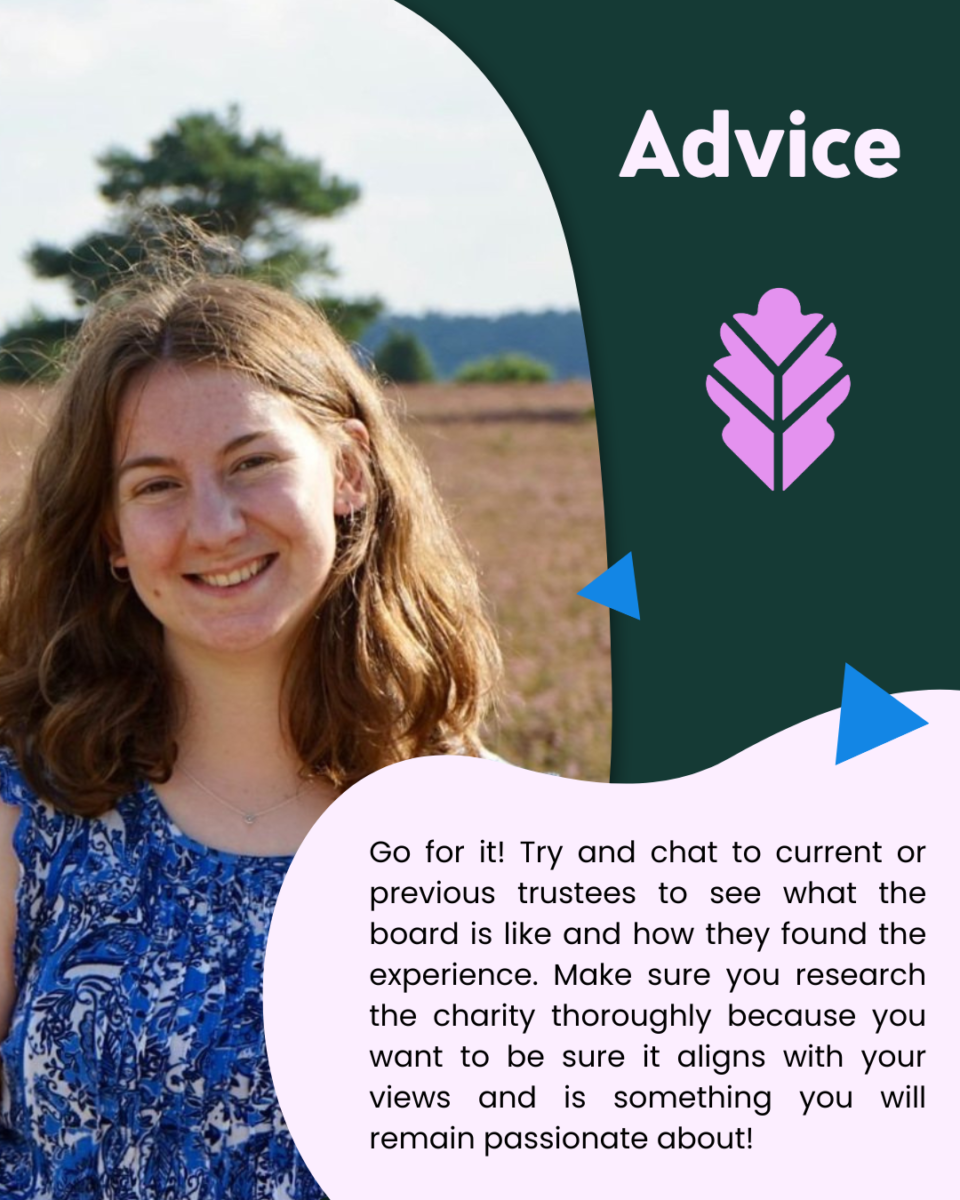
Elen: Go for it! Try and chat to current or previous trustees to see what the board is like and how they found the experience. Make sure you research the charity thoroughly because you want to be sure it aligns with your views and is something you will remain passionate about – trustee positions are usually long term!
Joe: I think it’s really important to remember that a trustee is a “governance” role, which means they are ultimately responsible for overseeing the charity/organisation and its employees. This is different from advisory roles that many of us are familiar with. Of course, trustees are also advisors, but there are additional responsibilities and, as a result, liabilities. I urge anybody interested in becoming a trustee to ask about the potential fallback on you as a trustee.
Most charities will have some form of trustee or director insurance and/or policy, which covers eventualities such as the organisation going bankrupt or an insurance claim being made. Newer and/or smaller charities might not, so it’s just worth a conversation with current trustees and/or senior staff. The above isn’t meant to put anybody off and I really hope it hasn’t! I just wanted to share as I believe putting these safeguards in place ensures that we as young people can apply and properly engage in trustee roles without this fear.
Being trustee is one of the most rewarding experiences as you are actually helping to steer organisations you care about! You definitely have something to offer the organisation!
We hope this blog has given you some insight into what it’s like to be a young trustee and inspired you to consider becoming one yourself. Additionally, we encourage organisations to create more opportunities and support systems that enable young people to take on these roles, fostering diverse leaderships for the future. To finish we have put below some resources from the webinar team and speakers that will hopefully be interesting and useful.
Resources
- Young Trustees Movement aims to double the number of trustees aged 30 and under on charity boards. While the spotlight is on the age factor, the movement is part of a wider call for diversity on boards.
- Getting on Board has a resource bank for aspiring trustees including CV and cover letter templates. They also have a practical guide on how you can become a charity trustee.
- Our Bright Future has an advice guide pack for how organisations can bring about diversity for their board through the lens of young people.
- Culture Hive has a guide to encourage more charities to take on young trustees, or at least put in place programmes giving young people the relevant skills that they will need for future service as trustees.
- Ecclesiastical’s guide for how more young people can get onto boards, is based on real-life experiences.
- The National Council for Voluntary Organisations governance wheel is a simple tool that helps boards of voluntary organisations quickly get a sense of how well they’re functioning and fulfilling their roles.
- North Wales Volunteer Centres toolkit for how organisations can involve young people.
- OnSide, In this Q&A, Abu is interviewed about his journey to becoming a young trustee and his advice for charities wanting to recruit a young trustee to their board.
- GOV.UK’s5 minute guides to refresh your knowledge on different topics you should have an understanding about as a trustee.