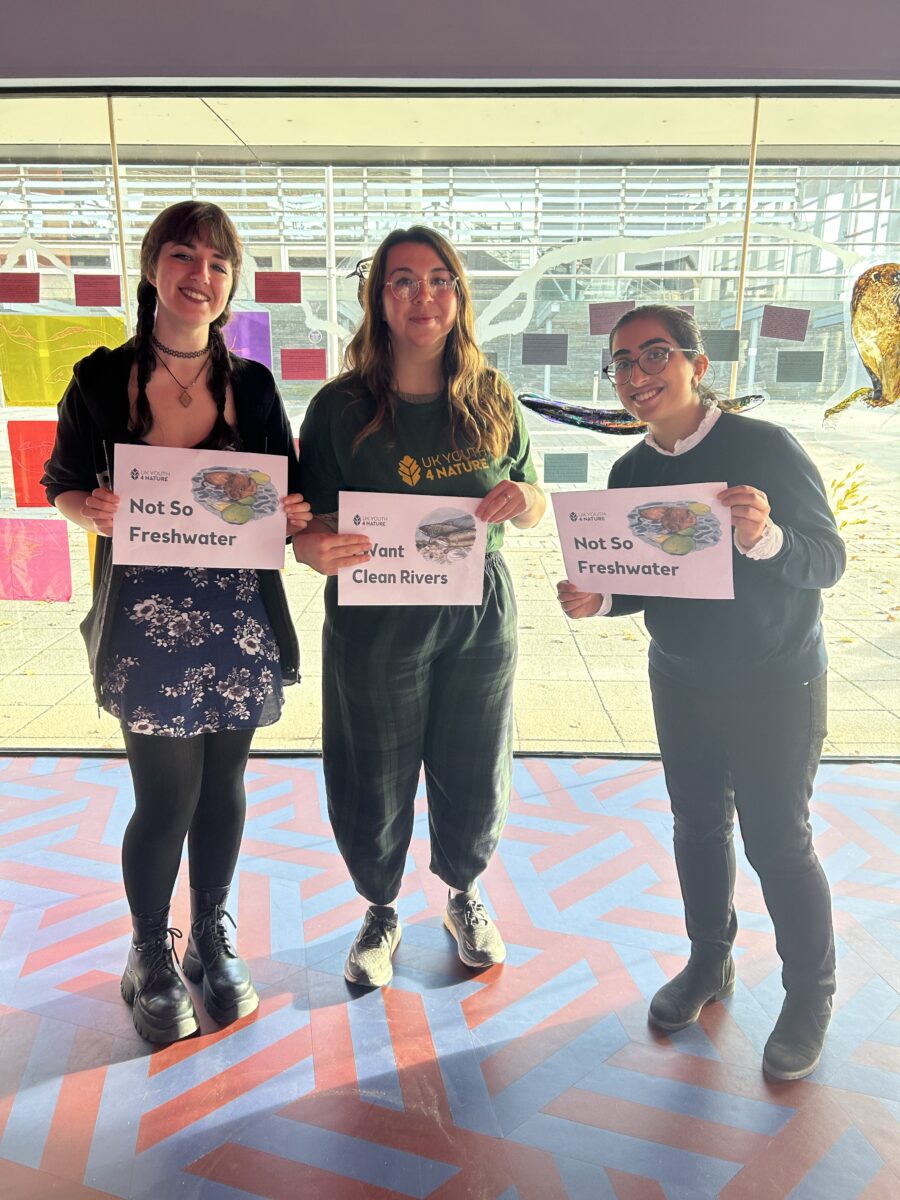
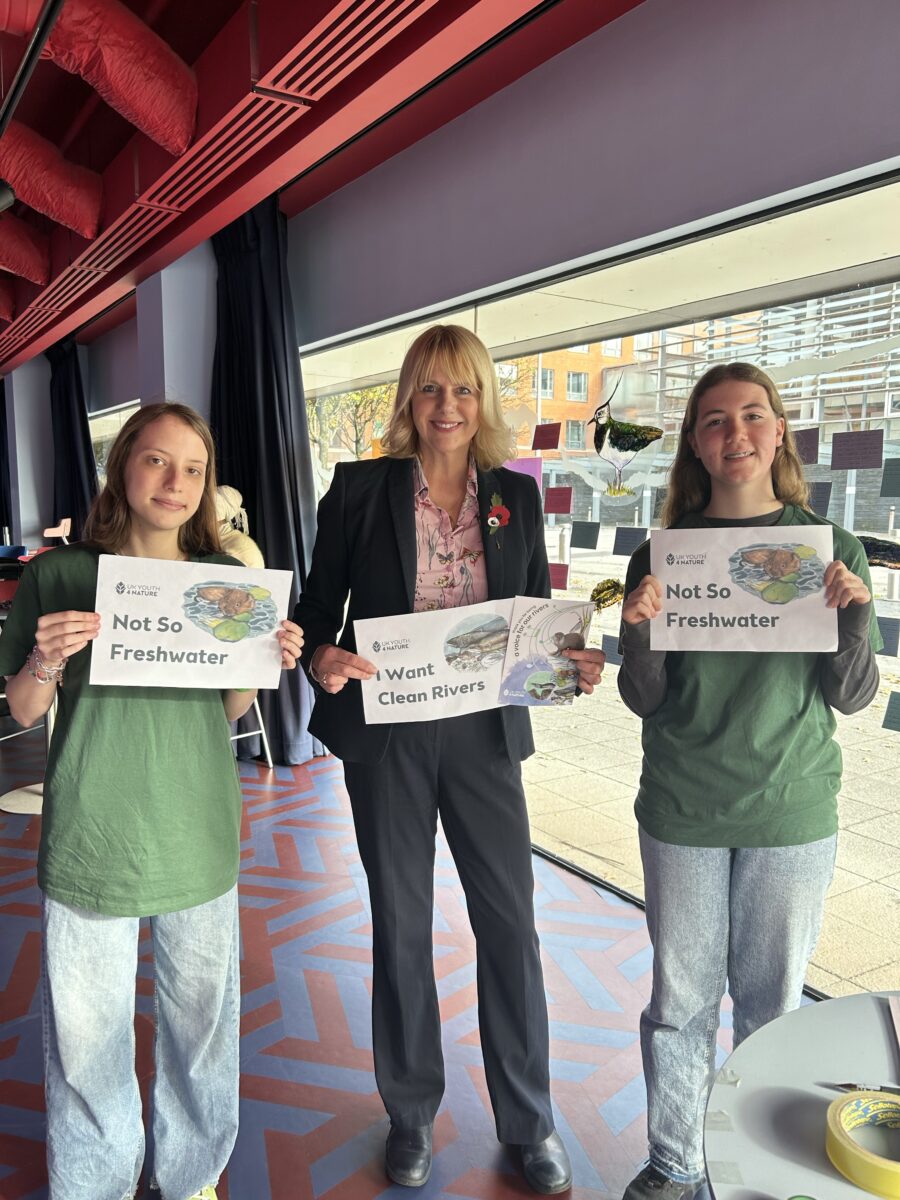
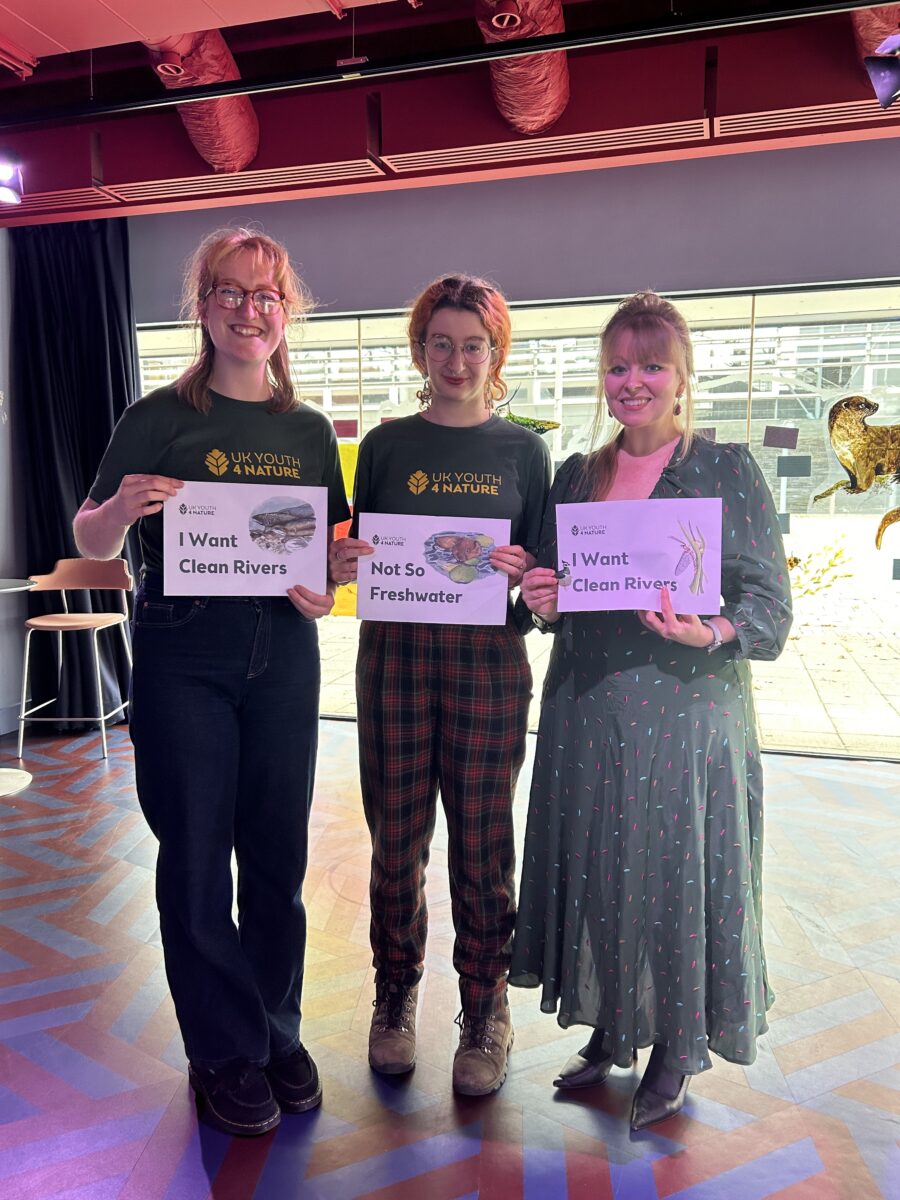
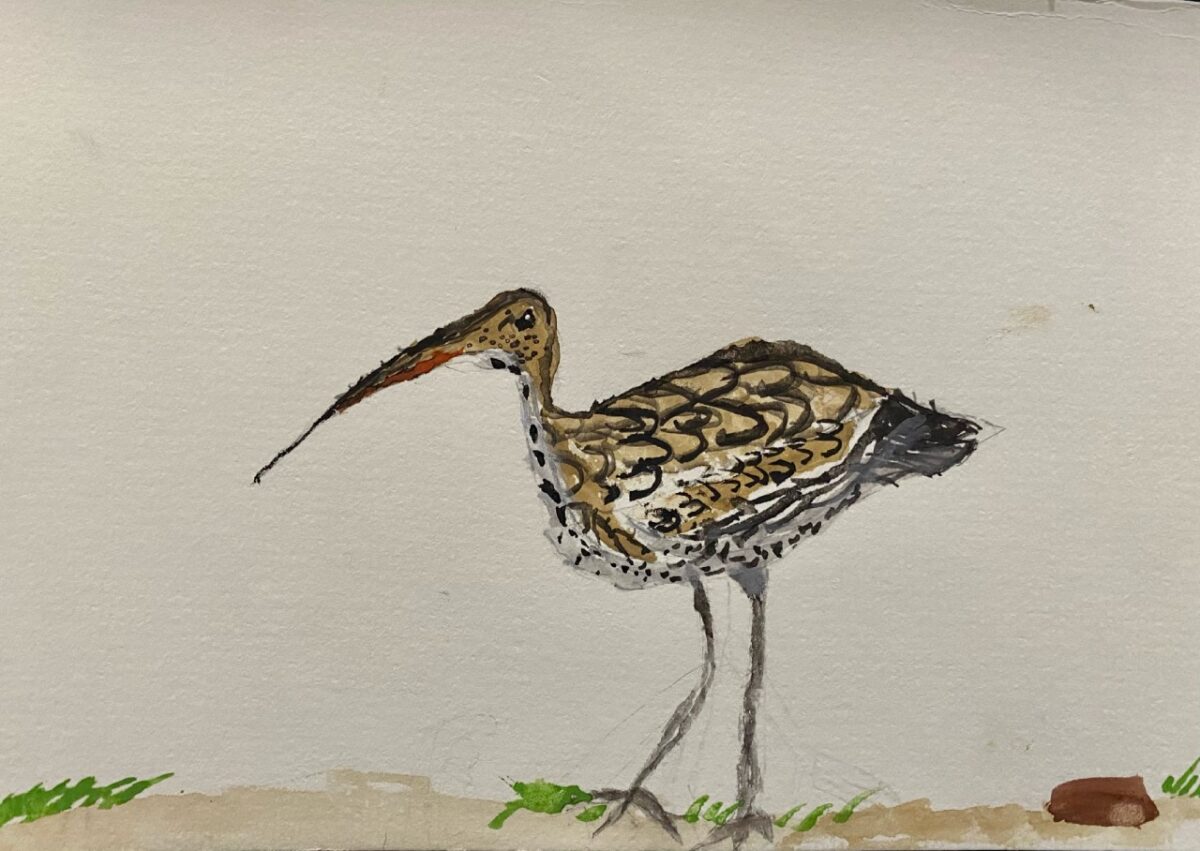
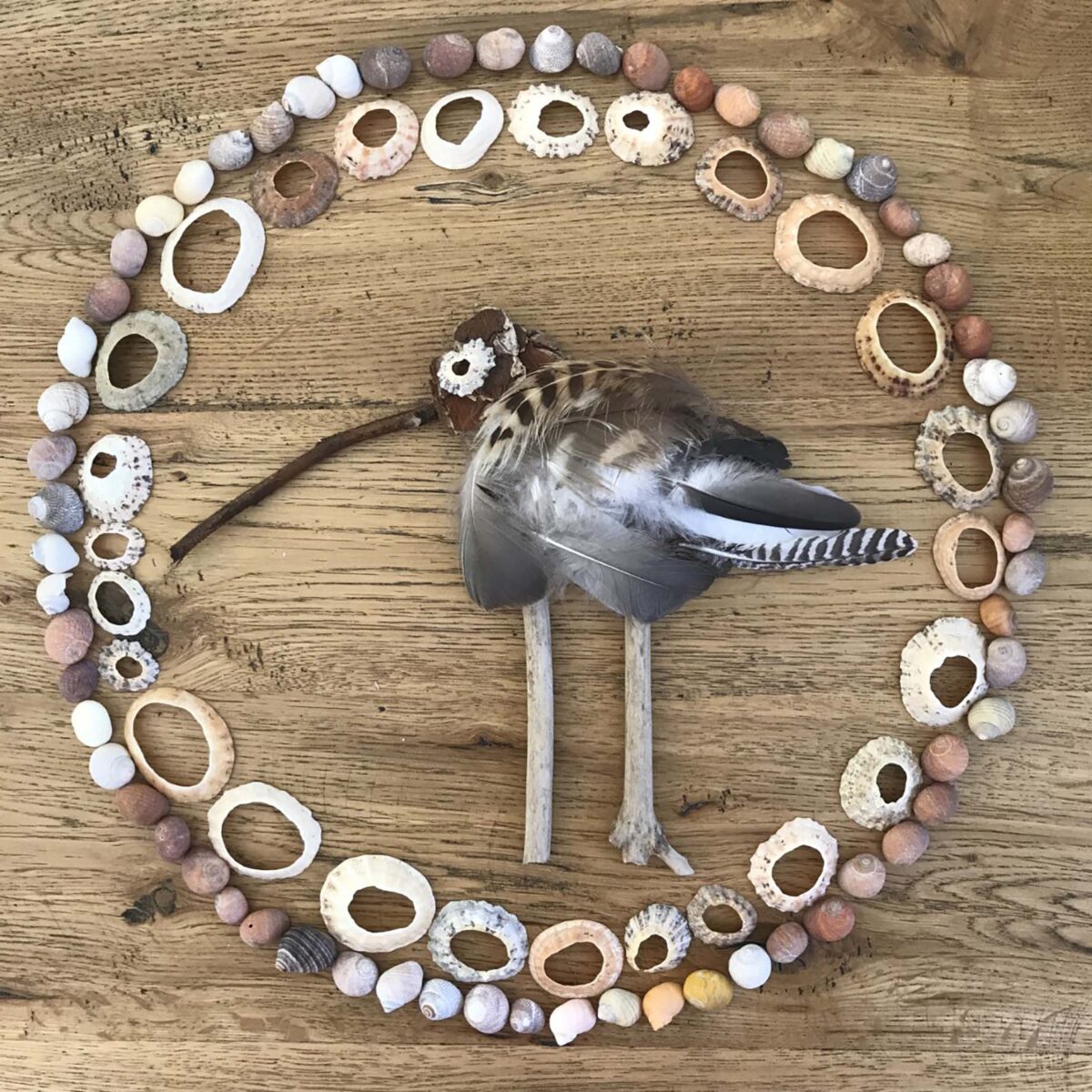
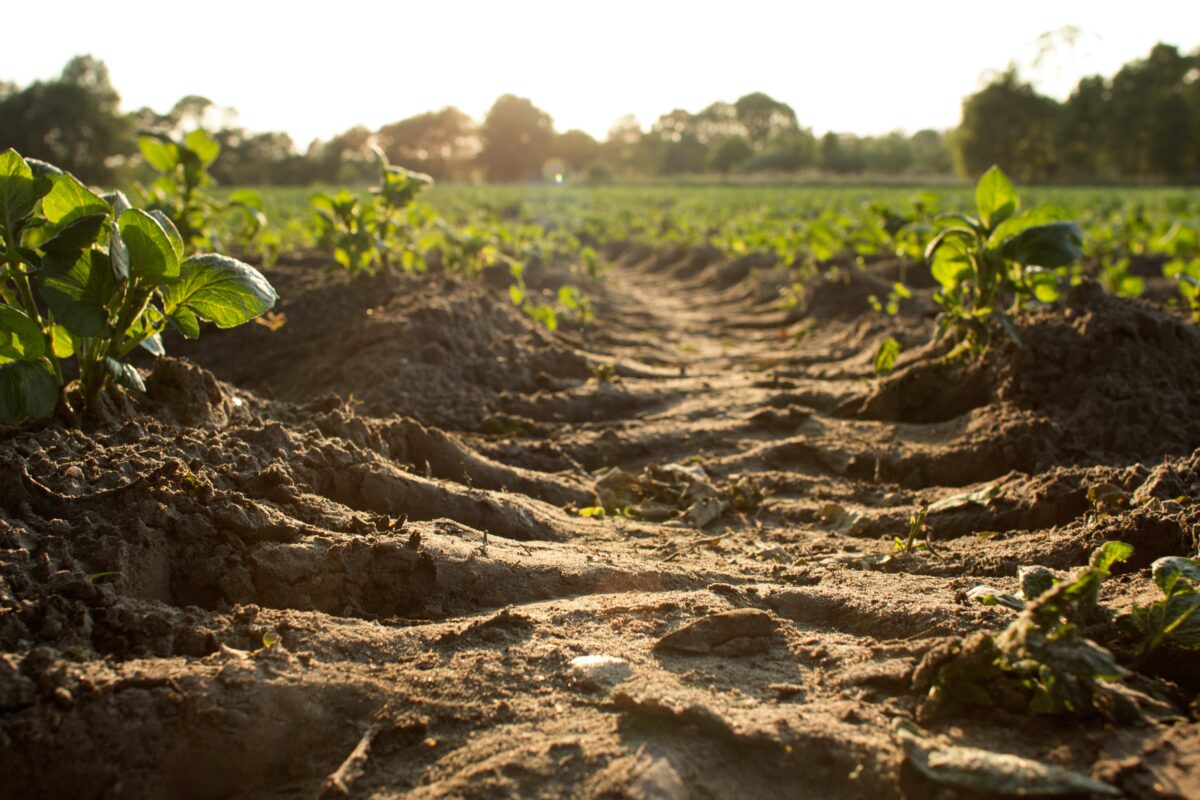
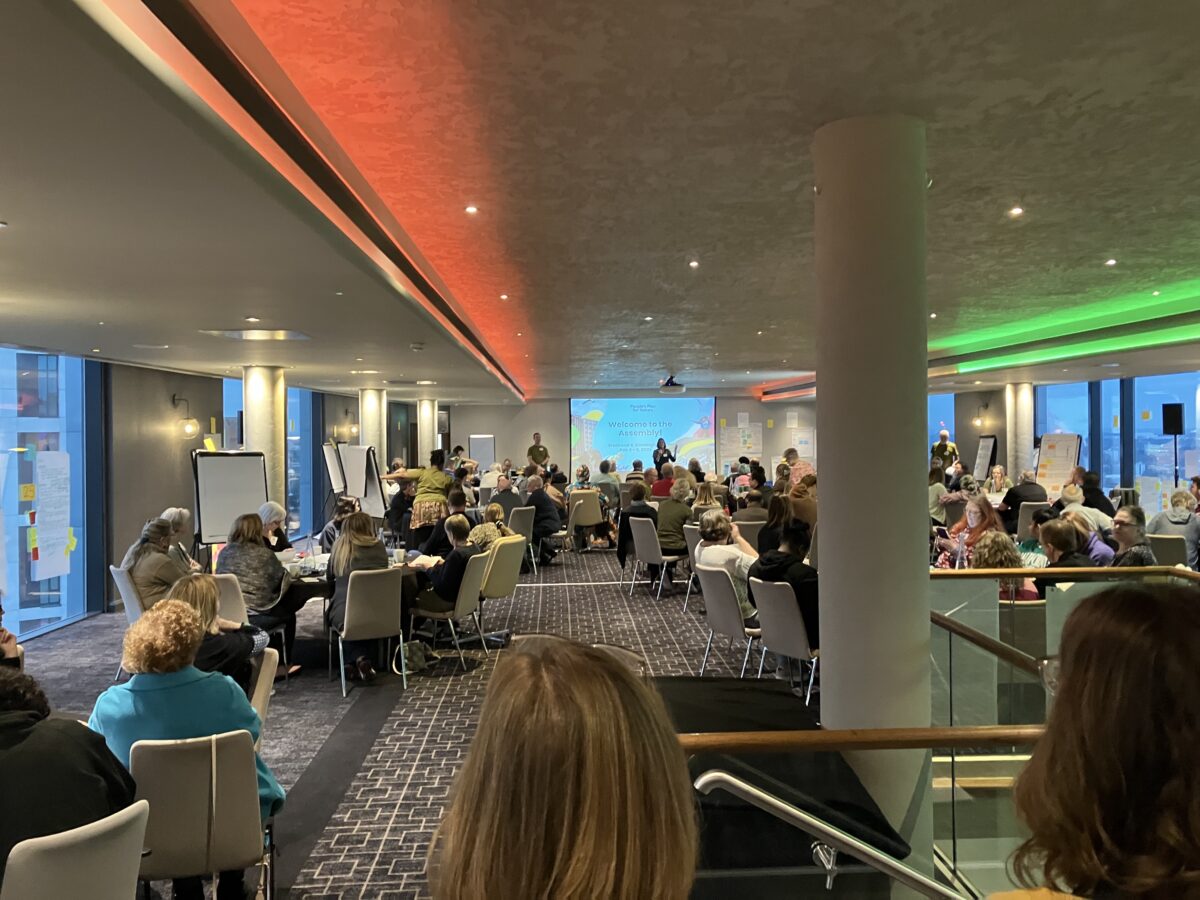
We are looking for 10 passionate young people (aged 16-35) in Wales who care about the state of our rivers, lakes and wetlands. You don’t need to be an expert – just someone who wants to take action for freshwater, influence decision-makers and build momentum for change.
Ideal volunteers will:
Be based in Wales or have strong ties to Welsh communities
Be able to commit one hour of their time per week for 8 months
Have an interest in nature, climate justice, activism or storytelling
Want to gain skills in campaigning, media work and political engagement
Be available for key events, training, and campaign actions over the next 6 months
Be available to attend our Senedd event, date to be confirmed, in May or June
What Will They Be Doing? (7 Key Asks)
Be a Voice for Freshwater in Wales
Share why protecting Wales’ rivers matters to you.
Speak up on social media, in community spaces or at events.
Take Action to Hold Politicians to Account
Write to your MS (Member of the Senedd) or meet with them to demand stronger policies on water pollution, nature-friendly farming and water protection.
Push for action from the Welsh Government on enforcing stronger environmental protections.
Mobilise Young People Across Wales
Engage with youth organisations, universities and community groups to grow a movement around freshwater issues.
Help recruit more young people to sign petitions, attend events or take part in our campaign.
Be a Key Part of Our Social Media Team
Help create and share campaign content (reels, graphics, personal stories, and videos).
Raise awareness about the Not So Freshwater campaign through Instagram, TikTok, and Twitter/X.
Organise and Attend Direct Action & Events
Support or participate in creative campaign actions (e.g., stunts at the Senedd)
Be part of roundtables or campaign activities to demand clean water and stronger policies.
Support Media and Press Work
Write short opinion pieces, letters to the editor or blog posts for UKY4N.
Take Part in Training & Skill-Building
Gain campaign skills in media, advocacy, public speaking and creative activism.
Be part of strategy sessions where you help shape the campaign’s direction.
What Happens If You Join?
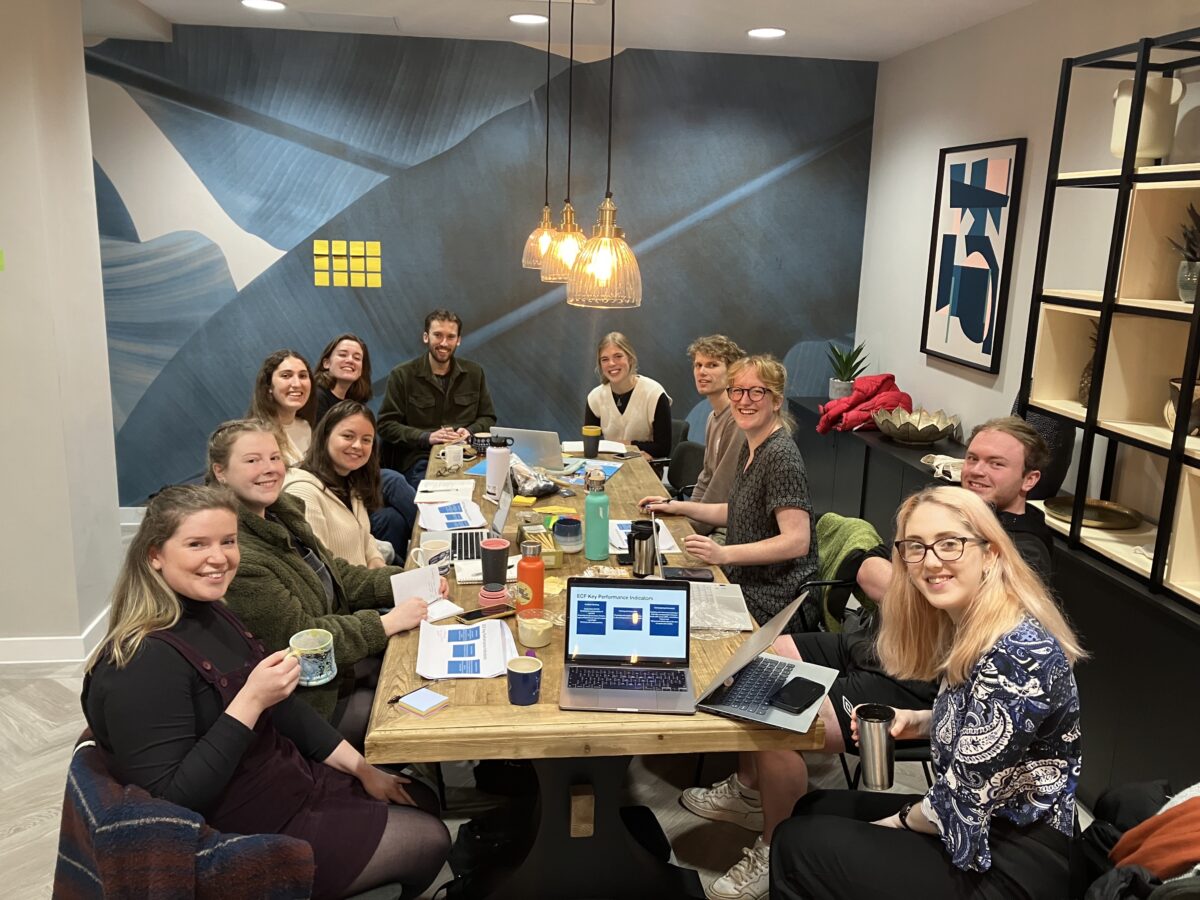
Successful applicants will be invited to join our next campaigns meeting (every Tuesday at 6pm on Zoom) where you’ll get to meet the rest of the organising team.
You’ll be asked to film a reel for our social media, sharing your interests and passions in nature.
You’ll be invited to join our Not So Freshwater campaign kick-off meeting on Zoom at the end of March.
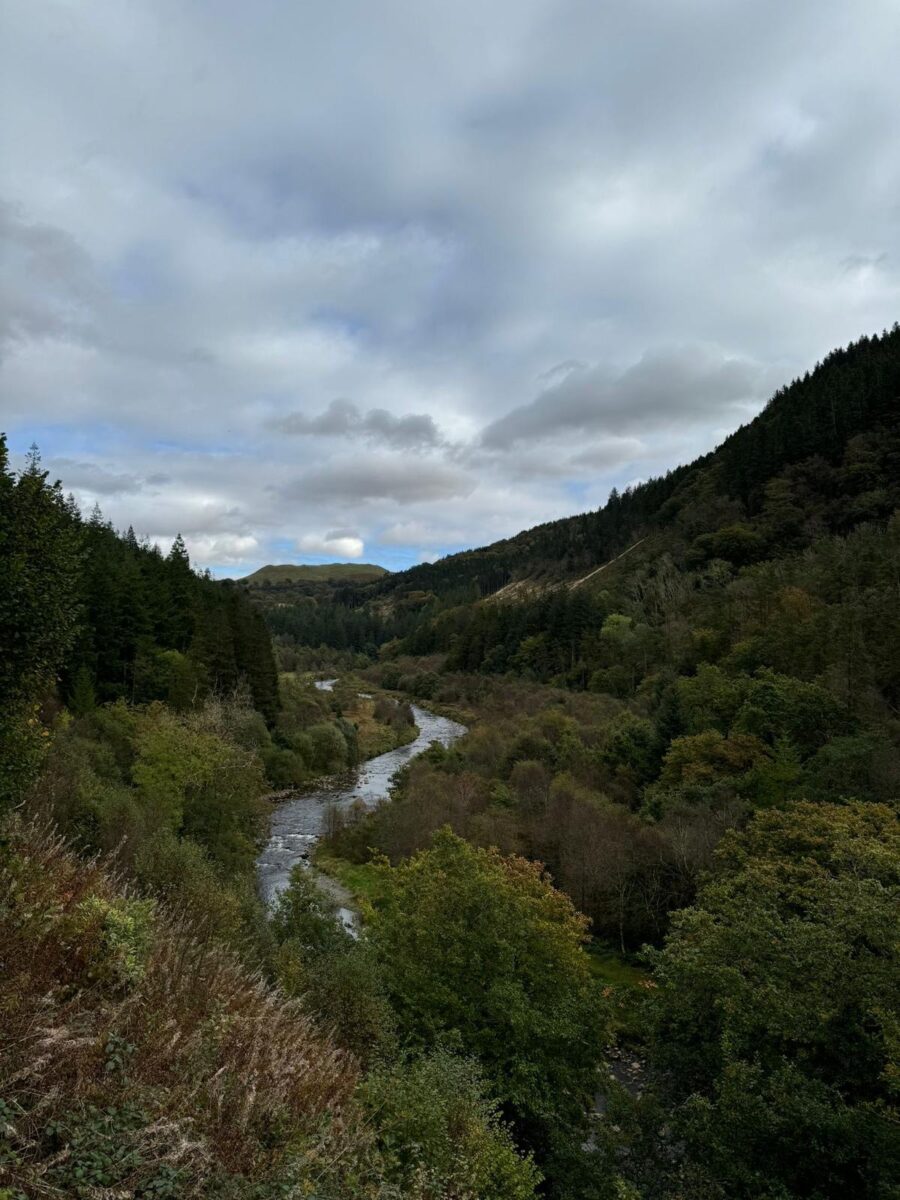
Ask anybody from or who has visited Wales, and they will tell you two things: it always seems to be raining, and everyone loves a sing-song. The former is mostly accurate, and the latter is entirely true. This wet and mild climate, or oceanic climate (Cfb) if we want to be fancy and use the Koppen climate classification, combined with a varied landscape, means that rivers are everywhere in Wales. And you know any nation whose nickname is “The Land of Song” loves to sing – especially the long tradition of choirs.
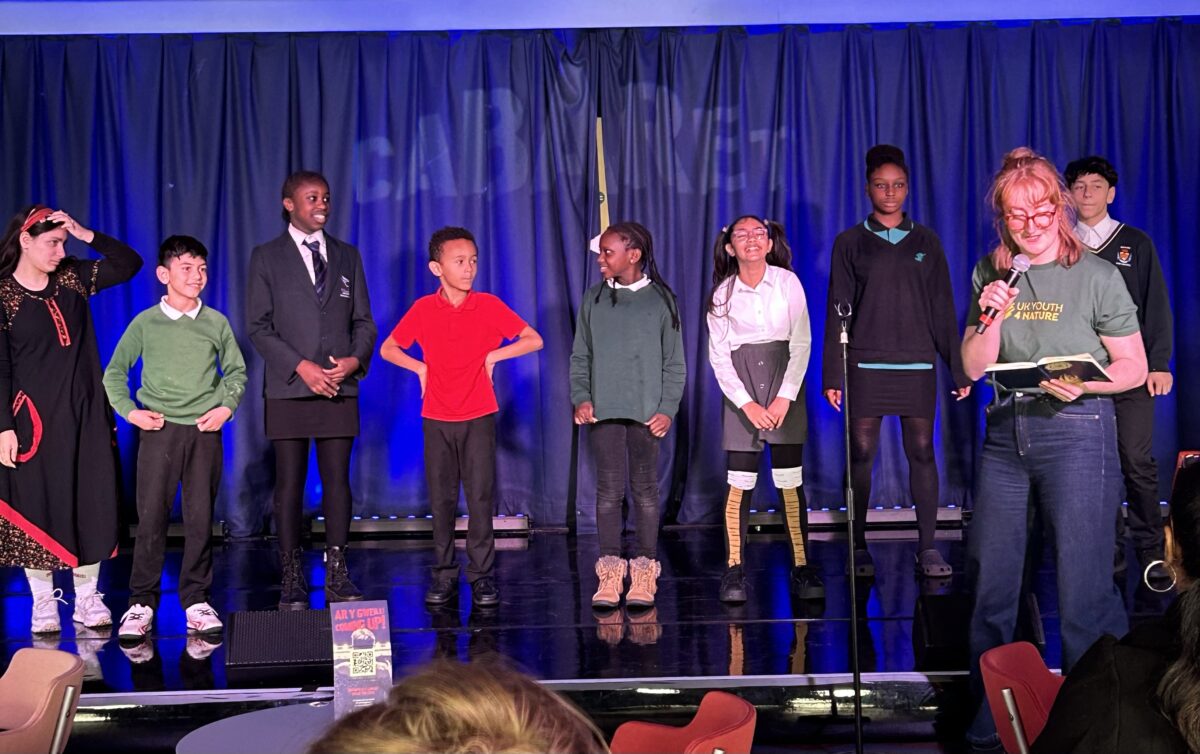
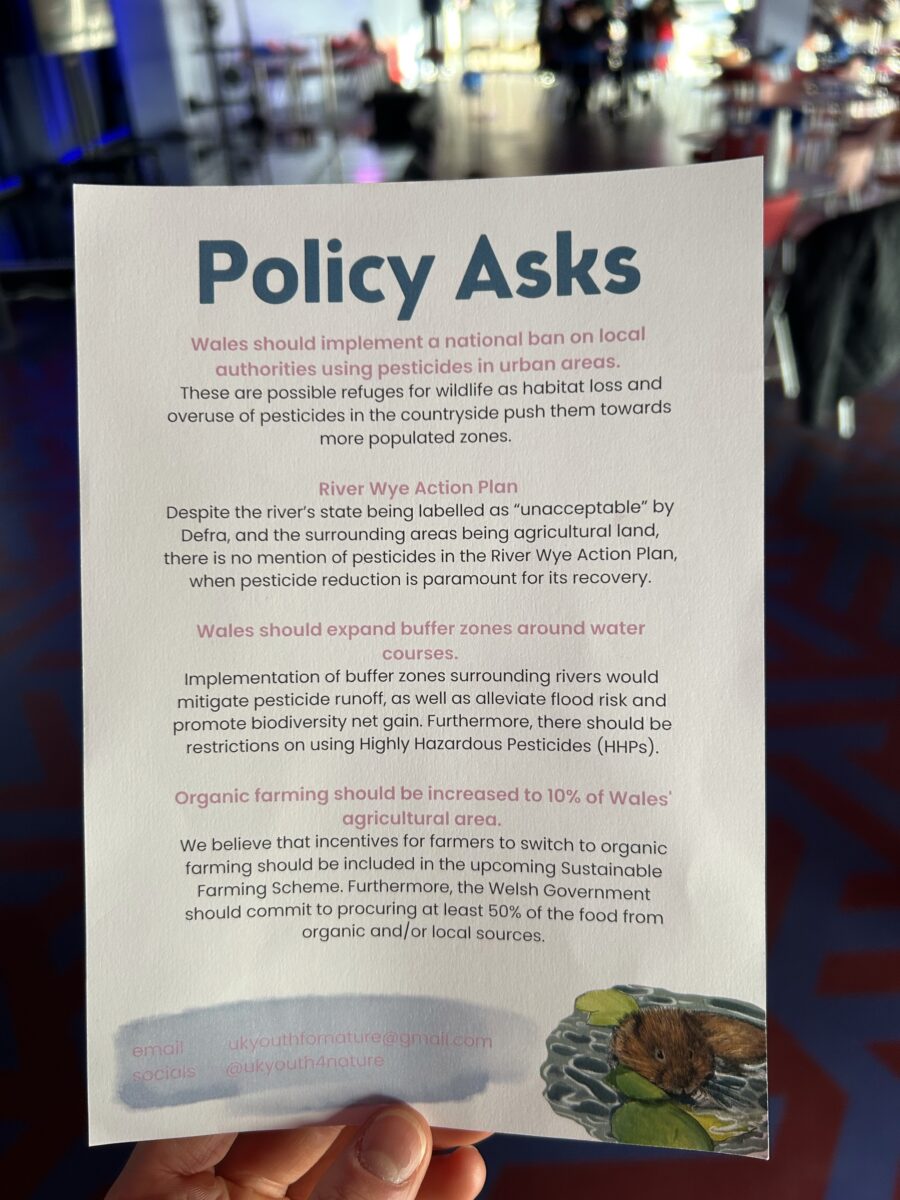
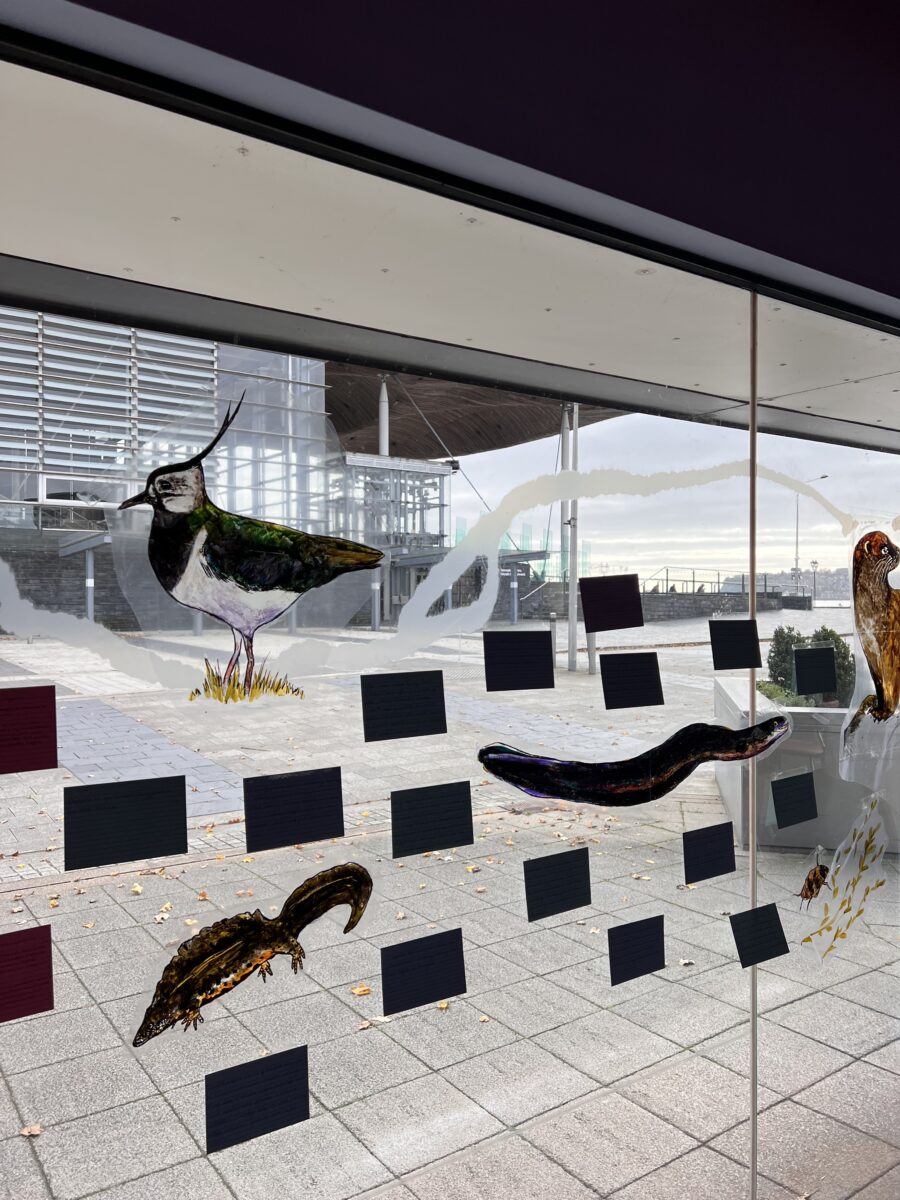
So, UK Youth for Nature combined these two defining features into one exciting event in Cardiff Bay. “A Voice for Our Rivers / Llais i Afonydd”, supported by Delyth Jewell MS, was an opportunity to celebrate Wales’ rivers through music and art. Attended by several MSs, policymakers, and ENGO leaders, it also allowed a chance to explore potential collaborations and policy solutions for addressing agricultural pollution in our rivers.
The event kicked off in incredible fashion with a performance by young members of the Oasis One World Choir – a community arts project welcoming and sharing arts activities with those displaced from their birth countries. The performance included a mixture of songs written by the choir showing their hopes and fears for the future of rivers, plus some Welsh classics with a twist. Working with the UK Youth for Nature team, they sang “Afon Lan”, an adapted version of the Welsh belter “Sosban Fach”.
Event sponsor Delyth Jewell MS then delivered an empowering speech highlighting that protecting and restoring rivers in Wales is not only an environmental issue but a social and cultural one, too!
Our #NotSoFreshwater campaign focuses on addressing water pollution from agricultural sources. But we want to work with farmers to find sustainable and just solutions to move towards nature-friendly farming. Therefore, it was important that farmers’ voices were heard at the event. Jake Cohen, who works closely with farmers in Mid Wales, did a fantastic job of sharing the views of his network of farmers on how we can move forward together at this challenging time.
Finally, we heard from Grace Ingram, a young campaigner from Cardiff and a member of our team. In a speech full of fears and hopes, Grace mentioned how we learn about fantastic rivers from around the world, but rarely are we taught about the incredible rivers in Wales. So, whilst people might be aware of wildlife in the Amazon, sometimes they are less familiar with the nature on their doorstep.
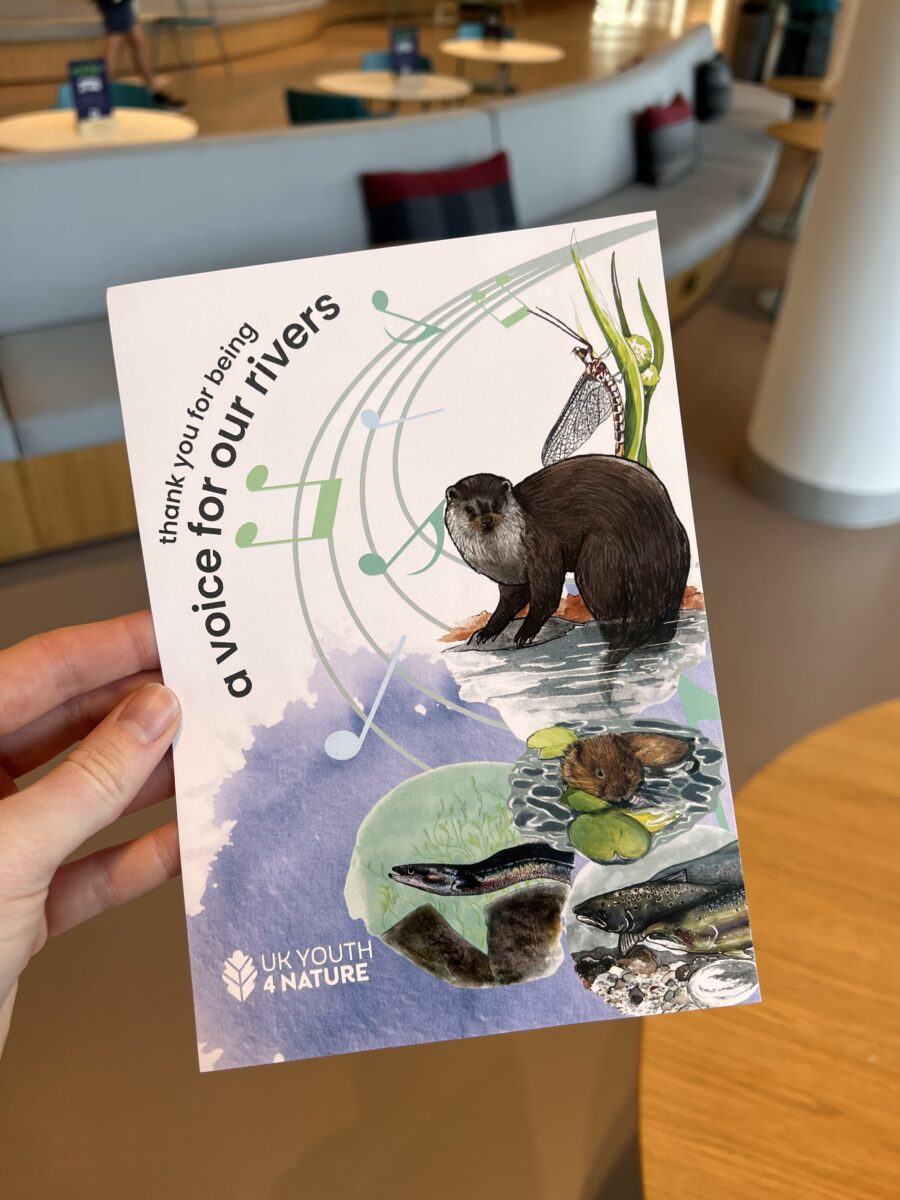
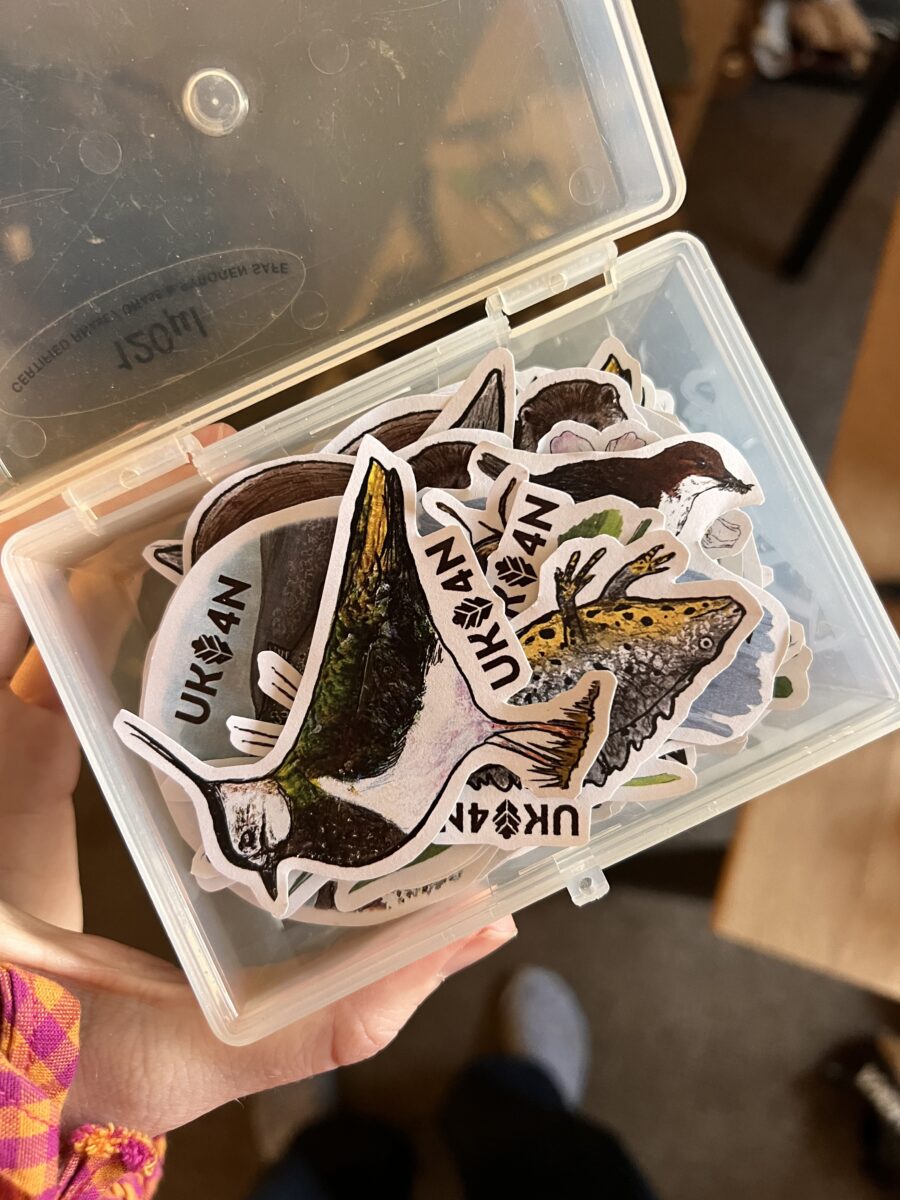
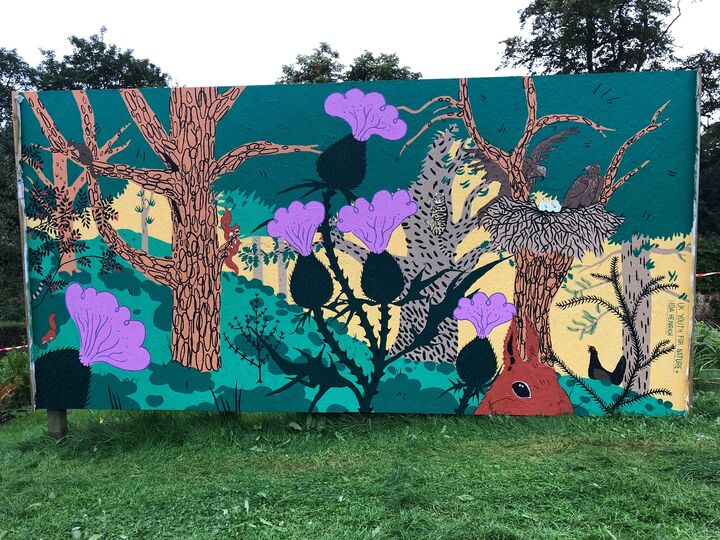
This point provided an excellent segue to the fantastic exhibitions on display around the room, highlighting the rivers of Wales and the communities around them. UK Youth for Nature displayed key river species at risk in Wales including mayfly, otters, and salmon. The incredibly talented Kirsty Lloyd created the artwork.
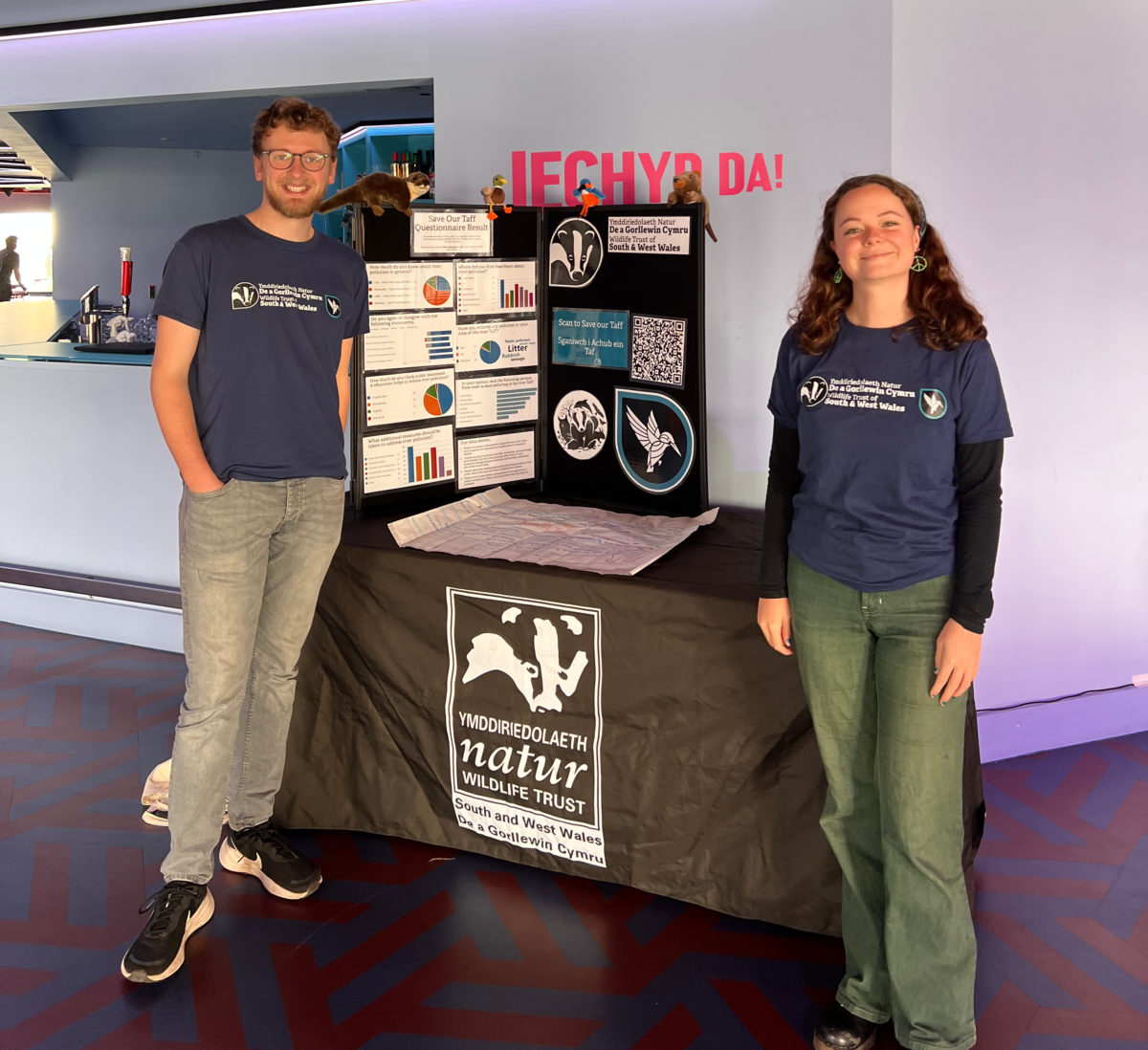
The Wildlife Trusts of South and West Wales presented their work on the “Save Our Taff” campaign, bringing communities together along a river less than half a mile from the event and representing a cultural link for many along its course.
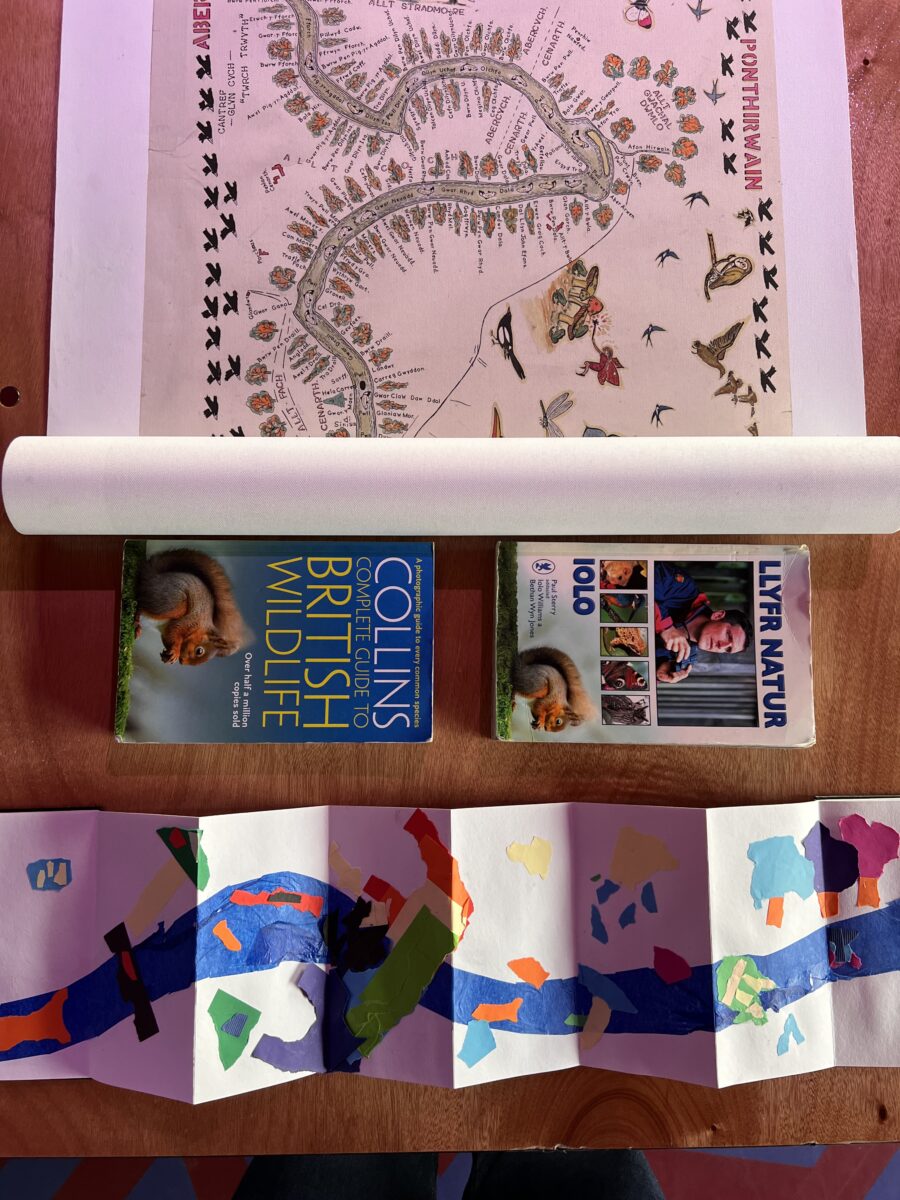
Finally, West Wales Rivers Trust presented work from their “Adopt a Tributary” volunteer programme and the “Llais yr Afon” project they are working on alongside Small World Theatre, spacetocreate, and Save the Teifi. The centrepiece of this exhibition was a map of the lower Teifi created by local postman Idris Mathias in the mid-20th Century and the modern interpretations created by schoolchildren as part of the project.
So, in true UK Youth for Nature style, it was a twist on your usual policy event, but at its heart, it was an opportunity to put forward ideas and solutions for the future of rivers in Wales. One attendee said they left feeling “incredibly energised” and ready to continue the push to restore Wales’ rivers. We at UK Youth for Nature are excited and ready to continue playing our role in bringing stakeholders together, standing up for nature, and finding just and sustainable solutions to ensure that Wales continues to be the land of healthy rivers and the land of song.
We thank Delyth Jewell MS and her incredible team for their support. We would also like to thank Oasis One World Choir, Wildlife Trusts of South and West Wales, and West Wales Rivers Trust for making this event a truly special occasion to celebrate rivers.
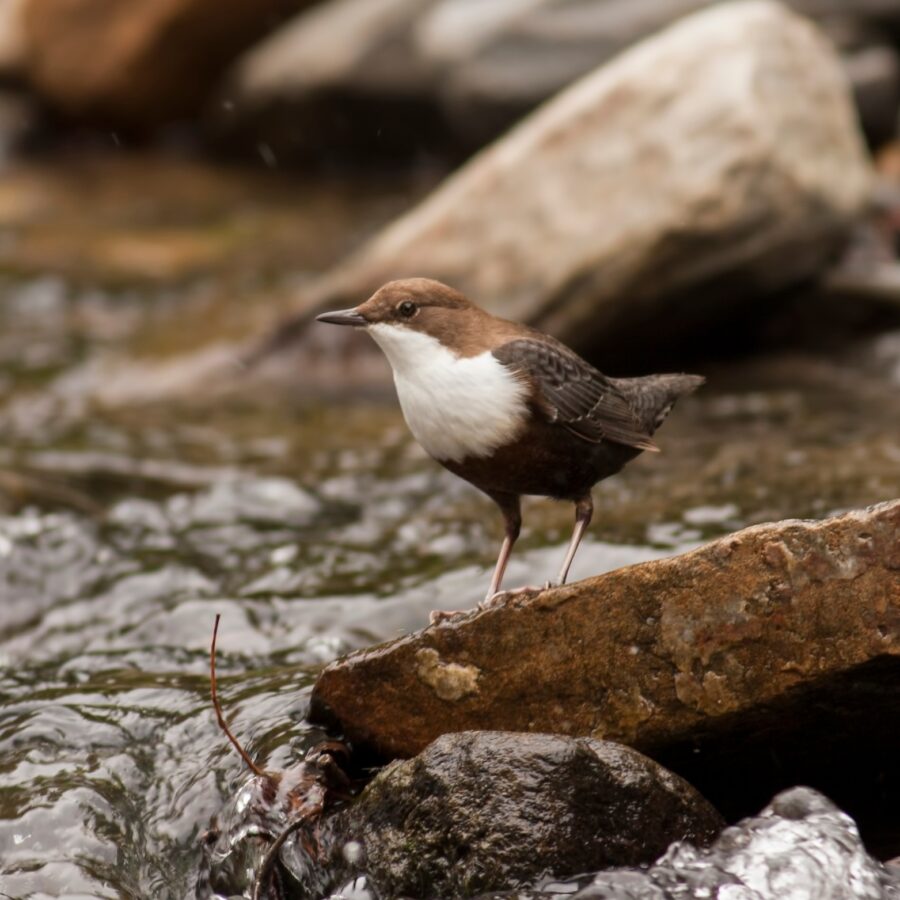
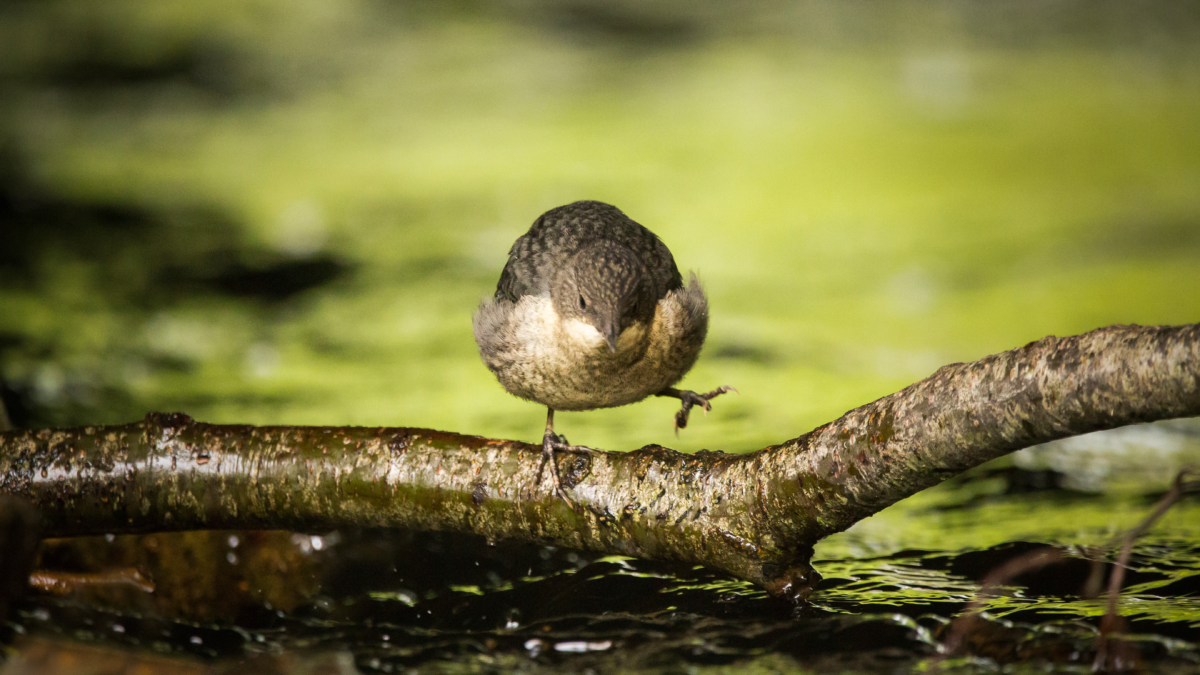
The dipper (Cinclus cinclus) is one of the UK’s most well-known freshwater birds. Despite this they are currently in decline, with stats from the British Trust for Ornithology (BTO) showing a 30% decline since 1970. They currently hold a UK Amber conservation status, meaning they face a decline and threat of extinction from Europe, but they are not currently threatened with global extinction.
CAUSE OF DECLINE
The main reasons for dipper decline all revolve around pollution. Airborne pollutants from industries can cause acid rain, which falls into rivers causing these to become acidic too – a process known as ‘river acidification’. The dippers’ aquatic prey (primarily insect larvae and freshwater shrimps) struggle to survive in acidic conditions, causing them to decline, leaving less food available for the dippers. Interestingly, recent studies are also examining how poor diets at early life stages may affect birdsong quality, and as dippers are territorial birds who sing all year round, adults may struggle to find mates or defend their territory without this vocal ability, causing further threats to population numbers. Other sources of pollution include agricultural fertilisers, microplastics and sewage waste.
ROLE IN THE ECOSYSTEM
Dippers are one of the main predators of freshwater insects and shrimp, and they are also a prey species for many larger birds. Ensuring the numbers of predators and prey in an ecosystem remain balanced is essential to maintaining equilibrium, or a stable environment. If dipper populations were to significantly decrease, this would have a knock-on effect for many other species, particularly in the freshwater ecosystem. It is also important to mention that dippers can absorb pollutants into their bodies, primarily by eating affected prey from polluted waterways, and the dangerous chemicals can then be passed higher up the food chain to animals that eat the dippers. This is a significant process known as bioaccumulation, where the concentration of toxins increases the higher up the food chain you look. Dippers are also an indicator species for water quality, meaning if you see a dipper in a river then the water quality is likely to be fairly good!
CONSERVATION STATUS
Dippers are a protected species in the UK under the Wildlife and Countryside Act 1981, which protects many species of wildlife and states that it is an offence to harm, kill or disturb the habitats of these species. Dippers are still a widespread species and can be seen regularly feeding and nesting around many rivers across the UK. According to the Scottish Wildlife Trust, one dipper nesting site has reportedly been used every breeding season for an enormous 123 years!
WHERE CAN I SEE DIPPERS IN THE WILD?
If you are hoping to see a dipper, look out for a plump bird with dark brown body plumage, a white throat, and a short tail. They can typically be seen perching on rocks in freshwater areas, continually bobbing up and down and cocking their tail. You may see them submerged underwater looking for food, without coming to the surface for up to 30 seconds! They are able to see and hunt for their prey in the water as their eyes have transparent eyelids that act as goggles when submerged.
The water violet is an aquatic plant which grows mostly submerged beneath the water surface, although the stem and leaves can sometimes float horizontally on the water surface. The leaves are a pale lime green colour and are limp if they are taken out of the water. The leaves are pinnatisect, meaning that they are divided into thin segments, similar to the leaves of ferns. The plant is deciduous but perennial, with the leaves dying off in the winter and growing back the next year. They need good sunlight in order to grow, and can live in any type of soil – sandy, loamy, or clay.
Only the flower spike emerges above the water surface and this can reach up to 80cm, although they can be much shorter. It takes 5-10 years to reach its tallest height, and can spread horizontally a distance of 0.5 – 1 metre. The flowers are present between May to June and appear very similar to a primrose – white or pale pink with a yellow centre and 5 petals. In fact, the water violet is not related to other Violets but is rather a species of Water Primrose. The water violet is a hermaphrodite, with both male and female organs. It has pin-eyed and thrum-eyed flowers, like Primrose, and requires cross pollination between pins and thrums to set seed. The flowers are pollinated by insects such as bees and butterflies. It also spreads through vegetative growth, forming colonies which do not set seed. The plant can grow fast.
WHERE CAN I FIND WATER VIOLETS?
It was formerly widespread across the east of England and the midlands, however it is now mainly confined to the Fens, the Somerset Levels, parts of Kent, and a handful of other sites. It is the county flower of Huntingdonshire. There are a handful of records in Scotland and Wales, and it has been introduced at some sites in Ireland. Globally, it is distributed across Europe as far east as the Ural mountains, with the exception of Spain and Portugal, the southern half of Italy, the northern parts of Scandinavia, and south-east Europe.
Because it is highly sensitive to pollution, the presence of the water violet is an indicator of a water source being clean and not polluted. The water violet is often grown in ornamental ponds.
CAUSE OF DECLINE
As an aquatic plant, the water violet is very vulnerable to water pollution, eutrophication and algal blooms. In addition, it is also threatened by drainage and prolonged drought, vegetation clearance, boat traffic, increasing salinity (due to evaporation of water at higher temperatures), and trampling by cattle. It is able to survive temporary summer drought, but not permanent drainage. It is declining and is listed as Vulnerable on the Red Data List for England. Many colonies were lost before 1930 in England.
ROLE IN THE ECOSYSTEM
The water violet is found in still or slow moving, shallow aquatic environments: ponds, ditches, and the slow flowing backwaters of some rivers. Its bushy leaves can create dense shelter for aquatic animals such as dragonfly nymphs, water beetles, tadpoles, snails, and fish and their larvae. The flowers provide nectar for bees and butterflies. The plant also oxygenates the water.
We’re calling on government to act now for our freshwater ecosystems, for nature and for our future.Head to our Not so Freshwater campaign page to learn more.
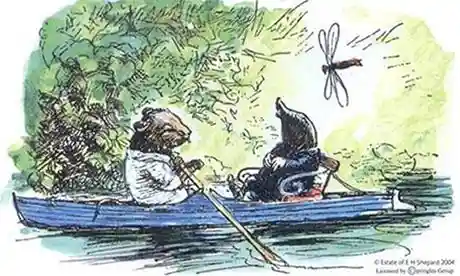
Water voles (Arvicola amphibious), characterised by “Ratty” in the Wind in the Willows, are one of the most charming creatures that call our waterways home. But water voles are also Britain’s fastest declining small mammal, vanishing from 94% of their former sites.
EH Shepard’s illustration of Ratty and Mole
CAUSE OF DECLINE
It might be hard to believe that during the pre-Roman period, water voles were actually Britain’s most common small mammal, with an estimated 6.7 billion living in our rivers, lakes, canals, and ponds. Agricultural development and the draining of 90% of the UK’s wetlands has caused major habitat loss, decimating water vole populations. Any remaining habitat is degraded by industrial pollution, with fertilisers, microplastics, and raw sewage turning our waters into an inhospitable chemical cocktail.
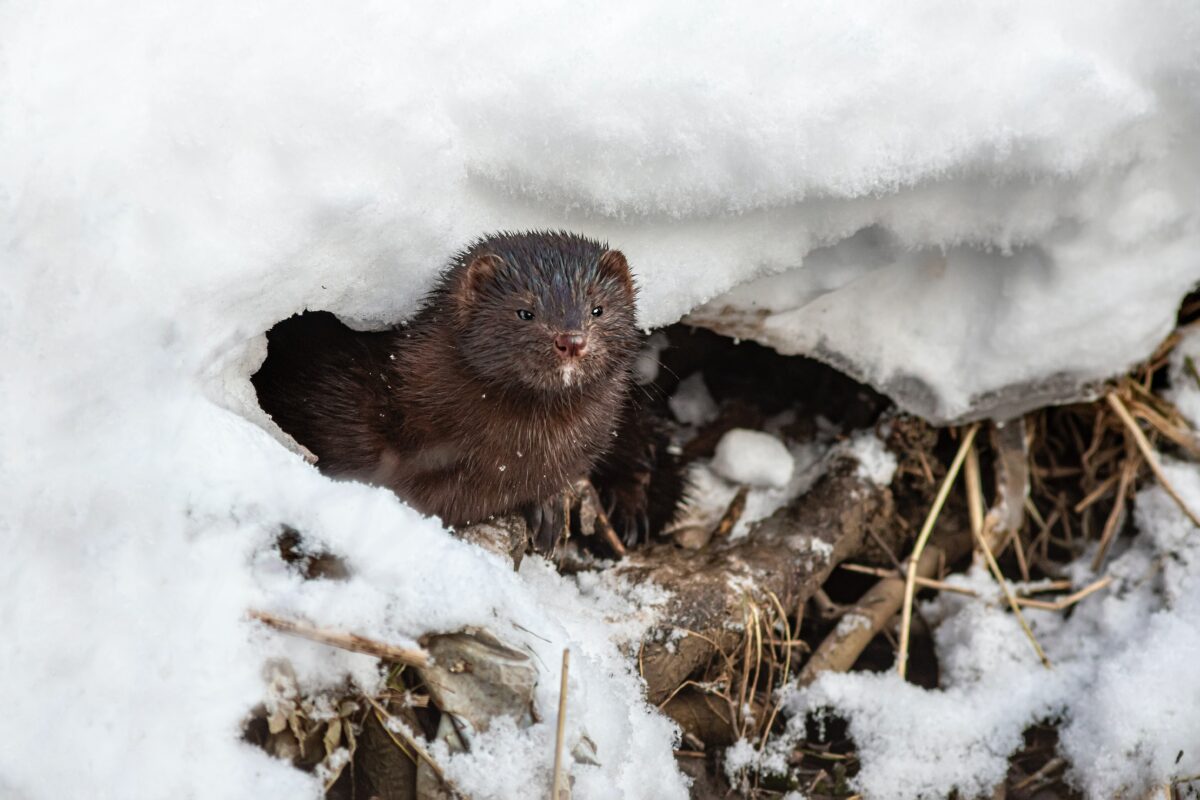
Water voles have also suffered from the introduction of invasive American Mink, from fur farms in the 1930s. Mink predate on water voles and are slim and agile enough to enter water vole burrows, sometimes wiping out entire colonies.
Water vole
American Mink
ROLE IN THE ECOSYSTEM
Water voles are a keystone species within the freshwater environment – meaning they create niches for other species and play a critical role in maintaining the structure of the ecosystem. In the water vole’s case, by forming their complex burrow systems in the riverbank, they alter soil properties: Physically, by increasing drainage, and biologically, by increasing the soil’s nutrient content when stashing food and leaving behind their droppings. This encourages a diversity of vegetation to grow, benefitting the whole ecological community.
CONSERVATION STATUS
Since the 1990s, water vole reintroduction programs have become increasingly popular. Urban development has isolated populations, making the natural recolonisation of our waterways impossible without our help. Where reintroduced, many other species like otters, reed warblers, and water violets have also returned, restoring a flourishing ecosystem.
WHERE CAN I SEE WATER VOLES?
If you’re trying to spot a water vole, look out for a rat-sized rodent, with dark fur and rounded facial features. However, they can be incredibly shy, so one of the best ways to see if they are living in your local wetlands, is to hunt for signs of their activity. Look out for characteristic tic-tac shaped green droppings in heaps called latrines. Grasses nibbled at 45 degree angles is another tell-tale sign of water vole activity. Finally, listen out their “plop” as they enter the water – usually because they’ve seen you long before you’ve seen them!
POEM/LITERATURE
“On either side of them, as they glided onwards, the rich meadow grass seemed that morning of a freshness and a greenness unsurpassable. Never had they noticed the roses so vivid, the willow herb so riotous, the meadow sweet so odorous and pervading. Then the murmur of the weir began to hold the air, and they felt a consciousness that they were nearing the end, whatever it might be, that surely awaited their expedition.”– Wind in the Willows
We’re calling on government to act now for our freshwater ecosystems, for nature and for our future.Head to our Not so Freshwater campaign page to learn more.
That feels like a very profound question to start off a blog post! I guess I’m a mishmash of lots of different things, I always find it difficult to explain what my jobs are and then to explain that yes, they are real jobs and no, I can’t believe I get to do this stuff either! I’m Co-Director of UK Youth for Nature, arguably one of the best jobs in the world, I get to work with such an amazing team of passionate, creative, nature-loving young people. I’m also a wildlife artist, aspiring natural history author and General Manager of Curlew Action, another incredible non-profit, working to reverse the decline of Curlews and to promote wider natural history education.
How did you get here?
Skipping over the long story of how I fell in love with nature and went to uni to study biology, my career all started with an email. Well actually, lots of emails. I sent one to every wildlife film company in Bristol asking for work experience, of the few who got back to me, a man called Richard Brock was one. I started working part-time for Richard and through that, discovered Mary Colwell and her campaign for a Natural History GCSE. So, drum roll please, I emailed her. Two and a half years later, Mary and I are good friends and colleagues at Curlew Action. UK Youth for Nature came along (through the magical medium of email) when they reached out to Curlew Action for support for their Natural Kingdom: Wild Walls campaign.
I was hooked, and reached out to the then Co-Director, Talia (via messenger pigeon this time), to ask how I could get involved. Side note: at the time I didn’t realise that UKY4N was for 16-35 year olds, I thought it was for U18s, so I remember being really impressed by how sophisticated and experienced her communication was. When a highly competent 28-year-old professional greeted me in our Zoom intro call, I was more than a little embarrassed… (side, side note: having now worked with numerous U18s who would put my communication and professionalism skills to shame, the joke is on me, again). When Matt and Talia decided to step down as Co-Directors last summer, I applied for the role and, as they say, the rest is history!
What is the coolest part of your work?
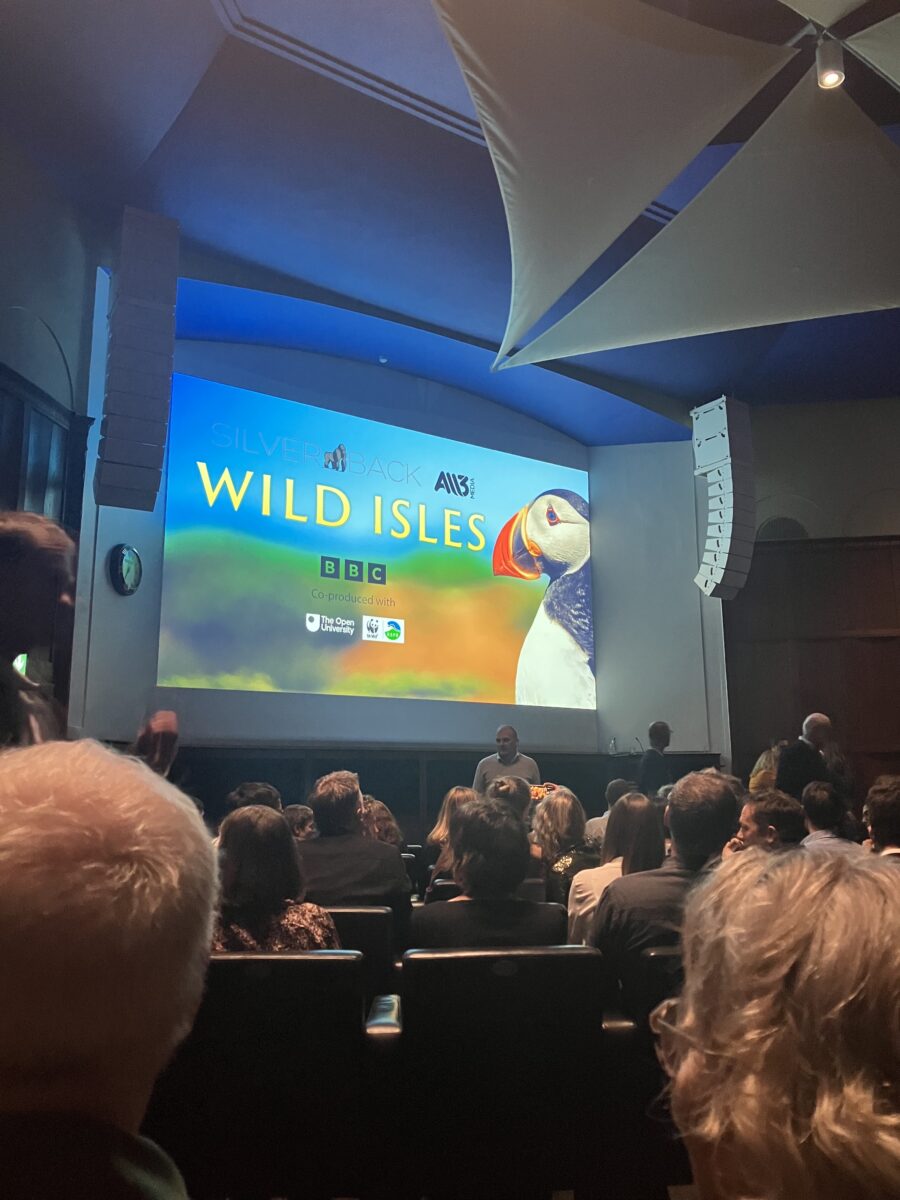
Honestly, the best bit is the people, I’ve met some of my best friends through UK Youth for Nature and I’m so grateful to Matt and Talia for starting such an amazing community. I’m so honoured to be a part of it as Co-Director. Working in the environmental sector means wearing a lot of different hats, being willing to learn different skills and having an open mindset to taking on new challenges. It is always exciting and always busy, I love it. Through my work I’ve met and worked alongside so many inspiring people doing amazing things. My work has had me giving talks across the UK, running workshops in France, attending the premiere of Wild Isles (in the same room as David Attenborough!), speaking on radio, podcasts, writing for magazines. I love what I do and I’m so grateful to everyone who has been part of my journey so far.
Biggest nature obsession?
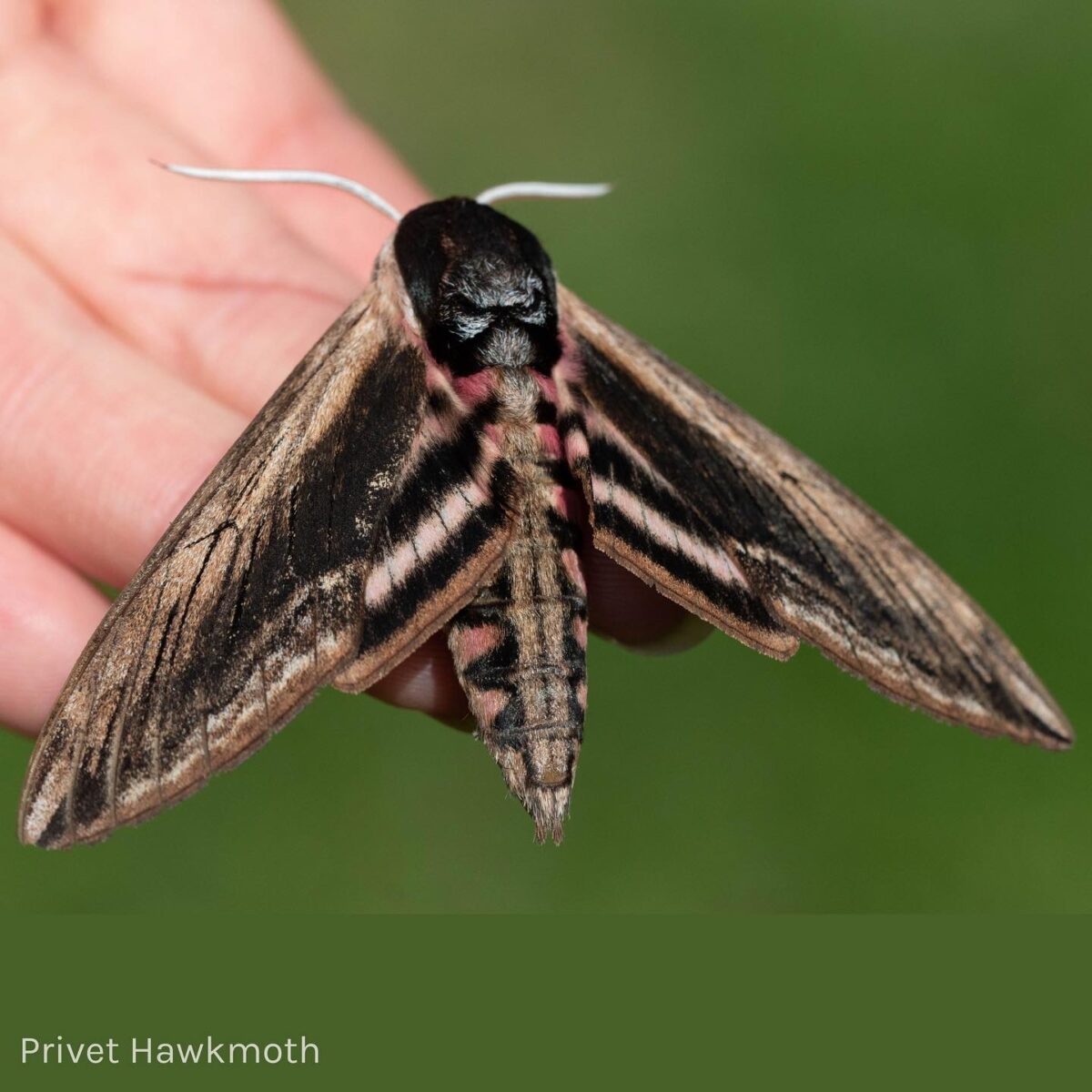
Moths! These fascinating little guys don’t get enough love. At uni I developed the slightly weird habit of regularly talking about moths when I was drunk, to the point that my friends started calling me moth girl. I would like to take this moment to formally apologise to all the drunk students who had to listen to all my cool moth facts. I wish I could tell you that I’ve grown out of this habit, but based on a recent drunken night, I definitely have not… In fact, it’s worse (or even better?) because I now do it sober as well.
Any non-nature obsessions?
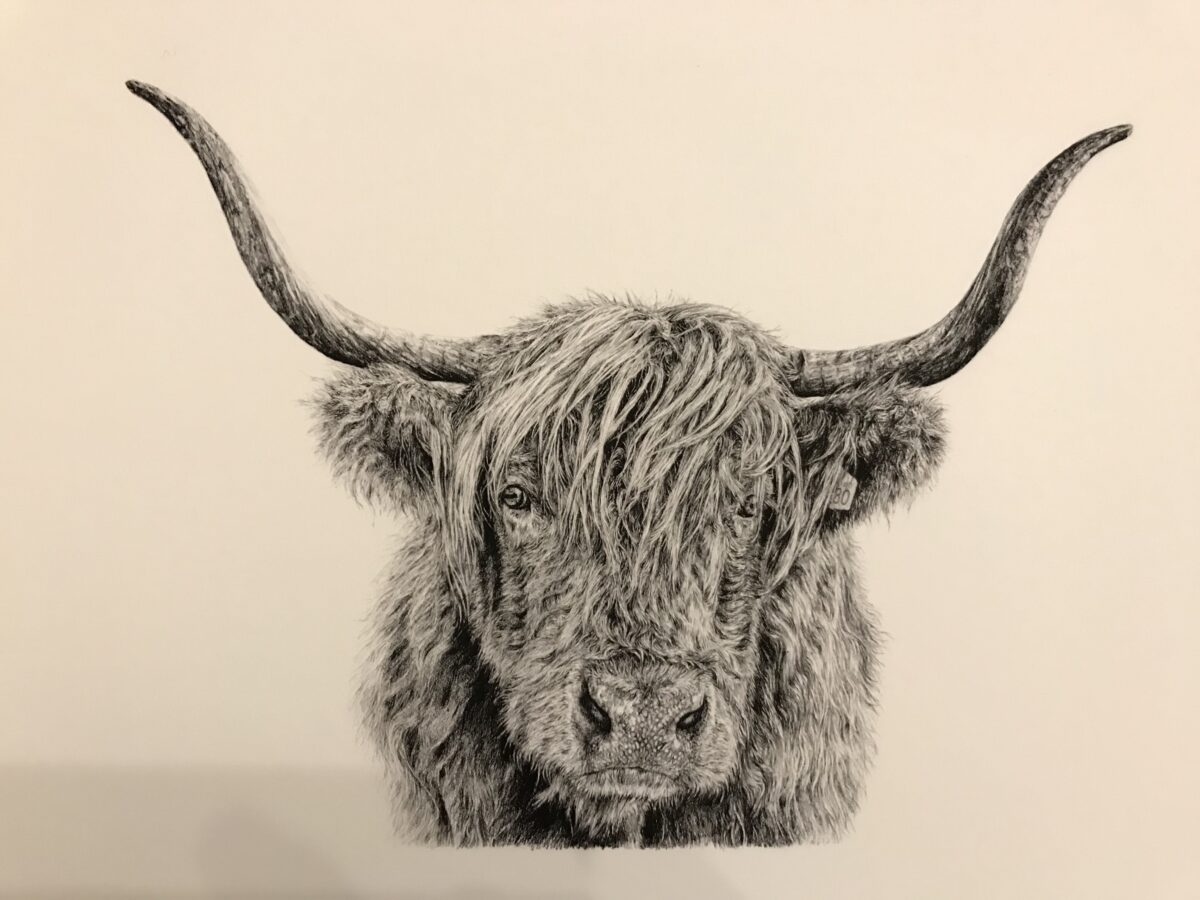
During the first lockdown in 2020 I picked up a pencil for the first time in years and rediscovered my love of drawing. I even ended up joining the masses who created a lockdown online business! Drawing really helped to keep me sane during what could have been a really lonely and difficult time. Highland cows are my number one favourite thing to draw, their hair creates such great texture and I just love their expressions!
Top tips for a budding environmentalist?
Email everyone! Get involved, reach out to people, you never know where it will take you!
If you’re interested in joining our community of like-minded young environmentalists, you can find out more information here.
The environmental calendar is peppered with special days, days dedicated to species, habitats, even whole ecosystems. Do we really need another day? Shouldn’t we just be celebrating all species, all of the time? Can having a date in the calendar really help a bird that has no idea what ‘World Curlew Day’ means? You can probably tell from the fact that it continues beyond the first paragraph, that in my opinion yes, I it can help them. My older brother had a handwritten note that he had pinned to his cork board saying “something that can be done at any time is never done at all”. It rings true for so many parts of life, including celebrating our wildlife, having special days to celebrate species like the curlew helps to prevent those celebrations from continuously slipping down the to do list to make way for the hum drum of daily life admin. They help to focus our attention, to bring communities and stakeholders together, and to remind us that there is stuff out there worth fighting for.
UKY4N and curlews: what’s the link?
Alongside my role at UK Youth for Nature, I am General Manager of a small charity called Curlew Action, an organisation working to reverse the decline of Curlews and promote wider natural history education. Curlew Action and UKY4N have partnered on several campaigns including Natural Kingdom: Wild Walls and Lines in the Sand.
I’ve worked in curlew conservation for two and a half years now and it is humbling to see the lengths that people will go to protect these birds. For each person, the call of a curlew means something different, for some, they are a meadow or moorland bird, heralding spring with their bubbling calls. For others, haunting curlew cries drift over mudflats and flooded fields, serenading listeners clutching hot flasks of tea in the winter cold. For still others, they are a memory of a childhood wilderness that has fallen silent. World Curlew Day is a day to bring us all together, everyone who has had their soul touched by the eerily beautiful cry of the curlew.
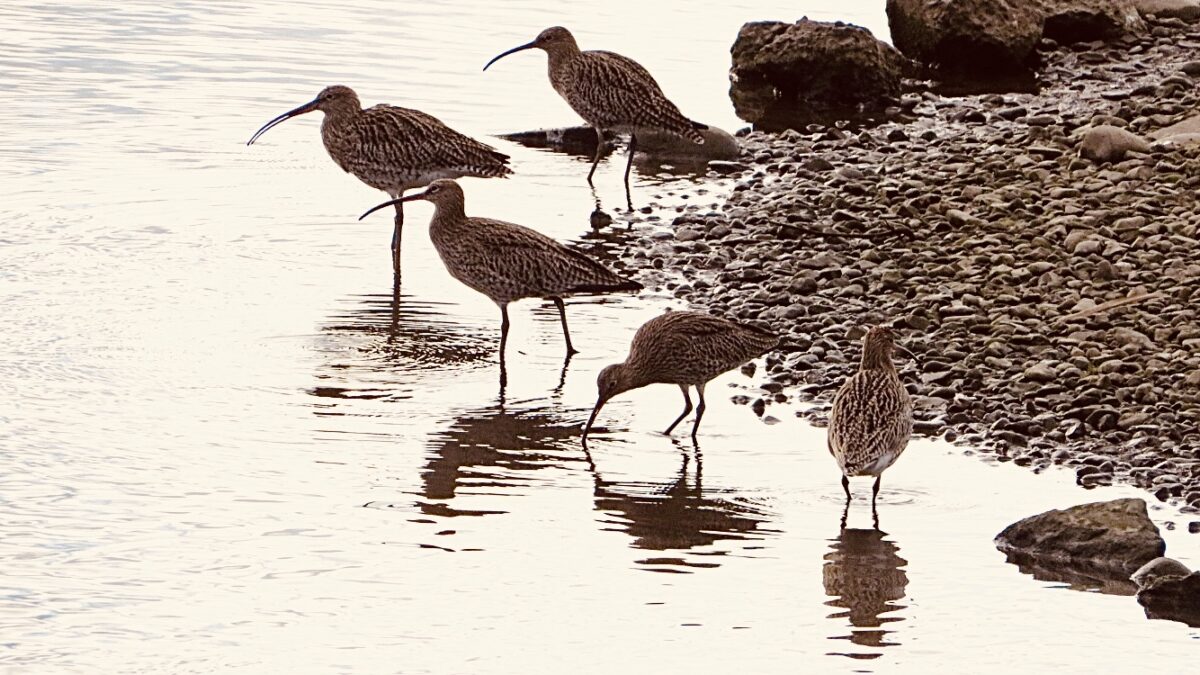
Photo by Tim Melling. Photo by Dirk Perry.
How did it all start?
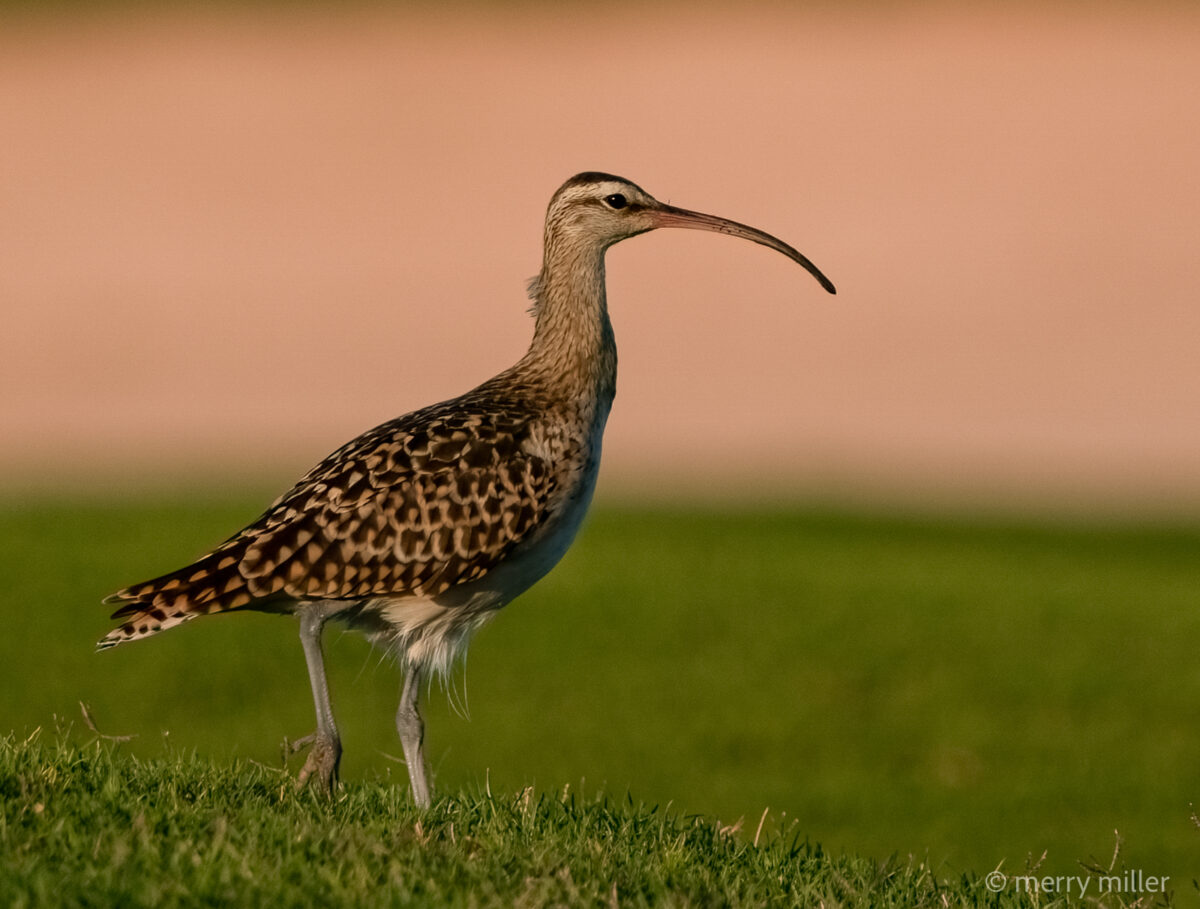
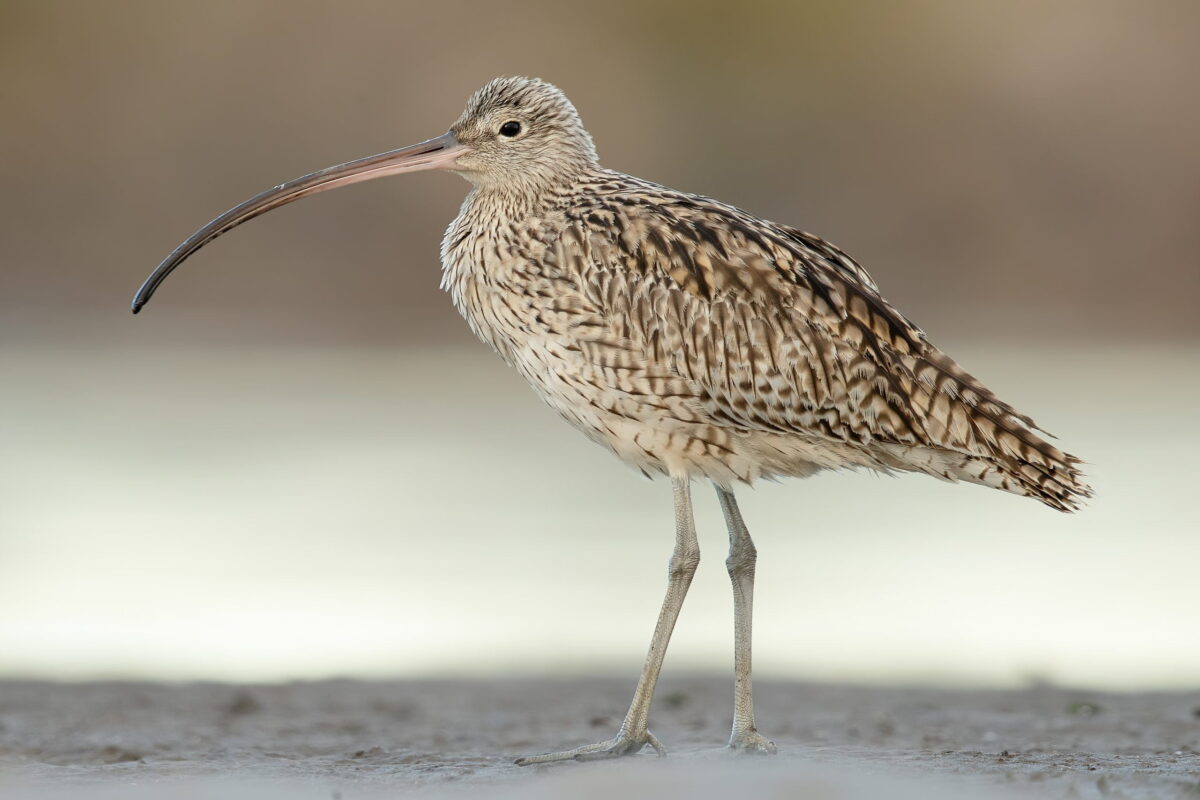
Mary Colwell, Founder and Director of Curlew Action, started World Curlew Day in 2017 to help draw attention to the threats faced by curlew species around the world. Here in the UK, the Eurasian curlew has declined by 50% in my 25 year lifetime. A combination of high levels of predation, intensive farming and loss of nesting habitat has pushed these once numerous and widespread songsters to one of the most pressing conservation priority species in the UK. The wonderfully named Bristle-thighed curlew, so called because of the long bristle-like feathers on its lower belly, is facing invasive rats that we introduced to their once safe Hawaiian island home. The Far-Eastern curlew is losing vital habitat to coastal development across the Australasian Flyway. The Numenius family is declining across the world. The curlews are telling us that all is not well across our landscapes, if we ignore the urgent message woven into their piping cries, we will lose them, and with them great swathes of the wildlife that they live alongside.
Eurasian curlew by Andy Greggory
Bristle-thighed curlew by Merry Miller
Far-Eastern curlew by unknown
Why today?
The 21st of April is the day that Mary started her 500 mile walk across the UK to find out what is happening to curlews, it is the average egg laying day for Eurasian curlews, it also happens to be the feast day of the patron saint of curlews, St Bueno. There really could be no other day for World Curlew Day. Today, people around the world are celebrating curlews. Curlew Action is holding a special event in the New Forest, an evening of song and conversation with Mary Colwell and singer-songwriter, David Gray. Events are happening in the Brecon Beacons in Wales, in Yorkshire and Bristol; across the world curlew fans are sharing photos, poems, artwork and music to celebrate curlews. I’ve now been involved in three World Curlew Days, each year I end the day exhausted but full of hope. Surely, where there is this much love for a bird, we will not let it disappear, surely, we can turn this around.
Left: Aneeshwar Kunchala, 6
Above: Ellen Labib
Curlew Action art & poetry competition 2021
To find out more about curlews, visit the Curlew Action website.
The power of changing the landscape has been held in too few hands for too long, the People’s Plan for Nature has given agency back to the people. 100 people from across the UK came together to take part in the People’s Assembly for Nature. They have worked to develop a plan and a set of recommendations for change on behalf of the UK public. This ground-breaking project has been powered by the WWF, RSPB and National Trust and is a unique collaboration with the public to protect and restore nature in the UK.
Across four weekends, two in-person and two online, the Assembly met and heard from experts and practitioners from different sectors to help them understand the state of nature in the UK and what could be done to save it. All talks and resources from the Assembly can be viewed here. UK Youth for Nature was invited to observe some of the sessions:
How we farm and what this means for nature:
This session covered a wide range of topics focused on the impacts of different farming methods on our environment. Sue Pritchard from the Food, Farming and Countryside Commission started by discussing the history of farming, as we’ve moved from subsistence farming to more intense agricultural practices, with the development of technology. Soil scientist Professor Pete Smith then spoke about the implications of farming for our soil quality and the trickle down effects for our biodiversity. To pull it all together, Martin Lines from the Nature Friendly Farming Network spoke about practical solutions farmers can implement to help the wildlife that shares our countryside, while maintaining agricultural productivity.
Diets and supply chains:
This session covered a range of topics around how we source and farm our food, and the impact this has on the environment. One presentation was from a nature-friendly farmer, Mark Lea from Green Acres Farm, on how he is implementing organic methods such as natural fertilisers into his food production. This was followed by Anna Turrell, the Sustainability Director from Tesco, discussing how large supermarkets can reduce their environmental impacts from their position at the other end of the supply chains. These were just a couple of examples of the diverse range of speakers helping to answer key questions surrounding the success of nature-friendly diets in the UK.
Photo by Archie Mathison
The final weekend took place in the centre of Birmingham on the 4-6th of February. One of our Co-Directors, Ellen, went along to observe and to talk with other environmental NGOs about how we can move into the next stage now that the People’s Plan for Nature has been pulled together.
Final weekend in Birmingham
“It was genuinely one of the most incredible experiences I’ve had in my career. There was a real sense that this was a powerful moment in history that has so much potential to create positive change. Nothing like this has ever been done before and when all the working groups came together at the end of the day to read out the first draft of the People’s Plan there were more than a few people in tears.
During the day I had the opportunity to hear about the process of picking the 100 people who formed the Assembly. A huge amount of thought went into making the group as representative as possible. I’ve been to quite a few environmental conferences and I’ve never seen so much diversity, it was amazing, this is what it should look like. There were people from a range of different socio-economic backgrounds, different races, cultures, 16 year olds working with people in their 90s. What was so special was that everyone wanted to hear other people’s views and opinions, there was no sense that one person was better or more knowledgeable than the next, everyone felt like they were part of something bigger and that their voice mattered.”
“Communicated messages around saving the planet have been done in one way for so long, this is something different.” – Nadeem Perera, founder of Flock Together
“I am so excited about the People’s Plan for Nature, I really feel that this is something different. We’re not going to save nature unless everyone is involved and everyone feels that they have agency to act and speak up. We cannot let this plan become just another report, but from the energy and passion I saw in that room, I’m sure it won’t. This is a really exciting time for UK nature and I’m really looking forward to UK Youth for Nature helping to spread the message and push for change.” – Ellen
UK Youth for Nature will continue to support the People’s Plan for Nature. To find out more about our campaigns visit our campaigns page.
2022 was one of the biggest years for nature in some time. Internationally, the UN held its global nature conference, putting in place a new 2030 deal to save nature. But for UK Youth for Nature too, 2022 was the most important year in our 3-year history.
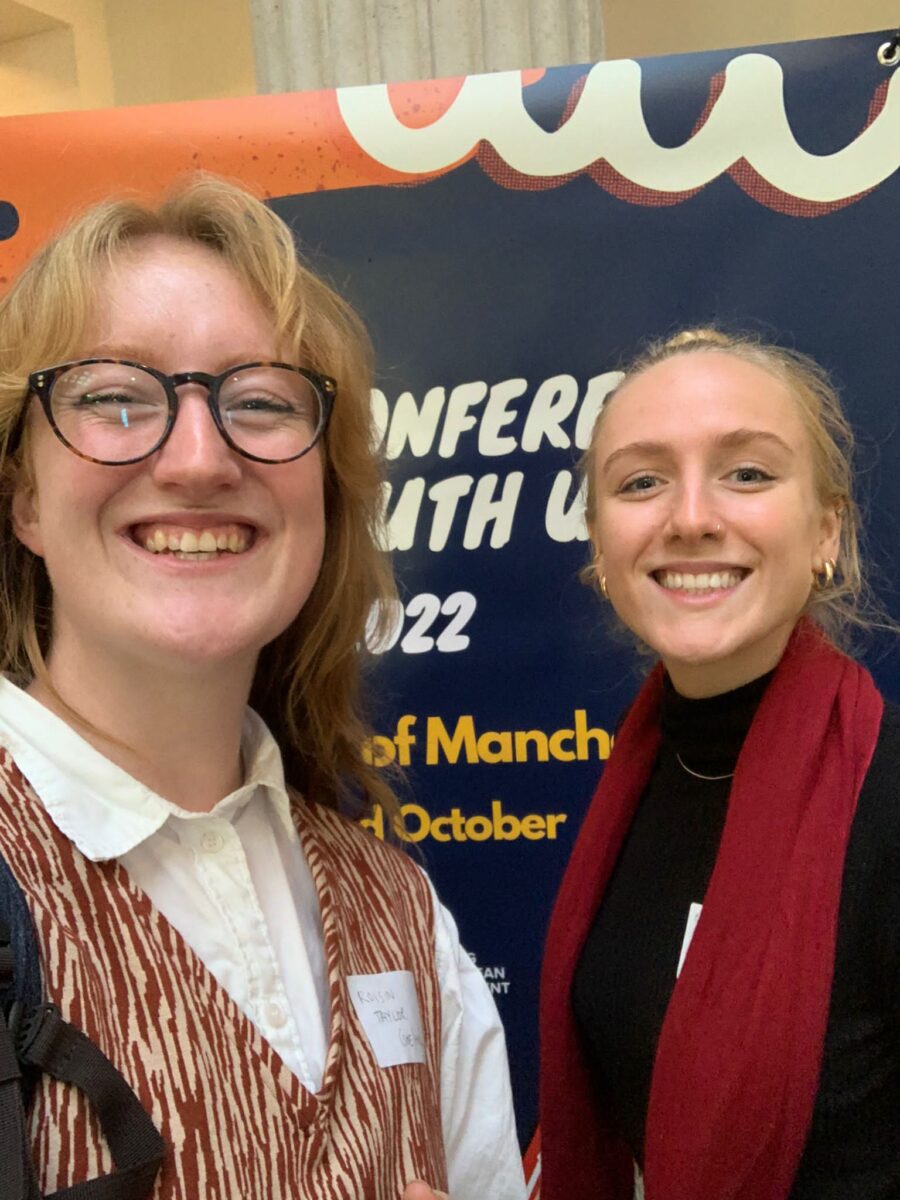
In October 2022, Matt and Talia handed over their Co-Director roles to Ellen and Roisin – a momentous occasion for both of them. For some context on who on Earth we are and why we’re writing this, well:
Matt founded UK Youth for Nature in April 2019. There were plenty of youth-led climate campaigning organisations. But no organisation existed empowering the UK’s young people to raise their voices to governments and politicians about the loss of nature. So, as little more than a humble WhatsApp group to start with, UK Youth for Nature (UKY4N) was born.
Talia then came along in March 2020 looking for something (anything!) that wasn’t totally pandemic-related and entirely about nature. It took one 4-hour strategy call to sink her teeth in and never let go.
Matt Williams
Talia Goldman
Handing over the leadership to Ellen and Roisin was an incredibly exciting moment – if a little heartbreaking. Heartbreaking because it’s always sad to say goodbye to something you love, even if you choose it. We’ve been through a lot together over the 3 years leading and working with UKY4N. Exciting because finding two new Co-Directors, as well as a Head of Communications and Head of Campaigns, to hand over to, means that there is so much more to come; a clear signal that we’re here to stay and here to have impact.
Of course we’d say it – but there is huge potential for UKY4N. Movement building can take time, but the dedication of the young people who are joining UKY4N and staying shows that our expectations aren’t unrealistic. UKY4N is filling a gaping hole in the youth nature space calling for political action to address the nature crisis.
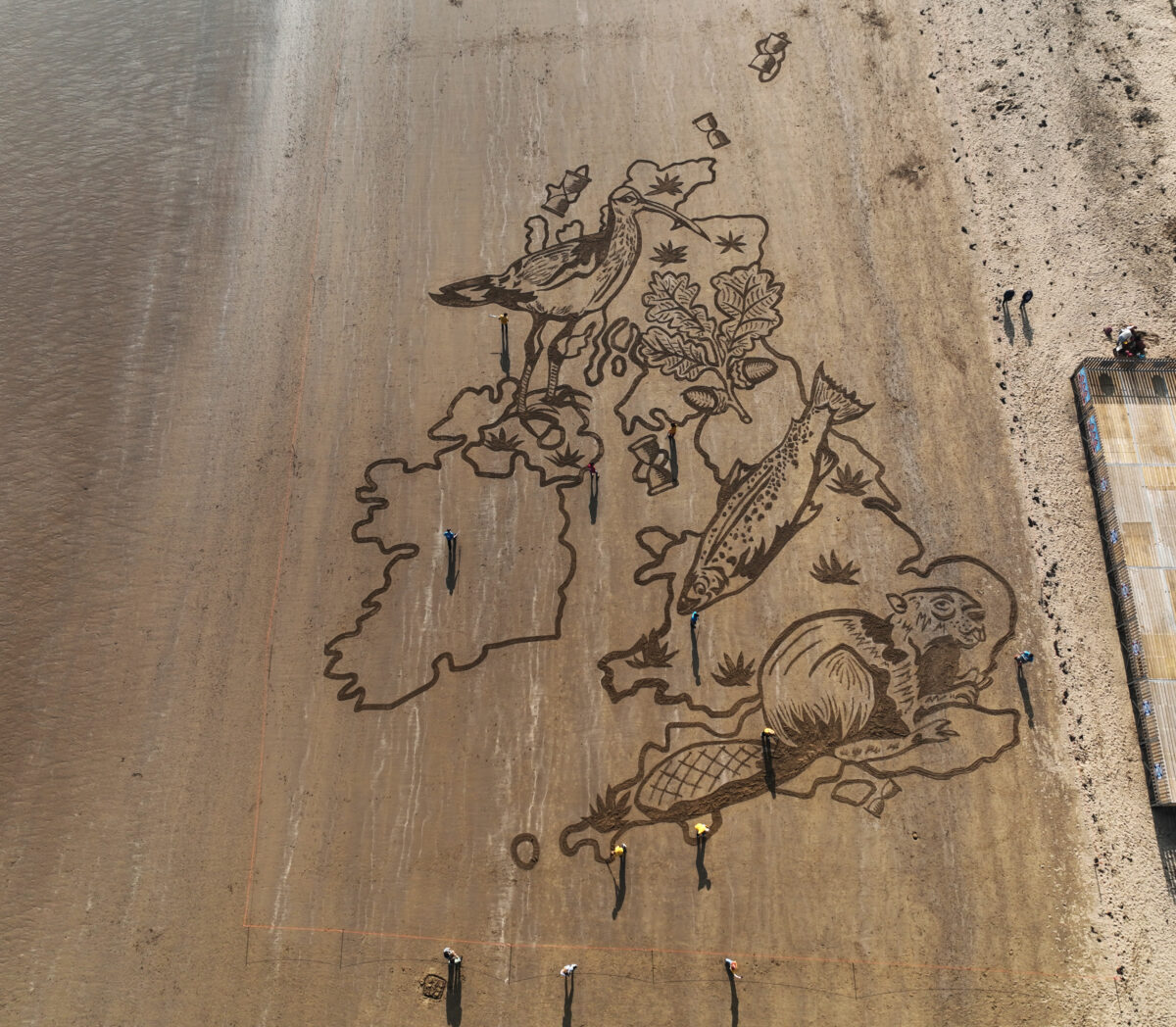
Our goal has always been to build a movement that reaches beyond the confines of a tweet. That’s why creative forms of campaigning have always been essential to anything that we do. We knew that we needed to find different ways for politicians and the general public alike to engage with our campaigns – that worked actively and passively with people’s imaginations to help them to engage. UKY4N has shown time and time again that we’re a creative powerhouse – one that multiple NGOs and other organisations have supported as a result (and taken on our ideas). Be that through our social media assets and digital guides to working with your local council, rewilding, or even building your own bug hotel – to our UK-wide mural campaign Natural Kingdom: Wild Walls, our giant sand drawing Lines in the Sand. This is a huge, ongoing area for potential as UKY4N moves forward.
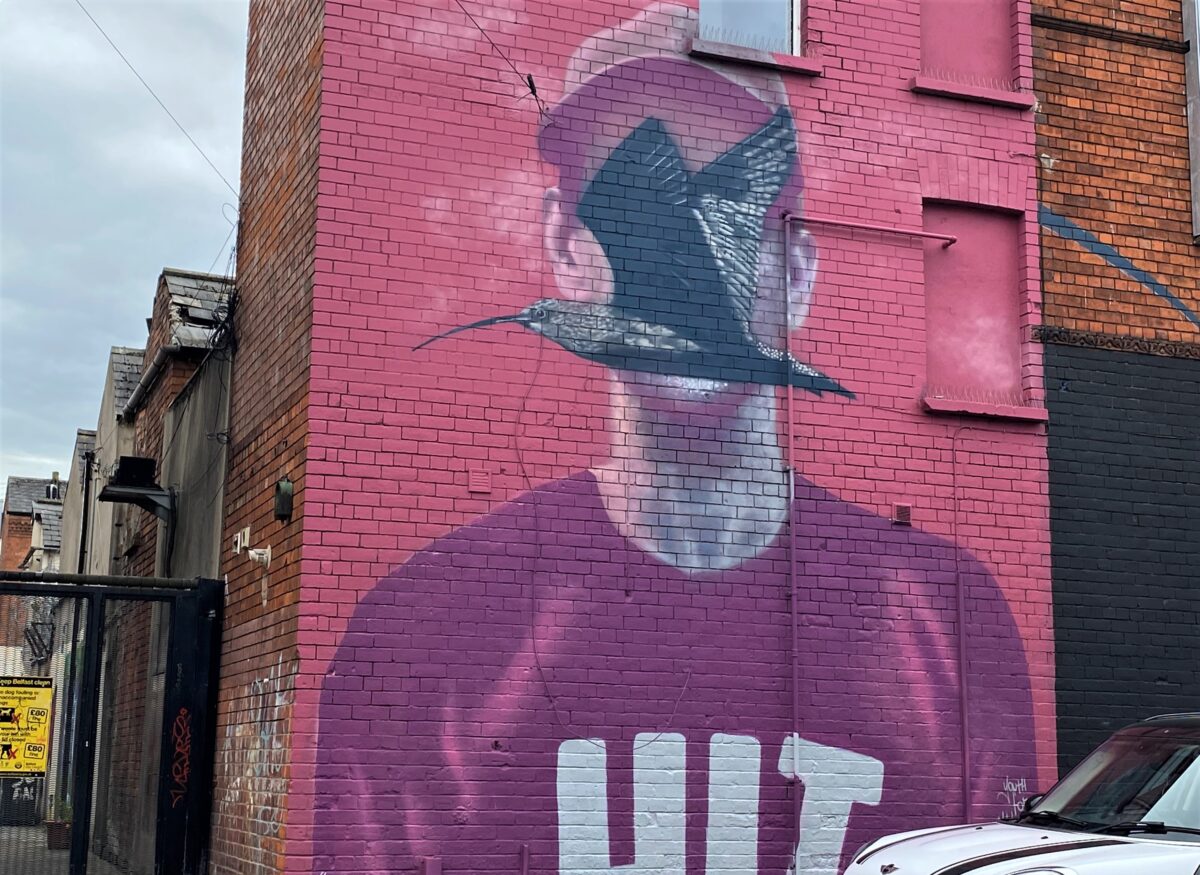
Eurasian Curlew wall – Belfast
Lines in the Sand drawing – Scarborough
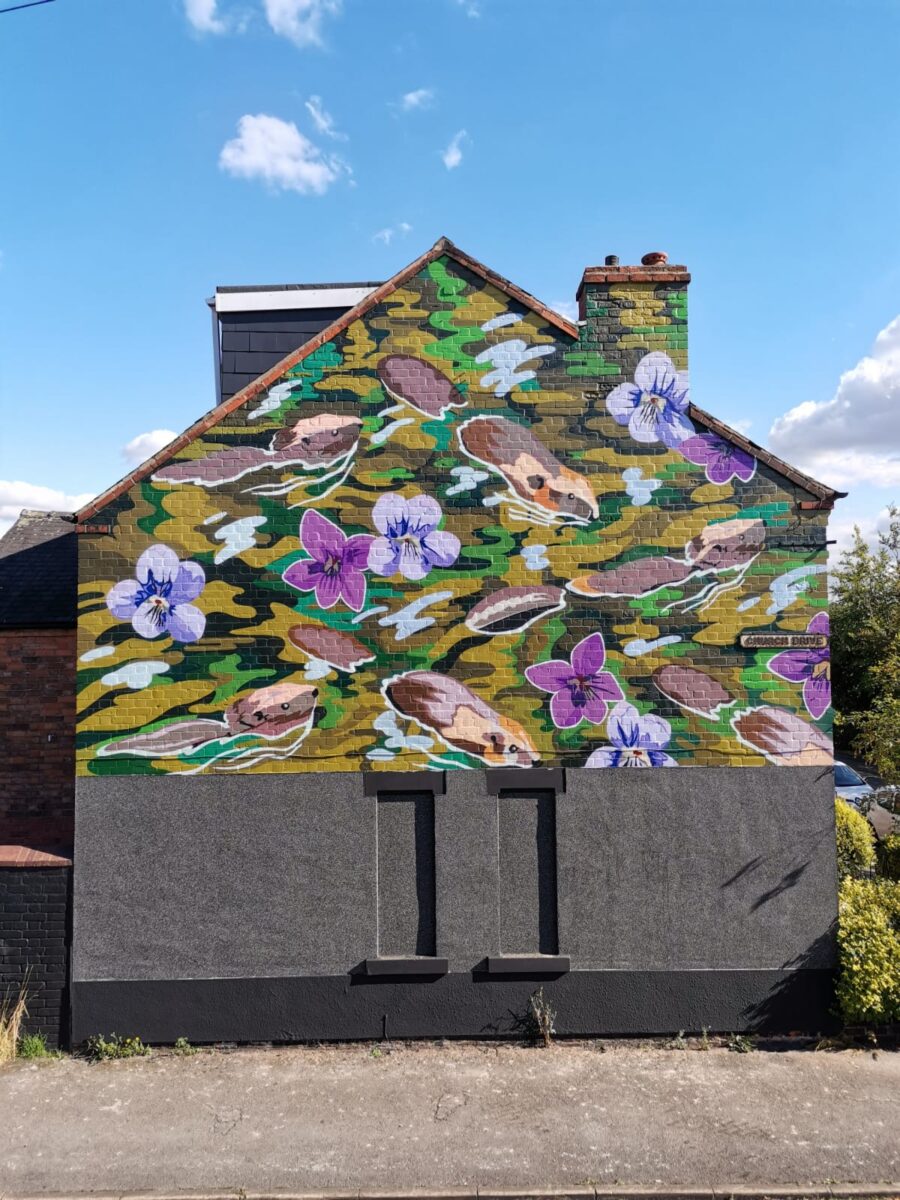
Beavers wall – Nottingham
Looking to the future of UKY4N there is so much that excites us. The possibility for real-world policy change is embedded into an upcoming water campaign. And the team remains as creative-minded as ever.
One of Talia’s proudest moments was the completion of the final wildlife mural we painted in Glasgow right before COP26. This was the 8th mural that we brought to reality as part of our Natural Kingdom: Wild Wallscampaign. It was the culmination of nearly a year’s work and demonstrated the unbelievable dedication and pure skill of our organising team. No one in the team had done anything like this before and yet… We managed to source the funding for every wall through a variety of means, worked with multiple organisations, individuals, and councils on the ground, co-designed the mural with local, mostly young, artists, and managed all the logistics of their creation – all whilst in full time employment or education. It’s such a point of pride because it started as an idea to paint 1 mural and transformed into 8 – all at the will and drive of the team. And this led to an additional 8 created in partnership with the Grantham Institute for Climate Change Research and Octopus Energy. We still get emails asking for our help creating new murals.
Glasgow wall
It’s impossible not to just write an endless list of things that UKY4N achieved since launching in 2019 and becoming Co-Directors in 2020. We’ve also had some tough times together – failed applications to the Arts Council, long nights in the early days where Aura, Joe, Bred and the of two of us were dealing with unexpected obstacles and working out new strategies for campaigning and everything in between.
But even where it’s been hard, the good has been overwhelming.
Since Matt founded UKY4N in 2019, we have gone from a few organising team members, a WhatsApp group, and a small mailing list, to over 4000 followers on social media with a thriving organising team, a growing network, and a huge internal overhaul where we moved over to Slack.
Whilst we had initial support from WWF and RSPB when Matt founded UKY4N, we’re now well-known amongst multiple organisations, individuals, councils, and political representatives. We have had media coverage in the UK and the EU, including in major publications such as The Guardian centrefold and global pictures of the day for The Guardian and The Times with our sand drawing. We’ve spoken on the radio, sat on multiple panels with national and European organisations, run events, and participated in the creation of the YOUNGOs COY16 at COP26. We took the next step forward in creating a movement that lasts by officially incorporating, winning an important grant from the European Climate Foundation to continue our work over the next year, going through a whole rebrand run by our own team members, and establishing our first Board.
UKY4N has achieved so much already that we’ve been incredibly proud to be a part of – but this was only just the beginning. This is no doubt a movement at the cusp of creating real, long-lasting change. The energy, enthusiasm, intelligence, and sheer determination of our organising team and wider network will be testament to that.
Thank you to everyone, past and present, who we worked with – to those who gave 10 hours week and 10 minutes, to the late night planning and early conversations, to the meetings squeezed into work days and weekends, to the ceaseless creativity and inability to say ‘no’ to ideas, to the barrages of WhatsApps and Zooms that always ran over, to the disagreements and eurekas.
Now over to you, Ellen, Roisin, Joe, Hannah, and the rest of this brilliant team to help the UK’s nature thrive once more.
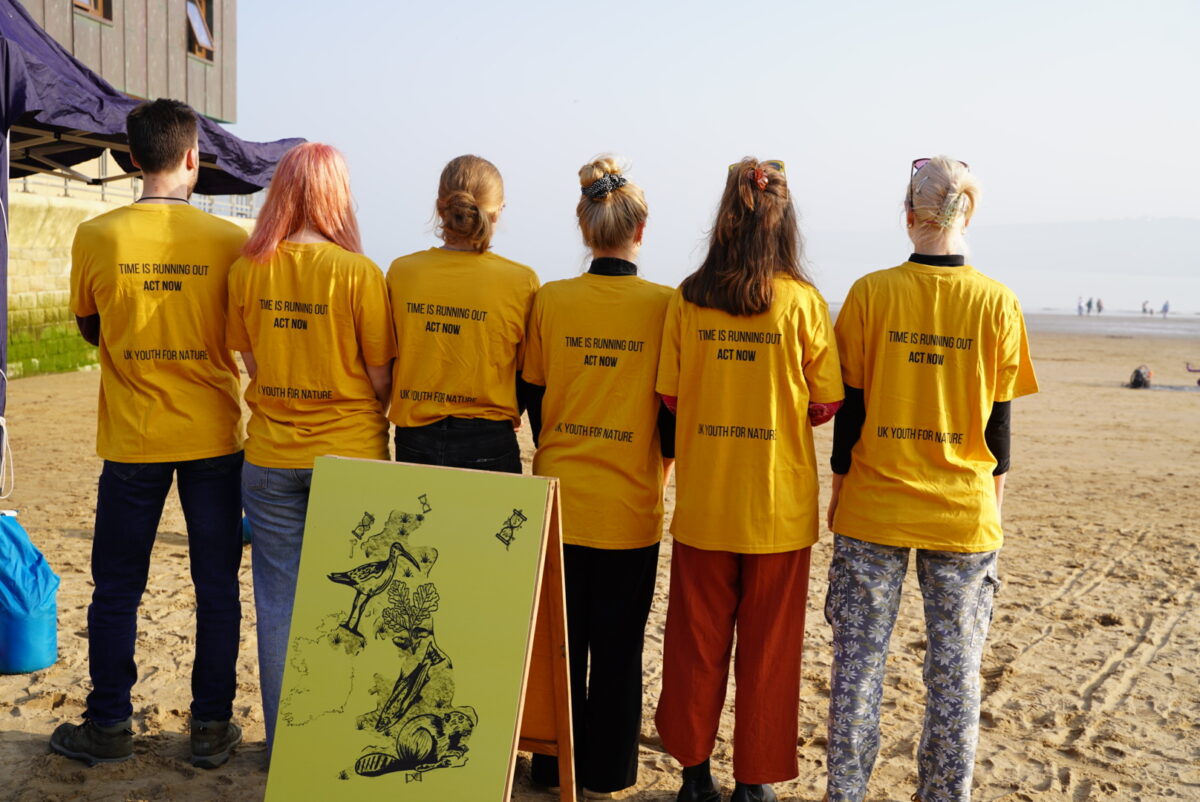
UKY4N team at Scarborough beach
If you’re a young person in the UK who is passionate about nature and the environment and want to join a community of like-minded people to save the planet with, please get in touch!
UK Youth for Nature is a network of 16-35 year olds across the UK. Our organising team runs all of our campaigns and workshops and we wouldn’t be here without them. This month we’re celebrating one of our key volunteers, Jessica Humphreys. Thanks Jess for all you do for UKY4N!
I’m Jessica , I’m 19 and based in North Wales. I’m an Animal Management student, meaning I study everything from animal behaviour to ecology and wildlife conservation! When I’m not studying or volunteering you can usually find me doing wildlife photography or Ballroom and Latin dancing.
What’s your favourite plant or animal?
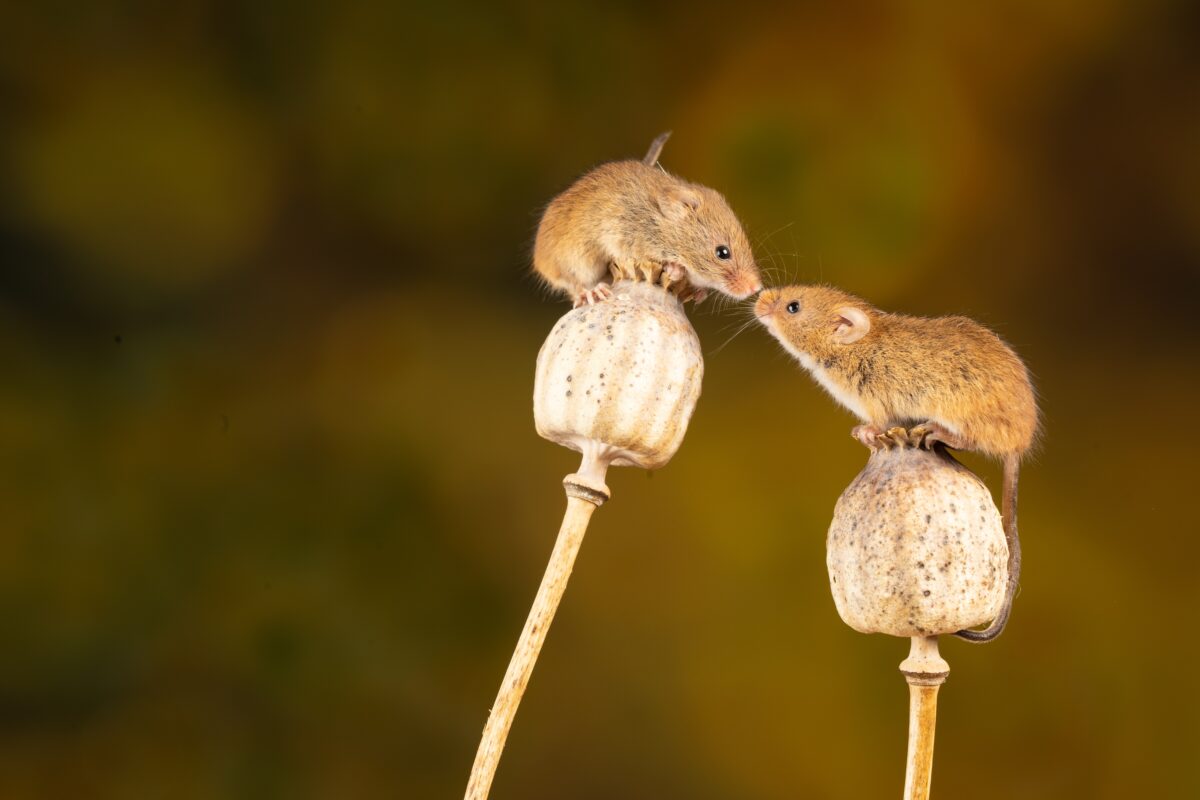
It’s so hard to choose one favourite! I’ve always had a particular love for ornithology (anything bird related!), but since I can’t decide on just one bird, I think I’d have to say the Harvest Mouse, Europe’s smallest rodent and the only British mammal to have a prehensile tail!
How did you hear about UKY4N?
I followed UK Youth For Nature on their Instagram account, and through there saw their week of ‘Silent Spring at 60’ webinars advertised. I signed up for a few (which were all amazing!), and I’ve been here ever since!
Wildlife photography workshop
The importance of insects
Women in conservation
What is the best bit about being part of UKY4N?
For me there’s 2! Firstly, being involved with a variety of campaigns for subjects I’m passionate about and having a platform to advocate for change. Secondly, the amazing team at UK Youth For Nature! They really are the nicest bunch of people, and it’s lovely to be able to work with such a passionate and likeminded team!
Why do you think youth voice is so important for nature protection and restoration?
I think young people particularly have grown up hearing about the biodiversity and climate crises and, at least for me, this has instilled extra passion and drive for change, which is the first step in making a difference. I think young people can sometimes feel powerless in these situations, and by simply seeing organisations of young people, like UKY4N, advocating for change, it will encourage and empower others to do the same.
Photo by Archie Mathison
If you’re interested in joining UK Youth for Nature as a volunteer, check out our get involved page to learn more or drop us an email.