Ruby Free’s book on Rathlin is an absorbing account of living surrounded by wildlife, which generated some interesting discussion at our recent book club.
In the book, she shares her joy at the encounters she has with the animals, as well as discussing a range of societal issues, including disconnection from the natural world, farming practices and eco-anxiety.
Structure
These ideas are blended well and make it much more than just a description of Rathlin. The book’s central focus is the seabird centre and the changes in the bird life there through the summer. This approach introduces readers to the birds in a way that most other books do not accomplish, and I enjoyed learning about the personalities and behaviours of them. I thought this was a very effective way to focus the narrative of the book, and in the book club we all said we enjoyed following the progression of the seasons and the changes in the bird life through the year.
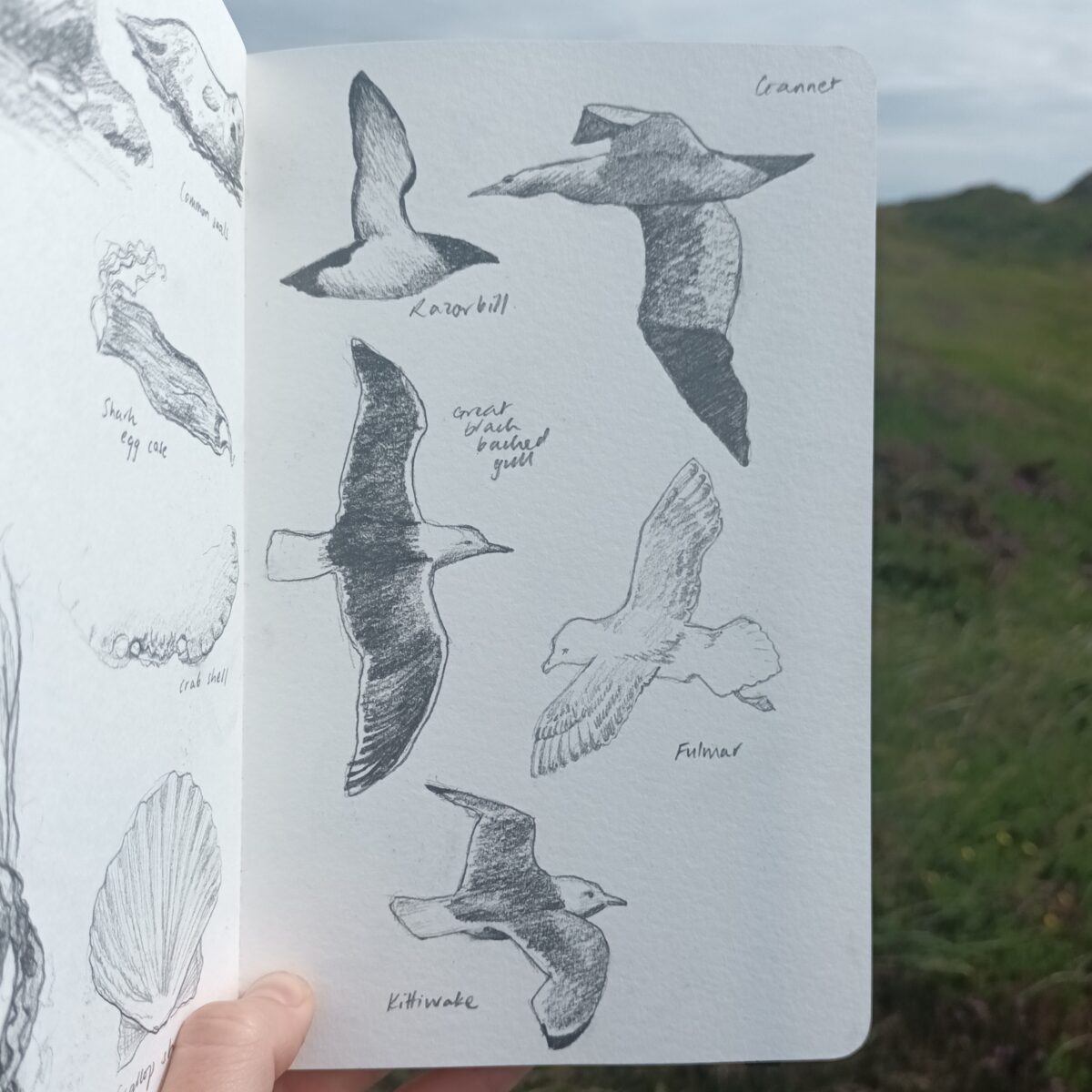
These birds, and the other animals she meets, are brought to life by her beautiful illustrations, and looking at these provided moments to pause and imagine what she is seeing. The range of species she finds the opportunity to see and talk about is amazing, including seals, moths and hares as well as a whole range of birds. Her passion for these creatures is infectious, and she added to my desire to do what I can for nature, just as she clearly inspires the visitors to the seabird centre.
Reflections
I was initially surprised when the book continued on beyond her time on Rathlin, but she wraps it up well by depicting her life afterwards. In doing so she brings together the feelings she expresses throughout the book in a thought-provoking way. This openness she has about her emotions on finding her place in the world and coming to terms with what happens around her is powerful and easy to relate to. The choice she makes out of it to continue advocating for nature through campaigning and wildlife-friendly farming is inspiring.
Overall, I really enjoyed reading the book and getting to know some of the wildlife of Rathlin through it. It is a book I may not have noticed if it hadn’t been chosen for the book club, but it was an excellent choice and one I’m really glad to have read, as it perfectly describes the wildlife and the feelings of a young person living with the current nature crisis.
Get Involved
If you’d like to meet with other young people (16 – 35) and learn about our natural environment in a relaxed setting, join UKY4N’s book club here.
If you’d like to check out Ruby Free’s discussion about Rathlin with UKY4N’s Emily Seccombe, check it out on our Instagram.
In light of the devastating wildfires this month, we wanted talk to a member of our community who helps to manage the uplands that have been burned. UKY4N volunteer and uplands common manager Jake Cohen, kindly shared his reflections on this landscape wide tragedy. Not So Freshwater
Jake Cohen:
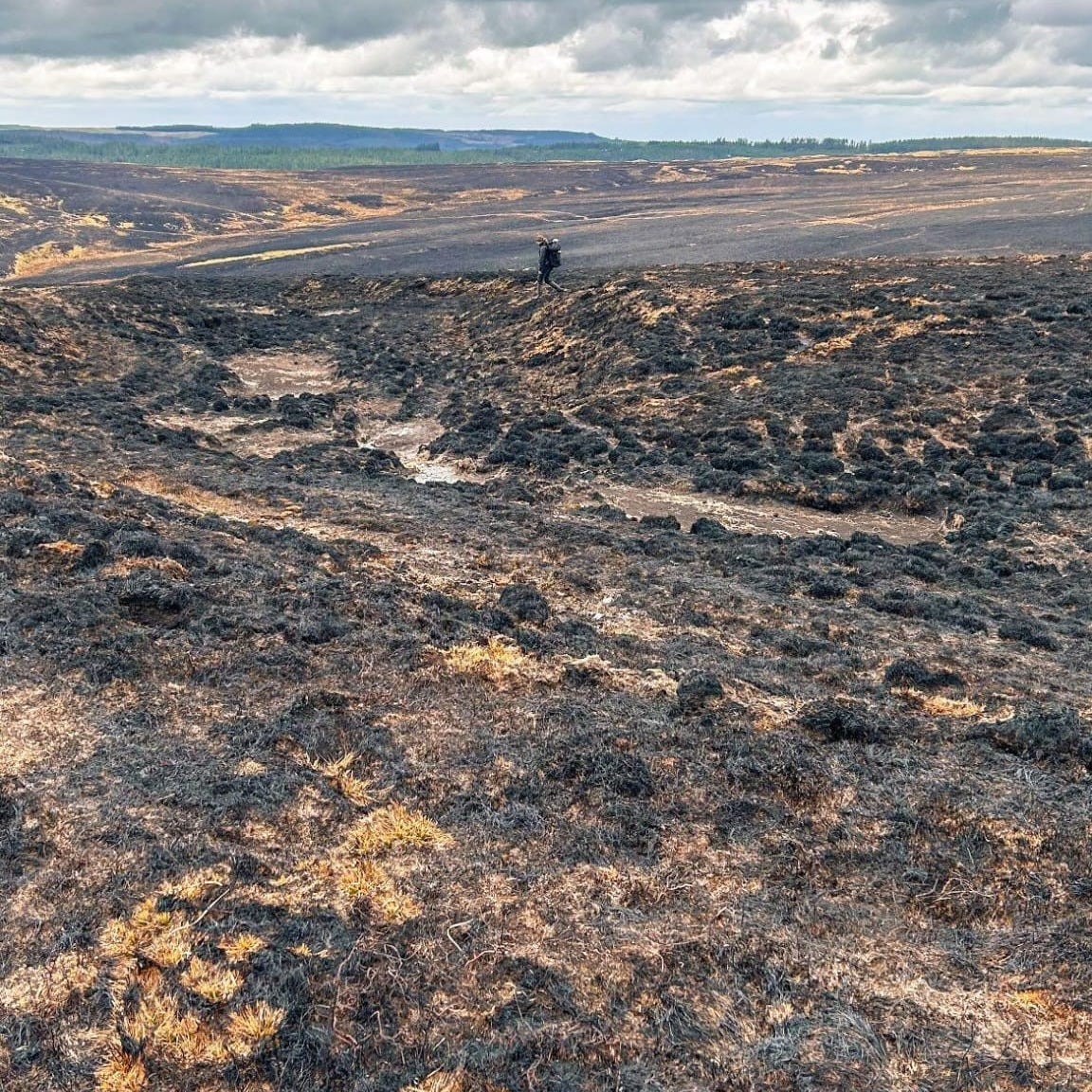
“Across the land I look after, fires have devastated 1600 hectares of upland landscape.
The size, scale and impact of such a fire is quite difficult to fathom and has both short term and long-term consequences.
The fire has torn through our last known stronghold of breeding Golden Plover (which are just about clinging on as a breeding species in Wales) and through the last three years of peat restoration efforts. The top layer of peat has been burned away, thereby emitting thousands of years worth of carbon dioxide that would otherwise have stayed in the ground. Furthermore, the freshly exposed peat will now dry out, erode and therefore release further emissions and contribute to habitat loss.
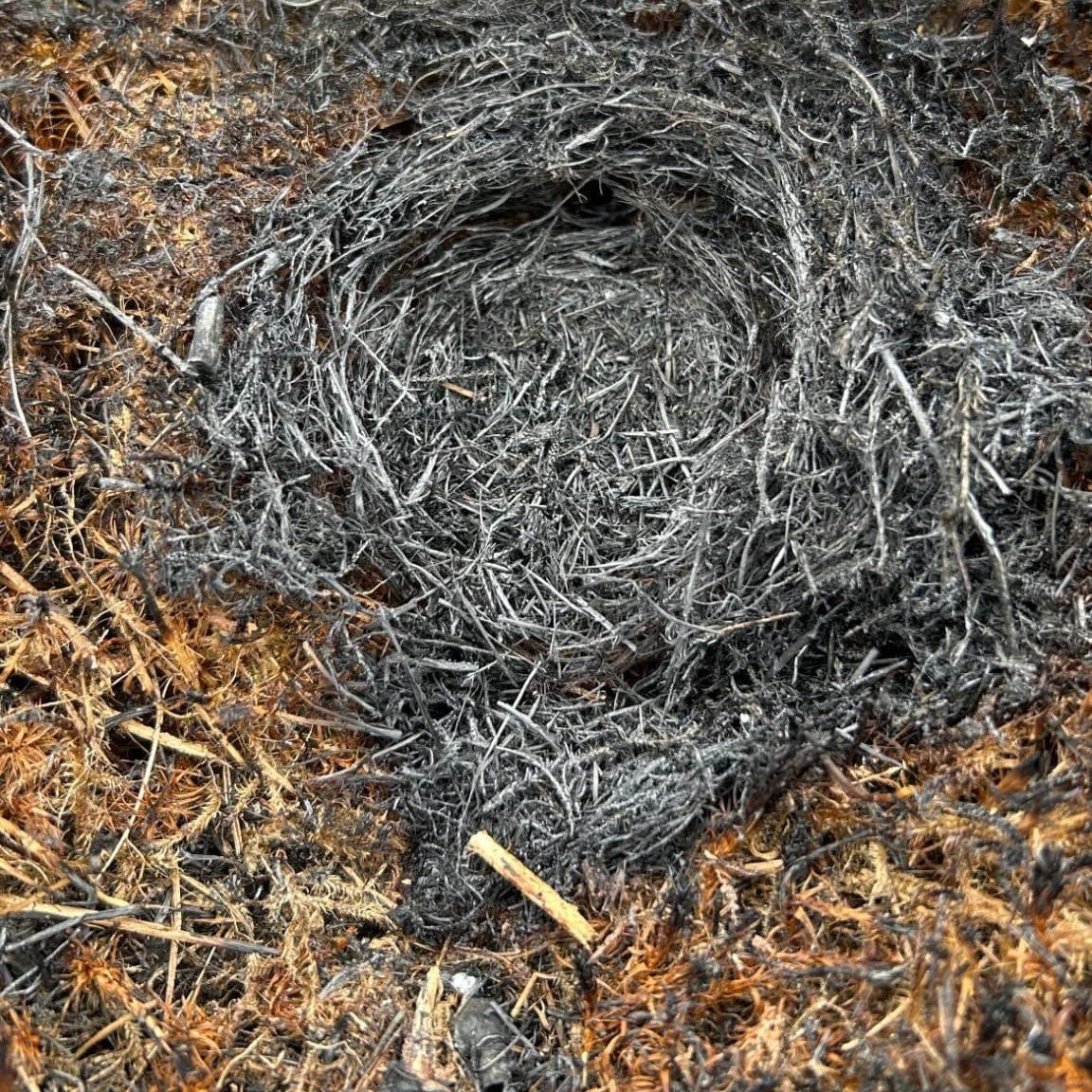
I went out last week to inspect some of the damage and found frogs and shrews burnt on the spot, as well as a lone male Golden Plover seemingly refusing to abandon his territory. Even if he does manage a nest, the lack of invertebrates leaves him and any potential chicks with very little chance. There was no Skylark or Meadow Pipit song which is usually rife this time of year and the miles and miles of blackened landscape was quite shocking. Our eyes, noses and clothing were choked with ash. It was a distressing and bizarre experience.
Upland Ecology
Fire damage also affects the long-term ecosystem as it encourages grasses, which hold their nutrients underground, to thrive, become dominant, and upset the delicate balance of this unique ecosystem. Grasses regenerate quickly and the fresh shoots are great for grazing livestock, but this rapid reproduction means that nothing else has the chance to come through. These dominant grasses create a dry level of vegetation, further increasing the fire hazard and thus creating a feedback loop.
Unfortunately, this is not an accidental wild fire – the fire services have deemed this fire to be ‘deliberate’ which just shows that we have quite a lot of work to do! Although this is a really mournful time for us – the fire didn’t reach rich areas of cattle grazing and more recent peat restoration sites, and the peat burn was only surface level and doesn’t appear to go deeper. So, we take stock and move forward!”
In today’s blog, we will be talking all about what it’s like being a Young Trustee. Less than 3% of charity trustees are under 30 (Young Trustees Movement), which is a startling statistic and a gap that needs to change. Young trustees offer fresh perspectives and represent the voices of future generations.
To shed light on this important topic, we gathered three incredible speakers a couple of weeks ago to speak and share their personal experiences as young trustees and this is a summary of some of their amazing and useful points.
What motivated you to become a trustee, and how do you think your perspective as a young person adds value to the board?
Alana: I volunteered for causes that I cared about – in this case youth voice, and local wildlife and green spaces. I was asked to be a trustee in 2020 because the boards knew they needed to increase their diversity but were taking the first steps in building that. Since then, with the support of the Young Trustee Movement and the rise of Youth Councils/Forums/Advisory groups, the value that young people can bring to boards is much more widely appreciated – through their experience, perspective, and ambitions in life.
Elen: I grew up in a coastal area in North Wales and spent my entire childhood in and around the sea. When I moved to Stirling for university I moved to a landlocked place and lost my connection to the sea. The charity I am a trustee for helps to empower people to speak up for Scotland’s seas, so it gave me the opportunity to reconnect to the sea and hopefully help it thrive again.
Additionally, I work as an ecological consultant and the work we do is driven by construction and infrastructure-based industries. These feel like destructive behaviours, surveying wildlife to aid people building in their space. Being a trustee helps me give back to society and again helps me feel a little better about helping people. I add perspective because my charity aims to empower young people and as a young person, I give direct advice that I wish had been in place when I was volunteering/working with charities.
How was the application process when you applied to become a Trustee?
Alana:
The trustee interviews are a great way to check in with how your CV and experience is for governance opportunities. It can be nerve-wracking, and that’s okay as that means you are pushing your comfort zone and trying. Some larger charities might have competitive trustee application processes, so if you’re not sure, local charities are often keen to find trustees.
Most charities will have a rotation of trustees, in the case of the charities I’m a trustee of, we go for ‘re-election’ every 3 years and we have a maximum term of 9 or 12 years. So, charities will be regularly looking for trustees.
Elen: Very easy. I set up a marine conservation society with a friend at university. She is pretty well known in marine policy in Scotland and so was asked to join the board first. They then decided they wanted additional young people, and she was asked if she knew anyone that would be interested/had relevant experience, and she named me! I had an informal interview/chat with the director and then was asked to join!
What are some of the main things you do in your role?
Alana:
Ranges from monthly tasks such as reading papers, revising policies and the meetings itself to networking with similar organisations and being an ambassador for the organisation.
Depending on the size of the charity / organisation trustees will take less of a main role in the operational (day-to-day) work, instead we are advisors working with the Senior Leadership Team.
Elen: I am the EDI lead for the charity so I push the charity to do the best it can and assist the staff with additional manpower when they need it. My other roles include searching for and applying to funding, trustee recruitment, attending events to represent the charity and more!
What have been some of the most rewarding aspects of being a trustee so far and what are some of the challenges?
Alana:
Being able to approve the creation of new job roles and seeing those projects and initiatives come to life through the incredible people that they have employed.
Attending the Annual General Meetings and hearing about a year of great work.
Site visits to project locations and hearing from the staff and volunteers doing the good work on the ground.
Elen: Most rewarding aspects have been seeing the work we put in as trustees pay off. We work by aiding staff with running our training programmes, by securing funding etc, and then seeing this pay off with young people responding to consultations or coming up to us at events and saying that the skills they’ve learned have helped them get a job or pick a future career or write a letter to their MSP, is so rewarding!
Challenges – I am generally a very busy person. I work a full-time job which sometimes has long days and unusual shifts (dawns/dusks), have two volunteer positions, train for two sports and hold my trustee position. I sometimes struggle with having time and energy for everything, but I find if I am organised, I have time and if I make time for my hobbies (being outdoors) then I maintain energy!
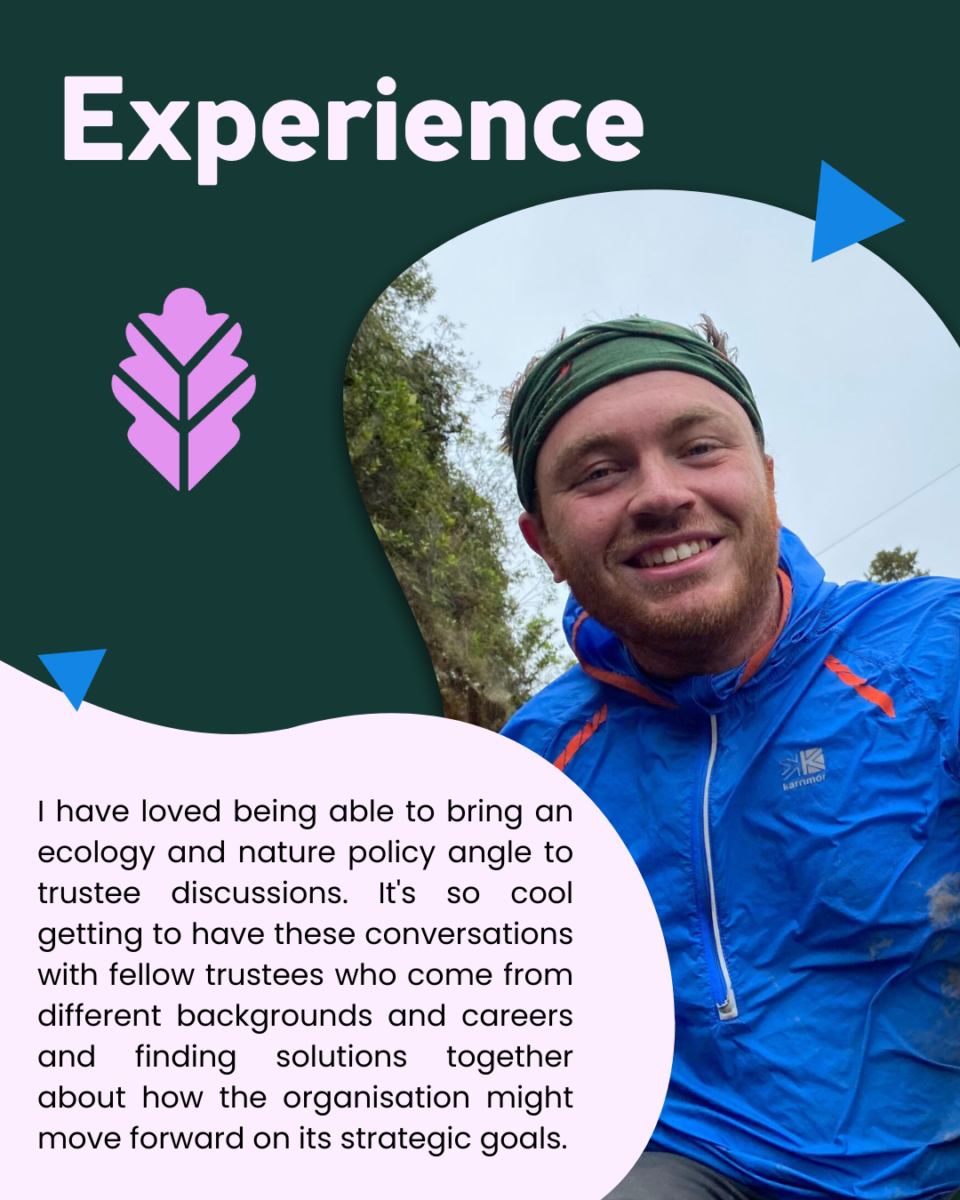
Joe: I have loved being able to bring an ecology and nature policy angle to trustee discussions. It’s so cool getting to have these conversations with fellow trustees who come from different backgrounds and careers and finding solutions together about how the organisation might move forward on its strategic goals.
I have learned so much about different aspects of running an organisation such as accounting, maintenance, and safeguarding legislation – topics that I might not have a chance to experience until much later in my career, if at all!
How can organisations best support young people with being a trustee?
Alana:
Adaptable meeting times.
Providing training opportunities.
Interview on values in addition to experience (as an early-career… it’s impossible to have 40 years experience in a sector)… look for dedication and enthusiasm. So for young people interested in being trustees… how have you put effort towards the goal and values of that organisation? You are volunteering your time, so support organisations that align to your values!
Elen: Try not to overload your young trustees – they’re often exceptionally busy. Have an honest conversation with them about the workload that is expected of the trustees and ask them what their capacity is. Have a buddy system where you pair the incoming trustees with more experienced trustees so that they have someone to show them the ropes or to ask “stupid questions” to (there aren’t any stupid questions).
Joe: There are many laws around paying trustees of a charity. It effectively means that, in most cases, a trustee is an unpaid role. Therefore, it is very important that organisations do what they can to make the trustee position as accessible as possible to young people. If they can, they should cover any expenses related to the trustee role (travel, platforms etc.)
It’s important that young trustees are given access to any training and networking opportunities to ensure the role is beneficial to their careers. So even though we can’t be paid to be a trustee under most circumstances, there are ways to ensure that (a) we are not losing money and (b) there are future career benefits as well.
What advice would you give to other young people who are interested in becoming trustees but may be unsure or intimidated about getting started?
Alana:
If you are able to get involved in the charity before you become a trustee to see if their values and actions align with yours.
Research what a trustee is and read role descriptions (provided by most organisations recruiting trustees).
If an organisation isn’t advertising for trustees, but you are interested, contact them to see if they have any positions on the board available.
Talk to current trustees of the organisation you may be interested in.
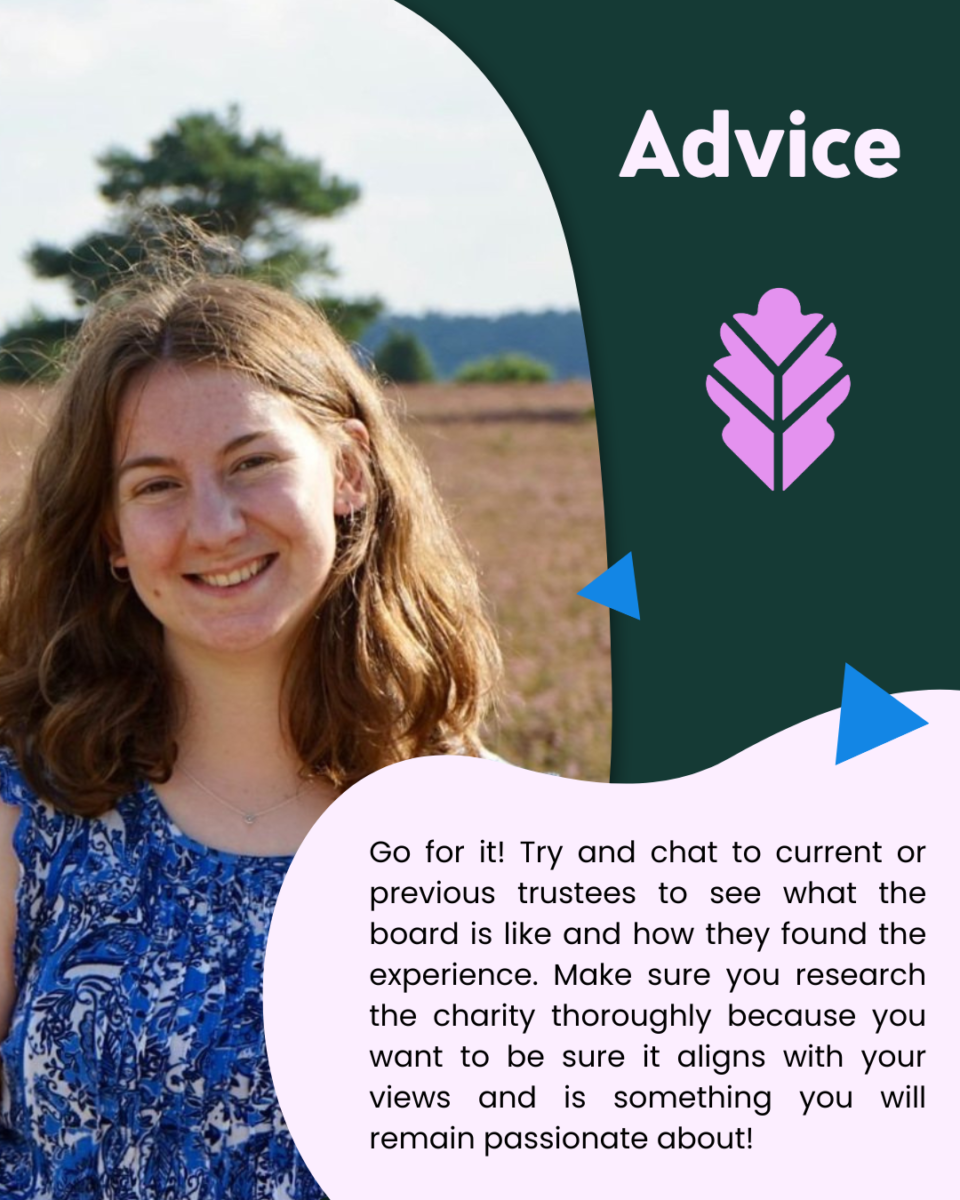
Elen: Go for it! Try and chat to current or previous trustees to see what the board is like and how they found the experience. Make sure you research the charity thoroughly because you want to be sure it aligns with your views and is something you will remain passionate about – trustee positions are usually long term!
Joe: I think it’s really important to remember that a trustee is a “governance” role, which means they are ultimately responsible for overseeing the charity/organisation and its employees. This is different from advisory roles that many of us are familiar with. Of course, trustees are also advisors, but there are additional responsibilities and, as a result, liabilities. I urge anybody interested in becoming a trustee to ask about the potential fallback on you as a trustee.
Most charities will have some form of trustee or director insurance and/or policy, which covers eventualities such as the organisation going bankrupt or an insurance claim being made. Newer and/or smaller charities might not, so it’s just worth a conversation with current trustees and/or senior staff. The above isn’t meant to put anybody off and I really hope it hasn’t! I just wanted to share as I believe putting these safeguards in place ensures that we as young people can apply and properly engage in trustee roles without this fear.
Being trustee is one of the most rewarding experiences as you are actually helping to steer organisations you care about! You definitely have something to offer the organisation!
We hope this blog has given you some insight into what it’s like to be a young trustee and inspired you to consider becoming one yourself. Additionally, we encourage organisations to create more opportunities and support systems that enable young people to take on these roles, fostering diverse leaderships for the future. To finish we have put below some resources from the webinar team and speakers that will hopefully be interesting and useful.
Resources
Young Trustees Movement aims to double the number of trustees aged 30 and under on charity boards. While the spotlight is on the age factor, the movement is part of a wider call for diversity on boards.
The National Council for Voluntary Organisationsgovernance wheel is a simple tool that helps boards of voluntary organisations quickly get a sense of how well they’re functioning and fulfilling their roles.
First off, we love your YouTube channel – what got you started making wildlife films?
I’ve always been inspired by the legendary Sir David Attenborough – his passion for the natural world is so infectious. Growing up, I was curious about the insects I discovered in my back garden, from snails to woodlice. I wondered why they were all different shapes, sizes, colours, why snails had eyes on long stalks and why they had a shell etc. This ‘inner scientist’ is something every child has within them as they grow up.
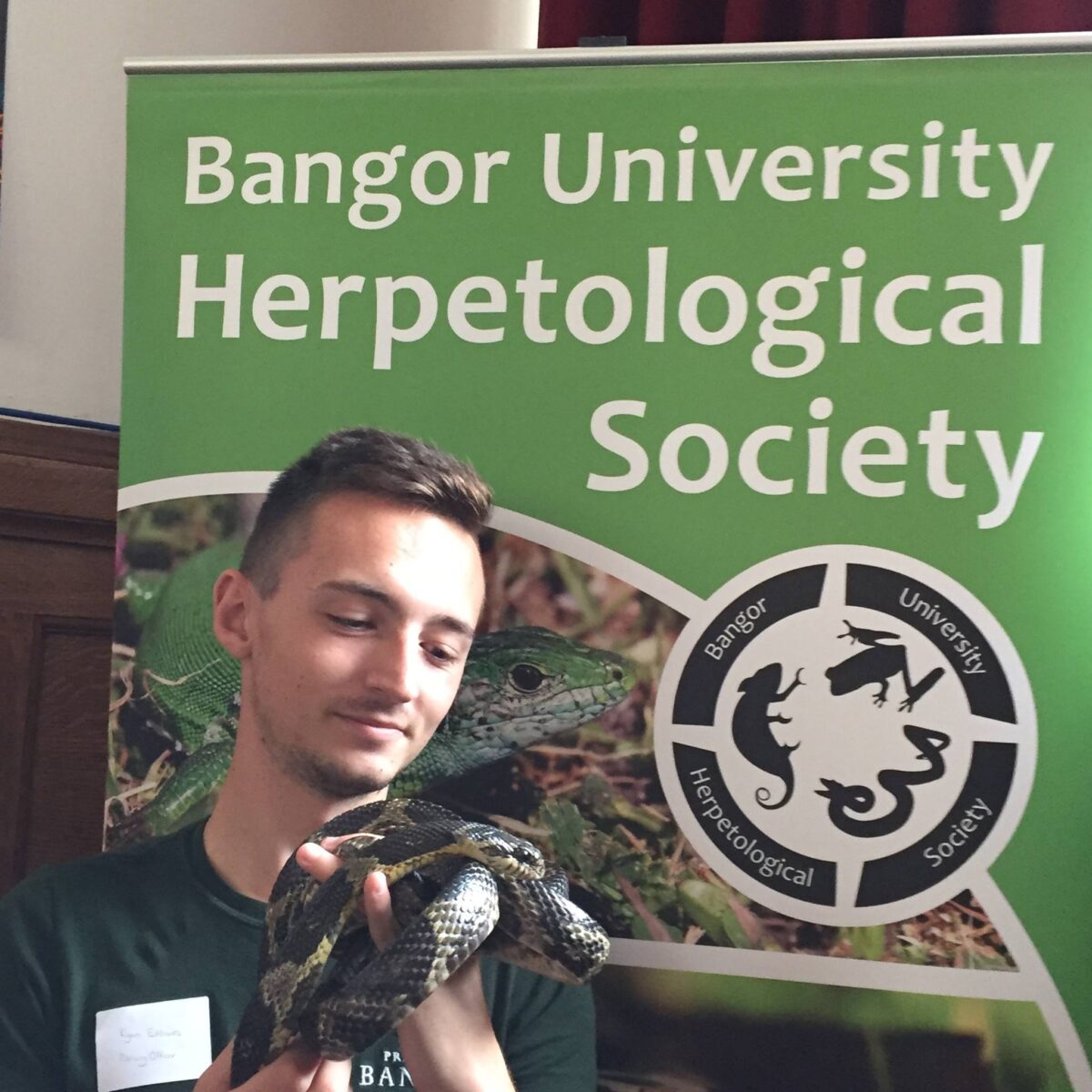
After leaving school, I went to study animal care at Rodbaston College. I graduated and went on to study Zoology with Herpetology (Snakes & Amphibians) at Bangor University in North Wales. It was here that I bought an old camcorder and started filming the local natural environment and wildlife. During a month’s wildlife filmmaking internship in South Africa, I learned how to become a presenter and I fell in love with the craft. I returned with my documentary called ‘Secrets of the Savannah’.
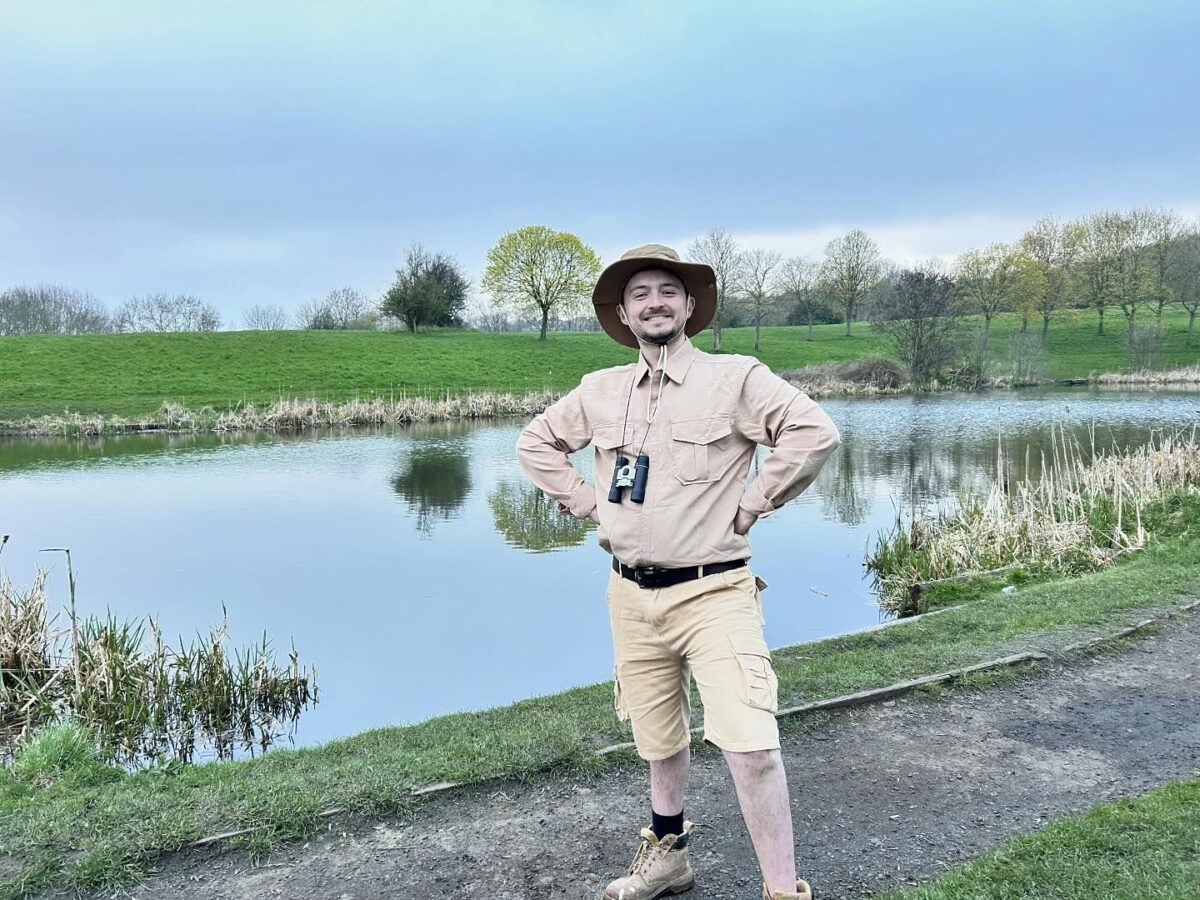
From here, I began making more films in my own time. My latest series ‘Ranger Ryan’ combines my unique humour and cheerful character to teach kids and adults about their local nature, like ducks, which feature in the first episode! In the future I hope to make more series with Ranger Ryan and maybe even make it on TV or Netflix.
Tell us about your Jurassic Coast Walk!
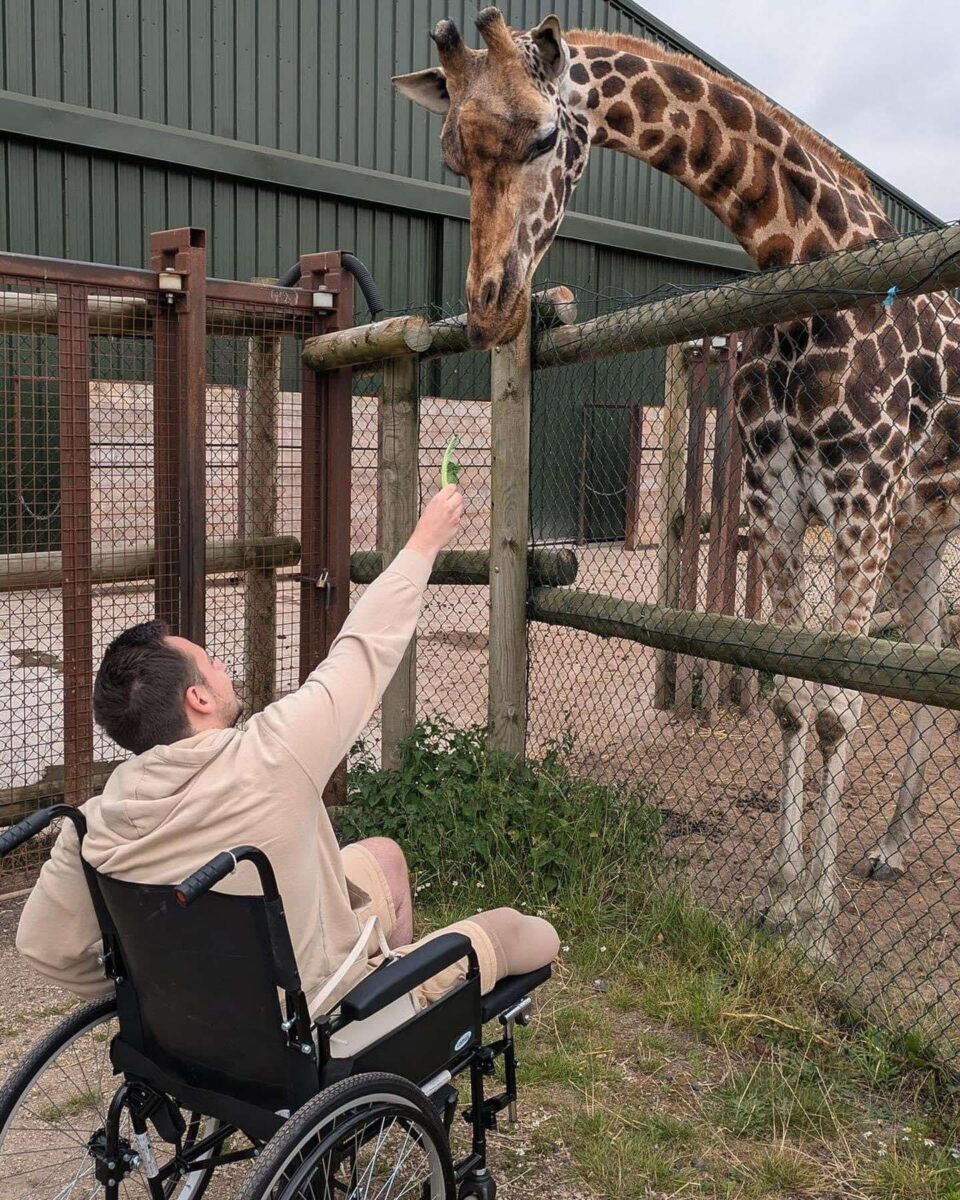
My Jurassic Coast Walk was to raise awareness of the birth condition I was born with known as clubfeet – a condition that causes your feet to turn inwards and downwards. It’s present on both of my feet.
Although it’s a common lower limb condition, there’s a lot of mystery surrounding it, especially around adults with clubfeet. My mission was to raise awareness of the condition, as there are thousands, maybe even tens of thousands of adults with untreated clubfeet. My walking challenge was to prove that a disability shouldn’t bar us from achieving our dreams, and also to raise awareness of how the condition affects individuals.
I was backed by the charity ‘Steps’, which supports people with lower limb conditions such as clubfeet (since completing my walk I’ve become their ambassador and trustee). As well as this, I also gained the backing and support of Julia Bradbury (TV Presenter) and her sister Gina, who run the Outdoor Guide, whose mission is to make the environment accessible for those with hidden or physical disabilities.
I managed 82 out of the 95 miles of coastline, which was a massive success and raised national awareness for clubfeet. As of 2024, I had my right leg below the knee amputated due to the severity of my bilateral clubfoot. I am now on my recovery route.
How does nature in the UK compare with some of the more exotic places you’ve worked?
Many people expect the wildlife abroad to be more spectacular and indeed in many cases it is – you’re unlikely to see a mass migration of wildebeest walking past you in the UK! This said, I believe that British wildlife can be just as spectacular and beautiful.
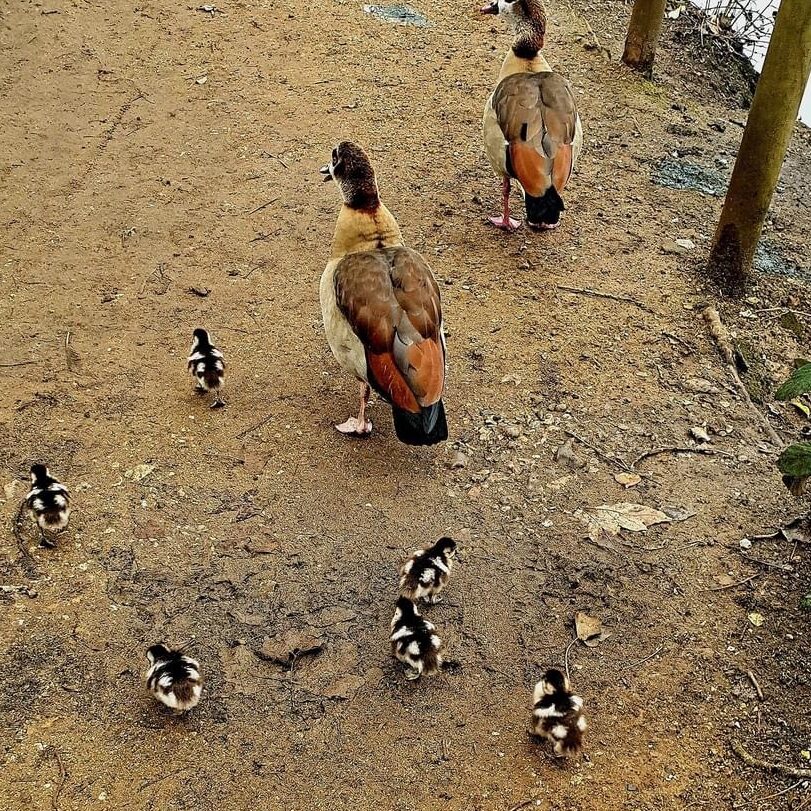
In local parks or back gardens, I see multitudes of species from mammals (Hedgehogs) insects (bees, butterflies, beetles and ants) and birds (Pigeons, Jays, Starlings and Sparrows). There’s so much to see in this country, and I feel it gets overlooked every time.
What’s the weirdest or most unexpected thing you’ve encountered while on a nature expedition?
The most unexpected encounter was when I went from my university to the Kruger National Park in South Africa.
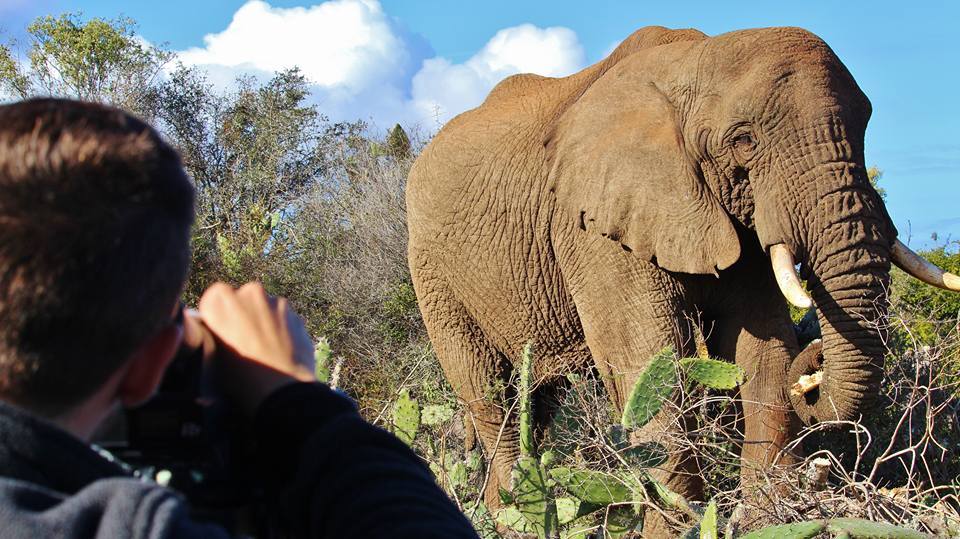
We went on a bush walk and came across a dried-up riverbed and had some food. Out of the bush, a family of elephants came walking towards us. The herd consisted of a matriarch, a sub-adult, and an infant. The mother and baby walked straight past us, and the sub-adult did a dummy charge at us, raising its trunk and flapping its ears. It then stepped back, waited a moment, and then walked up to catch up with its family.
It was breathtaking – the biggest land mammal walking past me while I was sitting eating a sandwich. That experience will stay with me for the rest of my life.
What animal could imitate most accurately?
Ha ha, this is a good question. I can imitate a few, to be honest. I can do the chuff of a tiger and the chirping noise of baby crocodiles.
UK Youth for Nature is a group of like-minded nature lovers who are on a mission to improve the future for wildlife, nature and humans in the UK. If you want to be part of our community, you can find out more here.
Article by Medha Vasisht Illustrations by Kirsty Lloyd
Cultural Impact
Wisdom, strength, endurance – all these characteristics associated with salmon mean the fish run through mythology as they do up the rivers of England, Wales, Scotland and Ireland each year during the Atlantic salmon’s migration.
In North European Folk Tales
One such tale from Ireland has it that Fionn mac Cumhaill, the legendary Irish hero, gains all the world’s knowledge by tasting the Salmon of Knowledge which had eaten hazelnuts from the sacred trees surrounding the Segais Well.
In the Welsh tale of Culhwch and Olwen, a series of impossible tasks is set before Culhwch by his potential father-in-law – all to earn his beloved Olwen’s hand. In one such mission, it is only the Salmon of Llyn Llyw – the wisest and oldest living creature – who can help Culhwch and the other knights of King Arthur to find an imprisoned comrade, and even graciously offers them a ride on his back!
You’ve probably heard of Loki, the conniving god of Norse mythology. After tricking a blind god into killing Baldor, the most beloved of the gods, he is said to have turned into a salmon to escape the wrath of the other gods. Even in slippery fish form, he was no match for Thor, who traps Loki so tightly that he gives salmon its iconic taper. Such shape-shifting stories illustrate salmon’s association with transformation and adaptability in these northern European traditions.
Salmon as Food
For generations, Norway, Sweden, and Finland have been major exporters of this fish – the frigid rivers, fjords, and streams of Scandinavia swarm with Atlantic salmon. They were once shipped in barrels where the fish were brined, cured or smoked to travel great distances. These processes gave birth to gravlax, a popular Norwegian delicacy; it is lox that has been spice-cured, thinly sliced, and served with sauce. Sounds delicious!
Salmon has been a vital food source for the Scottish since the Mesolithic period, with salmon festivals in the UK today celebrating this culinary icon while raising awareness about the importance of salmon’s conservation. Across the world, from Scotland to the Pacific Northwest, smoking techniques have been perfected for the famous smoked salmon, beloved for its succulent texture and smoky aroma.
Salmon has been consumed for millennia, and some archeological sites date back more than 11,000 years. The Ainu people of Japan were salmon-dependent, much like the indigenous peoples of the American Northwest. Salmon were considered a spiritual blessing; each fish’s spirit would only return if they were treated with the proper respect. Through handling corpses with care and holding welcoming ceremonies, the people made sure there would be an abundance of salmon for years to come.
Reflections
Across the globe, salmon has historically connected people to the land and to each other. While we can’t all have a taste of the Salmon of Knowledge, there’s a lot to learn from the salmon and its relentless journey. The word ‘salmon’ derives from the Latin for leap – ‘salire’. Leaping up waterfalls, being battered by rocks and still having the strength to keep going – no wonder this fish has endured as a symbol of cultural identity, prosperity and wisdom for so many.
After years at sea, salmon return to their birth river and swim resolutely upstream to their spawning grounds. Perhaps we can learn from their dramatic life cycles of perseverance, adaptation and connection, to protect salmon and all the cultures that it sustains.
Reduce pesticide use by 50% (volume and toxicity) by 2030
Create ambitious targets to restore field margins and riverside ecosystems to reduce field run-off and boost our waters for wildlife and people
If you want to support our campaign, head to our campaign page and write a letter to your MP or subscribe to our newsletter to get regular updates directly to your inbox.
If you’d like to help this iconic species continue to thrive in the UK and across the world, check out our Not So Freshwater campaign page and subscribe to our newsletter to get regular updates directly to your inbox.
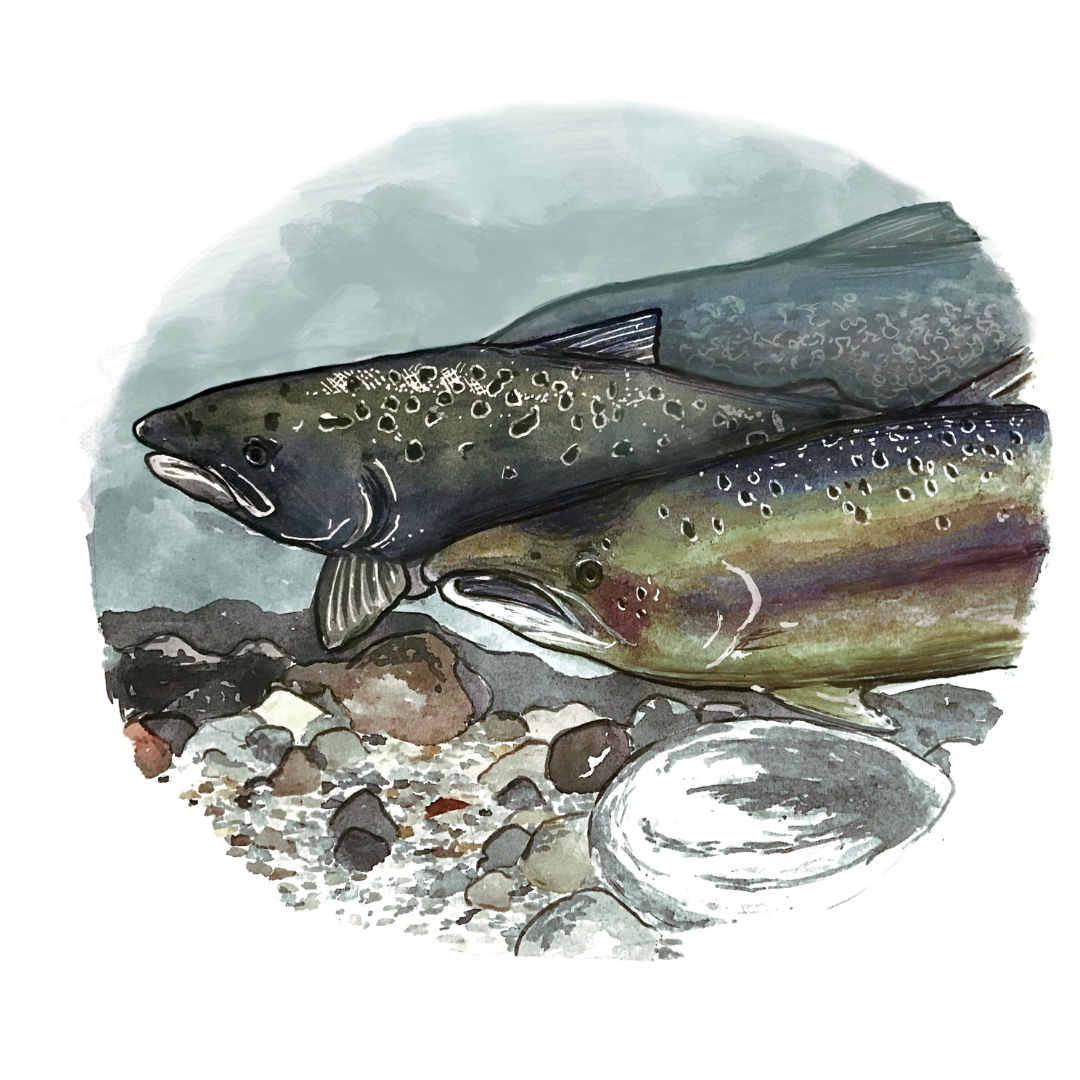
Salmon begin their lives as pea-sized eggs hidden in loose, gravelly riverbed nests in freshwater rivers. When they hatch, they are known as ‘alevins’, ready to embark on their journey through the gravel. First, they must rise to the water’s surface and gulp air to achieve neutral buoyancy, allowing them to swim in fast-flowing streams. Once they can swim freely, they are referred to as ‘fry’.
The fry have eight fins that help them maneuver through the water. As they mature, they undergo a physiological change called ‘smolting’, preparing them for migration to their feeding grounds in the North Atlantic. During this process, their body shape, colour, and behaviour adapt to life in the ocean.
Having reached deep-sea waters, they feed on a diet of crustaceans, sand eels and small fish. However, only about 10% of smolts will survive the numerous predators, sharks, seals, dolphins and humans, and return to the freshwater river they were born in to lay their eggs.
Upon reaching their spawning grounds, the female salmon uses her tail to create a depression in the riverbed, known as a redd, where she lays her eggs. After a male fertilises the eggs, she covers the redd with gravel before moving on to create a new one. During the spawning period, a single female may construct up to seven separate redds and lay between 2,500 and 7,000 eggs!
The spawning process can be so exhausting that over 90% of adults die once the eggs have been laid and fertilised. However, the few that do survive, called kelts, can return to sea and redo this epic journey.
And so, the life cycle begins anew, ensuring the survival of the species for the next generation.
Decline
In Britain, Atlantic salmon are classified as ‘endangered’ by the IUCN Red List, while globally, they are ‘near threatened’ due to significant population declines. These declines are due to a combination of factors, including habitat destruction, pollution, overfishing, climate change, and barriers to migration like dams.
For instance, salmon possess an extraordinary ‘homing instinct’- they can locate the river they were born in using the earth’s magnetic field, the chemical smell of their river, and pheromones. However, water pollution can reduce their ability to locate their river of origin that they need to return to as spawning adults, leading to reduced spawning success and population decline.
It underscores that much more work is needed to improve our natural environment. By reducing our impact on the environment and water, we may be able to reverse the decline of this species.
Reduce pesticide use by 50% (volume and toxicity) by 2030
Create ambitious targets to restore field margins and riverside ecosystems to reduce field run-off and boost our waters for wildlife and people
If you want to support our campaign, head to our campaign page and write a letter to your MP or subscribe to our newsletter to get regular updates directly to your inbox.
If you’d like to help this iconic species continue to thrive in the UK and across the world, check out our Not So Freshwater campaign page and subscribe to our newsletter to get regular updates directly to your inbox.
Emily Seccombe reviews Ruby Free’s account of living on a windswept isle off the County Antrim coast, ahead of March’s UKY4N Book Club.
I loved reading Rathlin A Wild Life as it allowed me to vividly recall my own time on the island’s seabird reserve last summer. I’ve rarely found a book that so perfectly captured the spirit of a place.
Like Ruby, I found Rathlin to be an incredibly inspiring nature haven, and the RSPB seabird centre is perhaps the most incredible single nature spot I’ve ever been to. I stayed on the island as a residential volunteer for the RSPB in 2024 and it was a joy to relive my own memories of the Rue Lighthouse, Craigmacagan Trail and of course the RSPB West Lighthouse Seabird Centre through this book. Ruby’s illustrated ‘big 5’ tick sheet – clearly photocopied many times over – was still in use when I visited and being appreciated by the younger visitors.
I appreciated how open and intimate Ruby’s writing was about her family, neurodiversity, grief, guilt and the feelings that come with being young and passionate about the natural world.
As well as providing factual details on nature’s decline, I liked that Ruby had a keen emphasis on her emotional connection to individual animals, especially the puffins. Some nature writers avoid anthropomorphising and naming wild animals, but Ruby’s approach resonated with my own experiences and aligns with her view (and mine) of seeing animals as equal individuals with their own personalities and life stories to tell.
I’m looking forward to discussing the book with the rest of the UKY4N book club on Sunday 30th March and to chatting with Ruby herself about the book on Instagram live on Monday 7th April.
Ramandeep Nijjar explores the joy of birding ahead of the RSPB’s Big Garden Birdwatch.
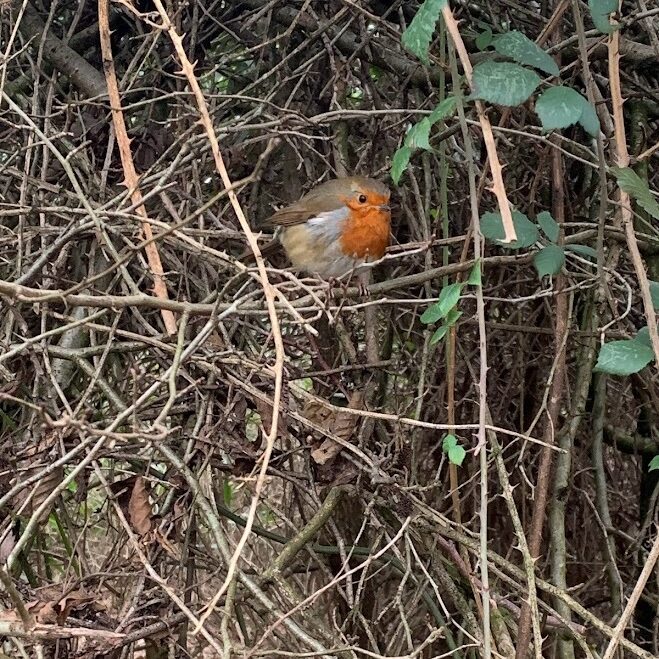
Birding is regularly defined as the identification, observation and recording of birds in the wild and their natural habitat. I personally love it as you can do it wherever you go, whether it is the park, a city centre, at a train station or just outside your house as there are often birds flying everywhere. You do not need to have an extensive knowledge of ornithology to be involved in birding, you just need to be curious about wildlife.
What are some benefits of Birding?
It can encourage you to get outdoors and this can provide benefits for your mind, body and soul.
It may allow you to connect with friends and family as you all spend time together.
It may provide you with a sense of calm, I have often found it reduces my stress and anxiety.
It may provide a change of scenery and allow you to experience new places that you have not been to before.
It can help create moments of stillness and wonder and help individuals feel more connected to the world around them.
Who can be a Birder and what do you need?
Anyone can be a birder, everyone is entitled to enjoy birds and birding, however it best suits them. You may want to watch birds from the comfort of your house through windows or more intensively in nature reserves. It is your personal choice.
Suggested Beginner Tools
A Field Guide – Even with modern technology, I find a traditional field guide incredibly helpful. An excellent guide should contain not just photos of birds, information on birds’ natural habitat, migration patterns, diet and their calls. Field Studies Council, RSPB have good ones and second hand book shops are another option. I found mine in a charity shop and use it regularly.
Binoculars and monoculars – to help you have better viewing of birds. There are a wide range of brands but as a beginner you do not need an elaborate brand and you can sometimes find some good preowned ones.
Notebook and pen/pencil – Some people like to keep a record of what birds they encounter but this is your personal preference, however you will likely experience the UK weather when birding so you might want to make it waterproof!
Recommended Apps
Merlin Bird ID – features the best of community contributed photos, songs, and calls, tips from experts around the world to help you ID the birds you see, and range maps from Birds of the World – all powered by billions of bird observations submitted to eBird.
Birda – a bird app and community for anyone curious about nature and birds, no matter your level of knowledge or previous bird watching experience.
Birdtrack – makes recording your sightings easy and your bird watching more rewarding; plus your sightings support research and conservation at the local, national and global scale.
Collins Bird Guide – provides everything you need to identify a species quickly and learn about it thoroughly. Immerse yourself in the exceptional illustrations, maps, calls and concise text.
RSPB Big Garden Birdwatch
Big Garden Birdwatch is the world’s largest garden wildlife survey. Every year, hundreds of thousands of nature lovers like you take part, helping to build a picture of how garden birds are faring. All you have to do is spend an hour watching the birds in your patch, between 24 and 26 January, and record the birds that land.
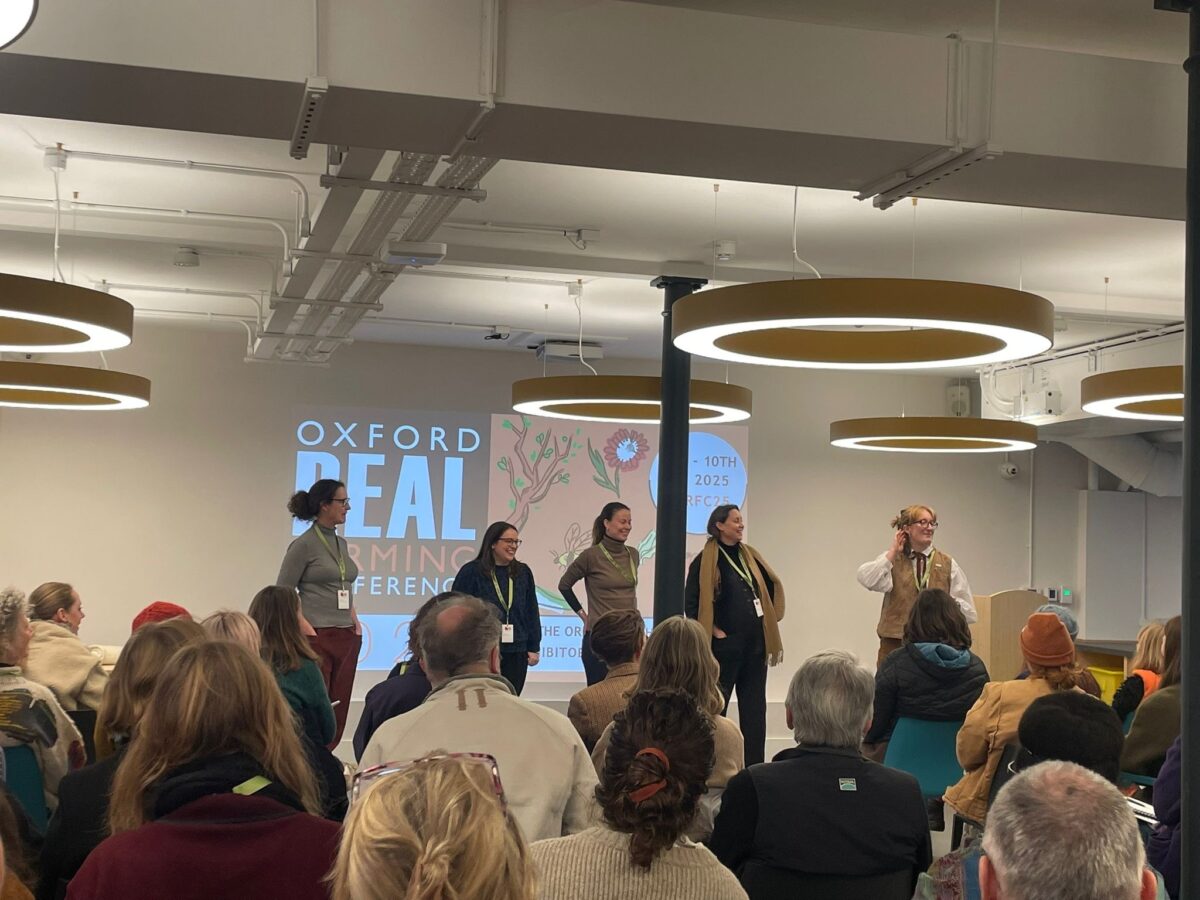
Oxford Real Farming Conference is a meeting of farmers, activists and various groups from across the rural economy. Yesterday our co-director Roisin delivered sessions aimed at connecting these interests, to help build a more biodiverse, sustainable future.
Rois led a session on flower farming and diversification (her other job) focussing on:
How nature friendly methods can help us adapt to our changing climate.
How we can increase the diversity within farming.
How we can create community, starting right here in the conference.
This event was absolutely packed out, demonstrating the appetite among farmers and growers to adapt to the climate and biodiversity crises. The questions tackled in the event matched the tone of the wider conference – how can we develop farming to improve our communities, our nature and our planet?
Growing Culture
Rois also represented the UK Youth 4 Nature campaign in a session hosted by the ‘Growing Culture’ cooperative. This session explored how we can communicate the trauma of climate change, nature loss and genocide without our narratives themselves reproducing that trauma.
The session was a space for everyone to share stories of hope and their stories of pain without fear of judgement. Rois’s favourite quote from the session was:
“We are not fighting for nature to survive, we are fighting to survive as nature.”
The room discussed the importance of looking after our own mental health and practicing self love as a critical tool against oppression. One member explained that this practice was vital to be able to recognise when we have become overwhelmed or burned out.
Inclusion and solidarity are values that we in the UKY4N campaign hold dear, and we were pleased to see it reflected in the broader conference. These values were woven through many of the sessions over the two days and we are excited to further engage with farming spaces as we navigate and develop our Not So Freshwater campaign in 2025.
Reduce pesticide use by 50% (volume and toxicity) by 2030
Create ambitious targets to restore field margins and riverside ecosystems to reduce field run-off and boost our waters for wildlife and people
If you want to support our campaign, head to our campaign page and write a letter to your MP or subscribe to our newsletter to get regular updates directly to your inbox.
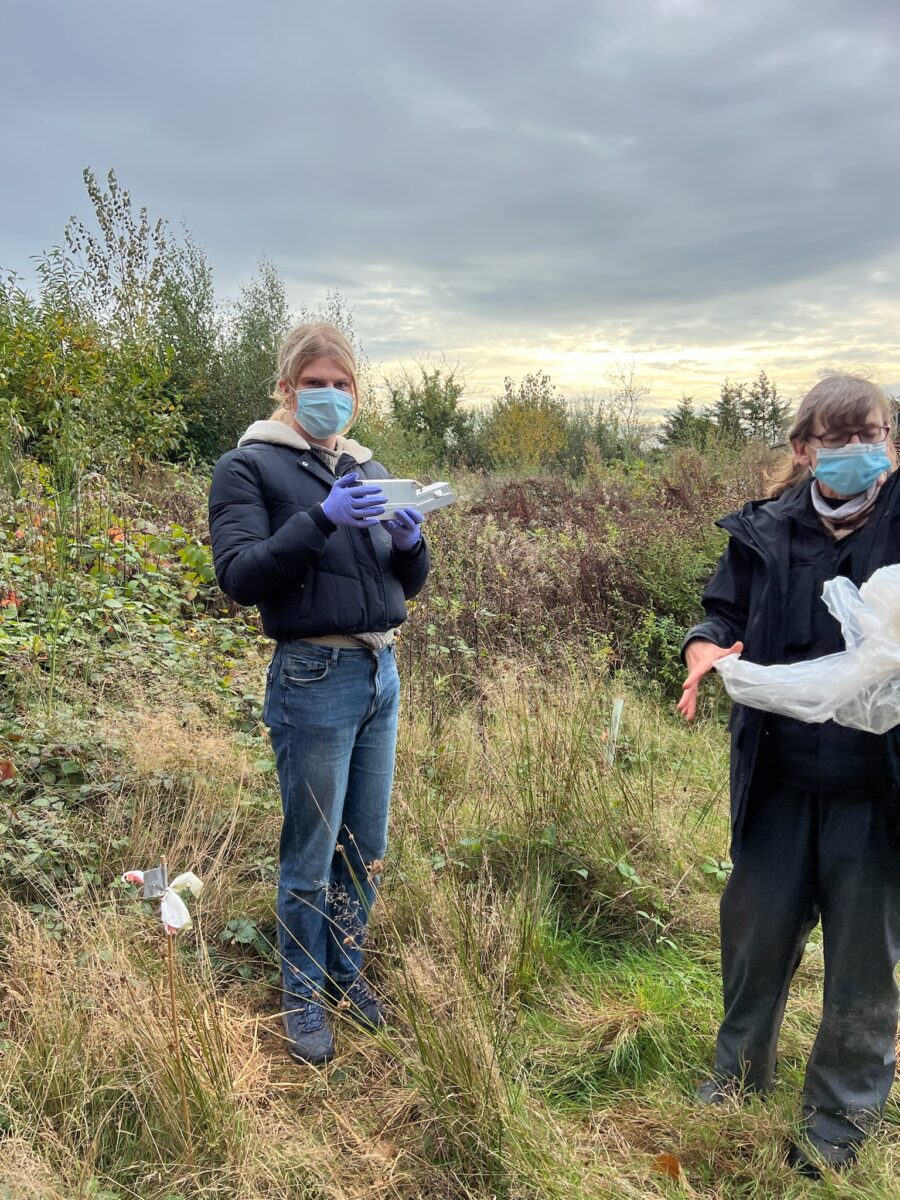
My name is Robson, and I am a third year Ecology and Conservation student at the University of Brighton. I am currently completing a dissertation on pond creation and restoration, looking at the use of invertebrates as bioindicators. At the university I am also President of the Ecological Society, where I work to deliver events and opportunities to connect students to nature and to develop their skills.
Outside of my studies I am a Youth Ambassador for the South Downs National Park, where I represent youth voice in the management and decision making relating to the park. As well as this, another part of the role is raising awareness about the work of the National Park and pushing for inclusion and accessibility within the landscape. I am also the Youth Engagement Coordinator for the Sussex Mammal Group, where I am working with other local groups and underrepresented communities to create a variety of opportunities and events for young people to engage with mammals and conservation. I also do some bits to support species monitoring efforts, such as being a Wetland Bird Surveyor and participating in other schemes. And of course, I am also part of the UK Youth for Nature community!
What’s your favourite season, and why do you enjoy it?
I love spring and autumn. I think there is something so special about how they act as a transitional period and the visual changes we experience in nature during these times. From bird migrations, flowers coming into bloom, and leaves falling, spring and autumn are definitely some of the most visually stunning. They’re also a fantastic time to spot a wide range of species, which is great if you’re a keen naturalist such as myself.
Why do you feel so passionately about National Parks?
There are a couple of reasons why I feel so passionate about working with National Parks here in the UK.
Firstly, I feel that there is an important role to play in increasing the public understanding of National Parks and what they are. Whilst National Parks are in part designated for their importance for nature, here in the UK they are also designated in part for their historical, geological, and landscape importance. In fact, many people live inside our National Parks, whereas in many other places National Parks are expanses of land where no one lives.
Secondly, I believe that landscape scale efforts are needed to counteract the ongoing nature and biodiversity crisis, and National Parks have such potential within this. To achieve biodiversity and nature targets we need to see habitat and landscape scale action, and protected landscape’s management plans can drive this.
What is one thing that you think we need to see more of in nature spaces?
Without a doubt knowledge exchange between individuals and groups. Something I have personally realised is that there are so many people with such vast knowledge of the natural world, but this knowledge doesn’t seem to always get exchanged. So for me I think a big thing is to try to start and facilitate these conversations. No one person is ever going to know everything about nature, but if we can all share what we each know then more people have a wider knowledge. This in turn creates more awareness about nature and the environment, but also develops for skills for those that work in the environment sector.
Where is your dream place to travel to?
My dream is to travel to Oceania one day. The wildlife is so diverse, and I would love to immerse myself in it all. For example, where else in the world would you come across an egg laying mammal?
Closer to home, I would love to explore more of the British landscape. We have such diverse landscapes across the UK and without a doubt there is so much more I want to see. One big one that sticks out to me is Snowdonia, it’s somewhere I’ve always wanted to visit so fingers crossed I squeeze it in this year! I also would love to go to Skomer Island to see the puffins, and I would love to return to the Scottish Highlands as my previous visit to the Cairngorms was very brief.
If you could instantly learn any skill, what would it be?
I always say I would love to be better at species identification. However deep down I know that learning these skills and the extensive time it takes is part of what makes them so fulfilling. I am always curious to identify and understand the living things I come across, and so learning more about species identification is always a bonus. This is something I hope to really develop this year!
UK Youth for Nature is a group of like-minded nature lovers who are on a mission to improve the future for wildlife, nature and humans in the UK. If you want to be part of our community, you can find out more here.