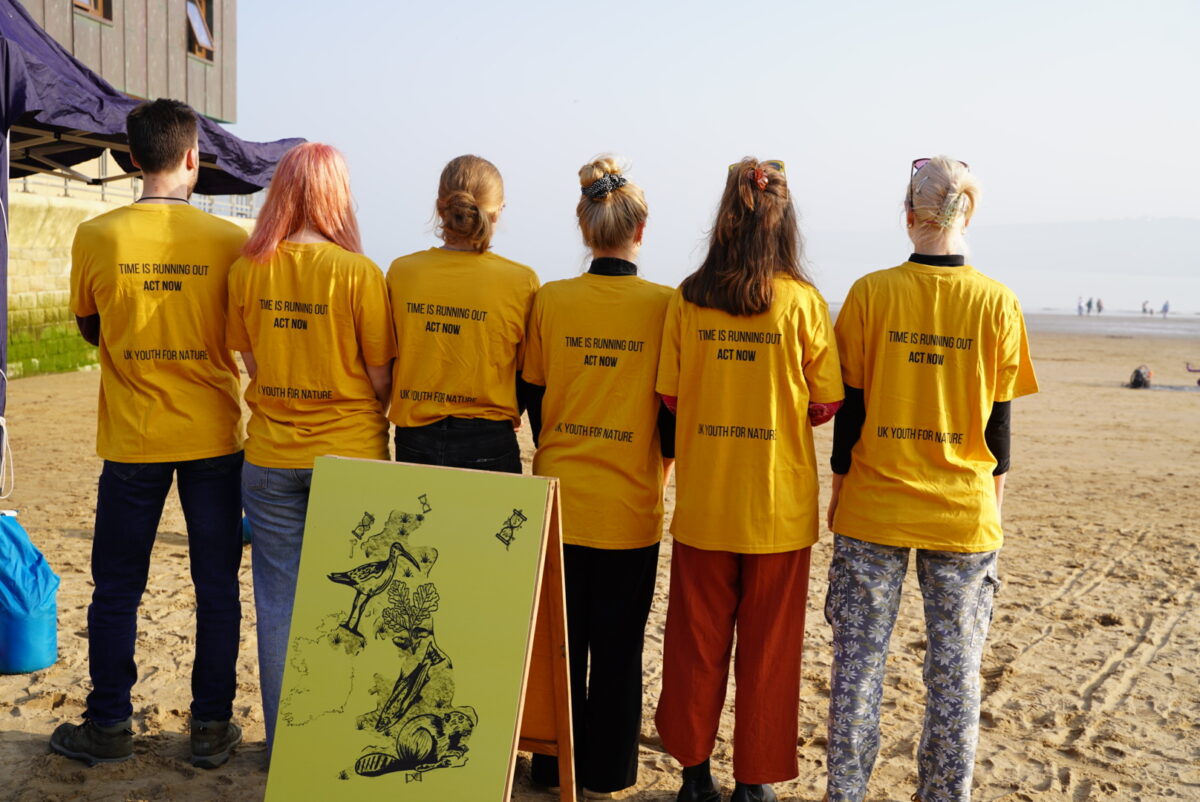
The Climate and Nature Bill – a campaign for new UK legislation – by Zero Hour

By Amanda Bishop & Amy McDonnell

In the month that has been confirmed as the world’s warmest March on record, it has never been clearer that we need to act with every lever we have to turn things around. At Zero Hour, we’re ramping up activities as we veer ever closer to the next UK Westminster General Election. We want to make sure that your next MP is ready to take environmental action as soon as they hit Westminster (more on this below!).


What is the Climate and Nature Bill?

The Climate and Nature Bill (CAN Bill) will make sure the UK does its bit to keep global warming down to 1.5°C, which gives us a chance to avoid the worst impacts of climate change. This means cutting down greenhouse gas emissions really fast. It’s a plan for a new UK law that addresses the full extent of the climate and nature crisis in line with the most up-to-date science. The Bill is the only proposed legislation before the UK Parliament that ensures a comprehensive and joined-up approach to the climate emergency and nature crisis.

While the existing Environment Act only offers to halt the decline of nature by 2030, the Climate and Nature Bill commits to reversing biodiversity loss by 2030. Weaning ourselves off fossil fuels means big changes. So it’s important that everyone is on board with them. That’s why the Bill also calls for a climate and nature assembly to help Government and Parliament develop an emergency strategy on the way forward.

The Bill, which was written by scientists, experts and campaigners, was first introduced in Parliament by Caroline Lucas MP in September 2020 and now has the backing of over 150 parliamentarians representing all major political parties.

Allow us to (re)introduce ourselves

As we gear up for the General Election, Zero Hour (the campaign for the Climate and Nature Bill) are making sure that the Bill is back on the books in parliament! This means we can sign up as many election candidates as soon as possible over the coming months.

We are proud that Labour/Co-op MP Alex Sobel is now leading the charge and reintroduced the Climate and Ecology Bill in the House of Commons in March—with cross-party backing from all major UK political parties—under a new name: the Climate and Nature Bill (or “CAN Bill”). The content of the CAN Bill is the same as the Climate & Ecology Bill—so that we are still holding the UK’s environmental ambition in line with science.


The Labour Party currently backs the “ambition and objectives” of the CAN Bill and with Alex Sobel taking the reins, we hope that we can get even closer to securing the party’s full backing. In 2019, Sobel set up the Net Zero All-Party Parliamentary Group to help secure a low carbon and clean industrial and economic future for the UK, and between 2021 and 2023 he was Shadow Minister for Nature Recovery and the Domestic Environment in the Opposition Party’s DEFRA team—so he is very well placed to help move the campaign forward.

Alex Sobel MP said:

‘I’m proud to have introduced the Climate and Nature Bill with cross-party support from MPs of all main parties. This joined-up climate and nature plan is continuing the legacy of the Climate Change Act 2008. This CAN Bill is needed if we want to reclaim our environmental leadership; and finally get serious about reducing energy bills, protecting our wildlife, creating green jobs, and bolstering our energy and food security.’

‘When made law, the CAN Bill will set the UK on a path where we can properly tackle the interconnected climate and nature crises—whilst making sure that no one is left behind in the long-overdue just transition we need. Global emissions are rising. Nature is in peril. So in this pivotal election year, let’s align our climate and nature laws in line with the science—and our international agreements—and deliver the climate and environmental action the public are crying out for.’


Chris Packham, Deborah Meaden and Tori Tsui launch ZH’s election campaign

This is the last Westminster general election, which will usher in the last Government able to turn the tide on climate change and nature loss—another five years will be just too late. This is why we’ve launched The Nation Needs You! Zero Hour’s election campaign calling on all candidates who will stand in the next General Election to back the Climate and Nature Bill. The launch (12 March) was packed and we were grateful to Chris Packham, entrepreneur Deborah Meaden, climate justice activist Tori Tsui, vice chair of Peers for the Planet Baroness Rosie Boycott and Zoological Society London scientist Prof. Nathalie Pettorelli for joining us.
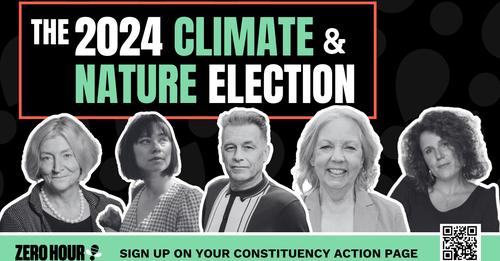
 

Within twenty four hours of the campaign’s official launch, over 800 candidates (10% of the total number standing for election) had agreed to back the Bill. CE Bill supporters include both incumbent MPs and Westminster challengers from all main parties across the UK, including Conservatives, Labour, Labour/Co-op, SNP, Greens, Lib Dems, DUP, Plaid Cymru, Scottish Greens, SDLP and Alliance.

Tori Tsui said: “It’s not a surprise that this upcoming election is absolutely vital for ensuring rapid climate and nature action. We absolutely need candidates to stand by a commitment to the CAN Bill. As voters, we have a responsibility and duty to hold our candidates to account. We can’t delay action any longer. It is up to us to make our voices heard.”


What you can do

Will you help us make sure that your next MP backs the Bill and is ready to take serious action? Find out more at zerohour.uk to sign up and get involved! Your local area has it’s own Constituency Action Page, which you can help build to demonstrate the power of collective action in your local community!
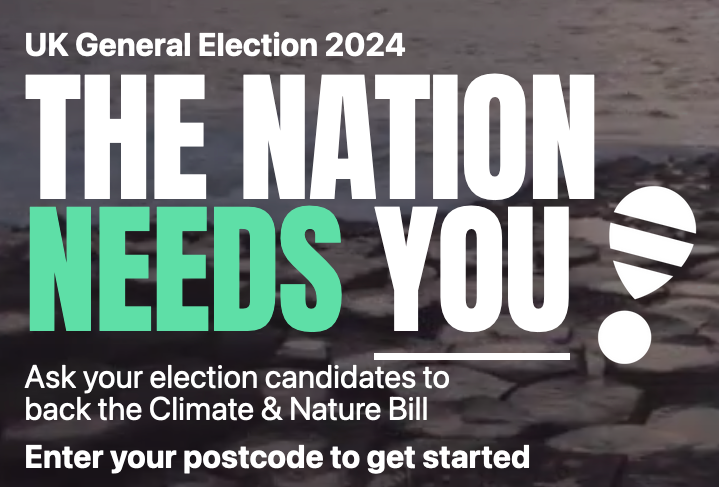
 

Together we can give politicians the mandate to take the action we need to protect climate and restore nature. Yes we CAN!

Check out our resources page to find more ways you can take action for nature.


FRESHWATER SPOTLIGHT: THE WATER VIOLET

By Joshua Harris 

SPECIES DESCRIPTION

The water violet is an aquatic plant which grows mostly submerged beneath the water surface, although the stem and leaves can sometimes float horizontally on the water surface. The leaves are a pale lime green colour and are limp if they are taken out of the water. The leaves are pinnatisect, meaning that they are divided into thin segments, similar to the leaves of ferns. The plant is deciduous but perennial, with the leaves dying off in the winter and growing back the next year. They need good sunlight in order to grow, and can live in any type of soil – sandy, loamy, or clay. 

Water violet in bloom

Only the flower spike emerges above the water surface and this can reach up to 80cm, although they can be much shorter. It takes 5-10 years to reach its tallest height, and can spread horizontally a distance of 0.5 – 1 metre. The flowers are present between May to June and appear very similar to a primrose – white or pale pink with a yellow centre and 5 petals. In fact, the water violet is not related to other Violets but is rather a species of Water Primrose. The water violet is a hermaphrodite, with both male and female organs. It has pin-eyed and thrum-eyed flowers, like Primrose, and requires cross pollination between pins and thrums to set seed. The flowers are pollinated by insects such as bees and butterflies. It also spreads through vegetative growth, forming colonies which do not set seed. The plant can grow fast.

WHERE CAN I FIND WATER VIOLETS?

It was formerly widespread across the east of England and the midlands, however it is now mainly confined to the Fens, the Somerset Levels, parts of Kent, and a handful of other sites. It is the county flower of Huntingdonshire. There are a handful of records in Scotland and Wales, and it has been introduced at some sites in Ireland. Globally, it is distributed across Europe as far east as the Ural mountains, with the exception of Spain and Portugal, the southern half of Italy, the northern parts of Scandinavia, and south-east Europe. 

Because it is highly sensitive to pollution, the presence of the water violet is an indicator of a water source being clean and not polluted. The water violet is often grown in ornamental ponds. 

CAUSE OF DECLINE

As an aquatic plant, the water violet is very vulnerable to water pollution, eutrophication and algal blooms. In addition, it is also threatened by drainage and prolonged drought, vegetation clearance, boat traffic, increasing salinity (due to evaporation of water at higher temperatures), and trampling by cattle. It is able to survive temporary summer drought, but not permanent drainage. It is declining and is listed as Vulnerable on the Red Data List for England. Many colonies were lost before 1930 in England. 

ROLE IN THE ECOSYSTEM

The water violet is found in still or slow moving, shallow aquatic environments: ponds, ditches, and the slow flowing backwaters of some rivers. Its bushy leaves can create dense shelter for aquatic animals such as dragonfly nymphs, water beetles, tadpoles, snails, and fish and their larvae. The flowers provide nectar for bees and butterflies. The plant also oxygenates the water. 

water violets growing in meadow

We’re calling on government to act now for our freshwater ecosystems, for nature and for our future. Head to our Not so Freshwater campaign page to learn more.


Bibliography 

https://plantatlas.brc.ac.uk/plant/hottonia-palustris (includes map of UK distribution) 
https://www.gbif.org/species/4006551 (map of global distribution)

https://www.rhs.org.uk/plants/25646/hottonia-palustris/details

https://www.plantlife.org.uk/uk/discover-wild-plants-nature/plant-fungi-species/water-violet

FRESHWATER SPOTLIGHT: THE WATER VOLE

by Rosa Hicks

SPECIES DESCRIPTION

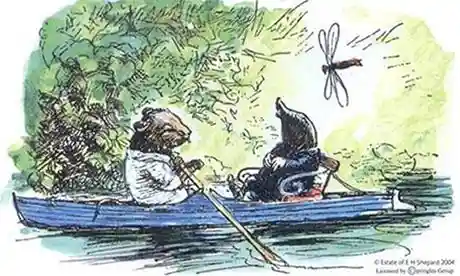
Water voles (Arvicola amphibious), characterised by “Ratty” in the Wind in the Willows, are one of the most charming creatures that call our waterways home. But water voles are also Britain’s fastest declining small mammal, vanishing from 94% of their former sites.

EH Shepard’s illustration of Ratty and Mole

CAUSE OF DECLINE

It might be hard to believe that during the pre-Roman period, water voles were actually Britain’s most common small mammal, with an estimated 6.7 billion living in our rivers, lakes, canals, and ponds. Agricultural development and the draining of 90% of the UK’s wetlands has caused major habitat loss, decimating water vole populations. Any remaining habitat is degraded by industrial pollution, with fertilisers, microplastics, and raw sewage turning our waters into an inhospitable chemical cocktail.

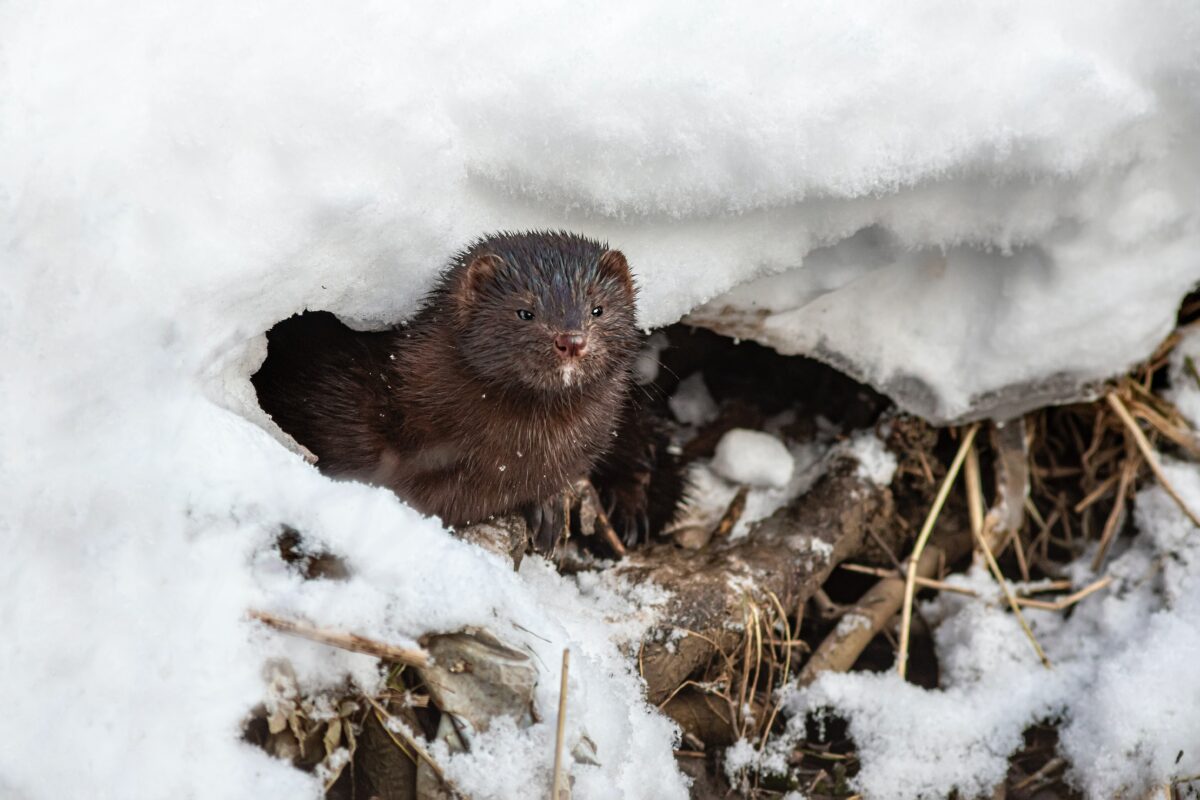
Water voles have also suffered from the introduction of invasive American Mink, from fur farms in the 1930s. Mink predate on water voles and are slim and agile enough to enter water vole burrows, sometimes wiping out entire colonies.

Water vole
American Mink

ROLE IN THE ECOSYSTEM

Water voles are a keystone species within the freshwater environment – meaning they create niches for other species and play a critical role in maintaining the structure of the ecosystem. In the water vole’s case, by forming their complex burrow systems in the riverbank, they alter soil properties: Physically, by increasing drainage, and biologically, by increasing the soil’s nutrient content when stashing food and leaving behind their droppings. This encourages a diversity of vegetation to grow, benefitting the whole ecological community.

CONSERVATION STATUS

Since the 1990s, water vole reintroduction programs have become increasingly popular. Urban development has isolated populations, making the natural recolonisation of our waterways impossible without our help. Where reintroduced, many other species like otters, reed warblers, and water violets have also returned, restoring a flourishing ecosystem.

WHERE CAN I SEE WATER VOLES?

If you’re trying to spot a water vole, look out for a rat-sized rodent, with dark fur and rounded facial features. However, they can be incredibly shy, so one of the best ways to see if they are living in your local wetlands, is to hunt for signs of their activity. Look out for characteristic tic-tac shaped green droppings in heaps called latrines. Grasses nibbled at 45 degree angles is another tell-tale sign of water vole activity. Finally, listen out their “plop” as they enter the water – usually because they’ve seen you long before you’ve seen them!

POEM/LITERATURE

“On either side of them, as they glided onwards, the rich meadow grass seemed that morning of a freshness and a greenness unsurpassable. Never had they noticed the roses so vivid, the willow herb so riotous, the meadow sweet so odorous and pervading. Then the murmur of the weir began to hold the air, and they felt a consciousness that they were nearing the end, whatever it might be, that surely awaited their expedition.”–    Wind in the Willows

We’re calling on government to act now for our freshwater ecosystems, for nature and for our future. Head to our Not so Freshwater campaign page to learn more.

Staff spotlight: Hannah Mulvany

Who are you?

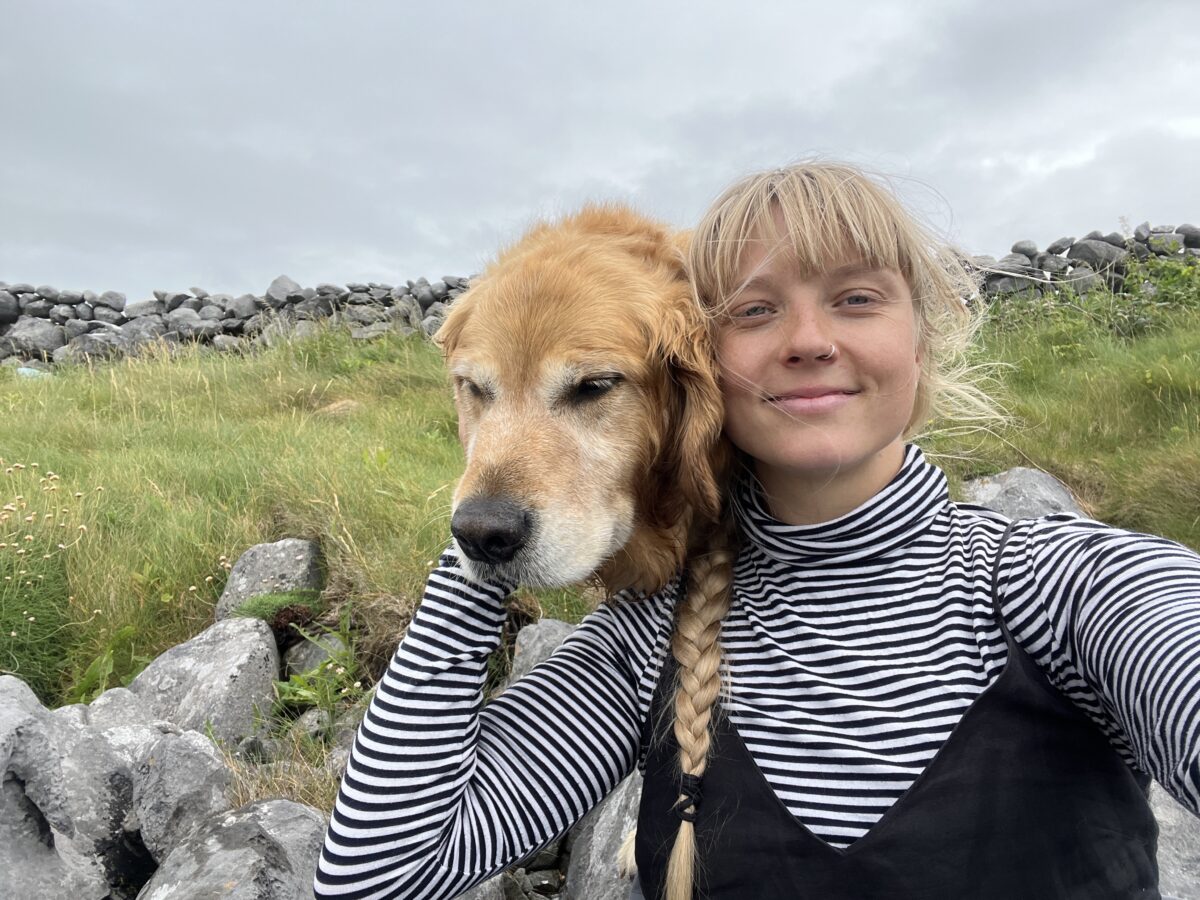
There’s so many ways to answer this question but I won’t get too deep about it! I’m Hannah Mulvany – I’m the Head of Comms for UK Youth for Nature. I’m an Environmental Biologist and Communications Specialist with a love for funk and disco music, who has been a part-time vanlifer, part-time housesitter for the past 7 years. I’ve lived in seven different countries as an adult, recently learned my star sign describes me very accurately, only like spinach when it’s raw, and have always dreamed of playing the saxophone.

Me with one of the many dogs I’ve looked after!

How did you acquire this illustrious role?

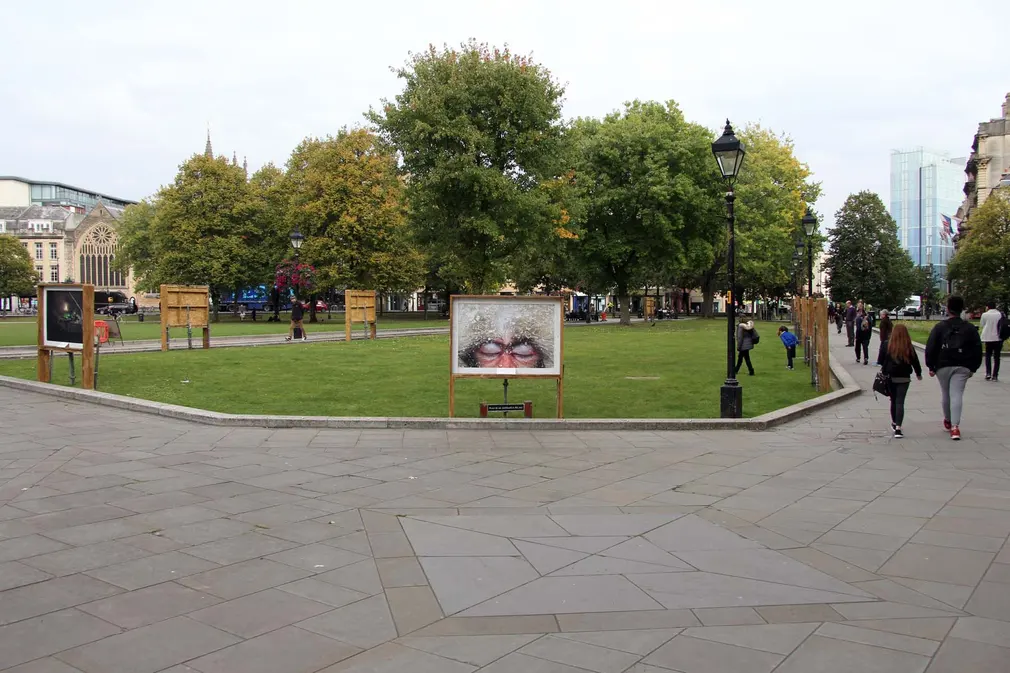
As with most people, my career has taken many meandering pathways. After doing my degree in Conservation Biology at the University of the West of England, I got a job straight away at Wildscreen, where I had done an internship during my degree. Here, I worked as a researcher/author, later working on building up their photo and video library for global conservation non-profits. I also ran the public programme for the Wildscreen Festival, which included creating large-scale street art, touring a bicycle-powered cinema around the city and screening wildlife documentaries, and creating the world’s very first completely recycled and recyclable outdoor photography exhibition. Part of my role was creating content for social media, and helping to acquire the content that charities needed to tell their stories. I knew I’d hit the nail on the head with my career when I figured out how to blend my creativity with my passion for the natural world.

The photography exhibition I curated, and created the concept for (built and installed by my friend Femi).

What’s something you find really annoying about the state of the planet?

I don’t think anything annoys me more than littering. Watching someone casually discard a wrapper, cigarette butt or whatever they’re choosing to destroy the environment with makes me feel like Squidward after SpongeBob has asked him too many questions. I love cartoons – forgot that from the about me section!

Name three things that you do to help the planet.

I eat a plant-based diet, I only buy second hand or recycled clothes, and I have a sustainable bank account and pension plan. I don’t think anyone is perfect, and I’m certainly not, but I think taking baby steps and considering how any aspect of your life can be more environmentally friendly, then taking small steps to resolve them, is the best way to align your life with your values without feeling totally overwhelmed.

Being an environmental scientist can be pretty heavy at times, how do you manage this?

It is heavy, and I think it’s so important that as environmentalists we give ourselves time to recharge. Firstly, my phone gets turned off for a large proportion of the day because there is no ‘safe space’ online for me to ignore environmental issues – most of the accounts I follow on social media relate to the planet. I hike, do yoga, trail run, wild swim, mountain bike, surf, ski, and SUP – anything that involves moving my body outside, I’m into. When I’m doing these things I’m present, I look up, and I am surrounded by the flora and fauna I spend so much of my time trying to protect. Nature helps rejuvenate me when I feel run down from spending so much time trying to get people to care about it – there’s some reciprocity in that, and that feels kind of awesome.

If you could change one thing in the UK regarding nature, what would it be?

It sounds obvious, but for there to just be more of it! I grew up in the middle of Nottingham, which is a pretty nature-sparse city (especially where I lived). You have to travel pretty far to find anything that resembles nature, and thankfully I was dragged out into the countryside at any opportunity my Mum had, which was the starting point of my passion for protecting it. Not everyone has that opportunity. It would be great to take nature to more people rather than expecting them to come to it. I’d love to see more connectivity between nature reserves, more rewilding and more urban nature funding so that more people get the chance to connect with it too. We generally don’t care about things that we know nothing about and have no experience of, so why should we expect other people to?

Give us a nature recommendation.

Learn to identify things, it’s so satisfying!

The People’s Plan for Nature

By Jess, Rosa and Ellen

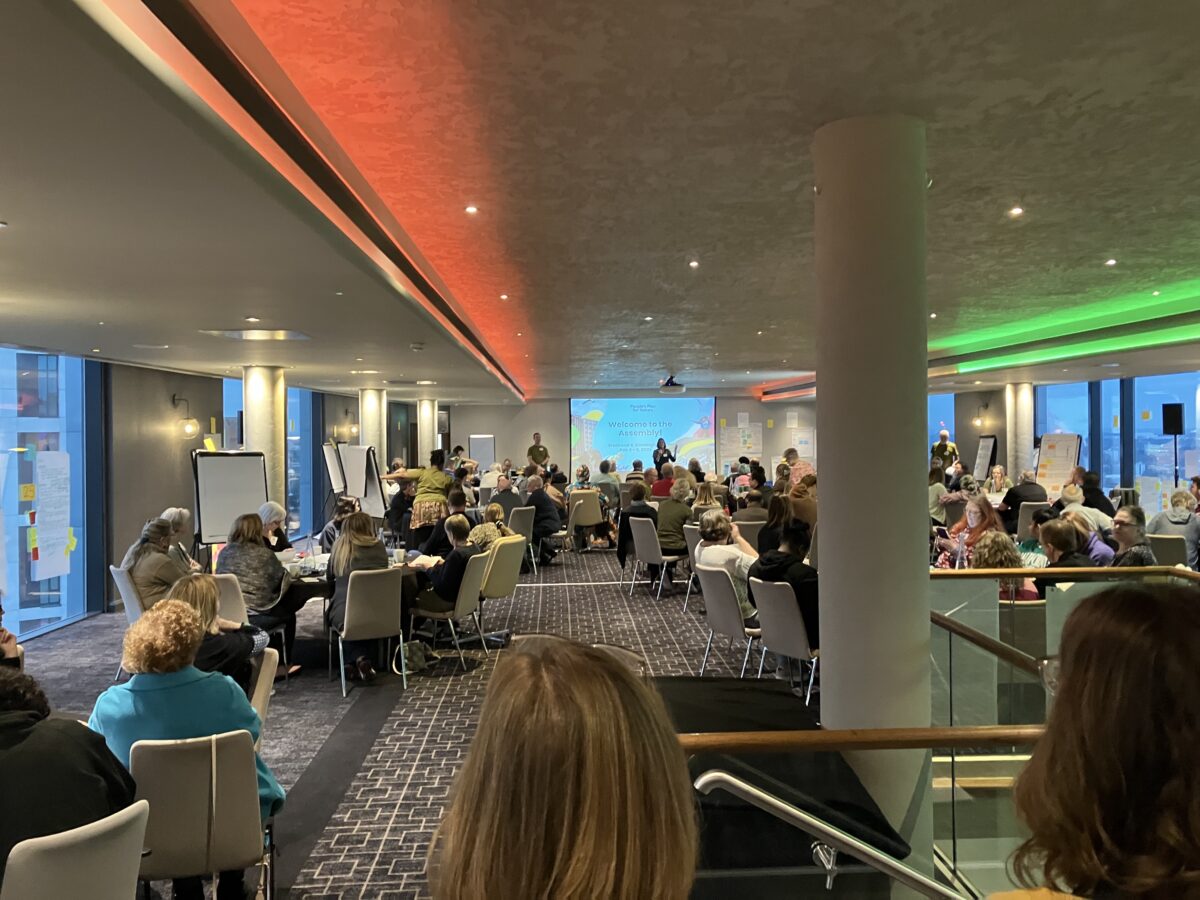
The power of changing the landscape has been held in too few hands for too long, the People’s Plan for Nature has given agency back to the people. 100 people from across the UK came together to take part in the People’s Assembly for Nature. They have worked to develop a plan and a set of recommendations for change on behalf of the UK public. This ground-breaking project has been powered by the WWF, RSPB and National Trust and is a unique collaboration with the public to protect and restore nature in the UK.

Across four weekends, two in-person and two online, the Assembly met and heard from experts and practitioners from different sectors to help them understand the state of nature in the UK and what could be done to save it. All talks and resources from the Assembly can be viewed here. UK Youth for Nature was invited to observe some of the sessions:

How we farm and what this means for nature:

This session covered a wide range of topics focused on the impacts of different farming methods on our environment. Sue Pritchard from the Food, Farming and Countryside Commission started by discussing the history of farming, as we’ve moved from subsistence farming to more intense agricultural practices, with the development of technology. Soil scientist Professor Pete Smith then spoke about the implications of farming for our soil quality and the trickle down effects for our biodiversity. To pull it all together, Martin Lines from the Nature Friendly Farming Network spoke about practical solutions farmers can implement to help the wildlife that shares our countryside, while maintaining agricultural productivity.

Diets and supply chains:

This session covered a range of topics around how we source and farm our food, and the impact this has on the environment. One presentation was from a nature-friendly farmer, Mark Lea from Green Acres Farm, on how he is implementing organic methods such as natural fertilisers into his food production. This was followed by Anna Turrell, the Sustainability Director from Tesco, discussing how large supermarkets can reduce their environmental impacts from their position at the other end of the supply chains. These were just a couple of examples of the diverse range of speakers helping to answer key questions surrounding the success of nature-friendly diets in the UK.

Photo by Archie Mathison

The final weekend took place in the centre of Birmingham on the 4-6th of February. One of our Co-Directors, Ellen, went along to observe and to talk with other environmental NGOs about how we can move into the next stage now that the People’s Plan for Nature has been pulled together.

Final weekend in Birmingham

“It was genuinely one of the most incredible experiences I’ve had in my career. There was a real sense that this was a powerful moment in history that has so much potential to create positive change. Nothing like this has ever been done before and when all the working groups came together at the end of the day to read out the first draft of the People’s Plan there were more than a few people in tears.

During the day I had the opportunity to hear about the process of picking the 100 people who formed the Assembly. A huge amount of thought went into making the group as representative as possible. I’ve been to quite a few environmental conferences and I’ve never seen so much diversity, it was amazing, this is what it should look like. There were people from a range of different socio-economic backgrounds, different races, cultures, 16 year olds working with people in their 90s. What was so special was that everyone wanted to hear other people’s views and opinions, there was no sense that one person was better or more knowledgeable than the next, everyone felt like they were part of something bigger and that their voice mattered.”

Communicated messages around saving the planet have been done in one way for so long, this is something different.” – Nadeem Perera, founder of Flock Together

“I am so excited about the People’s Plan for Nature, I really feel that this is something different. We’re not going to save nature unless everyone is involved and everyone feels that they have agency to act and speak up. We cannot let this plan become just another report, but from the energy and passion I saw in that room, I’m sure it won’t. This is a really exciting time for UK nature and I’m really looking forward to UK Youth for Nature helping to spread the message and push for change.” – Ellen

UK Youth for Nature will continue to support the People’s Plan for Nature. To find out more about our campaigns visit our campaigns page.

Handing on the torch

2022 was one of the biggest years for nature in some time. Internationally, the UN held its global nature conference, putting in place a new 2030 deal to save nature. But for UK Youth for Nature too, 2022 was the most important year in our 3-year history.

In October 2022, Matt and Talia handed over their Co-Director roles to Ellen and Roisin – a momentous occasion for both of them. For some context on who on Earth we are and why we’re writing this, well:

Matt founded UK Youth for Nature in April 2019. There were plenty of youth-led climate campaigning organisations. But no organisation existed empowering the UK’s young people to raise their voices to governments and politicians about the loss of nature. So, as little more than a humble WhatsApp group to start with, UK Youth for Nature (UKY4N) was born.

Talia then came along in March 2020 looking for something (anything!) that wasn’t totally pandemic-related and entirely about nature. It took one 4-hour strategy call to sink her teeth in and never let go. 

Matt Williams
Talia Goldman

Handing over the leadership to Ellen and Roisin was an incredibly exciting moment – if a little heartbreaking. Heartbreaking because it’s always sad to say goodbye to something you love, even if you choose it. We’ve been through a lot together over the 3 years leading and working with UKY4N. Exciting because finding two new Co-Directors, as well as a Head of Communications and Head of Campaigns, to hand over to, means that there is so much more to come; a clear signal that we’re here to stay and here to have impact.

Of course we’d say it – but there is huge potential for UKY4N. Movement building can take time, but the dedication of the young people who are joining UKY4N and staying shows that our expectations aren’t unrealistic. UKY4N is filling a gaping hole in the youth nature space calling for political action to address the nature crisis. 

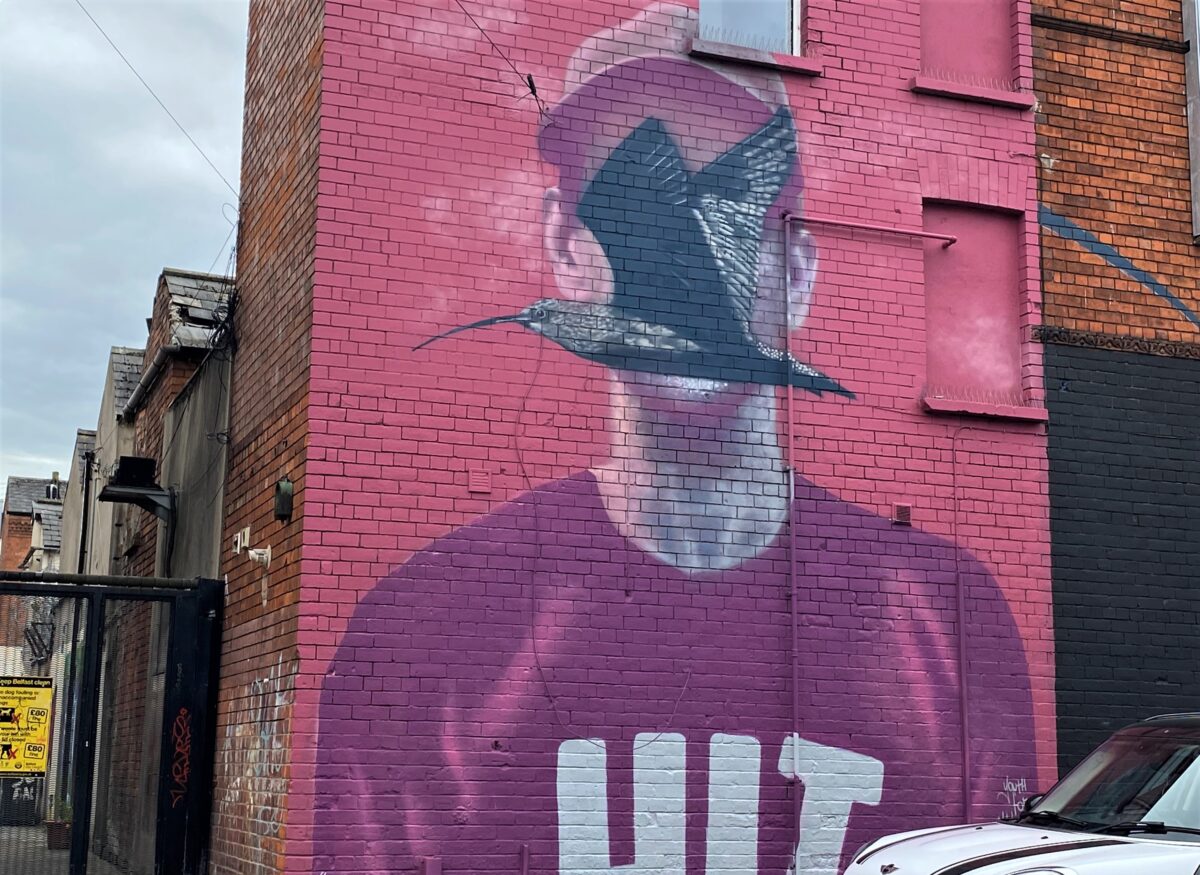
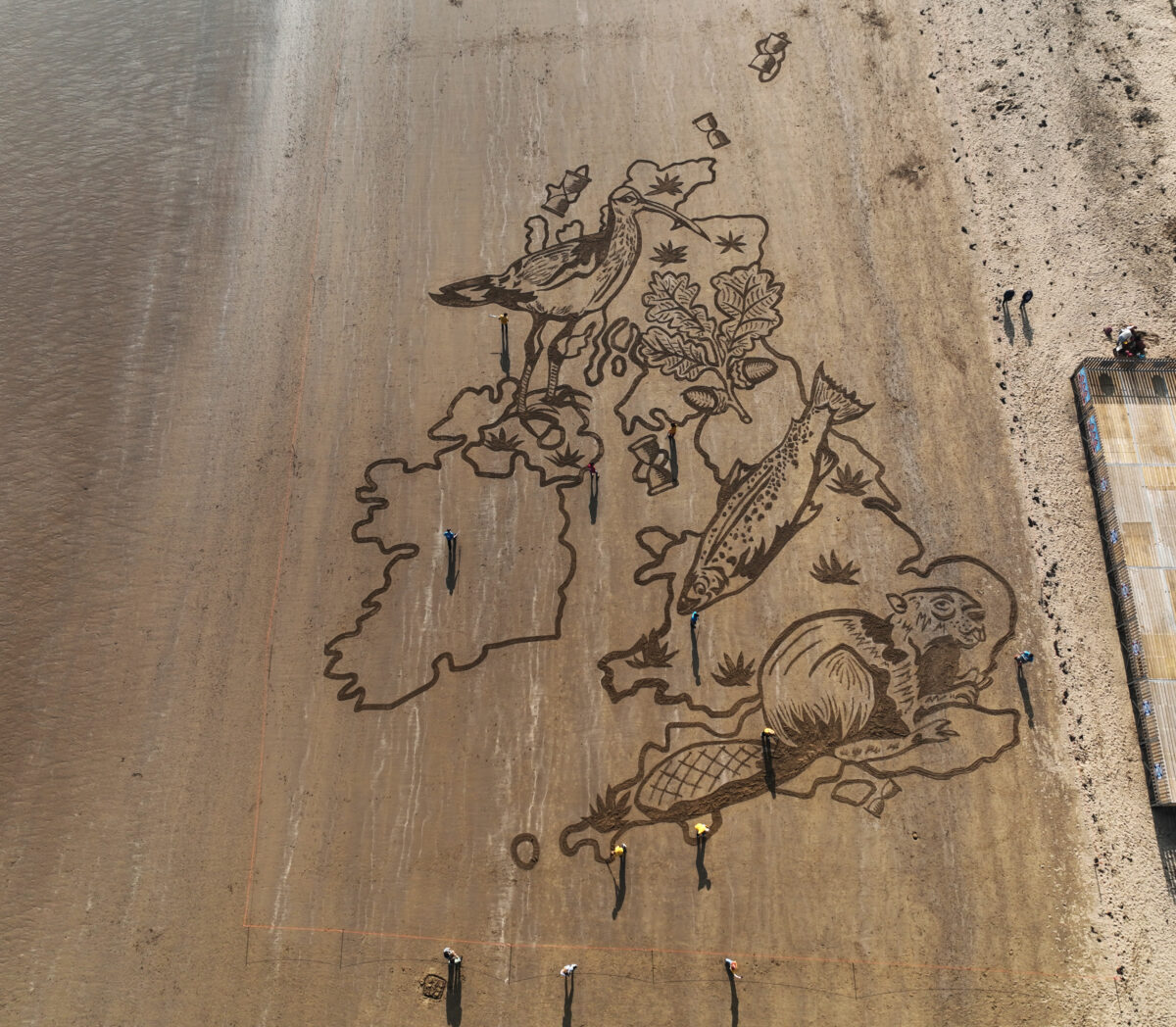
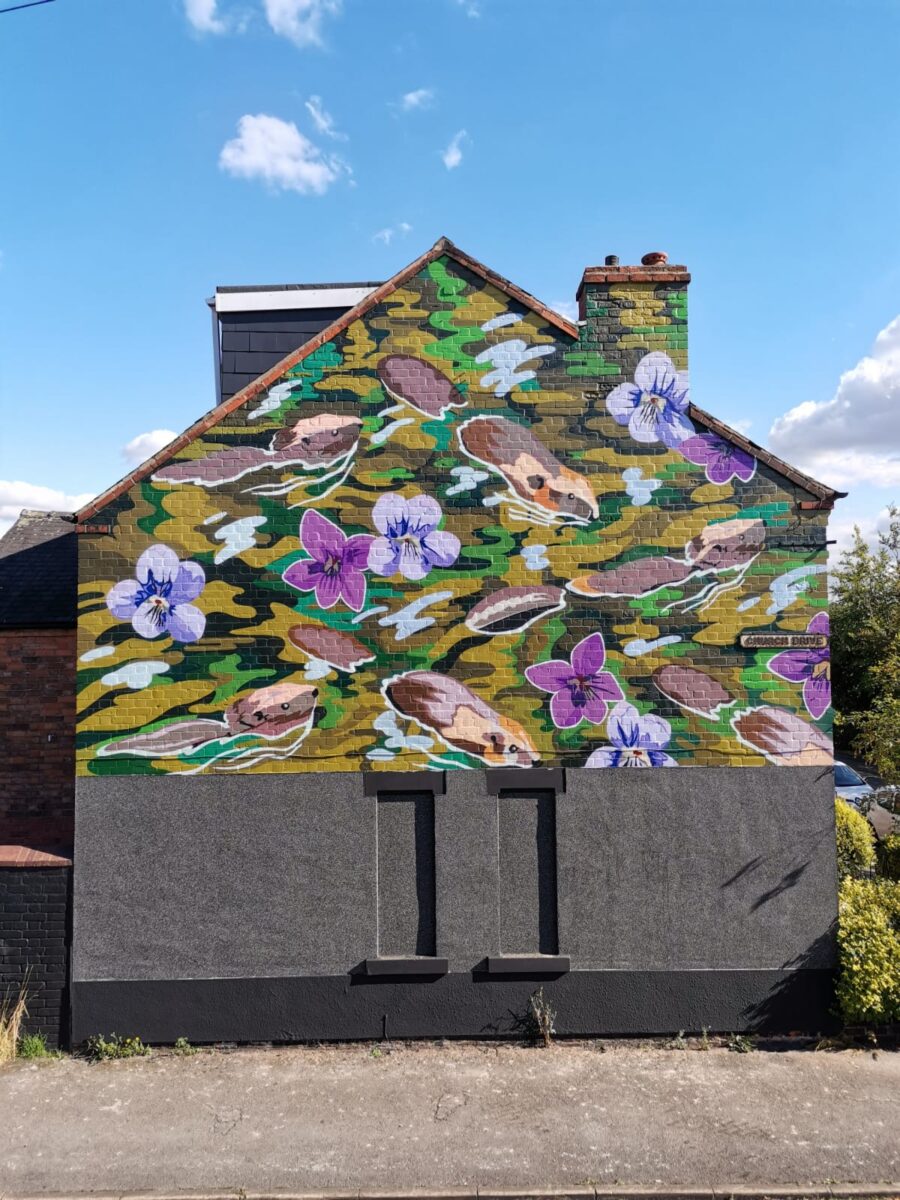
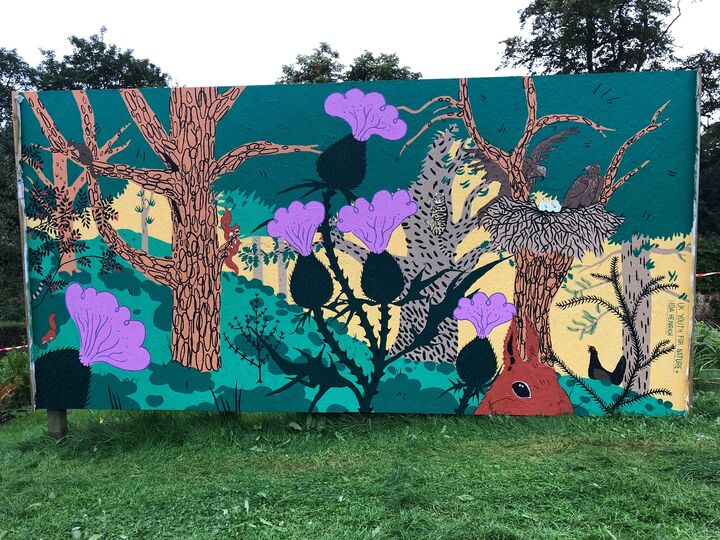
Our goal has always been to build a movement that reaches beyond the confines of a tweet. That’s why creative forms of campaigning have always been essential to anything that we do. We knew that we needed to find different ways for politicians and the general public alike to engage with our campaigns – that worked actively and passively with people’s imaginations to help them to engage. UKY4N has shown time and time again that we’re a creative powerhouse – one that multiple NGOs and other organisations have supported as a result (and taken on our ideas). Be that through our social media assets and digital guides to working with your local council, rewilding, or even building your own bug hotel – to our UK-wide mural campaign Natural Kingdom: Wild Walls, our giant sand drawing Lines in the Sand. This is a huge, ongoing area for potential as UKY4N moves forward. 

Eurasian Curlew wall – Belfast
Lines in the Sand drawing – Scarborough
Beavers wall – Nottingham

Looking to the future of UKY4N there is so much that excites us. The possibility for real-world policy change is embedded into an upcoming water campaign. And the team remains as creative-minded as ever.

One of Talia’s proudest moments was the completion of the final wildlife mural we painted in Glasgow right before COP26. This was the 8th mural that we brought to reality as part of our Natural Kingdom: Wild Walls campaign. It was the culmination of nearly a year’s work and demonstrated the unbelievable dedication and pure skill of our organising team. No one in the team had done anything like this before and yet… We managed to source the funding for every wall through a variety of means, worked with multiple organisations, individuals, and councils on the ground, co-designed the mural with local, mostly young, artists, and managed all the logistics of their creation – all whilst in full time employment or education. It’s such a point of pride because it started as an idea to paint 1 mural and transformed into 8 – all at the will and drive of the team. And this led to an additional 8 created  in partnership with the Grantham Institute for Climate Change Research and Octopus Energy. We still get emails asking for our help creating new murals.  

Glasgow wall

It’s impossible not to just write an endless list of things that UKY4N achieved since launching in 2019 and becoming Co-Directors in 2020. We’ve also had some tough times together – failed applications to the Arts Council, long nights in the early days where Aura, Joe, Bred and the of two of us were dealing with unexpected obstacles and working out new strategies for campaigning and everything in between.

But even where it’s been hard, the good has been overwhelming. 

Since Matt founded UKY4N in 2019, we have gone from a few organising team members, a WhatsApp group, and a small mailing list, to over 4000 followers on social media with a thriving organising team, a growing network, and a huge internal overhaul where we moved over to Slack. 

Whilst we had initial support from WWF and RSPB when Matt founded UKY4N, we’re now well-known amongst multiple organisations, individuals, councils, and political representatives. We have had media coverage in the UK and the EU, including in major publications such as The Guardian centrefold and global pictures of the day for The Guardian and The Times with our sand drawing. We’ve spoken on the radio, sat on multiple panels with national and European organisations, run events, and participated in the creation of the YOUNGOs COY16 at COP26. We took the next step forward in creating a movement that lasts by officially incorporating, winning an important grant from the European Climate Foundation to continue our work over the next year, going through a whole rebrand run by our own team members, and establishing our first Board. 

UKY4N has achieved so much already that we’ve been incredibly proud to be a part of – but this was only just the beginning. This is no doubt a movement at the cusp of creating real, long-lasting change. The energy, enthusiasm, intelligence, and sheer determination of our organising team and wider network will be testament to that. 

Thank you to everyone, past and present, who we worked with – to those who gave 10 hours week and 10 minutes, to the late night planning and early conversations, to the meetings squeezed into work days and weekends, to the ceaseless creativity and inability to say ‘no’ to ideas, to the barrages of WhatsApps and Zooms that always ran over, to the disagreements and eurekas. 

Now over to you, Ellen, Roisin, Joe, Hannah, and the rest of this brilliant team to help the UK’s nature thrive once more. 

UKY4N team at Scarborough beach

If you’re a young person in the UK who is passionate about nature and the environment and want to join a community of like-minded people to save the planet with, please get in touch!

A little bird told me… #3

Edition: Hedge of Glory

By Glesni & Alanna

Farming is a way of cultivating a relationship with the more-than-human world. It connects us to our own web of life and joins up the dots on how our harvesting and cultivation impacts those around us – for better or for worse. When done with respect to other natural systems we can create more biodiversity, better health and even redirect floods/alleviate drought and capture carbon. 

Commercial large scale farms that run on fossil fuels, mono-crops and subsidies are failing us. When farms consist of large fields of one crop, and one crop only, these require huge amounts of artificial fertilizers and additives that are systematically conforming to processes of machinery. This conformity not only results in quick run-off of nutrients from the fields into the nearest waterways, but also means that any ‘product’ unconforming to shape or size gets rejected from ever leaving the farm – thus creating wasted food.

Out of the over 300,000 edible plant species out there, only 200 of these on average are eaten by the majority of people, even less so in commercially monopolised countries like the UK. If the way we farmed reflected these other species, we could create farms that reflect the landscape and dance with their own niches.

More often than not, we associate our behaviour as an ethical consumer with the impact our spending habits have on the environment and on the treatment of the workers. Whilst these are incredibly important factors to consider, there are additional questions we should be asking ourselves that feed into these. How does how we shop affect ourselves and our community?

During the pandemic, more people have been shopping locally and supporting small businesses, which has been linked to an increased feeling of community spirit. This has given people the opportunity to connect with where their food comes from, build relationships with people in their community and has given both the consumer and the business owner a chance to help each other during a time of uncertainty. 

A practice that applies similar values, includes a method of food production called Community-supported agriculture (CSA). CSA enables people in the community to form a direct partnership with the farmers. This includes sharing the responsibility and rewards of farming and enabling them to take control of their food supply. There is no one strict method or definition for CSA. Examples can include local people investing in a farm, whereby they receive a share of the produce whilst the food production is still farmer-led. There are also other groups where local people lead the farm, by sourcing a piece of land and using it to produce their own food – recruiting other members of the community to help. 

CSA schemes have been found to provide a variety of benefits to individuals, the community, the local economy and the environment. 

It has changed people’s eating habits, often leading to eating healthier and organic food, supporting better overall health and happiness. Eating seasonal fruit and vegetables has provided people with the opportunity to experiment with the different food that is available that particular season and become more connected with nature and the process of growing food. Eating seasonal local foods also means there is very little transport or plastic involved, reducing an individual’s carbon footprint. 

Concerns that we might have when buying from larger supermarkets, including excess plastic packaging and limited transparency in the food trade and production, are reduced when buying food from CSA schemes. Consumers are able to be proactive in how their food is produced, are able to get involved as much or as little as they wish to. 

People have gained new skills, connected with others in their community and according to research from the Soil Association, CSA has also improved local employment. In comparison to UK agriculture as a whole, CSA has shown higher levels of employment relative to the land available. 

If you’re looking for hands-on experience and an element of adventure, have a look at Worldwide Opportunities on Organic Farms (WWOOF). WWOOFing involves learning about sustainable and argo-ecological farming whilst working and living with a host family. During your time as a WWOOFer, you are not paid by being given money. Instead, the host family pay you by providing you accommodation and food for the time that you spend on their farm. 

Alternative farming is a great example of how food production can work in harmony with nature and the community. We hope you find a way to get involved!


To read the full Newsletter – Click the link below

A little bird told me… #2

Edition: Connect to Roaming

Land. It’s all around us. But what comes to mind when you think of ‘land’? There is a tendency for our minds to wander to the familiar portrayal of it as large swathes of farmed fields that exist autonomously and seperate from the spaces we live in; far from towns and cities. But land is everywhere. Issues that include land include us. Everywhere we are allowed to relax, socialise,  work: – whilst not in the air or in the sea, of course, is land. Something we all bear our weight on each day, trusting the ground below us to support and cradle us, holding us close, preventing us from falling out into distant galaxies… 

And land is around us for our whole lives. Everywhere we occupy, wherever we are. 

Yet, our experiences of what type of land we each are able to access varies so vastly from person to person – from inner city parks where pigeons coo; to disused tennis courts full of dandelions and grasses sneaking up through the cracks; to vast wetlands and mountains adorned with flowering heather and the quiet buzz of bees… The type of land we can each access not only affects where we are, but also who we are and how we are. 

It has been said countless times already that the type of spaces we have been able to reach during national lockdowns have been incredibly important for our health. But just how important is it?  Research by the University Of Surrey[1] found that some birdsong were able to offer relief from stress and mental fatigue, depending on the participants’ upbringing. Studies[2] have also shown a correlation between noise pollution and exacerbation of detrimental physical and mental health issues, as well as hindering the ability to have primary socialization and develop crucial early learning skills. Chronic exposure to noise keeps your stress receptors active for longer than is healthy- wearing down your immunity and making you more vulnerable to health problems. The effects that noise pollution has on communities and families further deepens the pre-existing disparity that exists in society. 

Ensuring that we have better access to land would be a chance for us to better the health of those that we share the land with. Lepidopterist (butterfly collector!), Robert Micheal Pyle, once wrote “What is the extinction of a Condor to a child who doesn’t know a Wren?”. The strength of our connection to the life around us is reflective and shows up as reciprocal acts of care. When we understand the ecological systems around us we can find our place within them, and be a naturally equal asset to the biomes we inhabit, belonging here as much as any other species. We all have gifts that we can share. 

In the UK we have a long history with land rights. I’d recommend Three Acres and a Cow (and Gafael Tir) for a full and fun way to absorb it all (via some catchy folk songs and poems). However, I’d like to talk about our recent history. Only 24 years ago the Right To Roam  legislation was made law, and due to actions such as the Kinder Scout Mass Trespass in 1938 were the first National Parks created only 70 years ago. Currently, the Right To Roam only covers areas that equals approx 8% of England’s land (in contrast to 100% of land in Scotland). However, these areas (such as The New Forest, Dartmoor and The Peak District) are often too far away to be part of people’s daily life. Currently, the Right To Roam campaign is working on ways to further our ability to access more of these vital spaces. Emerging work such as Who Owns England and Mapping The Lost Rainforests of England is really taking strides at mapping out the unseen and unspoken. So if you are able to, do enjoy the areas that we can access in the UK, either by footpaths, rights of way or the right to roam – and be sure to check out the countryside code guidelines.

If we only conjure up images of big farms and far away forests when we think of land, we run the risk of removing ourselves from it – losing our innate connection with it and the knowledge of how to live in symbiosis. If we don’t take time to imagine the future, we will get what is already being planned – and there’s a lot of inspiration coming in our next newsletter…

Additional links: 

Slow Ways – https://beta.slowways.org 

Groundwork ‘Out Of Bounds’ report: https://www.groundwork.org.uk/about-groundwork/reports/outofbounds/?fbclid=IwAR1znEn5LgRyEEg4jmP_-FZch_sqplP7iVKdjKU9ThGgFloEOBDRyq7ABHA

The Lost Rainforests of England – https://lostrainforestsofengland.org/2021/03/16/mapping-the-lost-rainforests-of-england/

Three Acres and a Cow – history of land rights – https://threeacresandacow.co.uk

Countryside Code Infographics – https://www.nfuonline.com/news/latest-news/use-our-free-countryside-code-resources-to-spread-the-word-with-walkers/

Who Owns England – https://whoownsengland.org

Gafael Tir – http://gafaeltir.cymru/en/home/

Study citation [2] – https://www.theguardian.com/lifeandstyle/2018/jul/03/sonic-doom-noise-pollution-kills-heart-disease-diabetes

Study citation [1] – https://www.nhm.ac.uk/discover/how-listening-to-bird-song-can-transform-our-mental-health.html

A little bird told me…

Edition: Restore Our Rivers

Newsletter blog by Joshua Harris

You can really immerse yourself in a river. Both literally of course, but also by observing the physical and biological activity which is taking place there. Rivers, and aquatic environments in general, have an extra dimension of living space for organisms to occupy – the water. So you have these three kinds of living space in close proximity: the trees and other plants along the river banks; the aquatic world of algae, aquatic plants, and riverbed life; and the air in the river channel along which the kingfishers and dippers zoom. 

Then there are the connections between these different realms: the caddisfly larvae under the rocks on the bottom of the stream which feed aerial dippers; the bats which roost under the bark of the dead trees and feast on the emerging midges; the kingfishers which zoom up and down the tunnel of air between the riverbanks and the overhanging vegetation; the deer, foxes, and badgers which come from land to drink at the river. 

In lockdown, as many people have got to know their local areas more intimately, rivers are the perfect way to explore a landscape. And since the UK has 200,000km of rivers and streams, you are never too far away from the opportunity. In last year’s lockdown, I spent many days exploring my local network of rivers and streams to search for evidence of a certain elusive mammal. Often dragging my kayak through streams little wider than ditches, clambering over weirs and woody debris, and keeping undercover of the overhanging vegetation, I was really immersed in the environment, seeing it from the perspective of the creatures which live there. In small streams with high banks, you can’t see anything either side; on one day, I travelled for about 10 miles barely encountering any signs of human activity. On other occasions I have spent hours sitting half submerged in the river to photograph dippers from the water level, passing the time by watching the minnows congregating around my legs and the kingfishers zooming past my head. 

Rivers are amazing, and you can get lost in exploring the diversity of life they hold, but our rivers today are a shadow of their former selves. The river which I spent my summer exploring is polluted on a near weekly basis in winter by sewage discharges whenever there is heavy rain, as well as slurry and fertiliser pollution from farming. A report last year found that just 14% of English rivers were classified as being in “good” ecological condition, and none any better than that. It’s often said that wildlife populations are nearing a cliff edge, but in the case of British migratory fish, they’ve pretty much already fallen off. The 8 foot long sturgeon which once migrated up our rivers are long gone, eels are critically endangered, and salmon are almost extinct in most rivers. Medieval records tell us of the almost inconceivable abundance of migratory fish which once thronged our river systems and marshlands, in numbers which would once have rivalled those we see in western north America today.

To restore our rivers we’ll need a variety of approaches. Removing dams and weirs would allow migratory fish to journey unimpeded from sea to source, and reinstate some of the natural hydrology – meanders, gravel banks, eroded river cliffs, etc. At the same time, reintroducing beavers (whose dams are porous and often have side channels, allowing migratory fish to pass) could kickstart interesting hydrological processes and create wildlife habitats in our headwater streams, as well as holding back the flow of water after heavy rain. We urgently need proper regulation of the farming industry and water companies, as well as the adoption of better farming techniques (zero till farming, buffer strips, and the reduction of livestock numbers adjacent to watercourses), and better infrastructure for dealing with sewage.

We should also allow more public access to rivers so that people can engage with them. Currently a shocking 97% of rivers are off limits to wild swimming and kayaking. If we could implement a 20m buffer zone either side of our rivers and streams with no cultivation or chemical applications, and then allow public access to these areas, then this could form corridors for people and wildlife through the landscape. 

River restoration provides huge benefits for both nature and people – diverse wildlife habitats, recreation, flood alleviation, and ecological connectivity. With some fairly simple changes we could all enjoy living rivers. 

The Power of Birdsong

By Sathvika Krishnan

Birdsong has inspired many artists, poets and composers from different backgrounds over the years. Great writers like Chaucer and Shakespeare marvelled at sounds of birds and incorporated the songs in their literature. From classic-romantic Beethoven to 20th century Messiaen to modern jazz musician Rothenberg, either direct or indirect references to the melodious models of birdsong feature greatly across many genres of music. Birdsongs are said to be among the most beautiful, complex sounds produced in the natural world. Birds produce sound using a uniquely avian vocal organ called the syrinx, which is located at the top of the bronchi in the lungs. Some birds with particularly complex syringeal muscles are able to produce two harmonically distinct sounds simultaneously, like the Wood Thrush. Each species has a unique set of calls and songs, known as its repertoire, and some birds have a particularly vast selection of sounds. The Brown Thrasher, for example, can sing 2000 song variations and can switch sound production back and forth from one side of the syrinx to the other, even within a single syllable! Bird vocalisations are heavily involved in courtship displays, nesting care and interspecies interaction (the dawn chorus). However, birdsong is far more than just a means of communication.

Bird bioacoustics is an active field of scientific research using bird vocalizations to gather information about habitats. By measuring birdsong, researchers can use birdsong as an indicator to assess the health of ecosystems and can monitor species populations. Birds play ecologically crucial roles in the balance of food webs and it is imperative that their populations are maintained. Birdsong also has notably positive effects on humans. Listening to birdsong can improve our mood and boost our mental health significantly. This ‘natural high’ helps us to recover from stress and refocus our attention. This is because birdsong is stochastic; this means that it is made up of seemingly random sounds with no audible, repeating pattern to focus on. Evolutionarily, it is believed that birdsong was a signal of safety and thus stimulates us cognitively. The ecological and psychological benefits of birdsong are unquestionable but there is a serious problem.

Studies show that British birdlife is in trouble. The combined actions of pesticides, farming intensification and habitat change, as well as other factors, has caused species populations to plummet drastically. The glorious song of the nightingale, one of the world’s most celebrated passerines (songbirds), is now a rarity as its population has crashed by more than 90%. With our skies emptier and woodlands quieter, we need to act quickly to reverse this loss in biodiversity. So, what can you do to help support U.K. birds?

1) You could start by feeding garden birds on your windowsill, balcony or garden. This will help attract birds locally.

2) Avoiding chemical pesticides can help protect the insects that are essential to the survival of many bird species.

3) If you have a pet cat, try and keep your feline friend inside as cats are notorious for killing birds.

4) Enjoy the birdsong. Through listening and learning, you will soon be able to identify your avian garden visitors by sound and you can become a ‘citizen scientist’!

As renowned naturalist Sir David Attenborough says, “What wild creature is more accessible to our eyes and ears, as close to us and everyone in the world, as universal as a bird?”