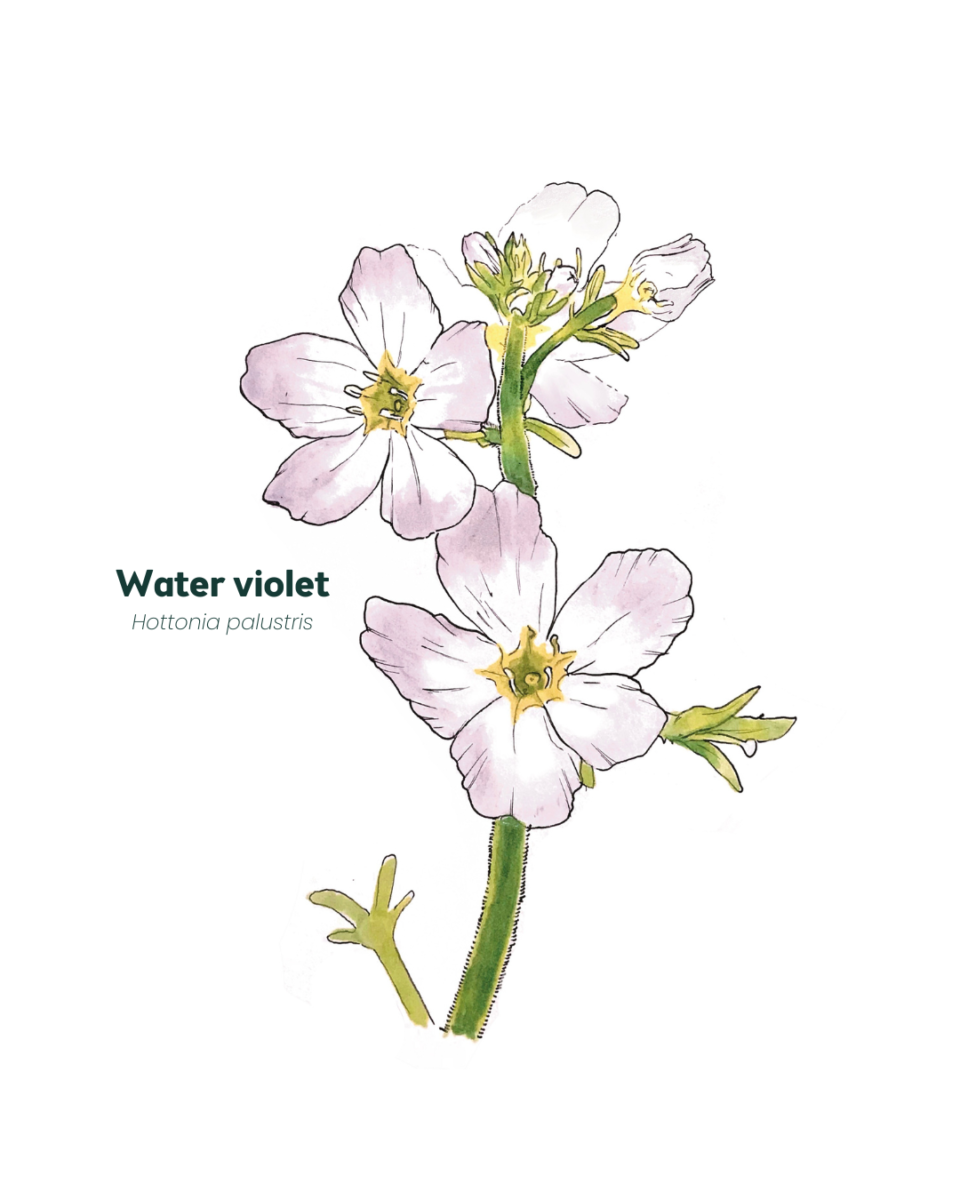
Did you know that water violets (also known as ‘featherfoil’) aren’t actually violets at all? They’re members of the primrose family. These beautiful aquatic plants bring a unique charm to the water’s surface, living mostly underwater with just their delicate flower spike peeking above the surface. Their blooms, which look a lot like other primroses, feature white or pale pink petals and a cheerful yellow “eye” at the center.
Water violet decline
Once a common sight across southeast England, water violets have had a tough time lately, landing a spot on England’s Red Data List due to a steep drop in their numbers. These plants thrive in clear, nutrient-poor waters, so water pollution and excessive drainage are among their biggest threats.
The scientific name for water violets, Hottonia palustris, gives a hint about their habitat preferences: palustris means “of the marsh.” The marshy, slow-moving waters that they thrive within aren’t just home to the water violet; they buzz with other life. Water spiders, beetles, and dragonfly nymphs share this habitat, and frogs, toads, and newts tadpoles are big fans, too. As well as providing shelter for other species, water violets are fantastic oxygenators, making them essential to biodiversity and a beautiful addition to slower streams and ponds.
So next time you’re near a quiet marsh or pond, keep an eye out for these “marsh primroses.” They’re not only lovely to look at, but they’re also doing vital work to keep our ecosystems healthy!
Reduce pesticide use by 50% (volume and toxicity) by 2030
Create ambitious targets to restore field margins and riverside ecosystems to reduce field run-off and boost our waters for wildlife and people
If you want to support our campaign, head to our campaign page and write a letter to your MP or subscribe to our newsletter to get regular updates directly to your inbox.
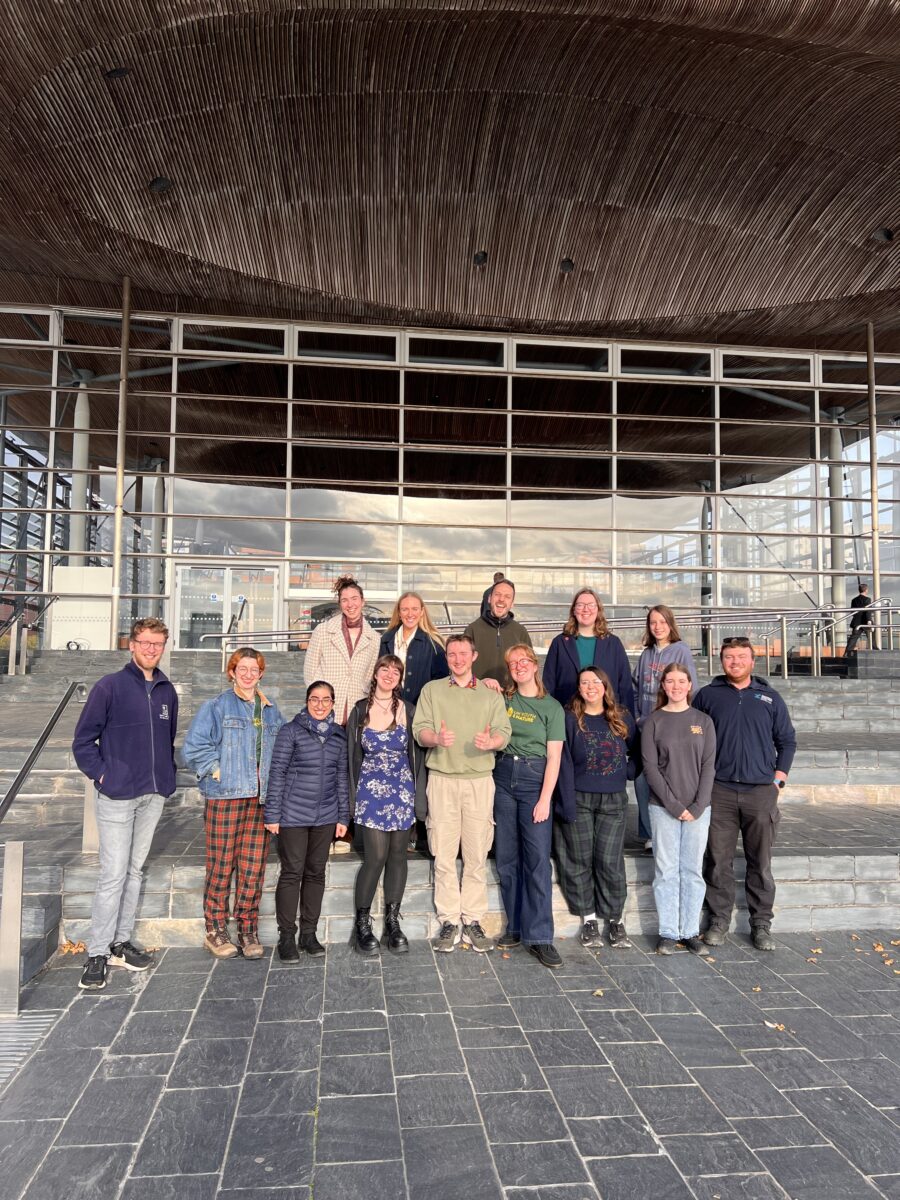
We recently held an event at the Senedd in Cardiff, entitled, ‘A Voice for Our Rivers’. We invited organisations and policy-makers, who were treated to a line-up of song and dance, speeches, and walls adorned with artwork that celebrated the UK’s freshwater species. This was all part of our Not So Freshwater campaign, which you can find out more about here.
Delyth’s speech
Our MS sponsor, Delyth Jewell shared these beautiful words about the importance of rivers in Wales (read below, or scroll to the bottom to watch instead):
“Thank you so much to everyone for being here this afternoon, and thank you so much to the Oasis One World Choir for singing and for dancing and for performing. For bringing that to life for us, because we need to remember that the reason that we all care about this is because of future generations.
It’s exactly what we’ve just been hearing. It’s for young people today and tomorrow. We have to save our rivers for young people like you, so thank you so much for inspiring us.
And it’s fitting that we should have music, because rivers in Wales, they sing to us the tune of our national anthem. Did you know this? The tune of our national anthem, Hen Wlad Fy Nhadau, it was inspired by a river.
The person who composed that tune that we sing on match days and things like that, was when the River Tab – well, so the story goes anyway – the River Tab and the River Rhondon meet together in Pontypridd, and the gentlemen who heard these coming together, that inspired where Hen Wlad Fy Nhadau comes from.
So we are a nation that listens to rivers. That song that is now so synonymous with everything that makes us Welsh, in all of our amazing differences. That came to us through water.
But if those rivers sang to us now, it would be quite a sad song, wouldn’t it? That they’d be singing to us instead. Because so many of our streams are struggling for breath. You were just singing to us about how we need to save future generations. It’s because they are struggling, the rivers, the waters, they’re really struggling.
Dirty pollution is killing the plants and the fish and the animals that rely on these habitats for their sources of life. Now, we have to unclog them if we’re able to hear our rivers sing again.
This afternoon, I mean, I was going to say we’re into a real treat. We’ve already had a real treat with that, we’re being treated to this celebration in song and dance. So thank you again to Oasis One World Choir.
We’ll be hearing from UK Youth for Nature campaigners, Welsh farming voices, there’ll be interactive art pieces like water testing, and all of this coming together in one massive cacophony of noise, and of voices coming together. That’s how it should be.
There’s a Welsh language poet called Waldo Williams, and he talks about this idea of ‘Un llef pedwar llais’ which means one harmony of four different voices coming together. This is very much how it should be. One flow of water, all different voices coming together.
Now, the campaign, the fight, the absolute necessity for doing this, it’s something which isshared, I think, across different political parties in the Senedd. Our Senedd was the first parliament to declare a nature and climate emergency. We need to make sure that those are acted on as much as they can be. I saw that Julie James was here earlier, who was the minister who had pushed these through. We have these hugely supportive voices in the Senedd who are fighting for these changes.
Again, we have to make sure that it’s more than words, always. Because I think everyone, when you talk to your friends, they probably agree with you that this is important, don’t they? I think all young people think it’s important. It’s not always clear that decision makers will be willing to make the difficult decisions, and that’s what we need to happen. Because between us, together, we can make a difference.
The inspiration we’ve heard this afternoon here, the passion that the young people have brought here, the dedication that they have, the drive that we can all tell that they have, that’s something we have to keep in our hearts.
It’s something that we have to keep reminding ourselves why these difficult decisions need to be made. I mean, lots of these decisions aren’t actually difficult, you know? In terms of making sure that water companies are doing what they need to do to save our planet, making sure that rivers and streams and our seas are safe for children to play in, that they’re safe for habitats to thrive. This should be a no-brainer. It shouldn’t be about where money goes. In Wales, at least, we don’t have shareholders and water companies in the same way. We need to reform the way that all of that works.
Our rivers, they sing to us of our yesterdays. Our rivers tell us the tale of where we as a nation have been. So let’s all make sure that youth voices are the ones that carry us forward to ensure that we as a nation, that we save the sounds of our waters for the future of these amazing young people. That their cry, unsullied by sewage or by pollution, will once again inspire great songs like our national anthem. like you’ve just been singing to us. Great songs for all the ages to come. Let’s save our rivers.”
For a full account of the event, see this blog from our community member, Joe Wilkins.
Feeling fired up to take action? Use our email template to write to your MP and encourage them to take action for rivers in your local area.
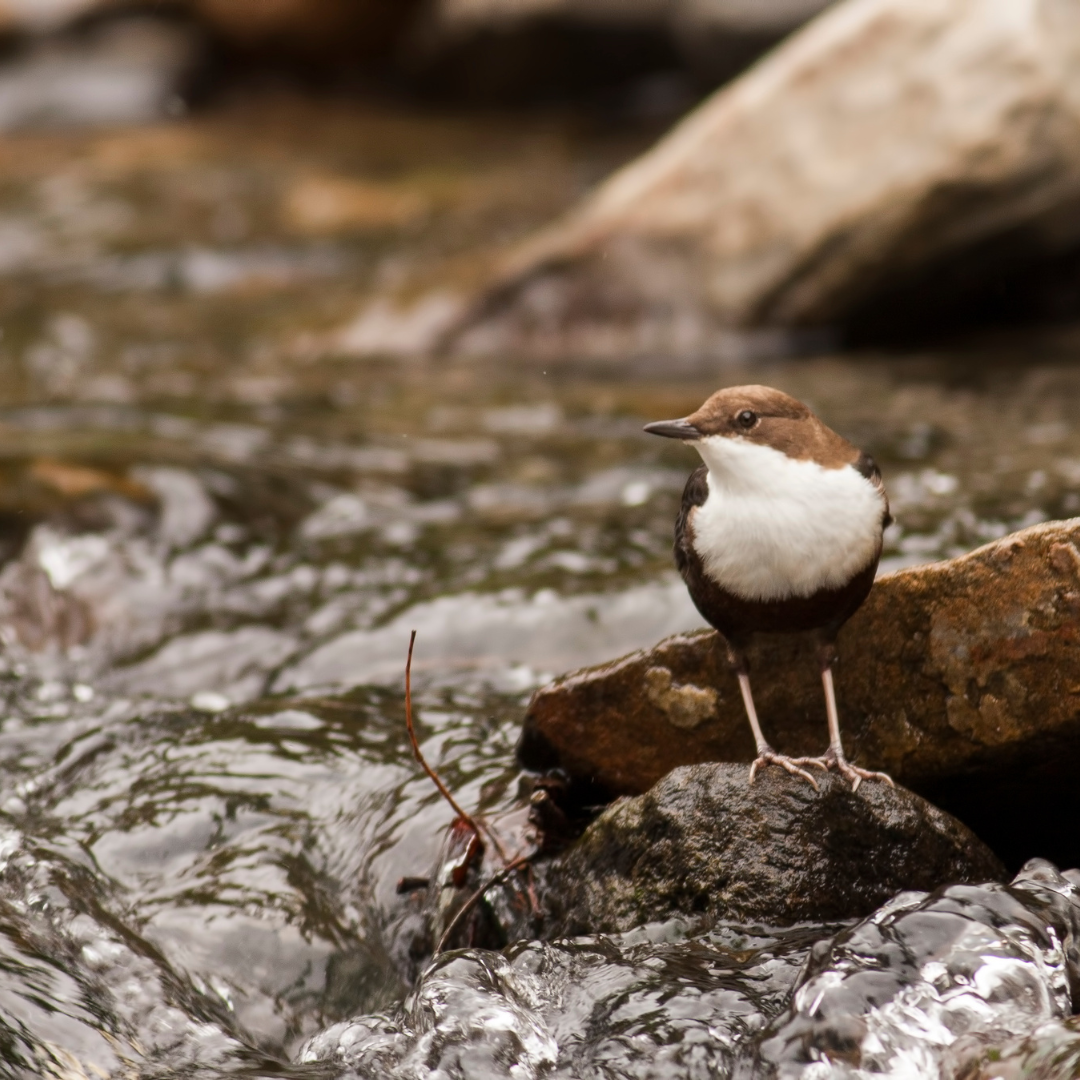
Dippers are one of the many species inhabiting freshwater areas. They play a key role in their environment, keeping the ecosystems they live in stable. However, pollution and other factors are threatening their survival.
Habitat and location
Dippers are found in freshwater habitats in North and South America, Europe, and Asia. They are also found in Morocco in Africa. There are five different species of dipper around the world, whoinhabit banks of fast-moving upland rivers and visit lake shores and sea coasts outside of the breeding season. The species found in the UK is also known as the white-throated dipper or European dipper.
Diet
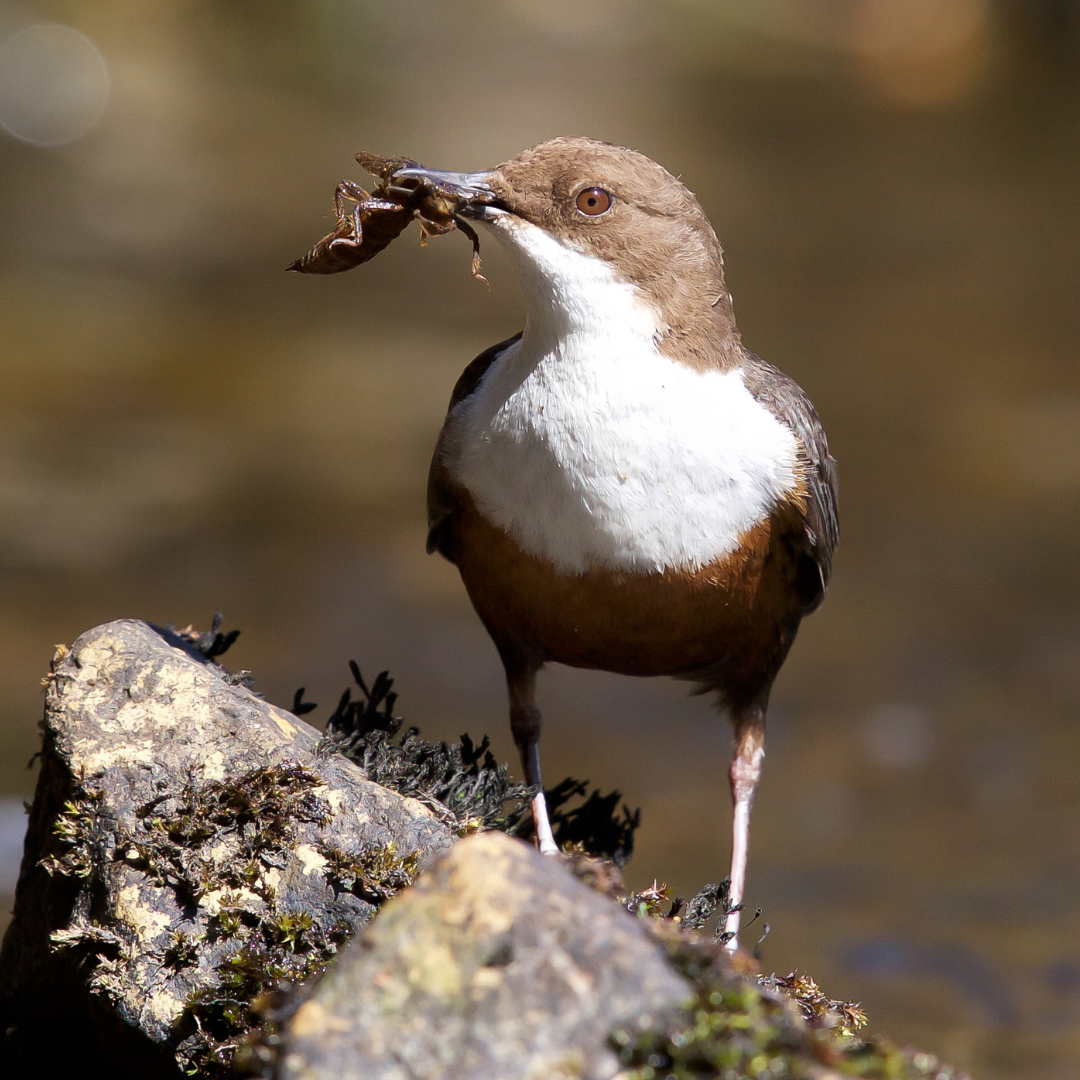
Dipper diets consist mainly of insects and their larvae. Crustaceans and molluscs are another source of food primarily during winter due to the lack of insect larvae. Additionally, they will sometimes feed on worms, tadpoles, and small fish.
Many types of prey that the dippers depend on are affected by pollution and water acidity, as they cannot survive in modified conditions. With the current state of rivers in the UK, dippers have less access to food which makes it difficult for them to sustain themselves.
Dippers find their prey by foraging in and along the margins of fast-flowing freshwater streams and rivers, perching on the edge of rocks and feeding at the edge of the water. They will often grip the rocks firmly and walk beneath the water until partly or wholly submerged, searching underwater for prey between and under stones and debris. Their wings also allow them to swim, meaning that they can find their prey more effectively.
Behaviour
During the breeding season, dippers will establish breeding grounds along suitable rivers, which they defend against attacks by other dippers. Their nests are made from moss, grass, and rootlets, and have a dome structure with a side entrance hole. They are constructed on ledges, banks, drainpipes, and crevices. The length of these breeding territories are usually between 300 metres and 2,500 metres, sometimes larger. The size is usually dependent on the availability of food throughout the area, and whether there is enough to sustain themselves and their brood.
The three northern dipper species usually have a clutch size of four or five, however clutch sizes of South American species aren’t well known. The incubation period usually lasts 16 to 17 days, after which the hatchlings are incubated by the female for 12 to 13 days and are fed by both parents. The fledging period lasts 20 to 24 days, and young dippers become independent within a couple of weeks of leaving the nest.
Dippers create loud, high pitched calls, similar to other birds inhabiting fast flowing rivers. They are the UK’s only aquatic songbird. Alongside vocalisation they communicate via dipping or bobbing movements, and rapidly blinking to expose the white feathers on their upper eyelids, creating a series of white flashes. This act is carried out for both courtship and threat displays.
Dipper vocalisatons (C) Simon Elliott/Xeno Canto CC BY-NC-ND 4.0
Environmental conditions
Dippers can be sensitive to the pH levels in water environments, and therefore need clear, clean water in their habitat. Heightened acidity in streams due to high levels of pollution can cause issues in reproduction and their survival. This is happening throughout the UK due to agricultural chemicals, sewage, oil pollution, and radioactive substances, causing declines in their population.
Reduce pesticide use by 50% (volume and toxicity) by 2030
Create ambitious targets to restore field margins and riverside ecosystems to reduce field run-off and boost our waters for wildlife and people
If you want to support our campaign, head to our campaign page and write a letter to your MP or subscribe to our newsletter to get regular updates directly to your inbox.
“Listen here Jake.” He grumbled sternly with his strangely warm Welsh accent. The accent was so unfamiliar to me I could only associate it with bubbly TV presenters. But his icy eyes told me otherwise as he glared up at me. I had clearly offended him.
“You never ask a woman her age and you NEVER ask a farmer how many sheep they have.”
I was initially unsure if he was joking, as the disconcerting silence was filled by my nervous high-pitched giggle. He assured me he was not and forcefully took the squished Welsh cakes from my hand, which I had not quite got around to offering him.
“You’re clearly not from a farming background” he rightfully pointed out. I knew as much about farming as I do trigonometry. I felt so out of my depth and so out of place here. I had been thrust from an entirely different world where I was just as lucky to see a goldfinch as to avoid stepping in dog poo in my local urban park.
A fish out of water
I’d never seen any expanse of real land and had no idea about countryside culture and certainly about utilising or altering land for farming. I didn’t know that when us city-folk think of ‘wild’ land, there is in fact no such thing. The truth is all our land across the UK has been changed in some way to benefit us. We are part of the ecosystem, and we have changed the land alongside other species who have evolved with us. The untouched wilderness of even the most remote mountainous regions of mid Wales have been so drastically and fundamentally altered that not even a fragment of what once stood is left. I will explain this later.
His house was full of clutter, but it was the giant fishbowl which caught my eye – full of dirty green water, with algae clinging to the sides, but no fish. I nervously sat down on a creaky cold wooden chair with uncomfortable spiny back supports and spotted a children’s drawing of a Ukrainian flag propped up against a homemade birthday card with the number 60 printed on it. Clearly whoever printed it needs to take a look at their colour ink. This restored my faith – this guy is still a human. I fought my inner demons and told myself to ‘fake it ‘til I make it’.
“Your birthday is it?” I asked as he was waiting for the kettle to boil. I noticed his ‘Barry’s’ Irish teabags, and assumed, as I had learned very quickly from most of Wales, that he despises the English and wouldn’t dare buy Yorkshire Tea or PG Tips.
“I’ve been here long enough to be bitter and angry. I’m a grumpy old man.” He confessed. Again though, there was a warmth in his voice, a vulnerability. I got a sense that he had been pushed to the edge, lived a hard life. As well as the physical strain he endured as his callused, dry handshake showed – he had experienced emotional, financial strain. It was later I learned about the ever-changing hardships that upland farmers have experienced, having to change their practices so immensely to navigate through different and conflicting government policies. Sheep farmers in Wales make all their money from government subsidies. If they weren’t subsidised, farmers would make a significant loss. Therefore, they are at the mercy of what the government decides is important and what to pay them for. In the past this has been to ramp up sheep numbers and maximise land use efficiency. This has led to catastrophic ecosystem change in the Welsh uplands and therefore a plummeting decline of biodiversity and wildlife.
He sat down opposite me and plunked my tea down. The mug had a rather garish Welsh dragon on it. Of course.
“So, what do you want to argue about then…”
Conservationist complexities
I’m a conservationist. When I tell people what I do – they assume that I am a vegan and that I spend my Saturdays at Extinction Rebellion rallies. My friends tease me for saying over and over again; ‘it’s more complex than that’ – because as conservationists know, ecology is complex, it needs to be complex and it’s that complexity that we are losing, which is perhaps the most vital component of the ongoing biodiversity crisis.
Ecosystems are precariously delicate and every species within it, from the top predator right down to micro-organisms and everything in between plays a role in change. These webs have evolved together, so if you remove or alter one minor interaction or species – this in turn has the potential to change everything within. In the simplest terms (and the example often used) – the reintroduction of wolves to Yellowstone fundamentally changed everything in its ecosystem, including the flow of water, fish, birds, invertebrate communities. The predation of deer had a knock-on effect, everything changed, and wildlife thrived.
The tipping point
The reason most wildlife is under immense pressure is mostly not entirely known for individual species, but an overarching loss of biodiversity can be attributed to two reasons; loss of habitat and the intensification of agricultural practices. In human speak – we’ve changed the way we farm drastically and 71% of land in the UK is at the mercy of farming practices. We hear about the use of fertilisers, pesticides, herbicides and other chemicals that farmers use on livestock. For example, sheep dips used to protect them from parasites. These are all chemicals designed to kill anything in its path, can take years to become inactive and are being used more frequently in recent years. These products are ever evolving with bans being rolled out every few years and we really don’t know what we are putting in our soils, rivers and environments.
It is important for us to understand and recognise that farmers have been incentivised and encouraged to use chemicals by large chemical companies and the government, to drive efficiencies. They enable the farmer to alter the land to their every need, provide reliable, resourceful and cost-effective feed for their livestock and prevent illness. Efficiency defines everything that farmers do, it is deeply entrenched in their psyche over generations – are we all not looking for more efficient ways to do our jobs? The question becomes, how do we showcase how farmers can move away from chemicals in ways that ensure they are able to fairly and equitably receive compensation for their work?
Transitions over time
In upland farming particularly, where we used to grow rich wildflower meadows to feed our sheep in the winter, we now grow a single species of grass in our fields, which (with the help of products) grow quickly and more efficiently, that feeding sheep through the winter is reliable and dare I say, easy. Wildflower meadows would have hosted over a hundred species of flower supporting a complex web of invertebrates, mammals, birds, fungi – the list is mind boggling. Every part of the plant is important from the root to the tip, providing unique and important roles in the ecosystem, altering soil structure, leaching nutrients from grasses, nitrogen fixing, swapping nutrients with other species and communicating with each other. As just an example, each species of butterfly typically has an intertwined relationship with just one species of plant – laying its eggs and feeding on it. Its success that year would be totally dependent on the abundance of this plant. Wildflower meadows are incredible and beautiful.
Contrary to popular belief (perhaps myths spread through our love of gardening), in many cases lots of nutrients in soils is not a good thing. Many of our habitats and soils have evolved in nutrient poor conditions and the plant life there is dependent on that. If we add nutrients to the soils, these species can’t survive. This is true of most upland habitats and species. In this case, it is important that our wildflower meadows remain nutrient poor. It’s vital that they are cut or grazed and that the cuttings are removed, in order for these wildflower meadows to come back again the next year. If they were left, not cut or grazed – they would accumulate too many nutrients and quickly revert to scrubland, or single species fields. So, farmers cutting these fields and using the hay to feed their sheep in the winter enabled these meadows and therefore biodiversity to thrive. Through hundreds, if not thousands of years of this practice – species have evolved alongside the farmer and grown dependent on their methods.
We have, in fact, lost 97% of our wildflower meadows since WWII, where the recent intensification of our agriculture began. Now, we spray our fields with pesticides and cover them in synthetic fertilisers. An absolute godsend for farmers, boosting efficiency. But leaves a single species grass monoculture. In the way of wildlife this supports…well, very little.
My point here, is to highlight just one example of new technologies and products which are revolutionising the way we farm, as well as the dependence of wildlife on human farming practices. I haven’t even brushed the surface on the complexities of the relationships between biodiversity and farming. My point is to highlight the two most important and defining factors in biodiversity loss; loss of habitat and intensification of agricultural practices and how these are intertwined. I don’t want to diminish the importance of rising temperatures and climate change, but my intention here is to point out that there are more alarming, more pressing matters at hand when we think about this world and the life it supports.
Convincing the unconvinced
There was no one in the pub. It was the smallest I had ever been to and felt more like someone’s living room than an actual establishment. A stench of real ale and boiled cabbage hit me, but I was perhaps more stunned by the realisation that they served food here. There was a small but cosy fireplace with stacks of roughly chopped wood bundled next to it. The walls were decorated with shooting paraphernalia – delicately crafted sticks and old rifles clung to seemingly any space they could find. On the bar, in prize position was a neat stack of Welsh regiment badges, just next to the only beer on tap – Butty Bach – which actually had quickly become my favourite beer. I had taken the run-down rustic looking truck, with big off-road tyres covered in mud so as to gain respect with the farmers. I knew now that if I rocked up in an expensive looking, clean truck there would be comments. Annoyingly, I was late and they were all already inside.
Eight men sat at the only table and they all suddenly stopped talking and looked at the door when I walked in. There were no smiles, just piercing gazes and stern faces to greet me. A mixture of shapes and builds, but all middle-aged white men – all looking at me with anger and frustration and perhaps a scrap of pity for this pathetic young boy with a garish London accent, with not the faintest clue about farming, coming to tell them to change their ways. In their eyes I represented the opposition, a party to destroy and tear down everything they and their ancestors had achieved, their pride and professions.
I know that conservation and farming can go hand in hand. And it was my job to convince them that through collaboration we can achieve land with an increased biodiversity, create a home for our dwindling wildlife, whilst also boosting both the productivity and economy of their farming practices. Hmm, good luck.
Miles and Miles of Bugger All
The land I manage is common land. When you buy a nearby farm this is likely to come with a suite of rights on the common. The right which is mostly exercised is the right to graze livestock. Farmers have been using this right for thousands of years and see these upland commons as an extension of their fields. It is deeply entrenched in them to keep this land grazeable, to maximise efficiency of the land by doing everything in their power to ‘improve’ it.
The word ‘improve’ is used to indicate an area of land that has been so intensively managed for livestock grazing, has had all biodiversity and soil health stripped away that it has nothing left but a few pathetic species palatable to sheep. A rather negligent word which took me a while to get my head around. If you have ever heard the term ‘improved grassland’ this is an indicator of land which has been the opposite of improved – it’s been destroyed through heavy fertiliser application, ploughing and overgrazing which, by the way, the government pay for and reward through their backward payment schemes.
In our upland commons, this has meant drainage, burning, and cutting. All these activities, together with years of intensive sheep grazing have left our uplands bare. They are also referred to as MAMBAs (Miles and Miles of Bugger All). To be clear though these are all activities, which have been rewarded by government subsidies and our upland commons, are absolutely fundamental to the way in which our hill farmers run their businesses and they are totally reliant on this land being palatable to sheep. After WWII, via government driven initiatives, numbers of sheep grazing on our uplands exploded and remained so for decades. I will explain why this has been catastrophic for our ecosystems.
Our ecosystems have evolved alongside grazing herbivores which are now extinct. The tarpan – a wild horse, wild boar, aurochs – the ancestor of our modern-day cattle, elks, bison, even elephants! (Note, none of these species is in any way similar to a sheep). These grazers would have had predators to keep their numbers in check – wolves, lynx, bears. The herbivores all grazed in different ways, with separate ecological niches and different shaped mouths, appetites and palates. Our flora has evolved delicately alongside them, they have defence mechanisms and are all interconnected in this web of ecological arms race dynamics.
Eurasian lynx
Natural defences
A good example of a defence mechanism that is easily visible today is in the holly tree. You may think that holly has spiky leaves, which in our urban spaces it does of course – but this is actually the trees defence mechanism. The leaves are naturally rounded with soft edges and this allows maximum sunlight exposure to capture as much energy as possible. Historically, if a grazing herbivore started munching on the leaves of a holly, the tree would respond by making its leaves sharp and inedible.
You can still see this today in grazed woodlands, where the holly has sharp leaves on the lower branches to stop grazing animals and has soft rounded leaves on the higher branches to maximise sunlight exposure. The reason we only see spiky holly leaves in our parks and urban areas is due to our obsession with hedge trimmers.
So, this all applies to our upland flora where a mixture of grazers and grazing methods have been replaced directly by one species, in excessive abundance, which wasn’t here in the first place – the sheep. I find sheep annoying anyway, apart from maybe in February when the tiny lambs mistake me for their mothers – but they are rather fussy eaters. They selectively pick and choose the softest, most juicy vegetation they can get their gross tongues around – soft grasses, wildflowers, young dwarf shrubs, new emerging tree saplings and basically everything apart from the rougher and drier species, which they leave untouched.
Large scale habitat loss
Through centuries of a single species grazing our uplands this has decimated the plant life and left just a few species, which are uncoincidentally the ones which the sheep don’t like to eat. There was once a mosaic of species rich acidic grasslands supporting a whole plethora of vegetation, which evolved delicately alongside numerous species of herbivores, with specific defences and interactions.
This, in turn, provided homes for thousands of invertebrates, amphibians, reptiles and birds, wrapped in a delicate web. These are now sadly, pretty much non-existent, or at the very least in steep plummeting decline – now just a few woody, scrappy species remain. MAMBA. Thanks to intense grazing pressures from an animal which does not and never has belonged in the ecosystem.
Losing hope
As an example, the curlew rely on our uplands in Wales to breed, as they have been pushed out of just about any other habitat by us and these breeding areas represent their last true strongholds. I say strongholds, but this species is precariously poised on the edge of extinction in Wales and the last few pathetic individuals are predicted to be extinct in Wales by 2033.
The word pathetic might seem harsh, but this is a species which has evolved to breed in colonies; there is safety in numbers and their populations are so low, they are pressed to breed in seemingly random patches of ‘improved’ grassland in the uplands – totally alone and wholly vulnerable and exposed to anything really that fancies a quick and easy treat. Crows, foxes, red kites, buzzards, badgers, ravens, even sheep! I’ve seen these chicks at just a few days old, I’ve been through the heartache of watching them being picked off, I’ve dealt with the grief and I feel helpless. They are helpless. They don’t stand a chance. It’s too late.
The slender-billed curlew was recently declared extinct and we need to act to ensure that we do not lose our native Eurasian curlew. While I worry that it may be too late to save my local curlew, we still have the chance to save them in other parts of the UK and organisations like WWT, Curlew Action and the RSPB are all working to protect these precious birds.
That said, there is a gargantuan effort to save them across Wales and the work being done is admirable to say the least. My point is that conservationists work tirelessly and are stuck in an endless cycle of anguish. We are a minority and our work is consistently undermined by a government pushed agenda of, and I say it again, the intensification of agriculture and a loss of habitat; farming.
Without being able to properly restore habitats by introducing grazing herbivores which are long extinct, there is an easy, quick answer. This solution relies on our farming communities, it is dependent on conservationist and farmer working collaboratively towards a common goal. The irony is in all of this that the hardy, woody species left behind on our uplands are unpalatable to sheep – our hills are dominated by mat grass, purple moor grass, bilberry, bracken and soft rush – all of which are left by the sheep, but all of which now dominate our uplands. There is no food left for the sheep.
Nature-friendly solutions
Conservationists want to create space for other species which once were there and allow the more delicate species of flora to come through to support our wildlife, which fortuitously are the same species which are palatable to sheep, thus our agenda is the same. The quick win for farmers is to burn, spray or cut – because sheep will eat the new young vegetation growth, but in the long term this is further worsening the problem, and allowing the dominant species to dominate.
The ecosystem is so fundamentally changed and these species are so dominant that if we took all the sheep off and left them, they would only become more dominant – because there is nothing to control them and disturb their ascending power. The answer is to replicate the ancient grazers as best we can and work with what we already have available at our fingertips.
Collaboration, not conflict
The best outcome is to work with and support our farmers to adjust their grazing regimes and to eventually convince our governments to properly reward farmers for actions with ecological benefit. With over 70% of land use in the hands of farmers in the UK, now is THE moment to bring farmers and conservationists together to solve the problems of our future. As an aside, there is a movement towards sustainable farming or ‘regenerative farming’ which recognises working with nature, improving soil health and biodiversity as a direct benefit on output, making our food healthier and richer in nutrients. Whilst also, revolutionising efficiency and economical productivity.
By letting nature do its thing and soils heal, as well as boosting biodiversity, it increases yield and provides a more enriched final product. Some brave, bold and perhaps privileged farmers are making this move. It’s an exciting movement but we need to see the shift towards making this attainable for our run of the mill farmers. The farmers I work with. I recently went to a talk on regenerative farming. The audience was full of engaged and forward-thinking organic farmers. I got a fair few dodgy looks, probably because of my loud turquoise Adidas fleece. But these are the rich farmers. The farmers I work with would not be seen dead in such a place.
In the short term, for our ‘sheepwrecked’ uplands there is an animal we are already farming which could totally change the ecology of our uplands for the better, but which is not commonly grazed on our commons, yet; the cattle.
Our community is made up of young nature enthusiasts with a plethora of skills. Whatever your talents, we’d love to welcome you to our team. If you’re interested in getting involved,get in touch!
The Nature Friendly Farming Network has loads of information about farming alongside nature so, if you’d like to learn more about it,visit their website.
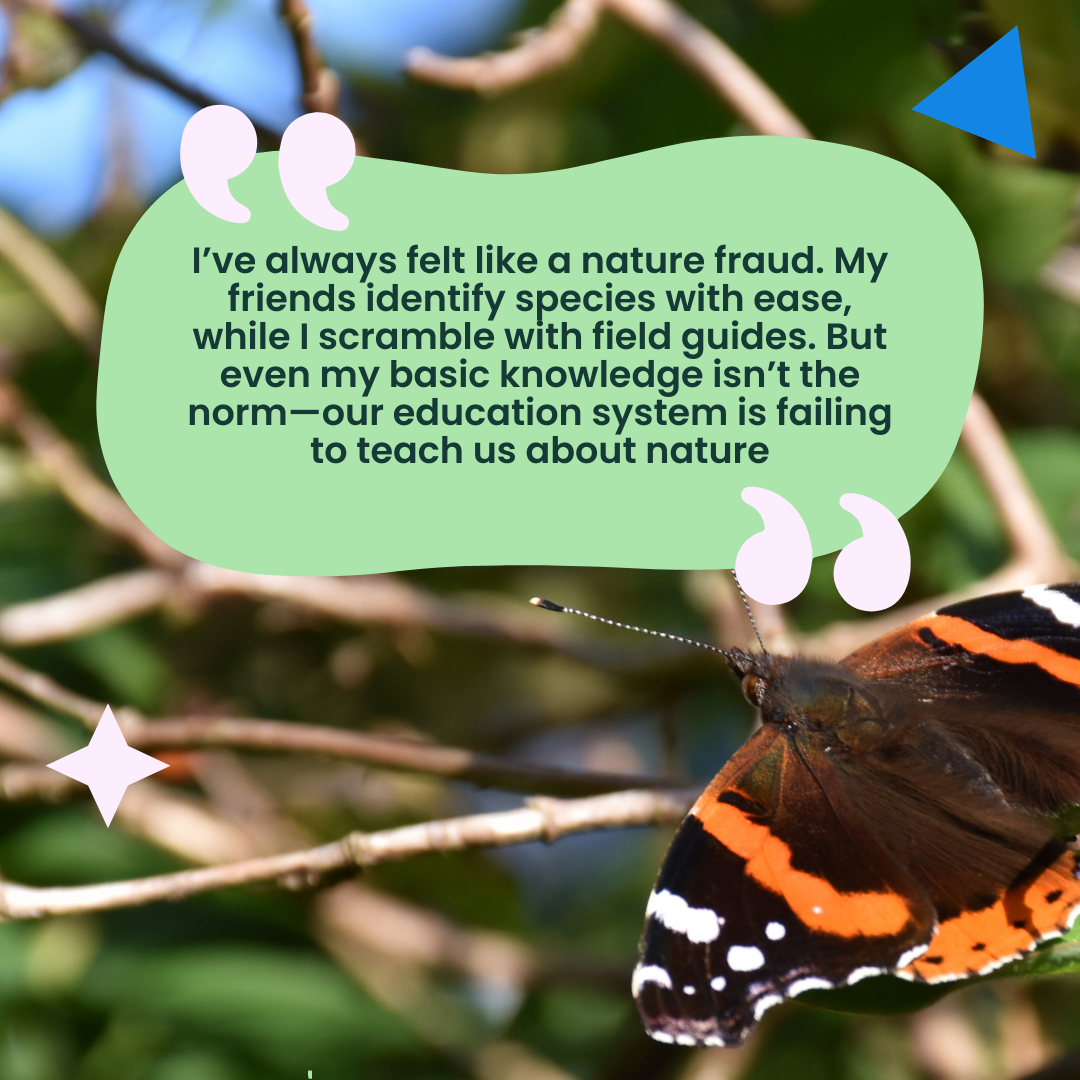
I’ve always felt like a bit of a fraud when it comes to nature. I go out on a walk with my nature-nerdy friends and am humbled by their incredible ability to identify the different species around us, while I clumsily thumb through field guides trying to catch up on whether it was a holly blue or a common blue butterfly.
But then I’ll hang out with friends I’ve made through a different part of my life and realise that even my mediocre nature knowledge is not the norm. I remember walking through a woodland with a very intelligent friend who I was studying biology with at university at the time. They pointed to a tree and asked me what type it was. I laughed and kept walking, assuming they were joking. “No, really, what is that tree?”
“It’s an oak”, I answered.
A Subject Left in Limbo
Our education system is failing. Failing to give young people the chance to understand the nature on their doorstep. Failing to give society the foundational knowledge needed to care for and protect the natural world. The Natural History GCSE is a unique and hugely exciting opportunity to level the playing field, to give generations of people the chance to discover more about their surroundings.
Delays Hurt Future Generations
The campaign for the GCSE, led by Mary Colwell, received cross-party support and everyone from students to mental health professionals, business leaders to farmers have enthusiastically lended their support, calling for this new subject to enter our classrooms. In April 2023, the Department for Education announced that the GCSE would be taught in schools from September 2025. That deadline has now been missed and first teaching in 2026 was promised. Months after this disappointing delay was announced, we are now concerned that it could go on even longer.
The new Labour government has labelled the GCSE as a Conservative initiative and says that it needs to be reassessed as part of the wider curriculum review. As Colwell says in a recent interview with The Guardian, “this could take years, it’s a huge piece of work”.
Cross-Party Support Ignored
At a time when we should be training teachers and preparing schools to introduce the new subject, the GCSE is sitting in limbo, gathering dust on a Westminster desk. There is huge support for this subject and an overwhelming need for it. It is not a tory initiative, it is a cross-party initiative with cross-sector backing. Each delay that the Department for Education and the Labour government put in front of the Natural History GCSE is a failure.
UK Youth for Nature will be joining Mary and many others in calling on the Labour government to deliver on their promise and to introduce the Natural History GCSE without delay.
If you’re a young person wanting to get involved in campaigns like this, and others centred around nature recovery in the UK, why not join our community?
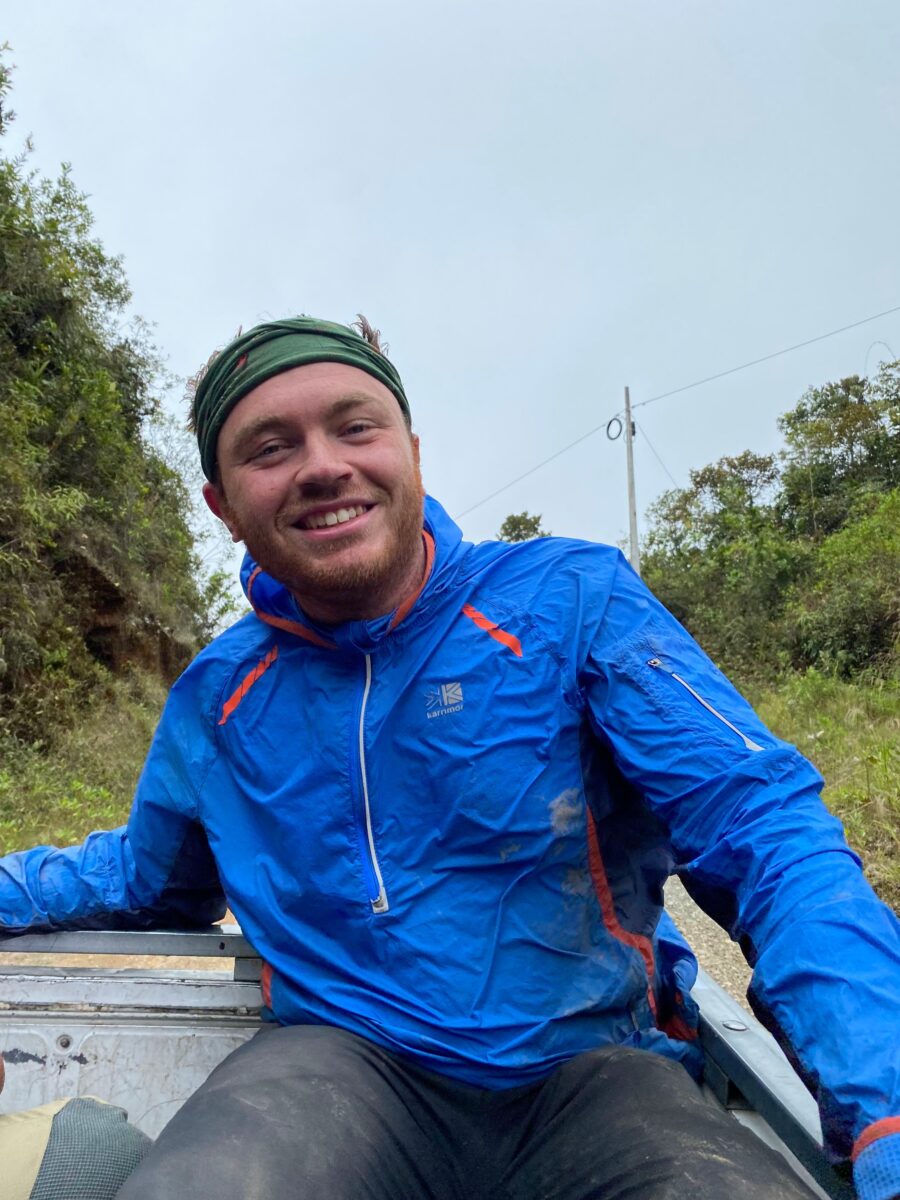
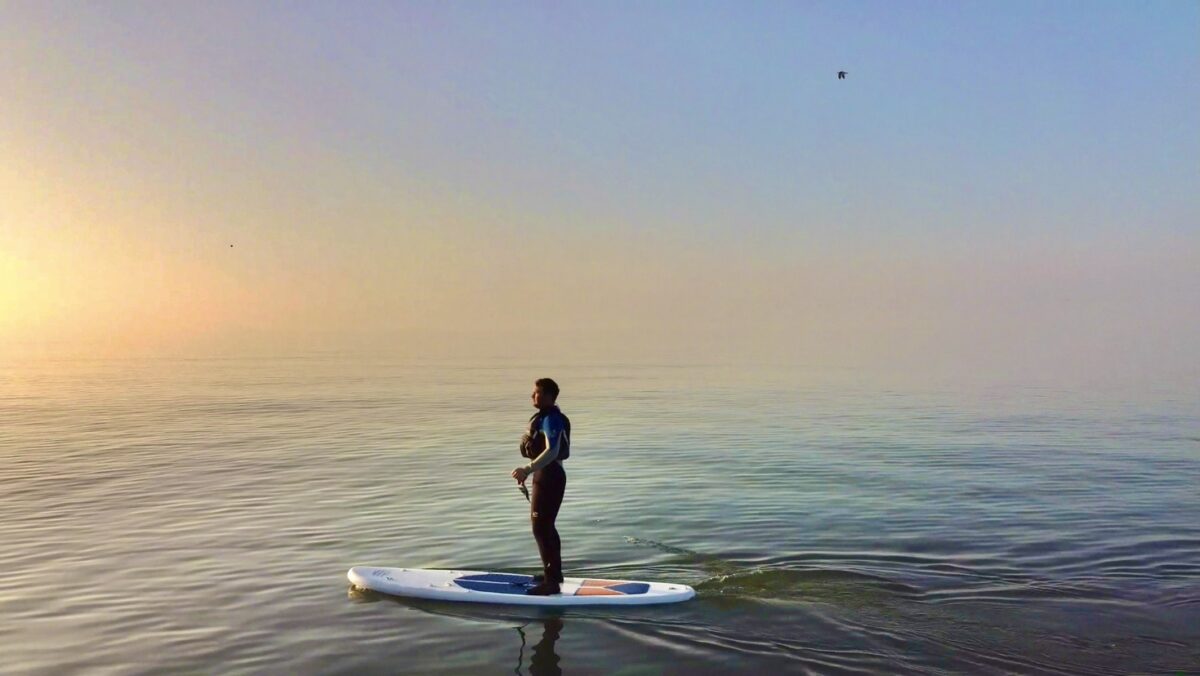
Shwmae! My name is Joe (he/him), and I’m an ecologist and Rights of Nature campaigner from Mid Wales. I love all nature, but marine and coastal nature are my passions, probably connected to my love of being in/on/near the sea. If I don’t reply to emails or messages, I’m probably out on my paddleboard – although I sometimes will answer when I’m out on my board, and I am known to record the odd “Paddleboard Politics”.
I am a first-language Welsh speaker and enjoy exploring the links between local culture and nature. I will always say yes to a story over a paned and a gluten-free biscuit. Growing up in Mid Wales has made me very aware of the importance of language and culture in conversation and nature restoration, so I take this with me in all of my work. Growing up in Wales also means I love a sing-song, but I apologise to anybody who has heard me attempt to sing some ballads – I’m definitely no songbird!
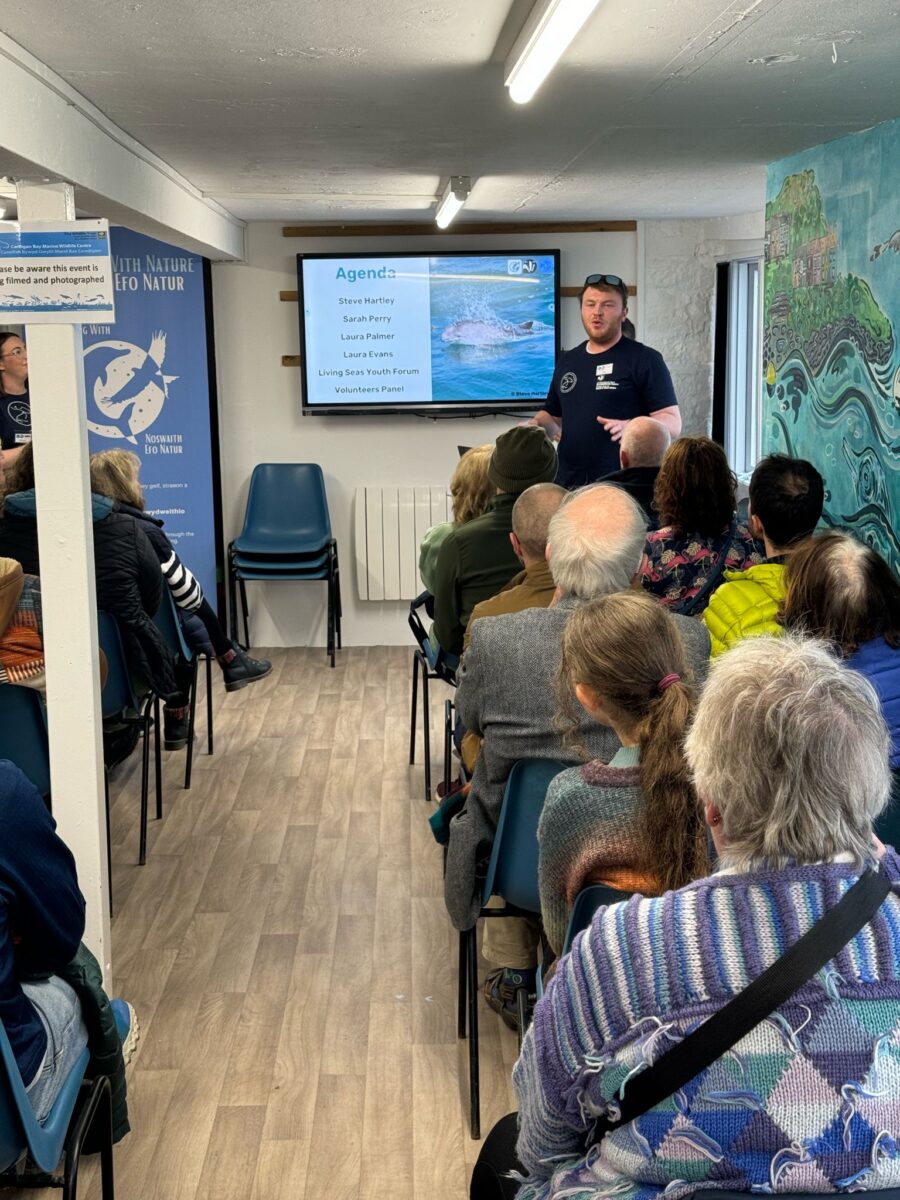
My day job is working with the incredible West Wales Rivers Trust. I lead our community engagement work in my home county of Ceredigion. I work closely with volunteers, farmers, school groups, sports clubs, and other community groups to train them to become eyes, ears, and voices for local rivers.
Outside of this work, I’m also an advisor to National Trust Cymru and the EU4Ocean Coalition, a volunteer with UK Youth for Nature and GYBN UK, youth representative for the Dyfi Biosphere, an ambassador for Radnorshire Wildlife Trust, and a director/trustee for Reserva: The Youth Land Trust and Small World Theatre.
Who has been your biggest inspiration on your nature journey?
I’ve been very fortunate to work with incredible people across various organisations and spaces. So, I have a very long list of people who have inspired me on my nature journey – one of the main ones being the fantastic community of UK Youth for Nature.
I always like to shout out Dr Jen Horgan, who lived in the same village as me growing up and would come into school to host nature sessions, gardening, and stamp club. She helped nurture my love for nature and was crucial to my early steps into this career.
I know it’s cliche, but I genuinely believe that my biggest inspiration is nature. A big oak tree near my house has grown almost horizontally out of a quarry wall. I often like to visit this tree and just marvel at the resilience and ingenuity of nature in her quest to survive and ideally thrive. And it does genuinely drive me forward!
What is your number one wildlife encounter ever?
As I said before, I’m an ocean boiii. See the line where the sky meets the sea? It really does call me!
So, I think my top wildlife encounters would be the occasions I’ve been lucky enough to see the bottlenose dolphins of Cardigan Bay, especially on a boat. They are just so special and I get excited every.single.time I see them.
I’m also very grateful that I get to help communities find out more about nature close to their homes. One of my favourite activities is kick sampling, where we take a big net into the river and, as the name suggests, kick the river bed to move small invertebrates into the net. The looks on people’s faces when they realise how much life there is between the rocks and in the sand, makes me happy every time. Tiny shrimp, beautiful mayfly and stonefly nymphs, small fish and elver (if lucky). I think it’s just a reminder that there is so much worth fighting for when it comes to rivers and nature in general here in the UK.
And who can ever not get teary at the sight of a kingfisher?!
If you could bring one extinct animal back, what would it be and why?
To be completely honest, I’m not a massive supporter of “de-extinction”. When funding for conservation and research is already limited, I would much rather be directing those funds and resources to conserve and restore what we still have. I don’t want us ever to fall into the trap of thinking, “It’s ok, we can always bring them back”. I think it should be seen as an absolute last line of defence for critically endangered species rather than trying to bring back animals that went extinct millennia ago, which would likely struggle in today’s conditions.
But that being said, I would love to see a triceratops!
Top 3 favourite memes?
Honestly, I think my favourite memes are probably the ones that do less well on social media. I’ve made some real niche memes over the years and absolutely love them! Like ones discussing real nerdy ecological or political topics.
I am trying to find a good balance between memes and more “serious” content on my social media, but memes suit my communication style because they match who I am as a person. I have enjoyed using social media a lot more since working to find my voice rather than trying to replicate what others do. Sometimes things go down well, and sometimes they’re a bit of a flop in terms of interactions, but I think it’s all part of finding that sweet spot for your platform, which will be different for each of us.
What’s the best sandwich you’ve ever eaten?
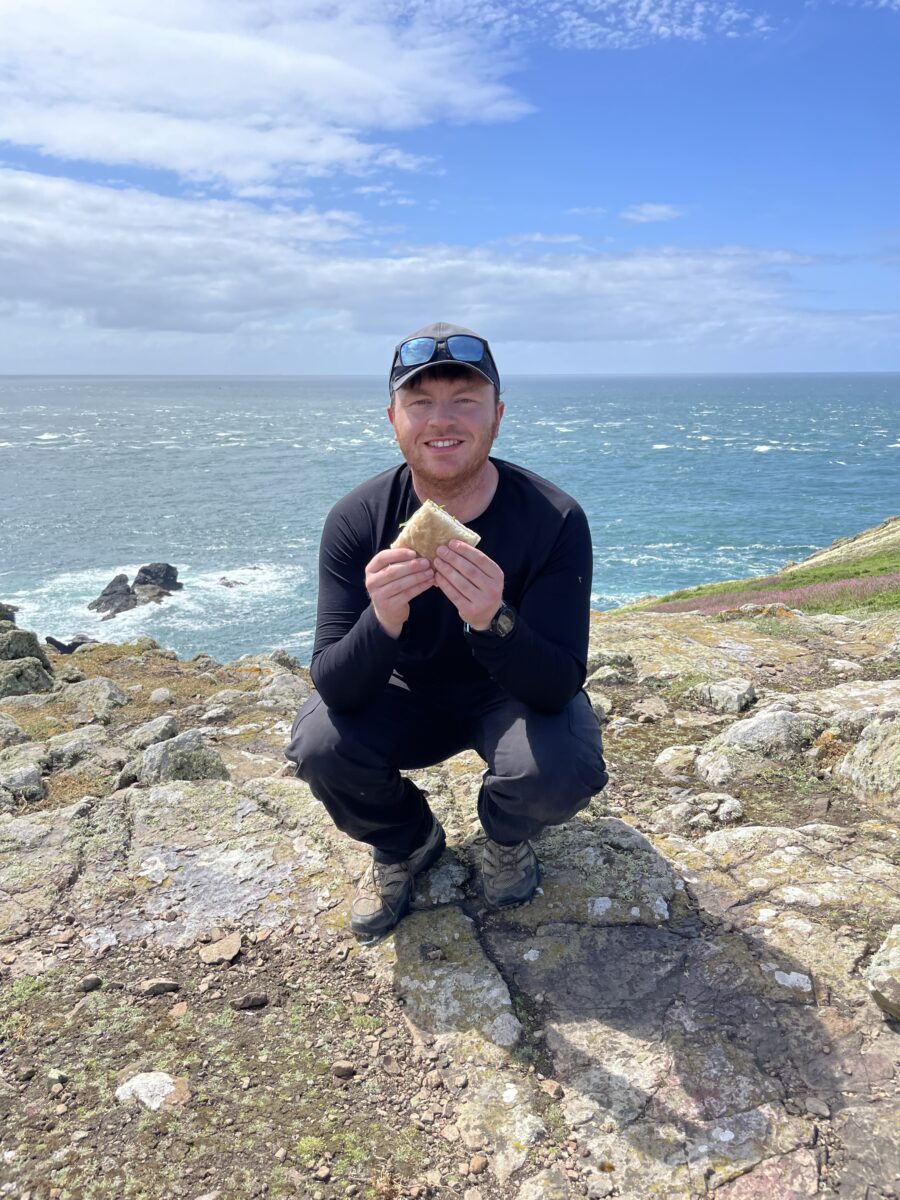
Now, that is asking a huge question! For those of you who might not know, I host a series on my Instagram called “Sandwich with a View”, which combines two of my loves – sandwiches and nature – to discuss some of the incredible sites and projects across the UK.
I think it’s challenging to pick the best sandwich I’ve ever eaten because it all depends on the vibes. Sometimes you want light and fresh, sometimes something a bit heavier! I make a mean chickpea and pea patty, one of my favourite things to have in a sandwich because it’s light and flavourful but also quite dense, so it fills me up. I also found out last year that I have coeliac disease, so I also like trying different gluten-free breads and recipes. For those of you who are avoiding gluten for any reason, you’ll know how hard it can be! Down with “Big Gluten”, I say!
UK Youth for Nature is a group of like-minded nature lovers who are on a mission to improve the future for wildlife, nature and humans in the UK. If you want to be part of our community, you can find out more here.
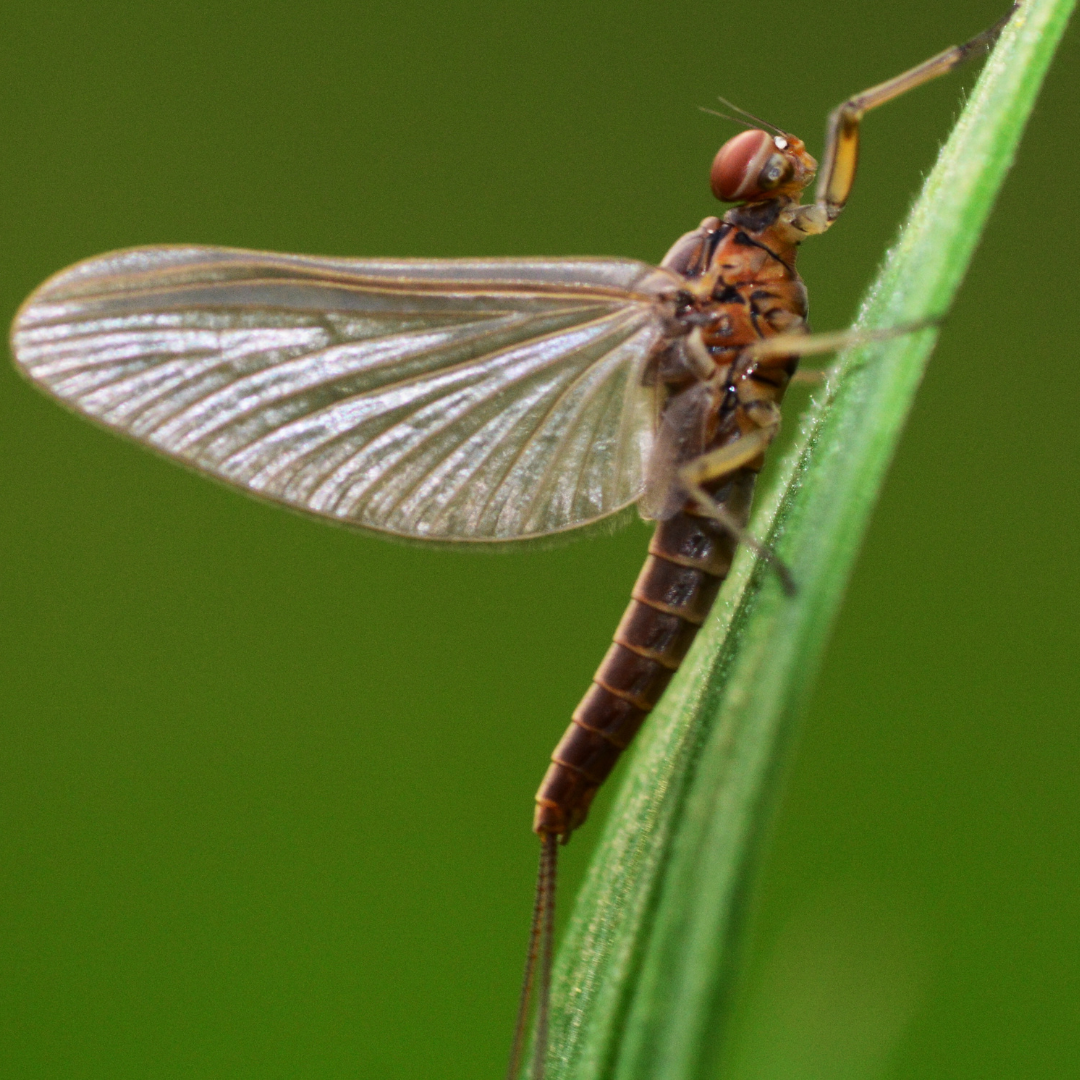
Mayflies begin their journey as nymphs, spending up to three years beneath the gravel in rivers and lakes. Eventually, the nymphs come to the surface and undergo two moults to reveal their winged adult form. After taking to the skies, often alongside hundreds of other mayflies, the insects have just a few hours to breed before they die.
Artwork by Kirsty Lloyd
Mayflies in ancient culture
This short adult lifespan is why mayflies have long been viewed as a symbol of the brevity of life. We find the earliest reference to mayflies in the Epic of Gilgamesh, which was written in Mesopotamia between around 2100 and 1200 BC. The short life of Gilgamesh, king of Uruk, is conveyed through the image of a dying mayfly: “Ever the river has risen and brought us the flood, the mayfly floating on the water. On the face of the sun its countenance gazes, then all of a sudden nothing is there”.
Many years later, in around 45 BC, the Roman lawyer Cicero considered the short life of mayflies in his Tusculan Disputations. After his daughter died at the age of 32, Cicero wrote this series of philosophical books to contemplate themes including death and grief. In Book I, Cicero wrote: “Death…which, by reason of the shortness of life, can never be far off, does not deter a wise man from making such provision for his country and his family as he hopes may last forever”.
Cicero goes on to say that nature “has only lent you life…without fixing any certain time for its repayment…Aristotle saith there is a kind of insect near the river Hypanis…whose life consists but of one day…Compare our longest life with eternity, and we shall be found almost as short-lived as those little animals”.
Cicero implies that, like mayflies, our lives are relatively short in the grand scheme of things. Nevertheless, the shortness of our own life should not stop us from trying to create a better future – a concept that is well understood by those working to preserve nature for the benefit of all humans, animals, and plants. In this sense, the mayfly teaches us that our lives have a purpose and we should make the most of the time we have available.
Mayflies in modern culture
Over two thousand years later, in 2006, Vodafone spread a similar message in a television advert compelling viewers to “make the most of now”. The advert explains that the common mayfly has a life expectancy of just one day, but “he fills his day with the things he loves” and “savours every moment”. It ends: “Just think, if we embrace life like the mayfly, what a life that would be”.
Whether you enjoy personifying the mayfly like Vodafone or prefer to accept that the insect is simply following its biological imperative, we should all agree on one thing: it is essential that we protect our freshwater environments so that the mayfly’s unique lifecycle may live on for many more years.
Reduce pesticide use by 50% (volume and toxicity) by 2030
Create ambitious targets to restore field margins and riverside ecosystems to reduce field run-off and boost our waters for wildlife and people
If you want to support our campaign, head to our campaign page and write a letter to your MP or subscribe to our newsletter to get regular updates directly to your inbox.
The RSPB has released its Bird Crime Report 2023, and if like me you are a nature lover then it’s not a fun read. It covers all confirmed incidents against birds of prey in the UK over the last 15 years, and the standout figure is that in that period 1344 birds have been killed. This, the RSPB argues, shows that not enough is being done to prevent these crimes. They have received some criticism for the report, but we’ll get into that later – first, let’s go through the basics.
What’s in the report?
Under the Wildlife and Countryside Act 1981 (and in NI, the Wildlife Order 1985) it is illegal to kill or harm any bird of prey in the UK. However, in the last 15 years, 586 buzzards, 270 red kites, 154 peregrines, and 51 golden eagles have indeed been killed (as well as many white-tailed eagles, goshawks, and hen harriers, which were in fact the most persecuted bird as compared to population size). Many of these birds have been brought back from the brink of extinction in the UK due to decades of work by dedicated conservationists, so this is incredibly tragic.
The main force driving these crimes, according to the report, is by far the game shooting industry, i.e. landowners charging clients to shoot grouse or pheasant or partridge on their large estates. The higher the density of these gamebirds on an estate, the more profit a landowner can expect to make.
Unfortunately, since many raptors will kill these gamebirds, it seems that the pressure to create high densities of gamebirds is leading gamekeepers to shoot or trap or poison these birds (as well as others which are very unlikely to threaten gamebirds at all, such as barn owls and kestrels).
We know this because most incidents of crime against birds of prey are discovered on or near game-shooting estates. In the last 15 years 75% of people convicted for such crimes have been connected to the game-shooting industry. However, convictions are very rare – on average, there have been only 4 convictions a year, even though a bird of prey is killed on average once every four days. What’s more, these convictions generally result in nothing but a small fine as punishment. This, the RSPB argues, does not provide an adequate deterrent.
It should also be said that many of these game-shooting estates are remote and isolated places – when a raptor is killed, there will likely be no witnesses to the crime, and the evidence can be easily destroyed. As can be seen in footage released by the RSPB earlier this year, gamekeepers also know to avoid killing raptors with radio tags attached. All of this means that the true number of birds being killed is likely much higher than the figure given by the report.
What needs to be done?
There is hope! In March this year, Scotland introduced the Wildlife Management and Muirburn Act. This means that if evidence of a wildlife crime is discovered on a shooting estate, then that estate’s license to host shoots can be withdrawn. As a much bigger financial risk to the landowner than a small one-off fine, this will hopefully help to reduce raptor persecution. No such law exists in the rest of the UK, however, where far more birds are killed, so it’s for this that the RSPB is now pushing.
Why has the report been criticised?
There has been pushback to this report. Roger Draycott of the Game and Wildlife Conservation Trust says that the report ‘clouds the positive conservation work done by game managers across the country, including the work to help raptors.’ The fact that raptor numbers are still increasing year on year is brought up by the director of moorland for Scottish Land and Estates, Ross Ewing, who also says that ‘what the RSPB determines to be a ‘confirmed incident’ is not necessarily a view shared by the police.’
The observation about ‘confirmed incidents’ is true – the RSPB includes cases where traps or poisoned baits have been found, even if this has not led to a confirmed bird death. However, it seems to me that such incidents should certainly be included in the report, as they still represent a direct attempt at a wildlife crime (and may well have killed a raptor if they had gone undiscovered).
It’s also true that some game shooting estates have aided conservation work (the Rottal Estate is in fact mentioned by the report as having helped with the translocation of a golden eagle), and that bird of prey numbers overall are on the rise in the UK. But this is a report on crimes against birds of prey – it seems reasonable that the focus is on birds being killed, rather than birds that have survived. And the evidence does clearly point to game shooting being the root cause of the majority of the crime: this is fact, not judgement, and the report is right to make this clear.
How can I help?
The RSPB is campaigning that Westminster introduce a bill similar to the one passed in Scotland earlier this year. There is a donations page on their website. It is crucial that if you believe you have witnessed a crime against a bird of prey taking place that you report it to the police. There are detailed instructions for doing this on the RSPB website, but to summarise: keep yourself safe, contact the police, note what is happening, take photos and videos of suspects and vehicles involved, and do not interfere with the evidence or post your footage on social media.
My own advice
Take every chance you can to communicate your love for these incredible birds to the people around you, especially if they are strangers. You never know what circles people move in and whether they are having doubts about their own habits or those of the people around them. If you can inspire an appreciation of how lucky we are to be able to see these birds in our skies again after so many decades of absence, it might just carry across to someone who can make a difference. It’s also possible that some who enjoy game shooting have no idea of the damage that is done in order to compete for their money.
Anger is a completely understandable response to wildlife crime, and it’s certainly a response I relate to. While it may be tempting to brand all shooting estates as anti-wildlife, this is in fact not the case. There are many cases of brilliant wildlife conservation that happen on shooting estates and it is a shame that the actions of some have tarnished the good work of others. Game-shooting has a long cultural history and many communities are formed around it – building bridges between communities can help to work towards a future where wildlife and people can thrive. Lets keep celebrating the incredible wildlife that can be found across our countryside and build policies and practices that will help to protect it.
If you’re a young person in the UK who loves nature and would like to join a community of like-minded people to fight for the future of birds of prey and other wildlife, click here to learn how to get involved!
As we face the state of our natural world and open our eyes to the extent of the climate crisis more and more young people are experiencing eco-anxiety.
A global survey in 2021 found that more than half of people aged 16–25 felt sad, anxious or powerless, or had other negative emotions about climate change. This highlights how important this topic is and that we should be talking more about these emotions that we might be feeling.
Speakers
Ellie: Community Cultivator at Re-Action Collective. Ellie (she/her) is a Change Agent and Community Cultivator at Re-Action Collective, a thriving global community driven by a shared love for the planet and outdoor adventures. Morag: Force of Nature speaker. Morag is a science student determined to tackle social and ecological challenges, highlighting the interconnection of biodiversity & climate crises with human rights, health inequalities and air pollution Parker: A Climate Aware Psychologist. Parker is a psychotherapist, coach, facilitator and farmer working at the intersections of mental health, climate justice and engaged spirituality. We had a set of panel questions and then each speaker was able to talk about some topics that they were passionate about such as eco-justice, mindful practice as well as neurodivergence.
Main takeaways
🍃 The intersection between the ecological and the social- The climate crisis is a social justice issue as much as it is an environmental issue. When talking about eco-anxiety we must be aware that these two themes go hand-in hand.
🍃 The importance of community – find people that support you but also champion for change in a way that resonates and inspires you. Community will also be able to support you when you are struggling and hopefully inspire you to not give up hope. If you’re not currently a member of one, why not join ours?
🍃 The importance of taking time to feel your emotions- Parker talked about how it is okay to pause and take a step back. Not only might you have feelings of anxiety, but you might feel grief and other intense emotions and if you continue to ignore them, they will only get worse. You might then be feeling your eco-anxiety physically as well.
🍃 Hope and optimism can sometimes feel a little hollow. Ellie talked about adopting terms like rebellious hope which highlights how hope is an active process as well as stubborn optimism. These are emotions that you should be holding onto when struggling with eco-anxiety and feeling hopeless.
🍃 Find your way of enacting change- not all activism requires you to be loud and out-going. There are so many different types of activism, and this webinar highlighted some of them such as writing, art, dancing or any other way you find you can best express yourself.
🍃 Focus on small moments of wonder and joy-These can keep you inspired play with what’s possible and think outside of the box. Morag talked a lot about looking out for little pieces of inspiration as these are the things that can help you re-focus when you are struggling.
🍃 Take time to rest- It can be very easy to be burnout especially when you might be deeply passionate about the environment. Passion can drive you to work for long hours and push to yourself to your limits. Rest will encourage balance and allow you to approach challenges from a fresh perspective and give you the energy to push for change.
🍃 Spend more time outside – The importance of spending time outside has been shown to have many positive effects. Click here for some tips. Research into ecotherapy, which involves doing activities outside in nature has show that it can help with feelings of anxiety and depression.
Resources if you are struggling with eco-anxiety
• Parker Bowling – one of our speakers who has recently started working and offering with people in the UK – find out more on his website.
• Force of Nature – organization offering resources, online community, training, podcasts & info on eco-anxiety
• Climate Psychology Alliance – offers up to 3 free therapeutic support options for those experiencing distress in the face of the climate crisis and/or support in activism
Many of our UK wildlife species have spooky folklore and stories attached to them, making them prime Halloween decoration/costume inspo! But where do these stories come from? Jasmine wanted to explore where these scary stories originated and whether the species deserve their bad rep (we think not!).
Spiders
What’s their connection to Halloween?
Spiders’ history on why they are related to Halloween dates back to the medieval period, when the Roman Catholic Church spread word of the dangers of witchcraft. They were often seen to be companions to witches, therefore gaining a bad reputation within communities, especially during the witch trials between the 15th and 18 centuries.
In addition to this, run down areas often said to be ‘haunted’ are naturally home to many species of spiders due to their fondness for darker, less disturbed areas. When there are lots of spiders sharing one area and building multiple webs, it doesn’t take long before they build up and look pretty much exactly like the decorations you can buy!
Why they don’t deserve their bad rep:
Spiders are a key aspect of insect control as they naturally prey on insects such as flies, moths, and mosquitoes. This means that insect populations can remain stable. The control of insect population can also reduce the spread of disease which can, in turn, benefit humans.
Spiders act as a source of nutrition for many bird species and other small animals, and therefore play a key role in their food web.
Favourite facts about spiders:
A spider’s blood is blue. The oxygen in their blood binds to copper, giving their blood a blue appearance.
Around 100 different species of spider mimic the appearance of ants, and they are even able to produce ant pheromones. This makes it easier for them to hunt and also provides them with protection from some of their predators.
Synemosyna formica
Owls
What’s their connection to Halloween?
Owls are nocturnal and therefore communicate during the night, producing haunting calls that are frequently used in horror films or to set the tone for a scary scene. The design of their feathers also allows them to fly silently.
Owls were also seen as the companions of witches, meaning that they became a sign of misfortune and ghostly and earthly decay. This was during the time period where Catholicism was encompassing Europe and more sinister Roman characteristics of owls became common. This made them more associated with Halloween themes.
In Welsh folklore Blodeuwedd, a maiden who has an affair and tries to kill her lover’s partner, turns into an owl as a form of punishment. They do this as they state that an owl is “the creature hated by all other birds”. This has led to myths around owls surrounding the folklore, making them seem more spooky and mysterious.
Why they don’t deserve their bad rep:
Similarly to spiders owls can act as form of pest control, especially for species such as rodents. Rodents are prone to eating and destroying crops in fields and storage, therefore controlling their populations is beneficial for human food production.
Owls such as barn owls are birds of prey and are at the top of the food chain, therefore playing an incredibly important role in their ecosystem. Preservation of owls can sustain biodiversity in certain areas.
Favourite facts about owls:
Their eyes are immobile. Owls have eyes that are tube-shaped, and cannot move. Their retinas contain many rod cells to help them see at night and help them with their depth perception for hunting.
To compensate for not being able to move their eyes, owls can rotate their heads 270 degrees. When they turn their heads and cut off blood circulation, a blood-pooling system collects blood to power their brain and eyes.
Tawny owl
Bats
What’s their connection to Halloween?
Around 2,000 years ago celtic people celebrated a festival called Samhain on the 31st October. The Celts believed that the division between the world of spirits and our world was the weakest during this day, meaning that spirits could cross into our world. The festival would include bonfires, which acted as an attractive light source for nearby flying insects. The gathering of these insects would then attract bats interested in a meal, therefore swarms of bats would gather near the festival. The Celts noticed this and then started to believe that the bats were the spirits that had crossed over to our world.
As well as old traditions, old media also influenced the reputations of bats. Dracula, a famous book written by Bram Stoker, depicts bloodsucking vampires turning into bats. The publishing of this book led to people believing that bats suck blood, when only 2 species are known to do so, and they prefer goats’ and birds’ blood over that of humans. This depiction of vampires and bats still influences how bats are seen and is one of the reasons they are feared, as well as the old wives’ tales about them getting stuck in your hair.
Why they don’t deserve their bad rep:
Bats are key for many tropical plants who depend on them, sometimes wholly, to pollinate their flowers or spread their seeds. This means that they can help maintain biodiversity of plants, making sure they’re spread across an area.
Bats are also insect controllers, due to them preying on many insects. All UK bat species eat insects, meaning that Britain benefits via pest control from their presence. Some studies show that bats are so efficient at this that they eat enough pests to save more than $1 billion per year in crop damage and pesticide costs in the United States corn industry alone. This is advantageous as it means less pesticides are being used, which can cause damage to the environment.
Favourite bat facts:
A single bat can eat up to 3000 insects per night, which is the same as eating their body weight in insects. This proves how effective they can be at pest control.
Over 300 species of fruit depend on bats for pollination. They also help spread seeds for nuts, figs, and cacao. Some other fruits that they pollinate include bananas, avocados, and mangoes.
Brown long-eared bats (found in UK)
Crows
What’s their connection to Halloween?
A poem by Edgar Allen Poe called ‘The Raven’ may have led to the association of crows (and also ravens) with Halloween. The narrator in the poem called the raven a thing of evil and a prophet, which suggests a connection with the supernatural. The talking raven responded to the questions of the narrator, which eventually drove him mad. The talking ability and intelligence of the raven in the poem reflected the natural abilities of crowds and ravens.
Crows also most likely became a part of Halloween due to their habits. Crows are large and black and make a “cawing” sound that is often considered jarring when compared to other birds. The birds also are scavengers and the Celtic people strongly associated crows with war, death, and the battlefield because they were known to feed on the remains of those who died in battle. GRIM.
Why they don’t deserve their bad rep:
Crows play a big role in waste management. They consume tonnes of waste every year, which can prevent disease and bad odour. They have an efficient digestive system, so they can consume waste efficiently.
Crows will stay around gardens to eat grubs and insects rather than crops. Their ability to clear pests and parasites from farmlands can outweigh the minimal damage they cause to vegetation. An extended family of crows can feed on more than forty thousand caterpillars, armyworms, and grubs during nesting season.
They can also act as pollinators by transporting pollen from one plant to another.
They also eat carcasses, meaning that decay is prevented and, consequently, an influx of insects.
Crows were used as an indicator by health authorities for the West Nile virus, due to being susceptible to it. The birds can die in large numbers during an outbreak which helps people detect the disease, but do not pass it onto humans.
Favourite crow facts
Crows can remember faces.
Crows have different dialects. Different species’ languages can have slight differences.
Carrion crow
Toads
What’s their connection to Halloween?
Toads have an association with witchcraft, which came from the idea that toads are toxic, and can therefore be used to craft maleficent poisons. By the 1600s they became a classic ingredient for mythological witch’s brew. This was immortalised after the publication of Macbeth.
A toad’s role in witchcraft then transformed into being a trusted and intelligent demonic figure accompanying witches. This was introduced in the Spanish Inquisition of the 17th century. In 1610 the Spanish inquisitors of Navarre reported that they’d seen a cult of witches in nearby mountains. They claimed that the devil had been recruiting witches in Navarre, and that he had gifted each new witch with a toad. These toads were described as “…A demon in the form of a toad with its face like a man’s, dressed in finely tailored velvet and cloth”. These creatures would then become known as a ‘dressed toad’ which would instruct witches on the Devil’s evil plans.
Why they don’t deserve their bad rep:
Toads are pest controllers, meaning that they eat slugs, snails, beetles, and flies in gardens and crop fields. This is considered as “ecosystem service” in the fact that the animals are benefiting humans free of cost.
Amphibians are important to their ecosystems. They are connected to many species in their food web, meaning that they eat a variety of things and a variety of things eat them. They are an indicator species, meaning that they often disappear from ecosystems first and indicate that something is wrong.
Favourite toad facts
A group of toads is often called a knot.
There are over 500 species of toads.
The largest toad is the cane toad. These can grow up to 23cm in length and are originally from South and Central America.
All of our blogs are written by our community members who are aged between 16 and 35. If you’re a nature loving young person seeking like minded people, why not join us? Find out more here.







 Eurasian lynx